




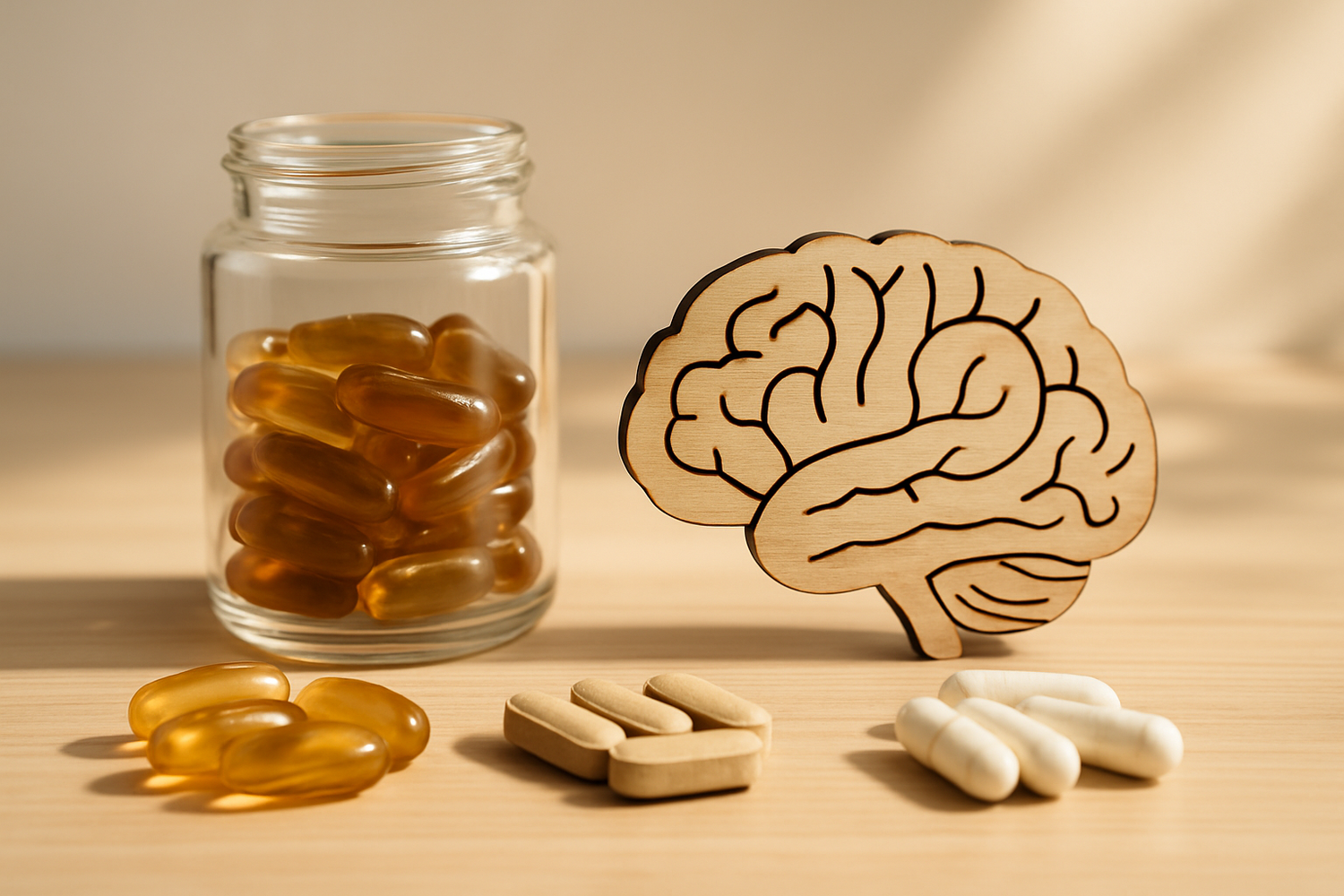
The best brain supplements combine clinically studied nootropic ingredients at research-backed doses — targeting memory, focus, and mental clarity through multiple biological pathways.* Yet most products on the market fall short of this standard. This science-backed guide breaks down exactly which cognitive supplement ingredients have real evidence behind them, which red flags to avoid, and how to choose a brain health supplement that genuinely delivers in 2026.
The global nootropics market is projected to exceed £12 billion by 2028. UK consumers are turning to cognitive enhancers in record numbers. But popularity doesn't equal efficacy — and knowing the difference could save you hundreds of pounds a year.
"The gap between the best brain supplements and the worst isn't price — it's transparency. If a product hides its doses, it's hiding its weaknesses."
What Are Brain Supplements and How Do They Work?
Brain supplements — also known as nootropics, cognitive supplements, or smart supplements — contain ingredients designed to support one or more aspects of brain function.* They work through several distinct biological mechanisms, and the most effective formulations target multiple pathways simultaneously.
Neurotransmitter Support
Ingredients like Citicoline and Alpha-GPC provide choline — a building block for acetylcholine, the brain chemical most closely associated with learning and memory.*
Brain Cell Growth and Neuroprotection
Compounds like Lion's Mane stimulate Nerve Growth Factor (NGF) and Brain-Derived Neurotrophic Factor (BDNF). These proteins encourage your brain to form new neural connections and repair existing ones.*
Stress and Cortisol Regulation
Adaptogens like Rhodiola Rosea and Ashwagandha help regulate the HPA axis — the feedback loop between your brain and adrenal glands — which directly affects cognitive performance under pressure.*
Cerebral Blood Flow and Mitochondrial Energy
Some nootropic ingredients support the energy-producing structures inside brain cells (mitochondria) or improve blood circulation to the brain. Acetyl L-Carnitine is a well-studied example that may help support both cellular energy production and neuroprotection.*
The critical takeaway: single-ingredient brain boosters rarely match the effectiveness of multi-pathway formulations. The best cognitive supplements address neurotransmitter production, neuroprotection, stress resilience, and brain energy together.
5 Nootropic Ingredients With the Strongest Clinical Evidence
Not all brain supplement ingredients are created equal. Below are the five compounds with the most robust human trial data supporting their use as cognitive enhancers.
1. Citicoline — The Gold Standard for Focus and Attention
Citicoline is arguably the most well-researched brain supplement ingredient available today, and it may help support attention, working memory, and mental energy.*
It provides both choline (for acetylcholine synthesis) and cytidine (which converts to uridine, supporting brain cell membrane repair). A randomised controlled trial in Nutritional Neuroscience found that healthy adults taking Citicoline for 28 days showed improved attention and psychomotor speed, alongside increased frontal lobe energy activity measured via MRI [1].*
Clinically studied dose: 250–500 mg daily.
2. Bacopa Monnieri — Long-Term Memory Support
Bacopa monnieri may help support memory formation and recall by modulating acetylcholine and serotonin pathways.* Its active compounds — bacosides A and B — also provide antioxidant protection for neurons.
A 2014 meta-analysis in the Journal of Ethnopharmacology, pooling data from multiple randomised trials, found significant improvements in memory free recall [2].* Bacopa typically requires 8–12 weeks of consistent use before benefits become noticeable.
Clinically studied dose: 300–600 mg daily, standardised to 55% bacosides.
3. L-Theanine — Calm, Focused Alertness
L-Theanine, an amino acid found naturally in green tea, promotes alpha brain wave activity — the neurological signature of relaxed concentration.*
A 2008 study in Nutritional Neuroscience demonstrated that combining L-Theanine with caffeine improved both speed and accuracy of attention-switching tasks compared to either substance alone [3].* This synergy makes it one of the most practical nootropic ingredients for daily use.
Clinically studied dose: 100–200 mg.
4. Lion's Mane — Neurogenesis and Nerve Repair
Lion's Mane mushroom (Hericium erinaceus) stimulates NGF and BDNF production — proteins essential for neuroplasticity and nerve fibre repair.*
A 2009 double-blind, placebo-controlled trial in Phytotherapy Research found significant improvements in cognitive function scores in adults aged 50–80 with mild cognitive impairment after 16 weeks of supplementation [4].* Research from the National Institutes of Health continues to explore its neuroprotective potential.
Clinically studied dose: 500–1,000 mg daily.
5. Rhodiola Rosea — Mental Stamina Under Stress
Rhodiola Rosea is a powerful adaptogen that may help the body manage stress more efficiently while supporting sustained mental performance.*
A controlled study in Phytomedicine demonstrated that Rhodiola significantly reduced mental fatigue while improving associative thinking, short-term memory, and calculation ability in physicians working night shifts [5].* The European Medicines Agency has assessed Rhodiola as a traditional herbal medicine for temporary relief of stress symptoms.
Clinically studied dose: 200–600 mg daily, standardised to 3% rosavins and 1% salidroside.

How to Spot a Low-Quality Brain Supplement
The cognitive supplement market has a transparency crisis. Many products look impressive on the label but fail where it matters most: dosage, standardisation, and honest disclosure. Here are the specific red flags that separate genuine nootropics from expensive placebos.
Proprietary Blends Hide Individual Doses
A proprietary blend lists several ingredients under a single combined weight. You have no way to know how much of each ingredient you're actually getting.
For example, a product might list Citicoline, Lion's Mane, and Bacopa under a "Cognitive Blend — 500 mg" label. If Citicoline alone requires 250–500 mg, that blend cannot possibly contain effective doses of all three. This practice — called "fairy dusting" — is the single most common trick in the supplement industry.
Under-Dosed Ingredients Look Good but Do Nothing
Even when doses are disclosed, many brain boosters include ingredients well below clinical thresholds. A product containing 50 mg of Bacopa monnieri provides less than a sixth of the minimum studied dose (300 mg). It appears on the label but is unlikely to produce meaningful cognitive benefits.
Missing Standardisation Means Unknown Potency
Herbal nootropic extracts vary enormously depending on processing. Bacopa standardised to 55% bacosides delivers a fundamentally different amount of active compound than generic Bacopa powder.
If a product doesn't specify standardisation percentages, you simply cannot evaluate its potency.
| Red Flag | What It Means | What to Look for Instead |
|---|---|---|
| Proprietary blend | Individual ingredient doses are hidden | Full dose disclosure for every ingredient |
| No standardisation listed | Active compound concentration is unknown | Standardisation percentages clearly stated |
| Doses below clinical range | Ingredient is present but likely ineffective | Doses matching published human trial data |
| No third-party testing | Purity and potency are unverified | Independent lab testing with results available |
| Exaggerated claims | "Supercharge your brain" — marketing fluff | Specific, referenced, softened benefit claims |

Drinkable vs. Tablets vs. Capsules: Which Format Works Best?
Drinkable (powder-based) nootropic supplements generally offer faster absorption than tablets or capsules because the active ingredients are already dissolved or suspended in liquid, bypassing tablet breakdown in the stomach.
Powder formats also deliver a practical advantage: higher doses of multiple cognitive enhancers without requiring you to swallow several large capsules. A comprehensive brain health formula might need four or five pills to match what a single drinkable serving provides.
However, format alone doesn't make a product effective. A drinkable supplement with under-dosed ingredients is no better than an under-dosed capsule. The format advantage only matters when the formulation itself is clinically sound.
"The best delivery format in the world can't compensate for weak ingredients at weak doses."
Beyond Focus: Why Brain Health Is Whole-Body Health
Your brain doesn't operate in isolation. Cognitive performance is profoundly shaped by sleep quality, stress levels, immune function, and metabolic stability. No supplement — however well-formulated — can fully compensate for neglecting these foundations.
Sleep and Memory Consolidation
Research highlighted by the NHS Every Mind Matters programme confirms that poor sleep directly impairs memory consolidation and next-day concentration. Supporting healthy sleep patterns is arguably as important as any nootropic ingredient.
Chronic Stress and Cognitive Decline
Sustained cortisol elevation can damage the hippocampus — the brain region most critical for forming new memories. The Alzheimer's Society identifies chronic stress as a modifiable risk factor for long-term cognitive decline.
Blood Sugar and Brain Fog
Glucose instability causes the familiar post-meal mental fog that undermines afternoon productivity. A 2020 review in Nutrients published by the MDPI open-access platform documented the link between glycaemic variability and impaired cognitive function across multiple populations.
This interconnected picture is precisely why the most effective approach to brain health involves more than a single focus-boosting supplement.
How Noobru Approaches Brain Supplements
Noobru is a UK-based drinkable supplement brand built around the principles outlined in this guide: full clinical doses, zero proprietary blends, third-party purity testing, and complete ingredient transparency.
The Noobru cognitive range includes Citicoline, L-Theanine, Rhodiola Rosea, Alpha-GPC, and Acetyl L-Carnitine — each at doses aligned with published research. The drinkable powder format delivers these doses in a single convenient serving.
The broader Noobru range addresses the interconnected factors that shape brain health:
- Noobru Pro — formulated for sustained mental energy and stress resilience using clinically supported adaptogens, helping to combat burnout and cognitive fatigue.*
- Noobru Lucid — may help support healthy sleep architecture and reduce anxiousness without next-day sedation, helping ensure the restorative rest essential for memory consolidation.*
- Noobru Shield — provides daily immune and antioxidant support, helping protect against the oxidative stress that contributes to age-related cognitive decline.*
- Noobru Zeus — comprehensive prostate and testosterone support for men over 40, addressing hormonal shifts that can affect energy, mood, and mental sharpness.*
- Noobru Cheat — helps manage post-meal blood sugar spikes, supporting the metabolic stability that prevents energy crashes and afternoon brain fog.*
Every Noobru product ships with free delivery on subscription, and the full Noobru range is backed by a 90-day money-back guarantee.
Frequently Asked Questions About Brain Supplements
Do brain supplements actually work?
Some brain supplement ingredients have strong clinical evidence. Citicoline, Bacopa monnieri, Lion's Mane, and L-Theanine have each shown measurable cognitive benefits in randomised human trials [1][2][3][4]. The key is choosing products with clinically studied doses rather than token amounts.
What is the best form for brain supplements?
Drinkable nootropic supplements generally offer faster absorption than tablets or capsules because they bypass the need for dissolution in the stomach. Powder-based formats also allow higher doses of active ingredients without requiring multiple large pills.
Are brain supplements safe to take every day?
Most well-formulated cognitive supplements using established ingredients at clinical doses are considered safe for daily use. Always consult your healthcare provider before starting any supplement, especially if you take medication or have existing health conditions.
How long do brain supplements take to work?
Some ingredients like L-Theanine may produce noticeable effects within 30–60 minutes. Others, such as Bacopa monnieri and Lion's Mane, typically require 8–12 weeks of consistent daily use before measurable improvements appear [2][4].
What should I look for when buying brain supplements in the UK?
Look for full-dose transparency with no proprietary blends, clinically studied nootropic ingredients at research-backed doses, standardised herbal extracts, and third-party purity testing. UK-based brands must comply with MHRA and Food Standards Agency regulations, providing additional consumer protection.
Can brain supplements help with brain fog?
Certain nootropic ingredients may help support mental clarity and reduce feelings of brain fog.* Citicoline supports acetylcholine production linked to alertness, while Rhodiola Rosea may help combat the mental fatigue that often underlies foggy thinking. Addressing sleep, stress, and blood sugar alongside supplementation tends to produce the best results.
Summary: 5 Steps to Choosing the Best Brain Supplement
- Check the dose of every ingredient. Reject any product using proprietary blends. Every active compound should be individually listed with its exact milligram amount, and that amount should match or exceed clinical trial dosages.
- Prioritise the top five evidence-based nootropics. Citicoline, Bacopa monnieri, L-Theanine, Lion's Mane, and Rhodiola Rosea have the most robust human trial data.* Look for formulations that include two or more of these at full clinical doses.
- Verify standardisation on all herbal ingredients. Bacopa should be standardised to 55% bacosides; Rhodiola to 3% rosavins and 1% salidroside. Without these specifications, potency is a guessing game.
- Choose a format that supports absorption and consistency. Drinkable powder formats offer faster absorption and can deliver higher combined doses than capsules. Pick whichever format you will actually use every day — consistency matters more than any single ingredient.
- Address the full picture of brain health. Cognitive performance depends on sleep quality, stress management, immune resilience, and metabolic stability. The best results come from supplementing alongside strong lifestyle foundations — not instead of them.
Ready to try brain supplements that use full clinical doses, zero proprietary blends, and complete ingredient transparency? Noobru's drinkable nootropic range is formulated for adults who want evidence-based cognitive support they can actually trust.
Try Noobru risk-free with our 90-day money-back guarantee →References
- McGlade E, et al. "Improved attentional performance following citicoline administration in healthy adult women." Nutritional Neuroscience. 2012;15(4):293-299. PubMed
- Kongkeaw C, et al. "Meta-analysis of randomized controlled trials on cognitive effects of Bacopa monnieri extract." Journal of Ethnopharmacology. 2014;151(1):528-535. PubMed
- Owen GN, et al. "The combined effects of L-theanine and caffeine on cognitive performance and mood." Nutritional Neuroscience. 2008;11(4):193-198. PubMed
- Mori K, et al. "Improving effects of the mushroom Yamabushitake (Hericium erinaceus) on mild cognitive impairment: a double-blind placebo-controlled clinical trial." Phytotherapy Research. 2009;23(3):367-372. PubMed
- Darbinyan V, et al. "Rhodiola rosea in stress induced fatigue — a double blind cross-over study of a standardized extract SHR-5 with a repeated low-dose regimen." Phytomedicine. 2000;7(5):365-371. PubMed
*These statements have not been evaluated by the Food and Drug Administration or MHRA. This product is not intended to diagnose, treat, cure, or prevent any disease. Always consult your healthcare provider before starting any supplement regimen. In the United Kingdom, food supplements are regulated by the Food Standards Agency and must comply with MHRA guidelines. The studies referenced above reflect findings from specific clinical trials and may not be generalisable to all populations. Noobru supplements are food supplements and should not be used as a substitute for a varied, balanced diet and a healthy lifestyle.


Leave a comment
All comments are moderated before being published.
This site is protected by hCaptcha and the hCaptcha Privacy Policy and Terms of Service apply.