




L-Theanine Supplement: Benefits, Dosage, and What to Look For
An L-theanine supplement is one of the most evidence-backed options for anyone seeking calm focus without drowsiness. Found naturally in tea leaves, L-theanine is an amino acid that promotes alpha brain wave activity — the same relaxed-but-alert state you might associate with meditation or deep creative work. With a robust body of clinical research behind it, L-theanine has earned its place as a staple in the nootropic world, particularly when paired with caffeine for enhanced mental performance [1].*
But not all L-theanine supplements are created equal. Dosage, format, ingredient synergies, and quality control all matter. This guide breaks down exactly what the science says, how much you actually need, and what to look for when choosing a supplement in the UK.
Key Takeaways
- What it does: L-theanine promotes calm alertness without drowsiness by increasing alpha brain wave activity and modulating GABA, serotonin, and dopamine.*
- Clinically supported dose: 100–200mg per day, often paired with 50–100mg of caffeine for enhanced focus and attention.*
- Onset time: Effects are typically measurable within 30–60 minutes of ingestion.
- What to look for: Clinical dosing (≥100mg), full ingredient transparency, synergistic formulations, and third-party purity testing.
- Best format: Drinkable supplements like Noobru offer faster absorption and easy integration into daily routines.
What Is L-Theanine and How Does It Work?
L-theanine is a non-protein amino acid found primarily in Camellia sinensis — the plant that gives us green tea, black tea, and white tea. It is the compound largely responsible for the calm, focused feeling a cup of tea provides, even though tea also contains caffeine.
To get a clinically meaningful dose of L-theanine from tea alone, however, you would need to drink somewhere between 5 and 20 cups per day, depending on the type and preparation method. A typical cup of green tea contains roughly 20–30mg of L-theanine [2], well below the 100–200mg used in clinical trials. That gap is exactly where supplementation becomes practical.
At a neurochemical level, L-theanine works through several mechanisms simultaneously:
- Alpha brain wave promotion: L-theanine increases alpha wave activity in the brain, which is associated with a state of calm alertness — focused but not anxious [3].*
- Neurotransmitter modulation: It modulates GABA, serotonin, and dopamine levels, helping to support balanced mood and relaxation without sedation [4].*
- Glutamate regulation: L-theanine is structurally similar to glutamate and may help regulate excitatory neurotransmission, contributing to its calming effects.*
- Caffeine counterbalance: When taken alongside caffeine, L-theanine may help reduce jitteriness and anxiety while preserving caffeine's focus-enhancing benefits [1].*
"L-theanine promotes relaxation without causing drowsiness — it helps take the edge off so you can think clearly."* This unique profile is what sets it apart from most other calming supplements on the market.
What Does the Research Say About L-Theanine Benefits?
L-theanine is one of the better-studied nootropic compounds available today. Here is what the peer-reviewed literature supports across four key benefit areas.
Focus and Attention
The combination of L-theanine and caffeine may significantly improve both speed and accuracy during cognitively demanding tasks.* A 2008 study published in Nutritional Neuroscience found that participants who received 97mg of L-theanine with 40mg of caffeine showed measurable improvements in alertness and reduced susceptibility to distraction on attention-switching tasks, compared to either compound taken alone [1]. This synergistic effect is why the L-theanine-plus-caffeine stack has become one of the most popular nootropic pairings worldwide.
A later systematic review published in Nutrition Reviews in 2014 confirmed that this pairing consistently enhances attention and task-switching accuracy across multiple study populations [5].*
Calm and Relaxation
Multiple EEG studies have demonstrated that L-theanine increases alpha brain wave activity within 30–60 minutes of ingestion [3]. Alpha waves are associated with the relaxed, creative, meditative state of mind — what psychologists sometimes call "wakeful relaxation."
A 2007 study in the Asia Pacific Journal of Clinical Nutrition showed that alpha wave increases were dose-dependent, with higher doses producing more pronounced effects in participants reporting high baseline anxiety [3].* This makes L-theanine particularly useful for people who need to stay calm under pressure — whether during a presentation, an exam, or a demanding gaming session.
Sleep Quality
L-theanine is not a sedative, but its calming properties may help support better sleep quality by reducing the mental chatter and pre-sleep anxiety that keeps many people awake.* A 2019 randomised controlled trial published in Nutrients found that participants taking 200mg of L-theanine daily reported improvements in sleep quality scores compared to placebo, including reduced sleep disturbance and less reliance on sleep medication [6].*
This makes it a compelling option for those who want to improve their rest without the grogginess associated with stronger sleep aids.
Stress Response
Research suggests L-theanine may help modulate the body's physiological stress response.* A 2016 study in the journal Pharmacology, Biochemistry and Behavior found that L-theanine supplementation reduced heart rate and salivary immunoglobulin A (s-IgA) — a biomarker of acute stress — during cognitively demanding tasks [4].*
For those dealing with work pressure, daily stress, or the effects of chronic burnout, this anti-stress mechanism is particularly relevant.
L-Theanine Dosage: How Much Do You Actually Need?
The clinically studied dose of L-theanine is 100–200mg per day, often paired with 50–100mg of caffeine for cognitive performance benefits. Below is a dosage breakdown by goal:
| Goal | Suggested Dose | Notes |
|---|---|---|
| Calm focus and attention | 100–200mg + 50–100mg caffeine | Most studied combination; take in the morning or before demanding tasks |
| General relaxation | 100–200mg | Can be taken any time of day without causing sedation |
| Sleep quality support | 200mg | Take 30–60 minutes before bed; works through relaxation, not sedation |
| Stress management | 200mg | May be taken before known stressful situations or as part of a daily routine |
One important point: many supplements on the market contain "fairy-dust" doses — small amounts of L-theanine that look impressive on the label but fall well below the levels used in clinical trials. When evaluating any L-theanine supplement, always check the actual milligram dose per serving and compare it against the 100–200mg range validated by research.
What to Look for in an L-Theanine Supplement
Not all L-theanine supplements deliver equal quality or value. Here are five key factors to evaluate before buying.
1. Clinical Dosing
You want at least 100mg of L-theanine per serving. Anything significantly below this threshold is unlikely to deliver the benefits demonstrated in clinical research. Avoid products that hide behind proprietary blends — if you cannot see exactly how much L-theanine is in the formula, that is a red flag.
2. Synergistic Ingredients
L-theanine works well on its own, but it becomes even more effective when combined with complementary compounds. The caffeine pairing is the most researched, but other ingredients can extend its benefits further:
- Rhodiola Rosea — an adaptogenic herb that may support sustained energy and stress resilience by modulating cortisol levels.*
- Citicoline — may help support attention and mental clarity through a different mechanism, providing the raw material for acetylcholine, the brain's key learning neurotransmitter.*
3. Format and Bioavailability
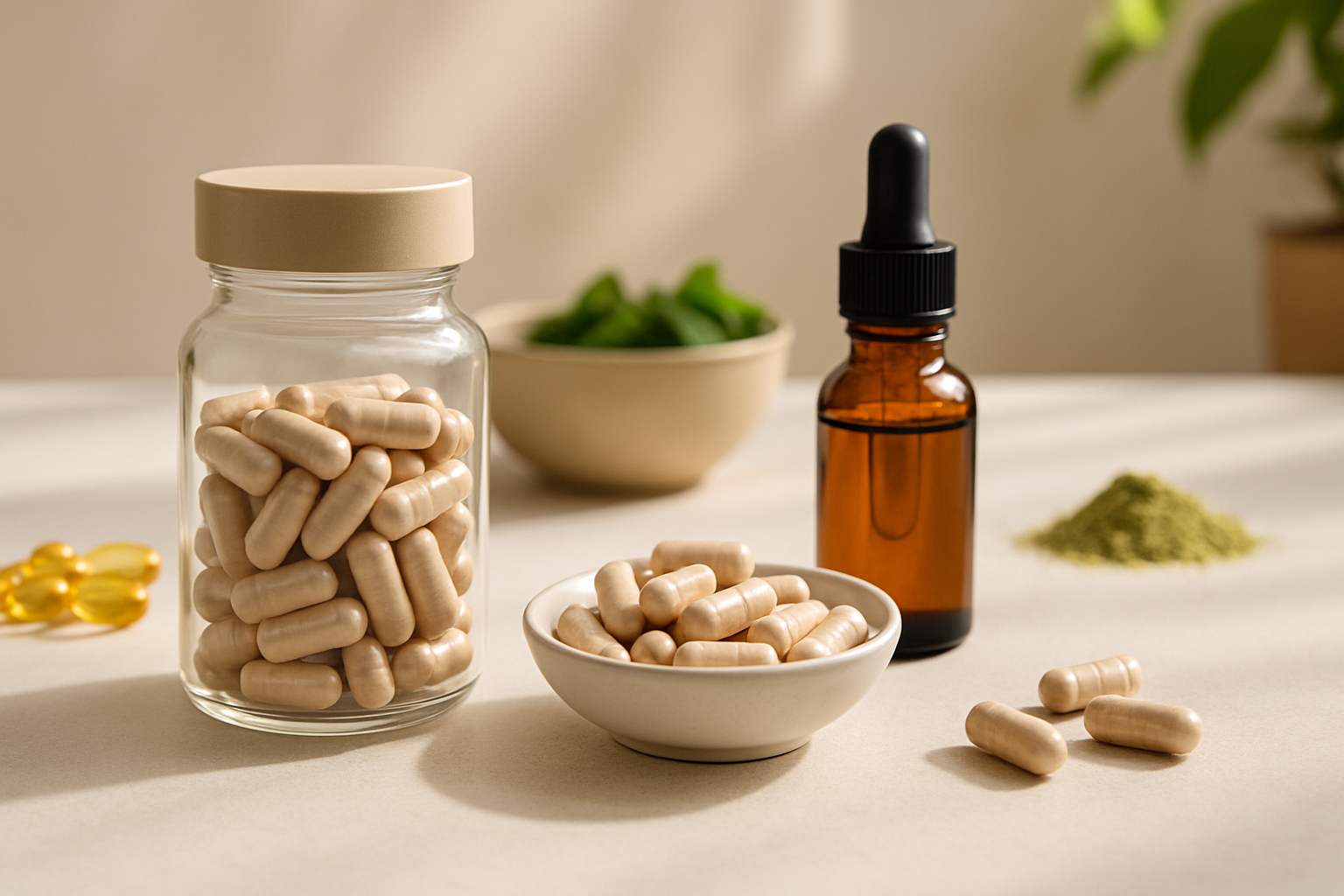
L-theanine is available in capsules, tablets, powders, and drinkable supplements. Drinkable formats tend to offer faster absorption since the ingredients bypass the capsule dissolution step. They also make it simpler to integrate supplementation into your existing routine — mix, drink, and get on with your day.
4. Transparency and Testing
Look for brands that publish full ingredient lists with exact doses (no proprietary blends) and that conduct third-party testing for purity. UK-based brands are subject to UK food supplement regulations that require accurate labelling, providing an additional layer of consumer assurance.
5. No Unnecessary Fillers
Some budget supplements pad their formulas with bulking agents, artificial colours, or excessive sweeteners. A quality L-theanine supplement should contain the active ingredients you are paying for and little else.
How Noobru Delivers L-Theanine the Right Way
If you are looking for a convenient way to get L-theanine alongside other evidence-based nootropic ingredients, Noobru offers drinkable supplement options that include L-theanine at clinically relevant doses — with full ingredient transparency and no proprietary blends.
For Evening Calm and Better Sleep
Noobru Lucid is designed for evening use and may help support relaxation, reduce nighttime stress, and promote better sleep quality.* Its calming formula pairs L-theanine with other relaxation-supporting compounds for a comprehensive wind-down routine.
For Daytime Focus and Stress Resilience
Noobru Pro takes a different approach, combining L-theanine with adaptogens like Rhodiola Rosea to help support sustained energy, stress management, and mental clarity throughout the day — without the crash.* It is formulated for high-performers dealing with chronic stress and burnout.
Both products are UK-based, tested for purity, and delivered in a convenient drinkable format for faster absorption. Every ingredient and its dose is clearly listed — no guesswork required.
Noobru also offers targeted formulas for other health goals, including Noobru Shield for immune support,* Noobru Zeus for male vitality,* and Noobru Cheat for metabolic health support.*
Frequently Asked Questions
How much L-theanine should I take daily?
Most clinical studies use 100–200mg of L-theanine per day, often paired with 50–100mg of caffeine for optimal focus and calm alertness. This dose range has been consistently shown to promote alpha brain wave activity without causing sedation [1][3].
Can I take L-theanine with caffeine?
Yes — L-theanine and caffeine are one of the most well-studied nootropic pairings. A 2008 study in Nutritional Neuroscience found the combination improved both speed and accuracy on attention tasks compared to either compound alone [1]. L-theanine helps smooth out the jitteriness caffeine can cause.*
Does L-theanine make you sleepy?
No. L-theanine promotes relaxation without sedation. It increases alpha brain wave activity, which is associated with calm alertness rather than drowsiness. That said, its calming properties may help support better sleep quality when taken in the evening [6].*
How long does it take for L-theanine to work?
L-theanine typically begins to take effect within 30–60 minutes of ingestion. EEG studies measuring alpha brain wave activity have detected measurable changes within this window [3]. For longer-term benefits like stress resilience, consistent daily use over several weeks may be more beneficial.
Is L-theanine safe to take every day?
L-theanine has a strong safety profile and is generally well tolerated at doses of 100–400mg per day. It occurs naturally in tea and has been consumed for centuries. The European Food Safety Authority has assessed L-theanine as a safe food ingredient. As with any supplement, consult your healthcare provider if you are pregnant, breastfeeding, or taking medication.
What is the difference between L-theanine and theanine?
L-theanine is the bioactive form of theanine found naturally in tea leaves and used in clinical research. When supplements list "theanine," they almost always mean L-theanine. Always confirm the label specifies the L-form, as this is the version validated by scientific studies.
References
- Owen GN, Parnell H, De Bruin EA, Rycroft JA. The combined effects of L-theanine and caffeine on cognitive performance and mood. Nutritional Neuroscience. 2008;11(4):193-198. PubMed
- Keenan EK, Finnie MDA, Jones PS, Rogers PJ, Priestley CM. How much theanine in a cup of tea? Effects of tea type and method of preparation. Food Chemistry. 2011;125(2):588-594. ScienceDirect
- Nobre AC, Rao A, Owen GN. L-theanine, a natural constituent in tea, and its effect on mental state. Asia Pacific Journal of Clinical Nutrition. 2008;17(S1):167-168. PubMed
- Kimura K, Ozeki M, Juneja LR, Ohira H. L-Theanine reduces psychological and physiological stress responses. Biological Psychology. 2007;74(1):39-45. PubMed
- Haskell-Ramsay CF, Kennedy DO, Milne AL, Wesnes KA, Scholey AB. The effects of L-theanine, caffeine and their combination on cognition and mood. Nutrition Reviews. 2014;72(8):507-522. PubMed
- Hidese S, Ogawa S, Ota M, et al. Effects of L-theanine administration on stress-related symptoms and cognitive functions in healthy adults: a randomised controlled trial. Nutrients. 2019;11(10):2362. PubMed
Ready to experience the benefits of L-theanine alongside other evidence-based nootropics — in a convenient, fully transparent drinkable format? Noobru delivers clinical doses with no proprietary blends, backed by a 90-day money-back guarantee.
Try Noobru Risk-Free →Disclaimer: *These statements have not been evaluated by the Food and Drug Administration or MHRA. This product is not intended to diagnose, treat, cure, or prevent any disease. Always consult your healthcare provider before starting any supplement regimen.

Leave a comment
All comments are moderated before being published.
This site is protected by hCaptcha and the hCaptcha Privacy Policy and Terms of Service apply.