




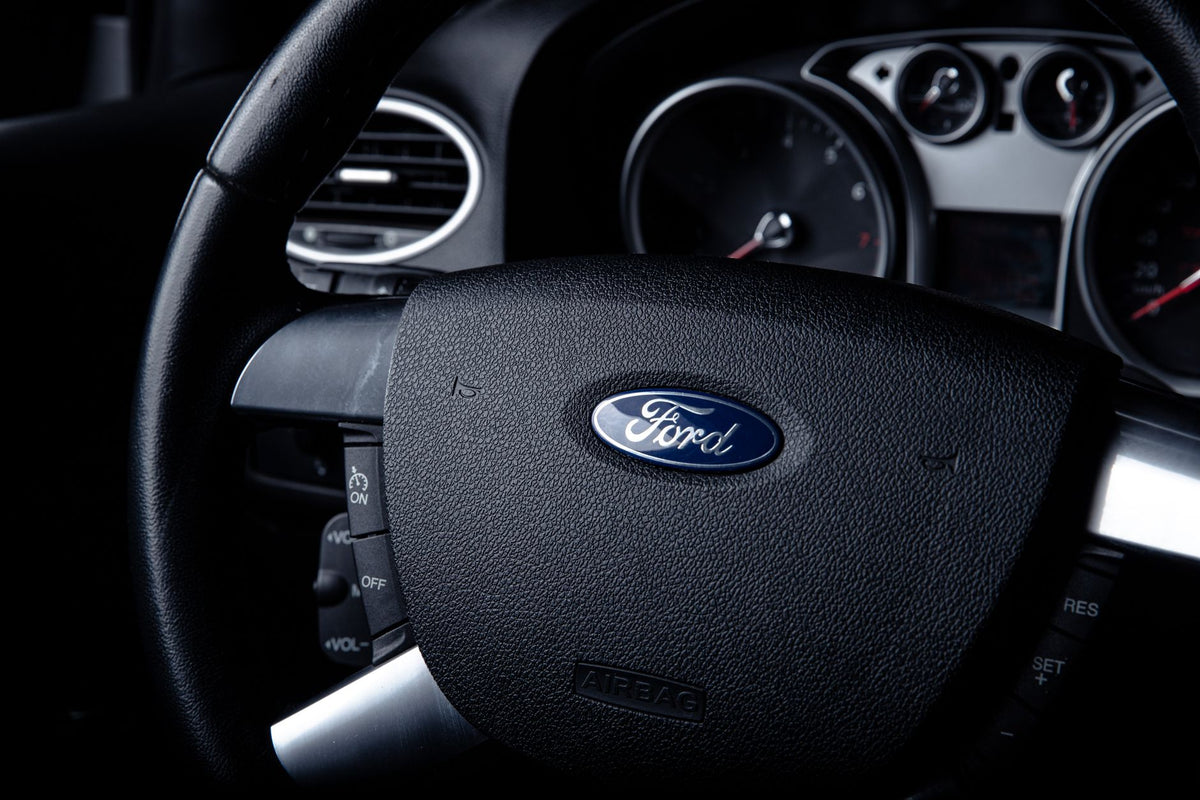
2013 Ford Focus Issues and the Hidden Cognitive Cost of Daily Car Stress
The 2013 Ford Focus issues are among the most complained-about vehicle problems of the past decade — and yet nobody talks about what those problems do to your brain. This article bridges two worlds: a factual breakdown of the mechanical failures that still plague this car in 2026, and the clinical evidence showing how chronic transport stress measurably degrades focus, memory, and decision-making. If you own (or have owned) a 2013 Ford Focus and feel mentally drained by the experience, you are not imagining it — and there are evidence-backed ways to support your cognition while you sort the car out.*
The 2013 Ford Focus Problems That Won't Go Away
The 2013 model year sits at the centre of Ford's most troubled era for the Focus. Here are the issues that generated the most complaints to the US National Highway Traffic Safety Administration (NHTSA) and equivalent UK bodies:
PowerShift Transmission Failures
The DPS6 dual-clutch automatic — marketed as "PowerShift" — is the single biggest source of 2013 Ford Focus problems. Owners report shuddering at low speeds, violent jerking during gear changes, sudden loss of power on motorways, and complete transmission failure. Ford faced a class-action lawsuit in the US and extended warranties on the clutch and Transmission Control Module (TCM) in some markets, but many vehicles were never fully repaired. According to data compiled by CarComplaints.com, the 2013 Focus received over 3,000 transmission complaints — more than any other Focus model year.
Door Latch Defects
Faulty door latches triggered a recall (NHTSA Campaign 17V-317) affecting over 400,000 vehicles. Doors could open while driving or fail to latch properly, triggering persistent "door ajar" warnings and interior light malfunctions. Beyond the safety risk, the constant false alerts create a drip-feed of anxiety every time you drive.
Engine Stalling and Idle Issues
Some 2013 Focus owners report the engine stalling at idle or during low-speed manoeuvres — particularly dangerous in roundabouts or heavy traffic. The root cause is often linked to the throttle body or purge valve, but diagnosis can take multiple garage visits.
Sync and Electrical Gremlins
The first-generation Sync infotainment system in the 2013 Focus was prone to freezing, Bluetooth dropouts, and phantom screen activations. While not safety-critical, these glitches add to the cumulative frustration of owning the car.
"It's the car that makes you feel stupid," one owner wrote on a UK forum — and that feeling, it turns out, has a measurable biological basis.
How 2013 Ford Focus Issues Create Chronic Stress — and Why That Matters for Your Brain
Owning an unreliable car is not a one-time stressor. It is a chronic, unpredictable source of anxiety — exactly the type that does the most cognitive damage. Here is what happens inside your body when your 2013 Ford Focus shudders through third gear for the hundredth time:
The Cortisol Drip
Your adrenal glands release cortisol — the primary stress hormone — every time you experience a perceived threat. A transmission that might fail on the motorway qualifies. Research published in Neuroscience & Biobehavioral Reviews demonstrated that chronic stress exposure significantly impairs working memory and executive function [1]. You do not need a single dramatic event; a daily drip of low-grade worry is enough.
Transport Stress Is Clinically Recognised
A 2019 study in the Journal of Transport & Health found that commuters with unreliable transport reported higher perceived stress, more sleep disruption, and lower workplace productivity than those with dependable vehicles. The cognitive cost of wondering "Will my car get me there today?" is real and measurable.
Decision Fatigue Compounds the Problem
Every day you own a problematic 2013 Ford Focus, you face a cascade of micro-decisions: Do I take it to the garage again? Can I afford the repair? Should I sell it at a loss? Should I take public transport instead? This constant decision load depletes mental resources — a phenomenon psychologists call decision fatigue — leaving you with less cognitive bandwidth for work, relationships, and wellbeing.
What Nootropics Can (and Cannot) Do for Car-Related Stress
Let's be direct: no supplement will fix your PowerShift transmission. What specific nootropic ingredients may do is help support the cognitive functions that chronic car stress degrades — focus, calm under pressure, and mental stamina.* Here is how each ingredient maps to the stress cycle described above.
L-Theanine: For the Moment Your Transmission Shudders
L-theanine is an amino acid found naturally in green tea. It promotes alpha brainwave activity — the electrical pattern associated with relaxed alertness — and may help you stay calm and focused in the immediate moment of stress.*
A 2008 study in Nutritional Neuroscience found that 97 mg of L-theanine combined with 40 mg of caffeine improved both speed and accuracy on attention-switching tasks, while reducing the jittery side effects of caffeine alone [2].* That is precisely the kind of composed focus you want when your car lurches unexpectedly in traffic.
When it helps: Within 30–60 minutes of ingestion. This is your "acute layer" — the ingredient you reach for on the morning of a stressful drive.
B Vitamins: For the Mental Drain of Ongoing Repair Decisions
Vitamins B6, B9 (folate), and B12 are essential building blocks for neurotransmitters like serotonin and dopamine — the chemicals your brain uses to regulate mood and motivation. When you are under sustained stress, your body burns through B vitamins faster than usual.
A systematic review in Psychosomatic Medicine (2013) concluded that B-vitamin supplementation was associated with reduced perceived stress and improved mood across multiple randomised trials [3].* Think of B vitamins as the daily maintenance your brain needs when your car is refusing to provide its own maintenance.
When it helps: Benefits are cumulative. Most studies used 4–12 weeks of daily supplementation. Because B vitamins are water-soluble (your body does not store them well), consistent daily intake matters.
Ashwagandha: For the Long Haul of Owning a Lemon
If you have been dealing with 2013 Ford Focus issues for months or years, your stress response system — technically, the hypothalamic-pituitary-adrenal axis, or HPA axis (the body's central stress thermostat) — may be chronically over-activated. Ashwagandha is an adaptogenic herb that may help recalibrate this system over time.*
A randomised, double-blind trial published in Medicine in 2019 found that participants taking 240 mg of ashwagandha extract daily reported significantly improved sleep quality and meaningfully lower morning cortisol levels compared to placebo [4].* Better sleep and lower baseline stress hormones mean more cognitive resilience the next time your dashboard lights up like a Christmas tree.
When it helps: Most studies report effects after 4–8 weeks of consistent daily use. This is not a quick fix — it is a long-term resilience builder.*
Phosphatidylserine: For Decision Fatigue
Phosphatidylserine (PS) is a fatty compound concentrated in brain cell membranes. It helps maintain the structural integrity of nerve cells and may support cognitive endurance — the ability to keep making good decisions late in the day when your mental tank is running low.*
A 2013 study in Clinical Interventions in Aging found that participants taking PS showed improvements in memory and cognitive function over several months [5].* While studied in older adults, the underlying mechanism — supporting membrane health and helping manage cortisol — is relevant to anyone dealing with prolonged mental load.
When it helps: Typically 4–12 weeks for measurable effects. PS works best as part of a daily routine, not as a one-off.
A Layered Approach: Matching Ingredients to Your Stress Timeline
The most effective strategy is not picking one ingredient — it is layering them according to when they take effect. Here is a practical framework for someone dealing with chronic car stress in 2026:
| Layer | Ingredient | Time to Effect | What It Targets |
|---|---|---|---|
| Immediate calm | L-theanine + caffeine | 30–60 minutes | Acute stress response, focused attention* |
| Daily maintenance | B vitamins (B6, B9, B12) | Cumulative (weeks) | Neurotransmitter production, mood support* |
| Long-term resilience | Ashwagandha + phosphatidylserine | 4–8 weeks | HPA axis regulation, cortisol management* |
This layered model is the rationale behind multi-ingredient formulations like Noobru Advantage, which combines L-theanine, B vitamins, and phosphatidylserine in a drinkable format designed for daily use.* It will not fix your clutch — but it may help you think clearly enough to negotiate a fair repair quote.
Practical Steps If You Own a 2013 Ford Focus
Supplements are one layer. Here are concrete actions for the car itself:
- Check your TCM status. If your Transmission Control Module has never been replaced or reprogrammed, contact a Ford dealer. Some extended warranty programmes may still cover this — ask specifically about Customer Satisfaction Programme 14M01.
- Document everything. Keep a dated log of every shudder, stall, and warning light. This strengthens any warranty or legal claim and reduces the cognitive burden of trying to remember details.
- Get an independent diagnostic. A non-dealer specialist can often identify whether your specific 2013 Ford Focus issues are the well-known PowerShift defect or something else entirely, saving you weeks of anxiety.
- Set a decision deadline. Open-ended "should I sell?" deliberation is a major driver of decision fatigue. Give yourself a specific date — say, four weeks from now — to decide whether to repair, sell, or replace the car. Then stop revisiting until that date.
- Support your cognition in the meantime. Whether through better sleep habits, stress-management techniques, or a targeted supplement like Noobru, actively counteracting the cognitive cost of car stress is not indulgent — it is practical.*
Key Takeaways
- The 2013 Ford Focus has well-documented issues — chiefly the PowerShift transmission (3,000+ NHTSA complaints), door-latch defects, engine stalling, and electrical problems.
- Chronic car trouble is a genuine cognitive stressor — it elevates cortisol, disrupts sleep, and accelerates decision fatigue, all of which impair focus and memory.
- L-theanine acts fastest (30–60 minutes) for acute calm under pressure; ashwagandha requires 4–8 weeks but may help reset your long-term stress baseline.*
- B vitamins are underrated — they are the raw materials for the neurotransmitters that chronic stress depletes.*
- Fix the car and support your brain. One does not replace the other. Deal with the mechanical problem while actively protecting your cognitive performance.
Frequently Asked Questions
What are the most common 2013 Ford Focus issues?
The PowerShift dual-clutch transmission is the number-one complaint — shuddering, jerking, loss of power, and outright failure. Door-latch defects, engine stalling, and Sync infotainment glitches round out the most frequent 2013 Ford Focus problems. The transmission issue alone triggered a major class-action lawsuit and over 3,000 complaints to NHTSA.
Is the 2013 Ford Focus transmission still a problem in 2026?
Yes, for vehicles that have not had the TCM replaced or the clutch properly serviced. Ford extended some warranties but never issued a universal recall covering all affected models. If you are buying a used 2013 Focus, demand full service history and specifically ask about PowerShift work.
Can car problems cause chronic stress?
They absolutely can. Research in the Journal of Transport & Health links unreliable transport to elevated cortisol, poorer sleep quality, and reduced productivity. Owning a car you cannot trust creates a persistent background anxiety that follows you even when you are not driving.
Do nootropics help with driving stress?
Specific nootropic ingredients may help support the cognitive functions that stress impairs. L-theanine promotes calm alertness within 30–60 minutes; ashwagandha may help regulate cortisol over 4–8 weeks.* They do not eliminate the source of stress, but they may help you respond to it more effectively.
What is the best supplement for commute stress?
L-theanine paired with a moderate amount of caffeine is the most-studied combination for maintaining focus under pressure.* Adding daily B vitamins and phosphatidylserine provides longer-term cognitive support. Noobru Advantage combines several of these ingredients in a single drinkable serving.*
References
- Shields, G.S. et al. (2016). 'The effects of acute stress on core executive functions: A meta-analysis,' Neuroscience & Biobehavioral Reviews, 68, pp. 651–668. PubMed
- Owen, G.N. et al. (2008). 'The combined effects of L-theanine and caffeine on cognitive performance and mood,' Nutritional Neuroscience, 11(4), pp. 193–198. PubMed
- Long, S.J. & Benton, D. (2013). 'Effects of vitamin and mineral supplementation on stress, mild psychiatric symptoms, and mood,' Psychosomatic Medicine, 75(2), pp. 144–153. PubMed
- Salve, J. et al. (2019). 'Adaptogenic and Anxiolytic Effects of Ashwagandha Root Extract,' Medicine, 98(37), e17186. PubMed
- Richter, Y. et al. (2013). 'The effect of soybean-derived phosphatidylserine on cognitive performance in elderly,' Clinical Interventions in Aging, 8, pp. 557–563. PubMed
Dealing with car stress and feeling mentally drained? Your brain deserves support too.
Try Noobru Advantage — the drinkable supplement designed to help you stay focused when life gets stressful →
*These statements have not been evaluated by the Food and Drug Administration or MHRA. This product is not intended to diagnose, treat, cure, or prevent any disease. Always consult your healthcare provider before starting any supplement regimen.


Leave a comment
All comments are moderated before being published.
This site is protected by hCaptcha and the hCaptcha Privacy Policy and Terms of Service apply.