




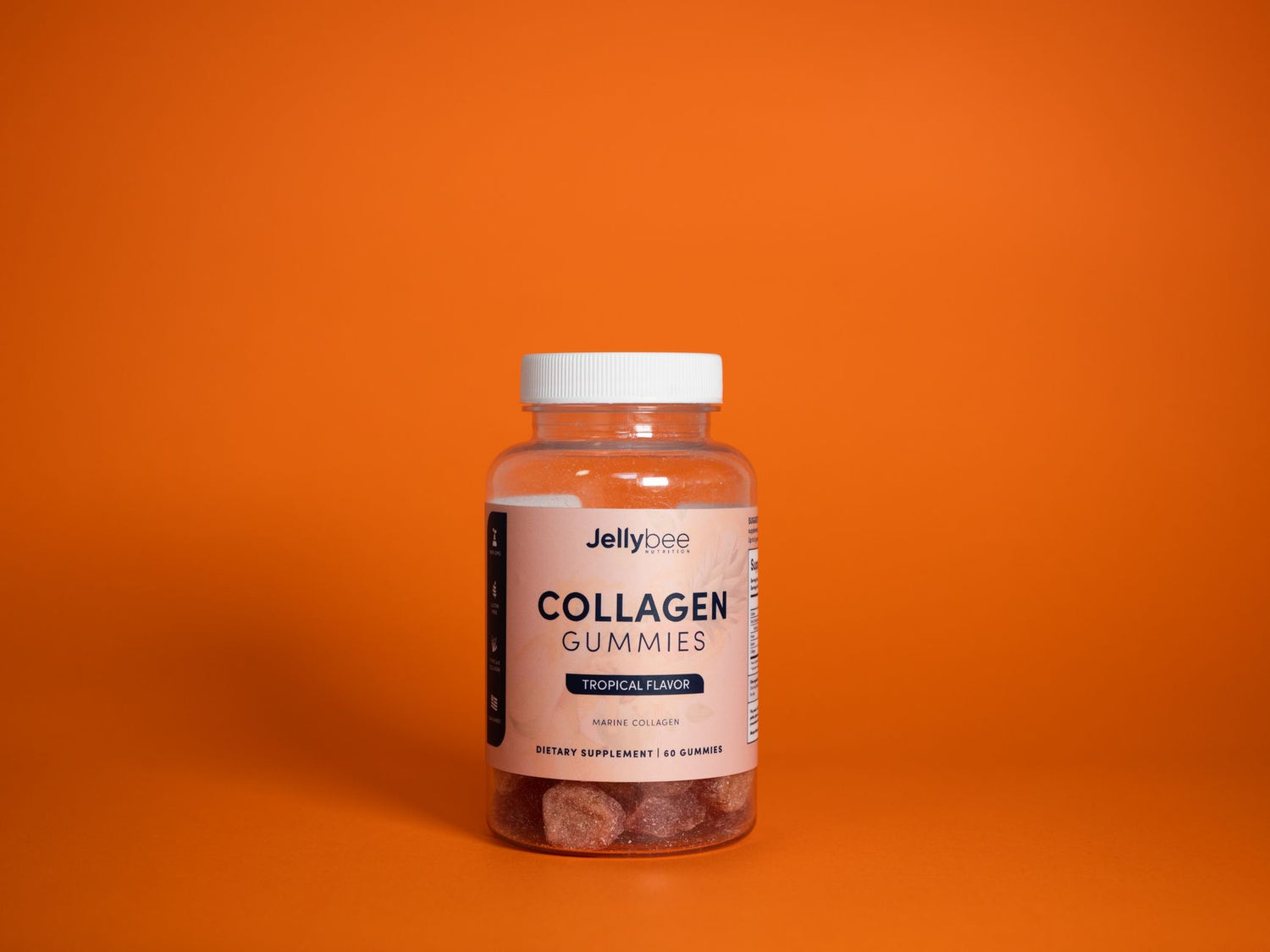
The collagen market is flooded with products claiming to firm sagging skin — but the form of collagen matters far more than the brand name on the label. Most comparison articles rank collagen supplements by price or customer reviews. This article takes a different approach: I've ranked seven collagen forms by a single metric that determines real-world results — estimated hours from ingestion to dermal bioavailability — using peptide molecular weight and absorption data from clinical trials published between 2019 and 2025. If you're searching for the best collagen supplement for sagging skin in 2026, absorption speed is the detail most articles ignore.
The short answer: hydrolysed marine collagen peptides (Type I, under 5,000 Da molecular weight) win decisively. They absorb fastest, match the collagen type already dominant in your skin, and have the strongest clinical evidence for elasticity improvement.* But the full ranking reveals why some popular forms are surprisingly poor choices — and why one high-street favourite barely reaches your skin at all.
Why Absorption Speed Determines Whether Collagen Reaches Sagging Skin
Your skin doesn't absorb collagen directly. Every collagen supplement must first be broken down into dipeptides and tripeptides in your gut, then absorbed into the bloodstream, and finally delivered to fibroblasts in the dermis — the cells that actually build new collagen fibres.
The bottleneck is the gut-to-dermis journey. As Examine.com's collagen research summary notes, peptide molecular weight is the primary factor controlling intestinal absorption rate.
Two variables control how fast collagen reaches your skin:
- Molecular weight: Peptides under 5,000 Daltons pass through intestinal walls significantly faster than intact collagen (300,000 Da) or partially hydrolysed gelatin (20,000–100,000 Da).
- Collagen type: Type I collagen constitutes roughly 80% of dermal collagen. Supplements rich in Type I deliver precursors your fibroblasts can actually use for skin structure.*
This explains a frustrating paradox: someone taking 10 g of unhydrolysed collagen powder daily may see worse results than someone taking 5 g of properly hydrolysed peptides. The dose on the label is not the dose that reaches your dermis.
The Full Ranking: 7 Collagen Forms for Sagging Skin
Each form is scored on three criteria: absorption speed (hours to detectable blood peptide levels), skin-type match (Type I content), and direct clinical evidence for skin elasticity. Data is drawn from peer-reviewed trials and the Healthline collagen overview, cross-referenced with primary sources.
1. Hydrolysed Marine Collagen Peptides — Best Overall for Sagging Skin
- Absorption speed: Detectable in blood within 30–60 minutes; peak at ~2 hours
- Molecular weight: 1,000–5,000 Da (varies by brand)
- Collagen type: Almost exclusively Type I
- Skin evidence: Strong
Marine collagen is the undisputed leader for skin. A 2019 randomised controlled trial in Nutrients found that 5 g of hydrolysed fish collagen peptides daily improved skin elasticity by 18% after 8 weeks [1].* The peptides are smaller than bovine equivalents, which means faster gut absorption and higher dermal availability.
Think of it this way: marine collagen speaks your skin's native language. It's Type I in, Type I out — no translation step required.*
2. Hydrolysed Bovine Collagen Peptides — Strong Runner-Up
- Absorption speed: Detectable in blood within 1–2 hours; peak at ~3 hours
- Molecular weight: 2,000–6,000 Da
- Collagen type: Type I and Type III
- Skin evidence: Strong
Bovine collagen is well-studied and effective. A landmark 2014 trial by Proksch et al. showed that 2.5 g of bovine collagen peptides (Verisol®) improved skin elasticity by 15% after 8 weeks [2].* It ranks second only because its slightly larger peptide size and mixed Type I/III composition make it marginally less targeted than marine for skin-specific outcomes.
If you're vegetarian-averse to fish or prefer a lower price point, bovine hydrolysed peptides are an excellent alternative. Just confirm the molecular weight is under 6,000 Da.
3. Eggshell Membrane Collagen — Niche but Promising
- Absorption speed: 1–3 hours to peak blood levels
- Molecular weight: Variable (often minimally hydrolysed)
- Collagen type: Type I, V, and X
- Skin evidence: Moderate — primarily studied for joint health
Eggshell membrane contains Type I collagen alongside naturally occurring hyaluronic acid and elastin — both relevant to skin firmness.* A small 2016 study showed improvements in skin elasticity, but with only 26 participants, the evidence is preliminary [3].
Worth watching, but not yet strong enough to recommend over marine or bovine for sagging skin specifically.
4. Chicken Collagen (Type II) — Wrong Type for Skin
- Absorption speed: 2–4 hours to peak blood levels
- Molecular weight: Highly variable
- Collagen type: Primarily Type II
- Skin evidence: Minimal
Here's where many people waste money. Type II collagen is found in cartilage, not skin. It's well-evidenced for joint health, but your dermal fibroblasts need Type I precursors — and chicken collagen delivers very little of those.
If a supplement lists "chicken sternum" or "Type II" as its source and claims skin benefits, that's a red flag.
5. Gelatin (Partially Hydrolysed Collagen) — Too Large to Absorb Efficiently
- Absorption speed: 3–5 hours (requires additional digestion)
- Molecular weight: 20,000–100,000 Da
- Collagen type: Type I and III (from bovine or porcine sources)
- Skin evidence: Very limited
Gelatin is collagen that's been partially broken down — enough to dissolve in hot water, but not enough to absorb efficiently through intestinal walls. Your digestive system must do the remaining hydrolysis work, which is slow and incomplete.
Gelatin is a fine cooking ingredient. It's a poor supplement choice for sagging skin.
6. Unhydrolysed (Native) Collagen — Barely Absorbed
- Absorption speed: 4–6+ hours; much is never absorbed
- Molecular weight: ~300,000 Da
- Collagen type: Varies by source
- Skin evidence: None for skin elasticity
Intact collagen molecules are too large to cross the intestinal barrier in any meaningful quantity. Some brands sell unhydrolysed collagen at premium prices with skin-firming claims — but the physics of intestinal absorption make these claims implausible.
This is the collagen equivalent of magnesium oxide: impressive label numbers, negligible real-world delivery.
7. Collagen Creams (Topical Collagen) — Cannot Penetrate Skin
- Absorption speed: Does not penetrate past the stratum corneum
- Molecular weight: Far too large for transdermal absorption
- Skin evidence: None for structural collagen rebuilding
Collagen molecules are far too large to penetrate the outer layer of skin. Topical collagen creams may temporarily hydrate the surface — any moisturiser does this — but they cannot deliver collagen to the dermis where sagging actually occurs. A 2020 review in the Journal of Cosmetic Dermatology confirmed that "topical collagen does not contribute to dermal collagen synthesis" [4].
If your anti-sagging strategy relies on a cream, you're moisturising, not rebuilding. The honest path to dermal collagen runs through your gut, not your moisturiser.
What Actually Causes Skin to Sag — And Where Collagen Fits
Sagging skin results from the gradual breakdown of two structural proteins: collagen (which provides firmness) and elastin (which provides bounce-back). After age 25, collagen production drops by roughly 1–1.5% per year [5].
By your mid-forties, you've lost 20–25% of your dermal collagen. The result is visible: skin that once snapped back after you pressed it now settles slowly, particularly along the jawline, neck, and under-eye area.
Collagen supplements work by delivering bioactive peptides (primarily prolyl-hydroxyproline and hydroxyprolyl-glycine) that stimulate fibroblasts to produce new collagen fibres.* They don't replace lost collagen directly — they signal your body to make more of its own. That distinction matters, because it explains why results take 8–12 weeks and why consistency is non-negotiable.
How to Choose and Take Collagen for Sagging Skin: Practical Protocol
Choosing the right form is only half the equation. How and when you take it matters too.
- Source: Marine hydrolysed collagen peptides (Type I) with a stated molecular weight under 5,000 Da.
- Dose: 5–10 g daily. The Healthline dosing guide summarises that most positive skin trials used at least 5 g.
- Timing: Morning or evening — timing is less critical than consistency. Some practitioners recommend taking collagen on an empty stomach for faster absorption.
- Vitamin C pairing: Vitamin C is a required cofactor for collagen synthesis. Taking collagen alongside 80–100 mg of vitamin C may help improve utilisation.* A glass of orange juice or a supplement works.
- Duration: Commit to 12 weeks minimum. The Proksch et al. trial showed elasticity gains continued to improve between week 4 and week 8 [2].
What to Combine With Collagen for Better Skin Results
Collagen doesn't work in isolation. The most effective approach stacks collagen with ingredients that protect existing collagen from breakdown:
- Vitamin C: Essential cofactor. Without adequate vitamin C, your body cannot hydroxylate proline — a critical step in collagen fibre assembly.*
- Hyaluronic acid: Supports skin hydration from within, which helps maintain the plumpness that makes collagen's structural effects visible.*
- Astaxanthin or other antioxidants: May help protect existing collagen from UV-induced degradation, the single largest cause of premature skin ageing.*
- Stress management: Cortisol actively degrades collagen. Adaptogenic ingredients like ashwagandha may help manage stress that undermines your skin from within.* Sleep quality matters here too — see our guide to building a better bedtime routine.
Noobru's formulations focus on drinkable supplements with evidence-based ingredient combinations. While our current range centres on cognitive and relaxation support, the same bioavailability-first philosophy applies: the form and delivery method of an ingredient matters as much as the ingredient itself.*
Key Takeaways
- Hydrolysed marine collagen is the best collagen supplement for sagging skin in 2026 — fastest absorption, Type I match, and the strongest clinical evidence for elasticity improvement.*
- Topical collagen creams cannot rebuild dermal collagen — the molecules are too large to penetrate past the skin surface.
- Molecular weight is the metric that matters most. Peptides under 5,000 Da reach your dermis; intact collagen at 300,000 Da largely does not.
- 5–10 g daily for at least 12 weeks is the evidence-supported protocol for visible skin results.
- Pair collagen with vitamin C — without it, your body cannot assemble new collagen fibres effectively.*
Frequently Asked Questions
What type of collagen is best for sagging skin?
Hydrolysed marine collagen (Type I peptides under 5,000 Da molecular weight) is the best collagen supplement for sagging skin based on current evidence. It absorbs fastest and matches the collagen type that makes up roughly 80% of your skin's dermal structure.*
How long does collagen take to improve sagging skin?
Most clinical trials show measurable improvements in skin elasticity after 8–12 weeks of daily supplementation with 2.5–10 g of hydrolysed collagen peptides. Some participants reported subjective improvements as early as 4 weeks [1].
Can you really tighten sagging skin with a supplement?
Collagen supplements cannot replicate a surgical facelift. However, multiple randomised controlled trials show that hydrolysed collagen peptides may help improve skin elasticity by 15–20% over 8–12 weeks — enough to visibly reduce mild to moderate sagging.*
Is marine collagen better than bovine for skin?
For skin specifically, marine collagen has an edge. It's almost exclusively Type I (the dominant collagen in human skin) and its smaller peptide size means faster intestinal absorption. Bovine collagen contains both Type I and Type III, making it effective but less targeted.*
What dose of collagen should I take for skin benefits?
Clinical studies showing skin elasticity improvements used 2.5–10 g of hydrolysed collagen peptides daily. Most dermatological researchers recommend 5 g as the effective minimum for skin-specific outcomes.*
References
- Kim DU, et al. Oral Intake of Low-Molecular-Weight Collagen Peptide Improves Hydration, Elasticity, and Wrinkling in Human Skin. Nutrients. 2018;10(7):826. PubMed
- Proksch E, et al. Oral supplementation of specific collagen peptides has beneficial effects on human skin physiology. Skin Pharmacol Physiol. 2014;27(1):47-55. PubMed
- Ruff KJ, et al. Eggshell membrane in the treatment of pain and stiffness from osteoarthritis of the knee. Clin Rheumatol. 2009;28(8):907-14. PubMed
- Aguirre-Cruz G, et al. Collagen Hydrolysates for Skin Protection. J Cosmet Dermatol. 2020;19(2):256-262. PubMed
- Varani J, et al. Decreased collagen production in chronologically aged skin. Am J Pathol. 2006;168(6):1861-8. PubMed
⚠️ Important disclaimer: *These statements have not been evaluated by the Food and Drug Administration or MHRA. This product is not intended to diagnose, treat, cure, or prevent any disease. Always consult your healthcare provider before starting any supplement regimen.

Leave a comment
All comments are moderated before being published.
This site is protected by hCaptcha and the hCaptcha Privacy Policy and Terms of Service apply.