




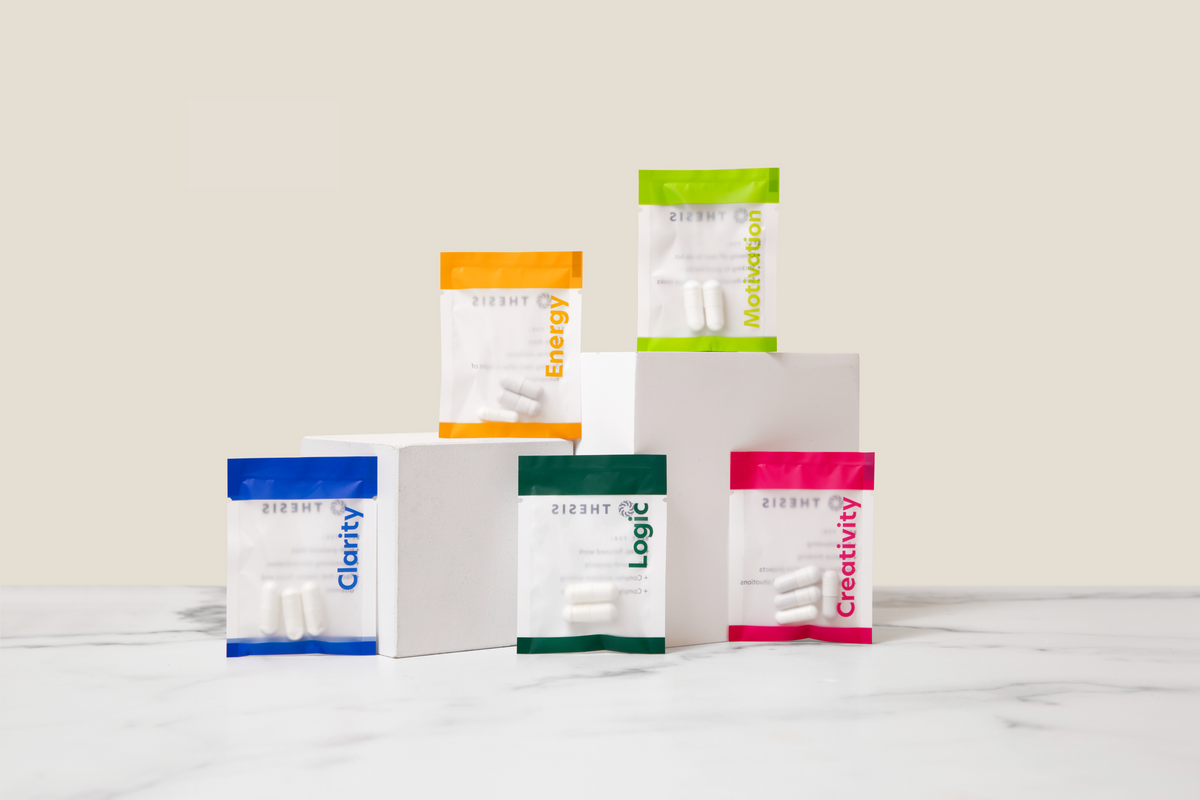
Most "best nootropics" lists rank products by price or star ratings — neither of which tells you whether an ingredient actually has human clinical evidence behind it. This article takes a different approach: we ranked the seven most common nootropic supplements for focus and memory by the number and quality of peer-reviewed human trials, so you can see exactly which ingredients have earned their reputation and which are riding on hype alone.
Whether you're battling afternoon brain fog, preparing for exams, or simply want sharper recall as you age, this evidence-first framework helps you spend your money on what the science actually supports in 2026.
What Are Nootropic Supplements and How Do They Work?
Nootropic supplements are compounds that may help support cognitive functions such as memory, focus, mental clarity, and processing speed.* The term "nootropic" was coined in 1972 by Romanian psychologist Corneliu Giurgea, who defined it as a substance that enhances learning while being neuroprotective with very low toxicity [1].
Modern natural nootropics work through several mechanisms:
- Neurotransmitter modulation — increasing acetylcholine, dopamine, or serotonin availability
- Cerebral blood flow — improving oxygen and nutrient delivery to the brain
- Neuroplasticity support — promoting nerve growth factor (NGF) and brain-derived neurotrophic factor (BDNF)*
- Stress hormone regulation — lowering cortisol to reduce the cognitive toll of chronic stress*
Not all mechanisms produce instant results. This is why we've separated ingredients below into "fast-acting" (minutes to hours) and "cumulative" (weeks to months) categories.
The 7 Best Nootropic Ingredients, Ranked by Clinical Evidence
We evaluated each ingredient on three criteria: total number of published human trials, study quality (randomised, double-blind, placebo-controlled), and consistency of positive results. Here's where they landed.
1. Bacopa Monnieri — Strongest Evidence for Memory
Bacopa monnieri tops our ranking with over 20 human clinical trials examining its effects on cognition. A 2014 meta-analysis in the Journal of Ethnopharmacology found that bacopa significantly improved attention, cognitive processing, and working memory across nine randomised controlled trials [2].
Effective dose: 300–600 mg daily (standardised to 50% bacosides)
Time to effect: 8–12 weeks (cumulative)
Best for: Long-term memory support and information retention*
2. L-Theanine — Best for Calm, Focused Attention
L-theanine, an amino acid found naturally in green tea, may help promote relaxed alertness without drowsiness.* A 2008 study published in Nutritional Neuroscience demonstrated that 50 mg of L-theanine increased alpha brain wave activity — the neural signature of calm focus — within 40 minutes of ingestion [3].
When paired with caffeine (as many nootropic stacks do), L-theanine may help smooth out jitteriness while preserving the alertness boost.* This combination has been studied in at least 11 human trials.
Effective dose: 100–200 mg daily
Time to effect: 30–60 minutes (fast-acting)
Best for: Immediate focus during work or study sessions*
3. Phosphatidylserine — Underrated for Age-Related Cognitive Support
Phosphatidylserine (PS) is a phospholipid that makes up about 15% of the brain's total phospholipid pool. A 2010 review in the journal Nutrition concluded that PS supplementation at 100–300 mg per day may help support memory, learning, and concentration, particularly in older adults experiencing age-related cognitive decline [4].
Effective dose: 100–300 mg daily
Time to effect: 6–12 weeks (cumulative)
Best for: Supporting cognitive function during ageing*
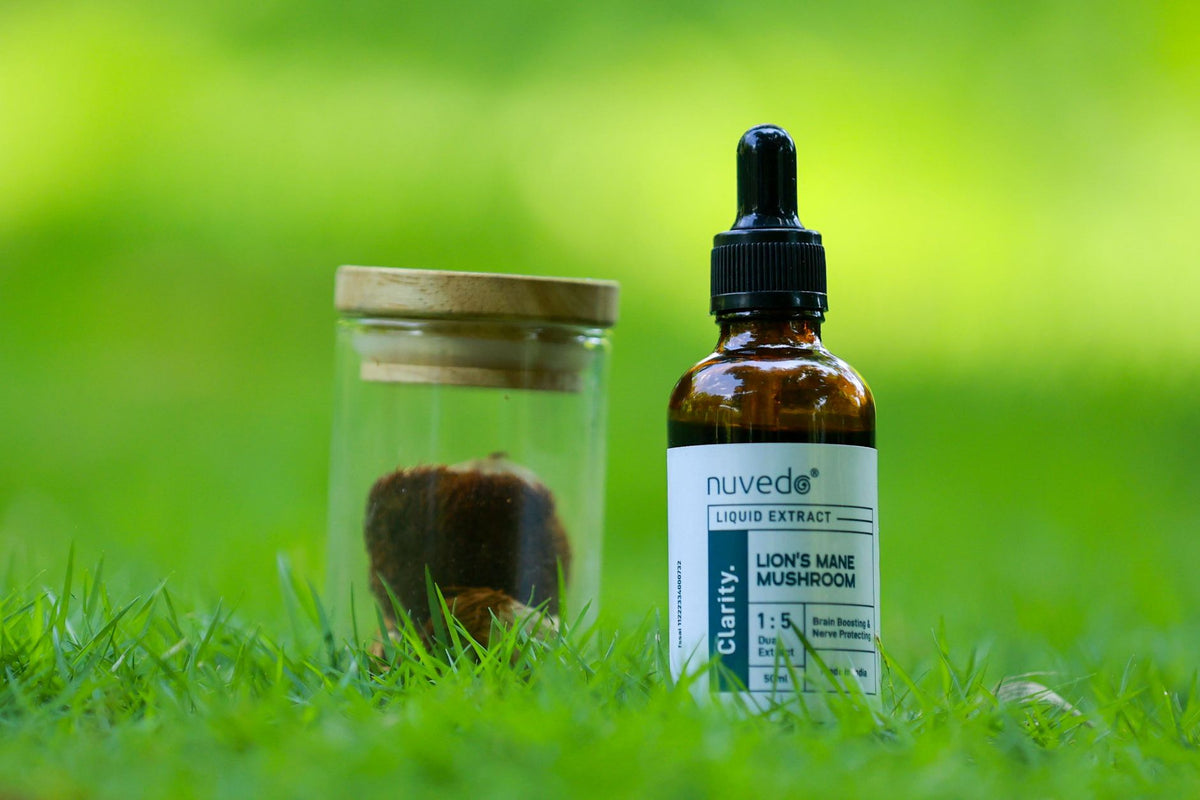
4. Lion's Mane Mushroom — Most Promising Neuroplasticity Research
Lion's mane (Hericium erinaceus) is the only culinary mushroom shown to stimulate nerve growth factor synthesis in laboratory studies. A 2009 Japanese trial found that older adults taking 3 g of lion's mane daily for 16 weeks scored significantly higher on cognitive function scales compared to placebo [5].
The human trial base is smaller than bacopa's (around 6–8 studies), but the neuroplasticity mechanism is unique and actively being investigated.
Effective dose: 500–3,000 mg daily
Time to effect: 8–16 weeks (cumulative)
Best for: Long-term brain health and neuroprotective support*
5. Rhodiola Rosea — Best Adaptogen for Mental Fatigue
Rhodiola rosea is an adaptogenic herb that may help reduce mental fatigue and support cognitive performance under stress.* A 2012 systematic review identified 11 placebo-controlled studies, most showing improvements in fatigue, attention, and mood during stressful conditions [6].
Effective dose: 200–600 mg daily (standardised to 3% rosavins)
Time to effect: 1–4 weeks
Best for: Cognitive resilience during high-stress periods*
6. Ginkgo Biloba — Oldest Nootropic, Mixed Modern Evidence
Ginkgo has been used for centuries and works primarily by improving cerebral blood flow. However, large-scale modern trials have produced inconsistent results. The 2008 GEM study (n=3,069) found no significant benefit for preventing cognitive decline in healthy older adults [7], though smaller studies have shown modest short-term attention improvements.
Effective dose: 120–240 mg daily
Time to effect: 4–6 weeks
Best for: Mild circulation-based focus support (evidence is mixed)*
7. Caffeine — Most Widely Used, Least Interesting
Caffeine is technically the world's most consumed nootropic, and its effects on alertness are well-documented. We rank it last not because it doesn't work — it clearly does — but because it has significant tolerance build-up, can disrupt sleep, and doesn't support long-term brain health. It works best when combined with L-theanine to offset side effects.*
Effective dose: 50–200 mg
Time to effect: 15–45 minutes (fast-acting)
Best for: Short-term alertness (with diminishing returns)
How to Choose the Right Nootropic for Your Needs
The best nootropic supplement for you depends on whether you need immediate focus or long-term cognitive support. Here's a practical decision framework:
- For immediate focus during work or exams: Look for L-theanine + caffeine combinations. Effects within 30–60 minutes.
- For better memory and recall over time: Bacopa monnieri (300 mg+) taken consistently for 8+ weeks.
- For stress-related brain fog: Rhodiola rosea, which specifically targets cognitive performance under cortisol load.*
- For age-related cognitive support: Phosphatidylserine and lion's mane, both targeting structural brain health.*
Many people benefit most from a multi-ingredient approach. Noobru Advantage combines several evidence-backed nootropic ingredients — including L-theanine and phosphatidylserine — in a single drinkable formula designed for daily convenience.* Rather than juggling five different capsules, a pre-formulated stack ensures complementary dosing.
What to Watch Out For When Buying Nootropic Supplements
Not all brain supplements are created equal. Before purchasing, check for these red flags:
- Proprietary blends — If a label says "cognitive blend 500 mg" without listing individual ingredient amounts, you can't verify whether dosages match clinical research.
- Unrealistic claims — Any product claiming to "cure brain fog" or "eliminate memory loss" is violating regulations and likely isn't trustworthy.
- Missing third-party testing — Look for products tested by independent labs for purity and potency.
- Unresearched ingredients — Trendy ingredients without human trials (like many "smart mushroom" blends) may have theoretical appeal but no proven benefit.
Transparent labelling with clinically studied dosages — like what you'll find on Noobru products — is always a positive sign.
Key Takeaways
- Bacopa monnieri has the deepest clinical evidence for memory support among natural nootropics in 2026.*
- L-theanine is the standout for fast-acting calm focus, especially paired with caffeine.*
- Cumulative ingredients (bacopa, lion's mane, phosphatidylserine) require 6–16 weeks of daily use — don't judge them after three days.
- Multi-ingredient stacks offer broader cognitive support than single-ingredient supplements.*
- Always verify that dosages on the label match the amounts used in clinical research.
Frequently Asked Questions
What is the most evidence-backed nootropic ingredient?
Bacopa monnieri currently has the strongest body of human clinical evidence for memory support, with multiple randomised controlled trials showing improvements in recall and information processing over 8–12 weeks of daily use.*
How long do nootropic supplements take to work?
Stimulant-type nootropics like caffeine and L-theanine can take effect within 30–60 minutes. Adaptogenic and neuroplasticity-focused ingredients like bacopa and lion's mane typically require 4–12 weeks of consistent daily use before noticeable benefits emerge.*
Are nootropic supplements safe?
Most well-studied nootropic ingredients like L-theanine, bacopa monnieri, and lion's mane have favourable safety profiles in clinical trials. However, interactions with medications are possible, so you should always consult your healthcare provider before starting any supplement.
Can you stack multiple nootropic ingredients together?
Yes. Many nootropic formulas combine complementary ingredients — for example, pairing L-theanine with caffeine for calm focus, or combining bacopa with phosphatidylserine for broader cognitive support.* Pre-formulated stacks like Noobru Advantage simplify dosing and reduce the risk of ingredient overlap.
What is the difference between natural and synthetic nootropics?
Natural nootropics are derived from plants, fungi, or amino acids — such as lion's mane, bacopa, and L-theanine. Synthetic nootropics like racetams are lab-created compounds. Natural options generally have longer safety track records and are available without prescription in the UK.
References
- Giurgea, C. (1972). "The nootropic concept and its prospective implications." Drug Development Research. PubMed
- Kongkeaw, C. et al. (2014). "Meta-analysis of randomized controlled trials on cognitive effects of Bacopa monnieri extract." Journal of Ethnopharmacology, 151(1), 528–535. PubMed
- Nobre, A.C. et al. (2008). "L-theanine, a natural constituent in tea, and its effect on mental state." Nutritional Neuroscience, 11(4), 193–198. PubMed
- Glade, M.J. & Smith, K. (2015). "Phosphatidylserine and the human brain." Nutrition, 31(6), 781–786. PubMed
- Mori, K. et al. (2009). "Improving effects of the mushroom Yamabushitake on mild cognitive impairment." Phytotherapy Research, 23(3), 367–372. PubMed
- Hung, S.K. et al. (2011). "The effectiveness and efficacy of Rhodiola rosea: a systematic review." Phytomedicine, 18(4), 235–244. PubMed
- DeKosky, S.T. et al. (2008). "Ginkgo biloba for prevention of dementia: a randomized controlled trial." JAMA, 300(19), 2253–2262. PubMed
Ready to try an evidence-backed nootropic stack?
Try Noobru Advantage → — a drinkable cognitive support formula with clinically studied ingredients including L-theanine and phosphatidylserine.*
*These statements have not been evaluated by the Food and Drug Administration or MHRA. This product is not intended to diagnose, treat, cure, or prevent any disease. Always consult your healthcare provider before starting any supplement regimen.


Leave a comment
All comments are moderated before being published.
This site is protected by hCaptcha and the hCaptcha Privacy Policy and Terms of Service apply.