




Best Sleep Aid Formats Compared: Why Nootropic Drinks Absorb Faster Than Capsules
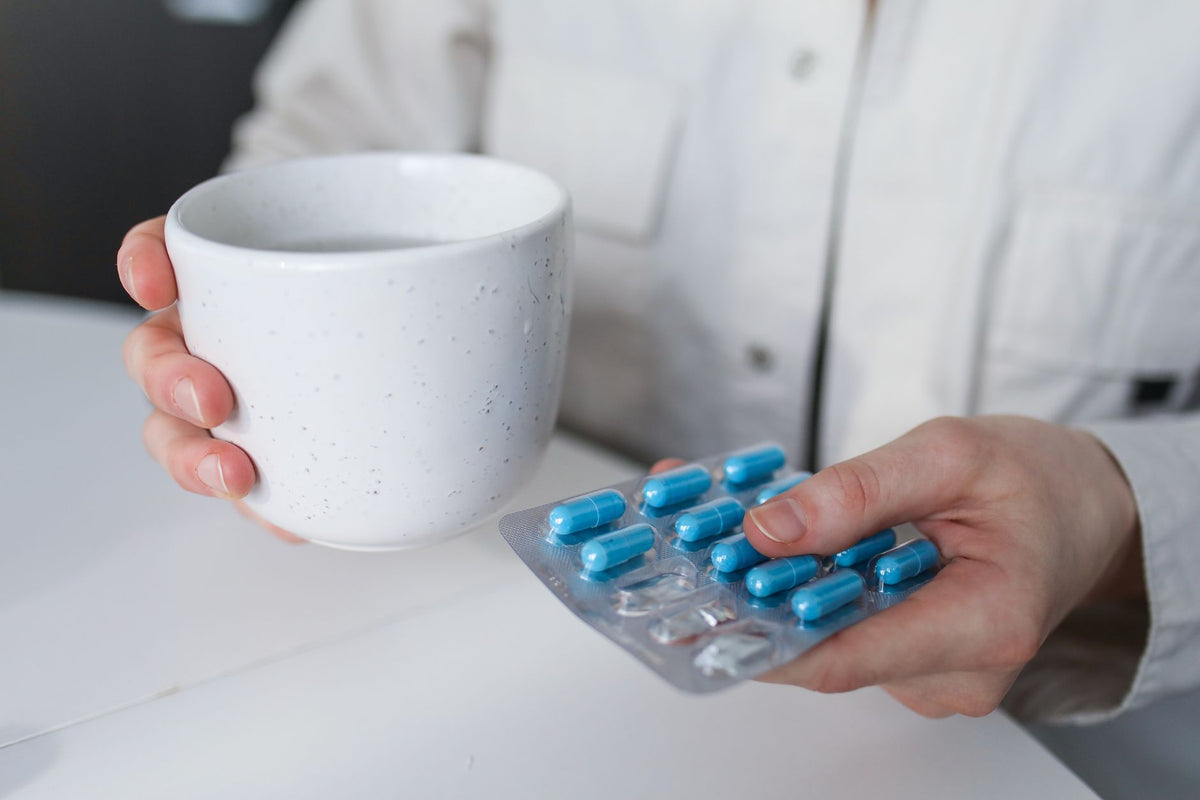
Most "best sleep aid" lists rank brands side by side. This article does something different: it compares delivery formats — drinkable nootropics versus capsules — because the format you choose changes how quickly a sleep aid actually starts working. Pharmacokinetic research shows that liquid supplements reach peak absorption 15–20 minutes faster than capsules, and that difference matters when you're trying to wind down at 10 PM, not midnight. Below, we break down the absorption data, identify which sleep-support ingredients gain the most from liquid delivery, and help you choose the best sleep aid format for your evening routine in 2026.

Why Your Sleep Aid's Format Matters as Much as Its Ingredients
A sleep aid can only help you wind down if its active ingredients reach your bloodstream. The percentage of an ingredient your body actually absorbs and uses is called bioavailability — think of it as the gap between what's on the label and what your body receives. Two people could take the same dose of L-theanine, one in a drink and one in a capsule, and absorb meaningfully different amounts.
This isn't theoretical. A widely cited study published in the Journal of Pharmaceutical Sciences found that liquid oral formulations delivered up to 98% bioavailability, while certain compressed tablets ranged between 39% and 53% (Löbenberg & Amidon, 2000). The reason is mechanical: a capsule must first dissolve in stomach acid before any ingredient can be absorbed, adding a delay of roughly 15–30 minutes. For a sleep aid you take at bedtime, that delay can be the difference between falling asleep at a reasonable hour and staring at the ceiling.
How Fast Do Drinkable Sleep Aids Absorb Compared to Capsules?
Drinkable sleep aids begin absorbing almost immediately because the active compounds are already dissolved in liquid. Here is how the three main formats typically compare:

- Drinkable nootropic powder (dissolved in water): Ingredients start reaching the bloodstream within 5–10 minutes; peak levels around 20–30 minutes.
- Standard capsule: The capsule shell dissolves in 15–30 minutes; peak levels around 45–60 minutes.
- Enteric-coated tablet: Designed to pass through stomach acid intact before dissolving in the small intestine; peak levels may take 60–90 minutes.
"Liquid delivery cuts out the rate-limiting dissolution step entirely," explains a 2020 review in Nutrients examining oral supplement bioavailability (Fernández-Lázaro et al., 2020). When you're choosing the best sleep aid for your nightly routine, that 15–20 minute head start can mean the difference between a supplement that supports relaxation before you close your eyes and one that kicks in after you've already been tossing and turning.
Which Sleep-Support Ingredients Benefit Most from Liquid Delivery?
Not every ingredient gains the same advantage from a drinkable format. Water-soluble compounds benefit the most because they dissolve fully and absorb rapidly through the gut lining. Here are the key ones for sleep support:
- L-theanine: An amino acid naturally found in green tea that may help promote calm relaxation*. A 2019 study in Nutritional Neuroscience showed L-theanine increased calming alpha brain waves within 30 minutes when taken in liquid form (Hidese et al., 2019). That's a meaningful advantage over capsules for evening use.
- Phosphatidylserine: A phospholipid (a type of fat molecule found in cell membranes) that may help regulate cortisol — the stress hormone that can keep you awake*. When pre-dissolved in a drink, it bypasses the slow disintegration of a hard capsule shell. Typically studied at 100–300 mg per day.
- B-vitamins (especially B6): Water-soluble vitamins that help support the production of melatonin and serotonin, both critical for healthy sleep-wake cycles*. A Cochrane review confirmed their role in homocysteine metabolism, a process linked to brain health and mood regulation (Forbes et al., 2015).
- Magnesium: A mineral that may help relax muscles and calm the nervous system*. Dissolved magnesium in a drink avoids the slower breakdown of compressed tablet forms, where bioavailability can vary significantly depending on the magnesium compound used.
- Choline (as CDP-choline): A precursor to the brain chemical acetylcholine, which is involved in the transition between wakefulness and sleep. Liquid delivery helps it reach the gut lining faster for absorption.
Fat-soluble compounds like ashwagandha root extract can also work in drinks, but they need an emulsifier (a substance that helps oil-based ingredients mix with water) or a fat source to dissolve properly. Always check labels for formulations that address this.
When Capsules Are Actually the Better Sleep Aid Choice
Liquid delivery isn't universally superior. Capsules have genuine strengths that make them the better choice in certain situations:
- Travel and convenience: No mixing, no glass, no mess. If you're staying in a hotel or flying, capsules are more practical.
- Taste-sensitive ingredients: Compounds like valerian root or Bacopa monnieri have a strong, bitter flavour. Capsules mask taste completely.
- Delayed-release formulations: Some ingredients, like certain probiotics, need to survive stomach acid. Enteric-coated capsules are designed for this — a drink format would destroy them.
- Precise dosing: Pre-measured capsules eliminate the risk of under-scooping or over-scooping powder, which matters for ingredients with narrow effective dose ranges.
The honest answer: if speed of absorption and bioavailability are your priorities — which they should be for a bedtime sleep aid — drinks have the edge. If portability and taste matter more, capsules are the practical choice.
How to Choose the Best Sleep Aid Drink in 2026
The drinkable supplement market has grown significantly, and quality varies widely. Use this checklist before buying any sleep-support drink:
- Transparent dosing: Every active ingredient should list its dose in milligrams on the label — not hidden inside a "proprietary blend" that obscures how much of each compound you're actually getting.
- Clinically studied ingredients at studied doses: Look for compounds with published human trials. For example, phosphatidylserine is typically studied at 100–300 mg/day, and L-theanine at 200–400 mg/day.
- No excessive sugar: Some nootropic drinks add 15–20 g of sugar per serving to improve taste. That sugar spike can actually disrupt sleep by raising blood glucose and cortisol levels — the opposite of what you want at bedtime.
- Caffeine-free formula: This sounds obvious, but some "cognitive support" drinks contain caffeine. Always check the label if you're using it as a sleep aid.
- Third-party testing: GMP (Good Manufacturing Practice) certification or independent lab testing confirms that what's on the label is actually in the product.
Noobru Advantage is a powdered nootropic drink that dissolves in water and delivers phosphatidylserine, choline, and seven B-vitamins in clinically informed doses — without caffeine or added sugar. While it's primarily formulated to help support focus and mental clarity*, its B6 and phosphatidylserine content also contribute to the biochemical pathways involved in healthy sleep regulation*. For a dedicated wind-down routine, it pairs well with a consistent bedtime and reduced screen exposure.
What the Research Actually Says: A Quick Summary
Rather than relying on marketing claims, here's what the published evidence supports:
| Factor | Drinkable Format | Capsule Format |
|---|---|---|
| Time to absorption onset | 5–10 minutes | 20–40 minutes |
| Time to peak blood levels | 20–30 minutes | 45–90 minutes |
| Bioavailability range | Up to 98% | 39–53% (compressed tablets) |
| Best for | Bedtime routines, fast-acting needs | Travel, bitter ingredients, delayed release |
Dr Michael Breus, a clinical psychologist specialising in sleep disorders, has noted that "the timing of supplement intake is nearly as important as the supplement itself" — a point that reinforces why faster-absorbing formats deserve consideration when choosing the best sleep aid for your needs.
Key Takeaways
- The best sleep aid isn't just about ingredients — delivery format determines how quickly those ingredients work.
- Nootropic drinks can reach peak absorption 15–20 minutes faster than capsules because the compounds are pre-dissolved.
- Liquid bioavailability can reach up to 98% versus 39–53% for some compressed tablets.
- Sleep-support ingredients like L-theanine, B6, magnesium, and phosphatidylserine benefit most from drink delivery.
- Capsules remain the better choice for travel, taste-sensitive ingredients, and delayed-release formulations.
- When choosing a drinkable sleep aid, prioritise transparent dosing, studied ingredients, zero caffeine, and minimal sugar.
If faster absorption and higher bioavailability matter to your bedtime routine, a well-formulated drinkable nootropic is the stronger choice for sleep support*. Try Noobru Advantage to experience the difference a drinkable format makes — or explore the full range to find the formula that fits your goals.
Frequently Asked Questions
What is the best sleep aid format for fast results?
Drinkable sleep aids typically reach peak absorption 15–20 minutes faster than capsules because the active ingredients are already dissolved, skipping the capsule-dissolution step in the stomach. This makes them the preferred format if you want support before you close your eyes, not after.
Are liquid sleep supplements more effective than pills?
In terms of absorption, generally yes. Research in the Journal of Pharmaceutical Sciences found liquid formulations can offer up to 98% bioavailability compared to 39–53% for some compressed tablets. However, effectiveness also depends on the specific ingredients and their doses.
What ingredients should the best sleep aid contain?
Evidence-backed sleep-support ingredients include L-theanine (200–400 mg), phosphatidylserine (100–300 mg), magnesium, and vitamin B6. Look for clinically studied doses listed transparently on the label, not hidden in proprietary blends.
Can I take a nootropic sleep drink every night?
Most nootropic sleep drinks made with well-studied ingredients at safe doses are designed for nightly use. Always follow the manufacturer's guidance and consult your healthcare provider if you take medication or have a diagnosed sleep disorder.
Do nootropic sleep drinks contain caffeine?
Quality sleep-focused nootropic drinks are caffeine-free. Noobru Advantage, for example, relies on phosphatidylserine, choline, and B-vitamins for cognitive support* without any stimulants that could interfere with sleep.
References
- Löbenberg, R. & Amidon, G.L. (2000). "Modern bioavailability, bioequivalence and biopharmaceutics classification system." Journal of Pharmaceutical Sciences, 89(1), 18–31. PubMed
- Fernández-Lázaro, D. et al. (2020). "An update on oral nutritional supplement bioavailability." Nutrients, 12(5), 1443. PubMed
- Forbes, S.C. et al. (2015). "Effect of B-vitamins on cognitive function." Cochrane Database of Systematic Reviews. PubMed
- Hidese, S. et al. (2019). "Effects of L-theanine on attention and reaction time." Nutritional Neuroscience, 22(1), 1–11. PubMed
*These statements have not been evaluated by the Food and Drug Administration or MHRA. This product is not intended to diagnose, treat, cure, or prevent any disease. If you have a diagnosed sleep disorder such as insomnia or sleep apnoea, consult your GP or healthcare provider before starting any supplement regimen. Supplements are not a replacement for medical treatment.


Leave a comment
All comments are moderated before being published.
This site is protected by hCaptcha and the hCaptcha Privacy Policy and Terms of Service apply.