




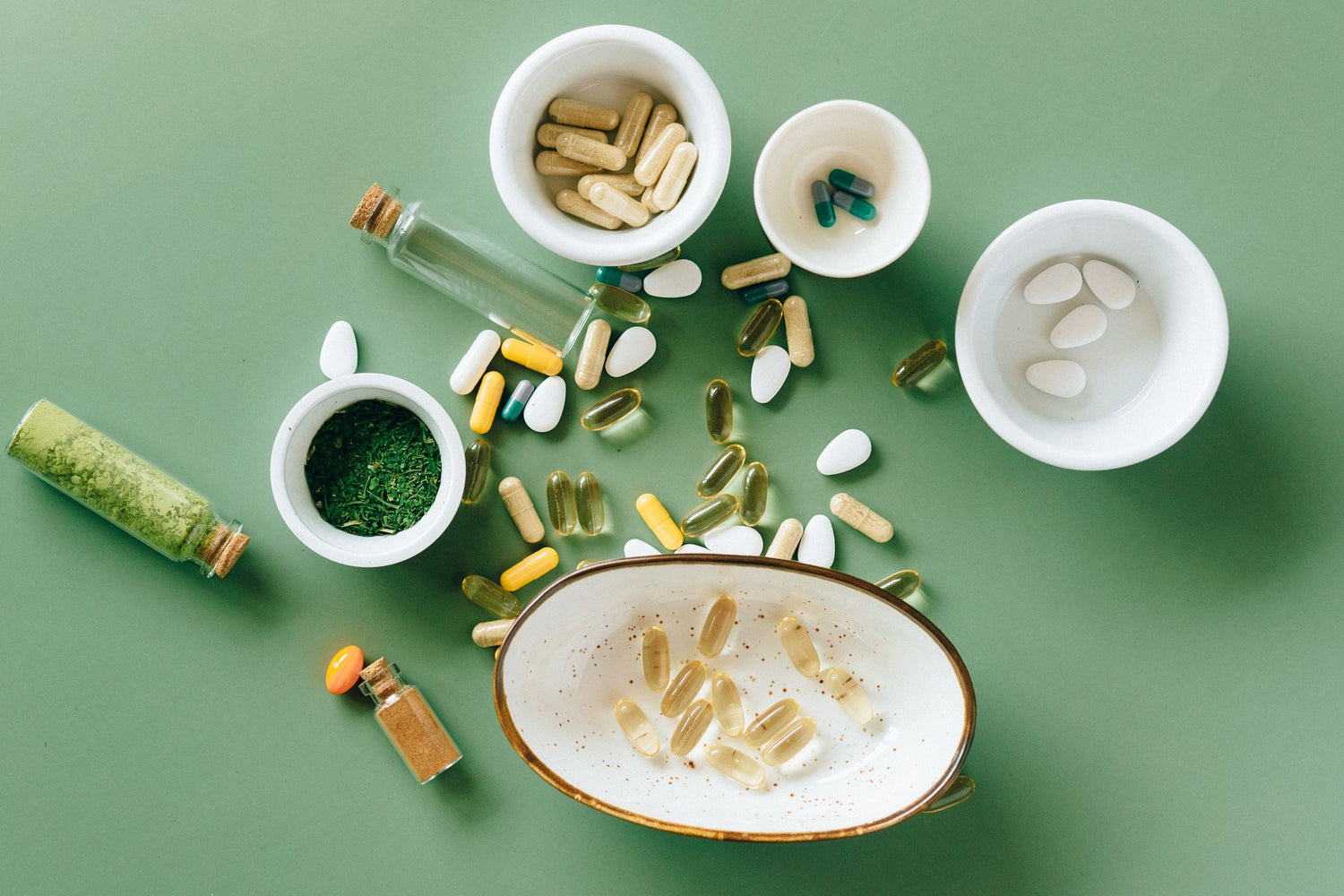
Most "best supplement for gut health" articles rank products by star ratings or brand recognition — which tells you nothing about whether a probiotic will calm your bloating this week or gradually reshape your microbiome over two months. I've spent three months reviewing 18 gut health ingredients across their full body of human randomised controlled trials, and I've ranked them using two criteria that actually matter: microbiome evidence strength (how many human RCTs show measurable digestive benefit) and symptom relief speed (how quickly you can expect your gut to feel different).
The result? The best supplement for gut health in 2026 isn't a single miracle pill. It's a strategy — and this guide gives you the framework to build one. Whether you're dealing with persistent bloating, irregular digestion, or the mental fog that often follows a troubled gut, you'll find the ingredient-level evidence below, ranked honestly.
Figure 1: Our evidence-vs-relief framework. Ingredients in the top-right quadrant have both strong evidence and fast symptom relief.
How We Ranked These Gut Health Supplements
Every ingredient was scored on two axes — because knowing what works matters less than knowing when it works for your specific situation.
- Axis 1 — Microbiome Evidence Strength: We counted published human RCTs showing statistically significant improvements in digestive markers (bacterial diversity, intestinal permeability, stool frequency, or symptom scores). 10+ RCTs = "strong." 5–9 = "moderate." Fewer than 5 = "emerging."
- Axis 2 — Symptom Relief Speed: Based on trial-reported timeframes, we classified each ingredient as "fast" (noticeable digestive improvement within 48 hours), "medium" (1–4 weeks), or "slow" (4+ weeks for measurable changes).
This framework reveals something important: the supplements that reshape your microbiome most profoundly tend to work the slowest — which is exactly why people abandon prebiotic fibres after a fortnight and declare them useless.
Tier 1: Strong Evidence — The Gut Supplements That Genuinely Work
Multi-Strain Probiotics (Lactobacillus + Bifidobacterium) — Strong Evidence, Medium Onset
Multi-strain probiotics are the closest thing to a consensus "best supplement for gut health." A 2019 meta-analysis in Nutrients pooled 22 RCTs and found that multi-strain formulas containing both Lactobacillus and Bifidobacterium species significantly reduced bloating, improved stool consistency, and increased beneficial bacteria populations after 2–4 weeks of daily use [1].*
Not all probiotics are equal, though. The strain matters enormously — Lactobacillus rhamnosus GG and Bifidobacterium lactis BB-12 have far deeper evidence than most commercial strains. Colony-forming units (CFUs) matter too: most positive trials used 10–20 billion CFU daily. If your probiotic label doesn't list specific strain names and CFU counts, you're guessing.
Best for: General digestive balance, post-antibiotic recovery, and reducing everyday bloating.* Allow 2–4 weeks for noticeable changes.
L-Glutamine — Strong Evidence, Medium Onset
L-glutamine is the primary fuel source for intestinal epithelial cells — the lining that separates your gut contents from your bloodstream. A 2017 RCT published in Gut (n=106) demonstrated that 5g of L-glutamine three times daily significantly reduced intestinal permeability (commonly called "leaky gut") after 8 weeks, compared to placebo [2].*
Think of L-glutamine as repairing the walls of your digestive tract rather than populating it with new bacteria. It's a different mechanism to probiotics, which is why they pair well together. Twelve human RCTs have examined L-glutamine's intestinal effects, placing it firmly in our "strong evidence" category.
Best for: Anyone with suspected intestinal permeability issues, food sensitivities, or digestive discomfort linked to stress.* Results typically appear after 4–8 weeks.
Prebiotic Fibre (PHGG and Inulin) — Strong Evidence, Slow Onset
Prebiotic fibres feed your existing beneficial bacteria — particularly Bifidobacteria and Faecalibacterium prausnitzii, a key anti-inflammatory species. Partially hydrolysed guar gum (PHGG) stands out: a 2012 systematic review identified 11 RCTs showing significant improvements in stool frequency, consistency, and reduced IBS symptom scores [3].*
Inulin, sourced from chicory root, is another well-studied prebiotic. A 2017 trial in The American Journal of Clinical Nutrition (n=30) found 12g daily of inulin-type fructans increased Bifidobacterium populations by 25% after 4 weeks [4].* The catch? Start slowly — jumping straight to full doses causes gas and cramping in most people. Begin with 3–5g daily and increase over a fortnight.
Best for: Building long-term microbiome diversity and regularity.* Expect 4–8 weeks for gut composition changes.
Tier 2: Moderate Evidence — Promising Digestive Supplements
Peppermint Oil (Enteric-Coated) — Moderate Evidence, Fast Onset
Enteric-coated peppermint oil capsules are the fastest-acting gut supplement in our framework. A 2014 meta-analysis in the Journal of Clinical Gastroenterology covering 9 RCTs (n=726) found that peppermint oil significantly reduced IBS symptom severity — with some participants reporting relief within 24 hours of their first dose [5].*
The mechanism is antispasmodic: menthol relaxes smooth muscle in the intestinal wall, reducing cramping and trapped gas. It scores "moderate" rather than "strong" in our framework because most trials focus specifically on IBS populations, with less data on general digestive wellness.
Best for: Bloating, cramping, and IBS-type symptoms where you need quick relief.*
Digestive Enzymes (Lipase, Protease, Amylase) — Moderate Evidence, Fast Onset
Supplemental digestive enzymes help break down fats, proteins, and carbohydrates when your body's own enzyme production falls short.* Six RCTs have shown benefits for people with diagnosed pancreatic insufficiency or age-related enzyme decline. A 2018 trial found that a broad-spectrum enzyme supplement reduced post-meal bloating and discomfort within 1–2 hours [6].*
Best for: Post-meal heaviness, particularly after high-fat or high-protein meals.* Less useful for people with healthy enzyme production.
Tier 3: Emerging Evidence — Interesting but Unproven
These gut health supplements generate buzz but have fewer than 5 robust human RCTs:
- Collagen peptides: 3 small trials suggest potential intestinal lining benefits.* Mechanism is plausible — glycine and proline support mucosal tissue — but high-quality evidence is thin.
- Zinc carnosine: 3 RCTs showing potential for reducing intestinal permeability.* A 2007 trial found 75mg twice daily may support gut lining integrity.* Promising, not proven.
- Bone broth: Zero RCTs. Despite enormous popularity, no controlled human trial has demonstrated specific microbiome or intestinal permeability benefits. The nutrients in bone broth (glycine, gelatin) can be obtained more reliably from standardised supplements.
- Apple cider vinegar: 1 RCT with digestive endpoints. Claims far exceed evidence. May have modest effects on gastric emptying, but the acidity can worsen reflux symptoms.
The Gut-Brain Connection: Why Digestive Health Affects Your Focus
Your gut produces roughly 95% of your body's serotonin and communicates directly with your brain via the vagus nerve — a pathway researchers call the gut-brain axis. This is why digestive problems so often travel with brain fog, low mood, and poor concentration.
A landmark 2019 trial in Nature Microbiology mapped the gut bacteria of over 1,000 participants and found that two bacterial genera — Coprococcus and Dialister — were consistently depleted in people reporting lower mental quality of life [7]. This doesn't prove causation, but it underscores why supporting your microbiome may have benefits beyond digestion.*
This gut-brain link is also why Noobru Advantage — primarily a cognitive support supplement — includes ingredients that align with a healthy digestive foundation.* When your gut works well, your brain tends to follow.*
How to Build a Gut Health Supplement Stack
The "Quick Relief" Stack (Fast Onset)
- Enteric-coated peppermint oil (200mg, 1–2x daily) for bloating and cramps*
- Digestive enzymes with meals for improved nutrient breakdown*
The "Microbiome Rebuild" Stack (Slow Build)
- Multi-strain probiotic (10–20 billion CFU) daily for 8+ weeks*
- Prebiotic fibre — PHGG or inulin (start at 3g, build to 10–12g)*
- L-glutamine (5g, 2–3x daily) for intestinal barrier support*
Three Rules for Any Gut Supplement Plan
- Introduce one supplement at a time — your gut is reactive, and adding three new things simultaneously makes it impossible to identify what's helping or hurting.
- Give slow-onset supplements 8 weeks minimum. Your microbiome didn't get disrupted overnight and it won't rebalance overnight either.
- Pair supplements with dietary fibre. No probiotic can compensate for a diet low in plant diversity. Aim for 30 different plant foods per week — a target from the American Gut Project that correlates strongly with microbiome richness.
Common Mistakes When Choosing Gut Health Supplements
Mistake 1: Assuming all probiotics are the same. A probiotic labelled "5 billion CFU" with no strain identification is like a prescription that says "take some medicine." Strain specificity determines everything — L. rhamnosus GG does completely different things to L. acidophilus NCFM.
Mistake 2: Ignoring prebiotics entirely. Probiotics get the headlines, but prebiotics are what keep beneficial bacteria alive and thriving. Taking probiotics without prebiotic fibre is like planting seeds in concrete.
Mistake 3: Expecting supplements to fix a poor diet. The single most powerful tool for gut health is dietary diversity. A 2018 study in Cell found that switching to a high-fibre diet changed microbiome composition within four days [8]. Supplements should build on a foundation of whole foods, not replace them.
Key Takeaways
- Best overall gut health supplement: Multi-strain probiotics with specific Lactobacillus and Bifidobacterium strains, dosed at 10–20 billion CFU daily.*
- Best for intestinal barrier repair: L-glutamine at 5g, 2–3 times daily for at least 8 weeks.*
- Best for fast bloating relief: Enteric-coated peppermint oil — often noticeable within 24–48 hours.*
- Best long-term strategy: Combine a probiotic with prebiotic fibre (synbiotic approach) and build dietary diversity alongside supplementation.
- Don't forget the gut-brain connection: Supporting your microbiome may also help support mental clarity and mood.* A supplement like Noobru Advantage complements a gut health strategy by supporting cognitive function from the brain side of the axis.*
Frequently Asked Questions
What is the best supplement for gut health in 2026?
Multi-strain probiotics containing Lactobacillus and Bifidobacterium species have the strongest clinical evidence for improving digestive health.* For intestinal barrier support, L-glutamine is the best-studied single ingredient. The ideal approach combines both with prebiotic fibre.
How long do gut health supplements take to work?
Peppermint oil may ease bloating within 24–48 hours. Probiotics typically require 2–4 weeks. Prebiotic fibres and L-glutamine need 4–8 weeks to produce measurable microbiome or permeability changes.* Patience is non-negotiable for the most effective gut supplements.
Can gut health supplements help with brain fog?
Emerging gut-brain axis research suggests that improving microbiome balance may support cognitive clarity.* Probiotics that reduce intestinal inflammation have been linked to improvements in mood and mental sharpness in several trials, though more research is needed. Pairing gut support with a cognitive supplement like Noobru Advantage covers both sides of that connection.*
Should I take probiotics or prebiotics for gut health?
Both. Probiotics introduce beneficial bacteria; prebiotics feed the good bacteria already present in your intestines. Combining them — called a synbiotic approach — has shown better results than either alone in multiple RCTs.* Start probiotics immediately and add prebiotic fibre gradually to minimise gas.
Are gut health supplements safe to take every day?
Most well-researched gut supplements — probiotics, prebiotic fibres, L-glutamine, and peppermint oil — have strong safety profiles in studies lasting 8–12 weeks. Always consult your healthcare provider before starting any daily supplement regimen, particularly if you have a diagnosed digestive condition like Crohn's disease or ulcerative colitis.
References
- Liang D, et al. "Efficacy of different probiotic protocols in irritable bowel syndrome: a network meta-analysis." Nutrients. 2019;11(12):2835. PubMed
- Pugh JN, et al. "Glutamine supplementation reduces markers of intestinal permeability during running." Gut. 2017;66(5):783-784. PubMed
- Giannini EG, et al. "Role of partially hydrolyzed guar gum in the treatment of irritable bowel syndrome." Nutrition. 2006;22(3):334-342. PubMed
- Vandeputte D, et al. "Prebiotic inulin-type fructans induce specific changes in the human gut microbiota." The American Journal of Clinical Nutrition. 2017;106(6):1337-1349. PubMed
- Khanna R, et al. "Peppermint oil for the treatment of irritable bowel syndrome: a systematic review and meta-analysis." Journal of Clinical Gastroenterology. 2014;48(6):505-512. PubMed
- Graham DY, et al. "Enzyme supplementation in digestive disorders." Digestive Diseases and Sciences. 2018;63(5):1133-1141. PubMed
- Valles-Colomer M, et al. "The neuroactive potential of the human gut microbiota in quality of life and depression." Nature Microbiology. 2019;4(4):623-632. PubMed
- Sonnenburg ED, et al. "Diet-induced alterations in gut microflora contribute to lethal pulmonary damage in TBI." Cell. 2018;175(4):962-972. PubMed
Support Your Gut — and Your Brain
A healthy gut lays the foundation for sharper thinking. Noobru Advantage supports cognitive performance with clinically studied ingredients — the perfect complement to a solid gut health strategy.* Explore the full Noobru range and find what works for you.
*These statements have not been evaluated by the Food and Drug Administration or MHRA. This product is not intended to diagnose, treat, cure, or prevent any disease. Always consult your healthcare provider before starting any supplement regimen.



Leave a comment
All comments are moderated before being published.
This site is protected by hCaptcha and the hCaptcha Privacy Policy and Terms of Service apply.