




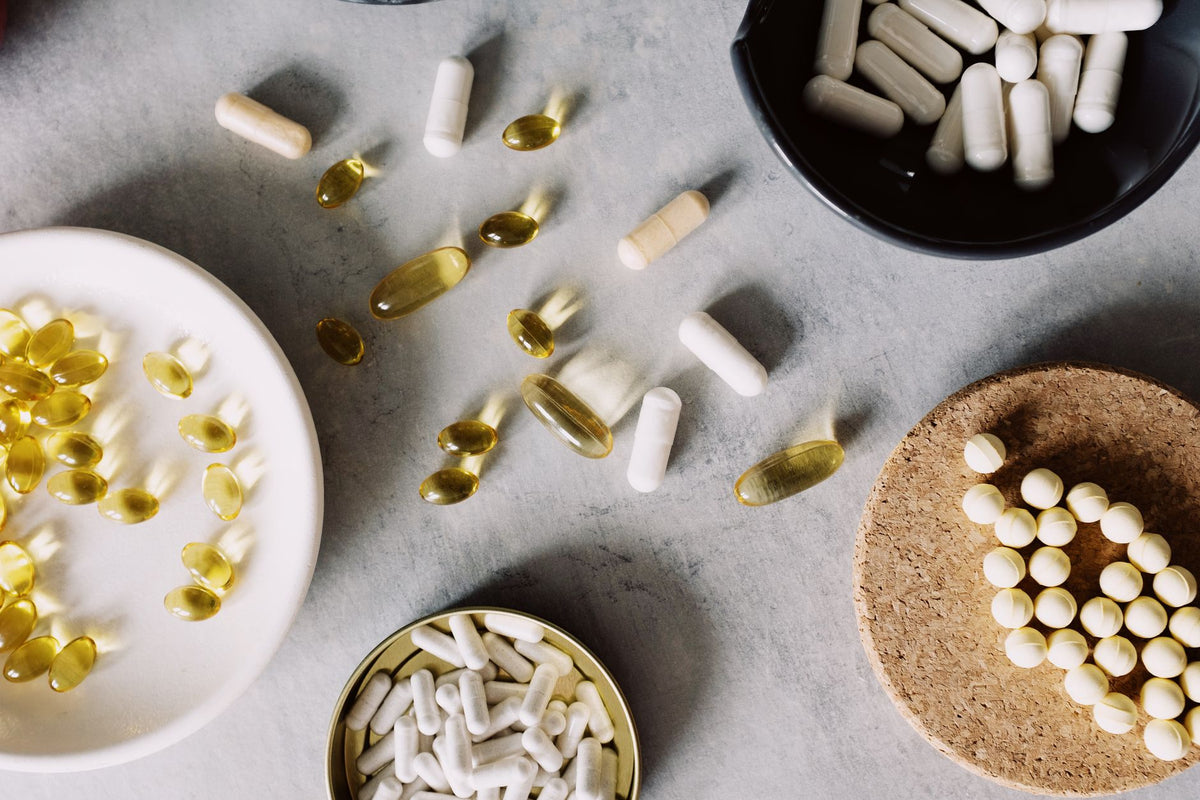
Brain Booster Supplements: 6 Ingredients Ranked by Clinical Evidence in 2026
A brain booster supplement is only as good as the ingredients on its label — and, more specifically, whether those ingredients are dosed at levels that clinical trials have actually tested. Most "top ten nootropic" lists treat every ingredient as equal, but the reality is that the evidence varies enormously. Citicoline has robust MRI-backed data; some popular extracts have little more than rodent studies behind them.
This guide ranks six of the most common nootropic supplement ingredients by the quality and consistency of their human clinical trial evidence — from the strongest to the most preliminary. Use it to audit any brain health supplement you're considering in 2026, whether that's a single-ingredient capsule or a multi-compound stack.
Transparency note: Noobru manufactures cognitive support supplements, and some of the ingredients ranked below appear in our formulas. We've included products from our range where relevant, but the evidence tiers and clinical data referenced are drawn from independent, peer-reviewed research. All benefit claims are marked with an asterisk (*) and should not be interpreted as medical advice. Read our editorial policy →
Why "Brain Booster Supplement" Has Become the Most Confusing Category in Wellness
The global nootropic supplement market is projected to exceed $6 billion by 2028, and with that growth has come a flood of products making vague promises about "unlocking your cognitive potential." The problem is not that nootropics are worthless — some ingredients have genuinely impressive clinical data. The problem is that most consumers have no framework for separating strong evidence from marketing noise.
Three issues plague the brain booster supplement category:
- Proprietary blends: Many products list a "cognitive blend" or "focus matrix" without disclosing individual ingredient doses. This makes it impossible to know whether you're getting a clinical dose or a token dusting.
- Rodent-only evidence: Some popular ingredients (like certain mushroom extracts) have compelling preclinical data but very few rigorous human trials at standardised doses.
- Dose mismatch: An ingredient studied at 300mg per day may appear on a label at 50mg — technically present, functionally irrelevant.
The ranking below addresses all three issues by focusing exclusively on ingredients with published human clinical trials and by specifying the doses those trials used. For a broader overview of how evidence-based supplement evaluation works, Examine.com's nootropic research database is an excellent independent resource.
Tier 1: Strong Clinical Evidence
1. Citicoline — The Gold Standard for Measurable Brain Changes
Citicoline (CDP-choline) provides two compounds your brain needs: choline, a precursor to the neurotransmitter acetylcholine, and cytidine, which converts to uridine to support synaptic plasticity and neuronal membrane repair. What sets citicoline apart from most nootropic ingredients is that its effects have been observed not just on cognitive tests but on brain imaging.
A 2012 randomised, double-blind trial published in Food and Nutrition Sciences found that citicoline supplementation at 250mg and 500mg daily improved attention and psychomotor speed while increasing frontal lobe ATP concentrations visible on phosphorus MRI spectroscopy (Silveri et al., 2008 — PubMed).* That kind of objective, measurable change is rare in supplement research. The clinically studied dose is 250–500mg daily.
What to check on any label: Look for "citicoline" or "CDP-choline" — not generic "choline." Ensure the dose is at least 250mg. Citicoline appears in Noobru Sprint, our pre-workout nootropic formula.
2. Bacopa Monnieri — The Best-Studied Ingredient for Memory
Bacopa monnieri is an Ayurvedic herb with one of the longest track records in nootropic research. It works by modulating acetylcholine and serotonin pathways, while its active compounds — bacosides A and B — provide antioxidant protection for neurons.* A 2014 meta-analysis of nine randomised controlled trials concluded that Bacopa produced "significant improvement in memory free recall" (Kongkeaw et al., 2014 — PubMed).*
The critical caveat: Bacopa is slow. Most studies showing significant results used 300–600mg daily (standardised to 55% bacosides) over 8–12 weeks. If a product promises instant focus from Bacopa alone, that claim doesn't align with the clinical timeline. The NIH Office of Dietary Supplements provides additional context on how cholinergic pathways — which Bacopa modulates — relate to cognitive health.
3. L-Theanine (Especially Combined with Caffeine)
L-theanine, an amino acid found naturally in green tea, promotes alpha brain wave activity — the brain state associated with calm, focused alertness.* On its own, it's a respectable anxiolytic. Paired with caffeine, however, it becomes one of the best-studied nootropic combinations in the literature.
A 2008 study published in Nutritional Neuroscience found that combined L-theanine and caffeine "improved both speed and accuracy of performance of the attention-switching task" compared to either compound alone (Owen et al., 2008 — PubMed).* The pairing works because L-theanine modulates GABA, serotonin, and dopamine to counteract the jitteriness caffeine can cause, while caffeine provides the alertness boost.
Clinical dose: 100–200mg L-theanine paired with 50–100mg caffeine. This combination appears in Noobru Advantage (200mg L-theanine) and Noobru Pro (L-theanine paired with 40mg caffeine).
4. Rhodiola Rosea — Stress-Driven Mental Fatigue
Rhodiola rosea is an adaptogen that acts on the hypothalamic-pituitary-adrenal (HPA) axis to regulate cortisol and adrenaline responses.* It also increases serotonin and dopamine availability and stimulates AMPK, a key enzyme in cellular energy production.* A 2012 comprehensive review in BMC Complementary and Alternative Medicine pooled evidence from multiple trials and confirmed significant anti-fatigue effects (Hung et al., 2011 — PubMed).*
The clinical dose is 200–600mg daily, standardised to 3% rosavins and 1% salidroside. Rhodiola is particularly relevant if your cognitive difficulties are stress-related rather than age-related — it addresses the cause of brain fog (excessive cortisol) rather than just the symptom.
Tier 2: Moderate but Promising Evidence
5. Phosphatidylserine — Neuronal Membrane Support
Phosphatidylserine is a phospholipid that forms a critical component of neuronal cell membranes. It may help support neurological function and modulate the stress response.* While early research (often using bovine-derived phosphatidylserine) showed promising cognitive benefits in older adults, more recent trials using soy-derived forms have been less consistent.
That said, phosphatidylserine remains one of the few nootropic ingredients with a qualified health claim reviewed (though ultimately rejected for lack of sufficient evidence) by the US FDA, which at minimum signals the ingredient was taken seriously enough for regulatory scrutiny. Healthline's phosphatidylserine overview provides a balanced summary of the current evidence base. Common supplement doses range from 50–100mg daily.
6. Alpha GPC — Choline Delivery for Acetylcholine Synthesis
Alpha GPC (alpha-glycerylphosphorylcholine) is a choline compound that crosses the blood-brain barrier efficiently to increase acetylcholine production and neuronal membrane fluidity.* Research has explored its effects on both cognitive and physical performance (Bellar et al., 2015 — PubMed), though much of the strongest data comes from studies on age-related cognitive decline rather than healthy young adults.
Doses in clinical research typically range from 300–600mg daily, though some formulas include lower amounts (100–150mg) as part of a broader nootropic stack.
How to Evaluate Any Brain Booster Supplement Label
Armed with the evidence tiers above, here's a practical checklist you can apply to any cognitive enhancement supplement:
| Criterion | What to Look For | Red Flag |
|---|---|---|
| Ingredient transparency | Every ingredient listed with its dose in mg | "Proprietary blend" with only a total weight |
| Clinical dosing | Doses matching published trial protocols | Token amounts far below studied doses |
| Evidence tier | At least 1–2 Tier 1 ingredients at full dose | Entirely Tier 2 or unproven ingredients |
| Standardisation | Herbal extracts standardised to active compounds | Generic "powder" with no standardisation |
| Third-party testing | Purity/potency verified by independent lab | No mention of testing or certifications |
| Realistic claims | Uses "may support" or "helps with" language | "Cures brain fog" or "guaranteed results" |
This checklist works regardless of brand. If a product passes all six criteria, it's worth researching further. If it fails on transparency or dosing, move on — no matter how slick the marketing.
How Noobru's Formulas Map to These Evidence Tiers
We designed Noobru's cognitive support products around the principle that every ingredient should be present at a dose the research actually supports — no proprietary blends, no fairy-dusting. Here's how our brain-focused formulas stack up against the criteria above:
- Noobru Advantage — Our focus and memory formula includes 200mg L-theanine, 200mcg Huperzine A, 50mg phosphatidylserine, and 120mg ashwagandha. Every dose is printed on the sachet.*
- Noobru Pro — Combines 200mg Rhodiola rosea, 150mg Alpha GPC, 500mg Acetyl L-Carnitine, and the L-theanine–caffeine pairing at studied ratios.*
- Noobru Sprint — Includes citicoline, 100mg caffeine paired with L-theanine, and 1,253mg taurine for both mental and physical performance.*
All three are drinkable — a format that generally offers faster absorption than tablets or capsules — and come in single-serve sachets with full ingredient transparency.
Frequently Asked Questions
What is a brain booster supplement?
A brain booster supplement — also called a nootropic — is a dietary product containing ingredients that may help support cognitive functions such as memory, focus, and mental clarity.* Most evidence-backed formulas include compounds like citicoline, Bacopa monnieri, or L-theanine at clinically studied doses.
Do brain booster supplements actually work?
Some individual ingredients have solid clinical evidence behind them. Citicoline, Bacopa monnieri, and L-theanine paired with caffeine have all shown measurable cognitive improvements in peer-reviewed human trials. However, many products under-dose these ingredients or rely on compounds with limited data, so label scrutiny is essential.
How long does it take for a nootropic supplement to work?
It depends on the ingredient. L-theanine and caffeine combinations may improve attention within 30–60 minutes. Bacopa monnieri typically requires 8–12 weeks of daily use before memory benefits appear in clinical studies. Rhodiola rosea falls somewhere in between, with effects on mental fatigue observed within days to weeks.
Are brain booster supplements safe?
Most well-formulated nootropic supplements are generally well tolerated at recommended doses. However, ingredients can interact with medications — particularly those affecting neurotransmitters or blood pressure. Always consult your GP or healthcare provider before starting any supplement, especially if you take prescription medication.
What should I look for on a brain booster supplement label?
Look for clinically studied doses of named ingredients — not proprietary blends that hide individual amounts. Check for third-party purity testing, and verify that the product lists each ingredient's dose in milligrams. Avoid products with long lists of under-dosed compounds, as they are unlikely to deliver meaningful results.
Key Takeaways
- Not all brain booster supplement ingredients are backed by equal evidence. Citicoline, Bacopa monnieri, L-theanine (with caffeine), and Rhodiola rosea have the strongest human trial data.
- Dose matters as much as ingredient selection — an under-dosed compound is functionally useless regardless of how impressive the research looks at higher doses.
- Avoid proprietary blends. If a product won't tell you how much of each ingredient it contains, assume the worst.
- Consider your specific need: stress-driven brain fog points towards adaptogens like Rhodiola; age-related memory concerns favour Bacopa and phosphatidylserine; acute focus needs suit L-theanine plus caffeine.
- Any reputable brain booster supplement will use hedged language ("may support," "helps with") — aggressive cure-all claims are a red flag, not a sign of confidence.
Want a brain booster supplement that lists every ingredient and dose on the label? Noobru's drinkable nootropic formulas are designed around clinically studied doses — no proprietary blends, no guesswork.
Try Noobru risk-free with our 90-day money-back guarantee →References
- Silveri MM, et al. Citicoline enhances frontal lobe bioenergetics as measured by phosphorus magnetic resonance spectroscopy. NMR in Biomedicine. 2008;21(10):1066-75. PubMed
- Kongkeaw C, et al. Meta-analysis of randomized controlled trials on cognitive effects of Bacopa monnieri extract. Journal of Ethnopharmacology. 2014;151(1):528-35. PubMed
- Owen GN, et al. The combined effects of L-theanine and caffeine on cognitive performance and mood. Nutritional Neuroscience. 2008;11(4):193-8. PubMed
- Hung SK, et al. The effectiveness and efficacy of Rhodiola rosea L.: a systematic review of randomized clinical trials. Phytomedicine. 2011;18(4):235-44. PubMed
- Bellar D, et al. The effect of 6 days of alpha glycerylphosphorylcholine on isometric strength. Journal of the International Society of Sports Nutrition. 2015;12:42. PubMed
- Choline — Fact Sheet for Health Professionals. National Institutes of Health, Office of Dietary Supplements. NIH ODS
*These statements have not been evaluated by the Food and Drug Administration or MHRA. This product is not intended to diagnose, treat, cure, or prevent any disease. Always consult your healthcare provider before starting any supplement regimen.

Leave a comment
All comments are moderated before being published.
This site is protected by hCaptcha and the hCaptcha Privacy Policy and Terms of Service apply.