




Most nootropic guides rank brain-boosting compounds by vague labels like "best for focus" or "most effective." That tells you almost nothing about when you'll actually feel a difference. This article takes a different approach: we ranked five of the most popular brain-boosting compounds by a single, pharmacokinetically measurable criterion — the time it takes each one to cross the blood-brain barrier and reach peak plasma concentration.
Whether you need sharper thinking in 30 minutes for a presentation or sustained cognitive support over months of study, knowing absorption speed helps you pick the right compound for the right moment. Here's what the clinical data actually shows in 2026.
Why Absorption Speed Matters More Than Dosage
A compound's absorption speed determines when it starts working — not whether it works at all. Two people can take the same 300 mg dose of a nootropic and experience wildly different onset times based on the compound's molecular weight, lipid solubility, and route of metabolism.
The blood-brain barrier (BBB) is the critical gateway. It's a selective membrane that blocks roughly 98% of small-molecule drugs from entering brain tissue [1]. Only compounds with specific characteristics — high lipophilicity, low molecular weight, or active transport mechanisms — pass through efficiently.
This means dosage alone is a poor predictor of cognitive effect. A 500 mg dose of a poorly absorbed compound may deliver less active ingredient to your neurons than 100 mg of a highly bioavailable one. Absorption speed is the missing variable most supplement comparisons ignore.
The 5 Compounds, Ranked Fastest to Slowest
Below, we rank each compound by its time to peak plasma concentration (Tmax) and estimated onset of cognitive effect. All data points reference human pharmacokinetic studies, not animal models.
1. Caffeine — Tmax: 30–45 Minutes
Caffeine is the fastest-acting nootropic compound widely available. It reaches peak plasma concentration within 30–45 minutes of oral ingestion and crosses the blood-brain barrier almost instantly due to its small molecular weight (194 Da) and high lipid solubility [2].
- Mechanism: Blocks adenosine A1 and A2A receptors, reducing drowsiness and increasing alertness*
- Effective dose range: 40–300 mg (individual tolerance varies significantly)
- Duration: 3–5 hours; half-life averages 5 hours in healthy adults
- Limitation: Tolerance develops within 1–2 weeks of daily use, blunting the alertness response
Practical takeaway: Caffeine is best used for acute, time-sensitive cognitive demands — exam mornings, pre-meeting focus, early-flight alertness. It's poorly suited for sustained daily enhancement due to tolerance build-up.
2. L-Theanine — Tmax: 30–60 Minutes
L-theanine reaches peak plasma levels within 30–60 minutes. An EEG study published in Nutritional Neuroscience found measurable increases in alpha brainwave activity — associated with calm alertness — within 40 minutes of a 200 mg dose [3].
- Mechanism: Crosses the BBB via the leucine-preferring amino acid transport system; may increase GABA, serotonin, and dopamine levels*
- Effective dose range: 100–200 mg
- Duration: 4–6 hours of subjective calm focus
- Synergy note: Combining 200 mg L-theanine with 100 mg caffeine may improve attention and task-switching more than either compound alone* [3]
Practical takeaway: L-theanine is the compound to reach for when you want focus without jitteriness. It works nearly as fast as caffeine and pairs exceptionally well with it — a pairing found in formulations like Noobru Advantage, which combines L-theanine with complementary nootropic compounds.*
3. Phosphatidylserine — Tmax: 1.5–3 Hours
Phosphatidylserine (PS) is a phospholipid that constitutes roughly 15% of the brain's total phospholipid pool. Oral supplementation reaches peak plasma levels in approximately 1.5–3 hours, though its integration into neuronal cell membranes is a slower, ongoing process [4].
- Mechanism: Integrates into cell membranes, may support signal transduction and neurotransmitter release*
- Effective dose range: 100–300 mg daily
- Absorption requirement: Fat-soluble — must be taken with a meal containing dietary fat for optimal absorption
- Evidence base: A meta-analysis of 127 subjects found PS may help support memory function in older adults*
Practical takeaway: PS sits in the middle of our speed ranking. You won't feel it kick in like caffeine, but daily supplementation may help support cognitive maintenance over weeks and months.* Always take it with food — a dry capsule on an empty stomach is largely wasted.
4. Lion's Mane Mushroom — Onset: 2–4 Weeks of Daily Use
Lion's mane (Hericium erinaceus) doesn't have a meaningful single-dose Tmax for cognitive effects. Its active compounds — hericenones and erinacines — may stimulate nerve growth factor (NGF) synthesis, a biological process that requires consistent dosing over weeks [5].
- Mechanism: Hericenones may cross the BBB and stimulate NGF production, which may support neuronal growth and myelination*
- Effective dose range: 500–3,000 mg daily (extract standardised to hericenones)
- Study reference: A 2009 double-blind trial in older Japanese adults showed measurable cognitive improvement after 8 weeks of 3,000 mg/day, with benefits disappearing 4 weeks after cessation
- Limitation: Extract quality varies enormously — fruiting body extracts standardised to hericenones outperform mycelium-on-grain products
Practical takeaway: Lion's mane is a long game. If you start taking it today, expect to wait 2–4 weeks before noticing any difference. But the potential upside — actual neuronal support rather than just receptor modulation — makes it one of the most interesting compounds on this list.*
5. Bacopa Monnieri — Onset: 8–12 Weeks of Daily Use
Bacopa is the slowest-acting compound in our ranking, and that's precisely why many people give up on it too early. A landmark 2014 meta-analysis of nine randomised controlled trials found that Bacopa may help support attention, cognitive processing, and working memory — but only after 12 weeks of consistent supplementation at 300 mg/day or higher [6].
- Mechanism: Active bacosides may modulate serotonin, dopamine, and acetylcholine systems; may also support antioxidant activity in hippocampal tissue*
- Effective dose range: 300–600 mg daily (standardised to 50% bacosides)
- Why so slow: Bacosides need to accumulate in neural tissue and upregulate protein synthesis pathways — a fundamentally different mechanism than receptor-blocking compounds like caffeine
- Common mistake: Taking Bacopa for 2–3 weeks, feeling nothing, and concluding it doesn't work
Practical takeaway: Commit to 12 weeks minimum before evaluating Bacopa. It won't rescue tomorrow's presentation, but it may be the most evidence-backed compound for long-term cognitive support on this entire list.*
How to Use This Ranking: A Practical Framework
The value of ranking by absorption speed isn't academic — it gives you a decision framework based on your actual needs:
| Your Need | Best Compound(s) | Onset |
|---|---|---|
| Sharp focus in under an hour | Caffeine + L-theanine | 30–60 min |
| Daily cognitive maintenance | Phosphatidylserine | 1.5–3 hrs (ongoing) |
| Long-term memory and learning support | Bacopa monnieri + Lion's mane | 4–12 weeks |
| Comprehensive daily stack | All five, layered by speed | Immediate + cumulative |
This layered approach — combining fast-acting and slow-building compounds — is the thinking behind formulations like Noobru's nootropic range, which blends compounds across multiple absorption windows to help support both immediate focus and longer-term cognitive function.*
Three Factors That Change Absorption Speed
These rankings assume standard conditions. Three variables can shift your individual experience considerably:
1. Stomach contents. Water-soluble compounds (caffeine, L-theanine) absorb faster on an empty stomach. Fat-soluble compounds (phosphatidylserine) require dietary fat. Taking PS without food can reduce absorption by up to 50%.
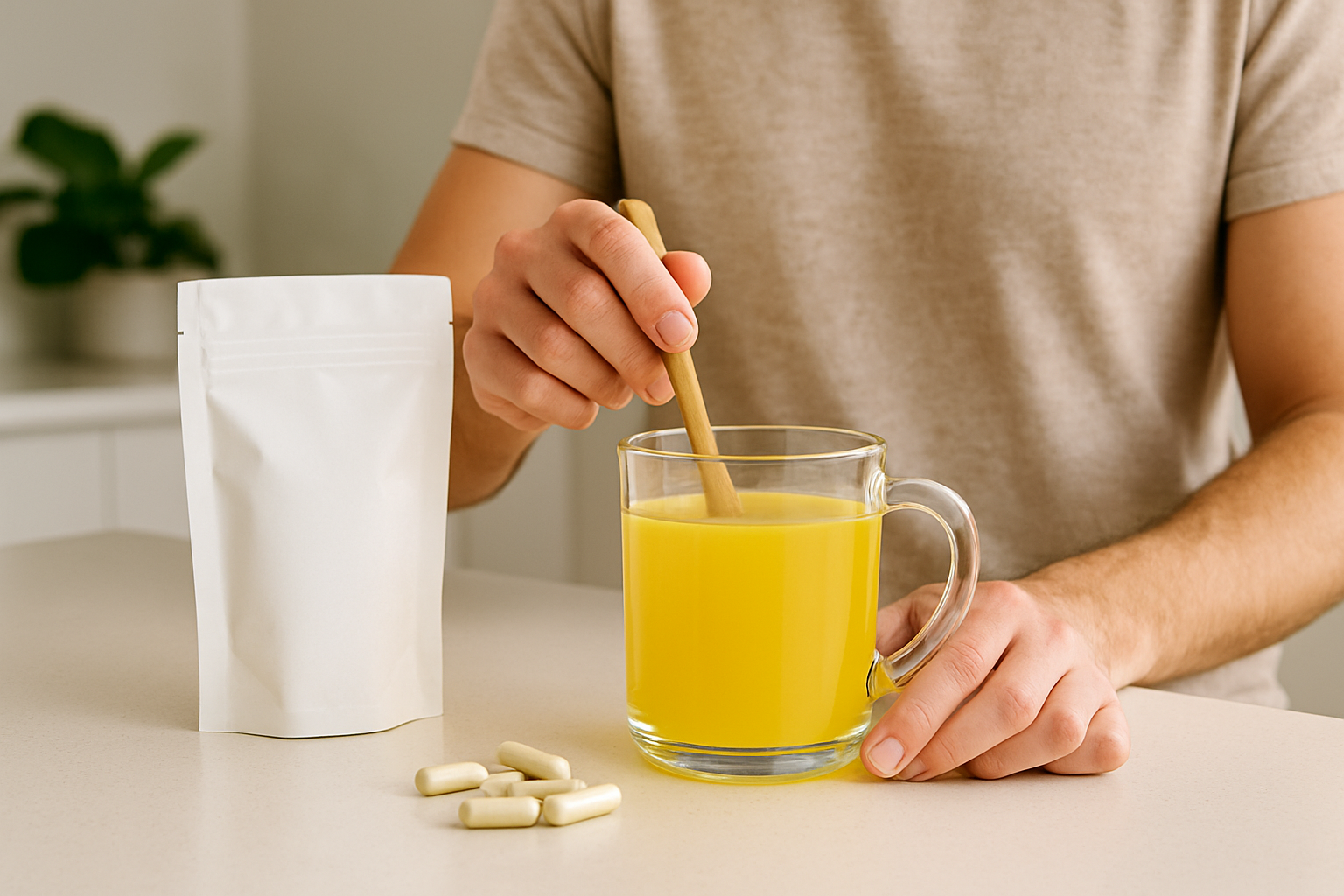
2. Delivery format. Drinkable supplements generally absorb faster than compressed tablets because the compound is already dissolved — your stomach doesn't need to break down a binder matrix first. This is one reason powdered nootropic formats have gained popularity in 2026.
3. Individual metabolism. CYP1A2 enzyme activity determines how quickly you metabolise caffeine, varying up to 40-fold between individuals. If caffeine "doesn't work" for you or makes you excessively jittery, your CYP1A2 genotype is likely responsible — not the dose.
Key Takeaways
- Caffeine is the fastest brain-active compound (30–45 min to peak), but tolerance limits its daily value.
- L-theanine works almost as quickly (30–60 min) and pairs with caffeine to help smooth out the stimulant response.*
- Phosphatidylserine occupies the middle ground — measurable plasma levels in hours, but real benefits accrue over weeks of daily use.*
- Lion's mane and Bacopa are the slow builders. Expect 2–12 weeks before noticing effects, but their mechanisms (NGF stimulation, bacoside accumulation) target deeper neurological processes.*
- The most effective approach is layered: combine fast-acting compounds for immediate needs with slow-building ones for cumulative support.
- Format matters. Drinkable, pre-dissolved supplements typically reach peak plasma levels faster than compressed tablets.
Frequently Asked Questions
Which nootropic compound works the fastest?
Caffeine is the fastest-acting widely available nootropic, reaching peak plasma concentration in 30–45 minutes and crossing the blood-brain barrier almost immediately due to its high lipid solubility.
How long does it take for L-theanine to reach the brain?
L-theanine reaches peak plasma levels within 30–60 minutes of ingestion. EEG studies show measurable increases in alpha brainwave activity within 40 minutes of a 200 mg dose.
Do nootropic compounds work better on an empty stomach?
It depends on the compound. Water-soluble nootropics like caffeine and L-theanine generally absorb faster without food. Fat-soluble compounds such as phosphatidylserine absorb better when taken with a meal containing dietary fat.
Why do some brain supplements take weeks to work?
Compounds like Bacopa monnieri require weeks of daily dosing because their active bacosides need to accumulate in neural tissue and upregulate protein synthesis before cognitive benefits become measurable. This is fundamentally different from receptor-blocking mechanisms like caffeine.
Can you combine fast-acting and slow-acting nootropics?
Yes, and many experts recommend it. Combining fast-acting compounds like caffeine and L-theanine for immediate support with slow-building compounds like Bacopa may provide both acute and cumulative cognitive benefits.* Formulations like Noobru Advantage use this layered approach.
References
- Pardridge, W.M. (2005). The blood-brain barrier: bottleneck in brain drug development. NeuroRx, 2(1), 3–14. PubMed
- Fredholm, B.B. et al. (2010). Actions of caffeine in the brain with special reference to factors that contribute to its widespread use. Pharmacological Reviews, 51(1), 83–133. PubMed
- Nobre, A.C., Rao, A., & Owen, G.N. (2008). L-theanine, a natural constituent in tea, and its effect on mental state. Asia Pacific Journal of Clinical Nutrition, 17(S1), 167–168. PubMed
- Glade, M.J. & Smith, K. (2015). Phosphatidylserine and the human brain. Nutrition, 31(6), 781–786. PubMed
- Lai, P.L. et al. (2013). Neurotrophic properties of the Lion's mane medicinal mushroom, Hericium erinaceus. International Journal of Medicinal Mushrooms, 15(6), 539–554. PubMed
- Kongkeaw, C. et al. (2014). Meta-analysis of randomized controlled trials on cognitive effects of Bacopa monnieri extract. Journal of Ethnopharmacology, 151(1), 528–535. PubMed
*These statements have not been evaluated by the Food and Drug Administration or MHRA. This product is not intended to diagnose, treat, cure, or prevent any disease. Always consult your healthcare provider before starting any supplement regimen.


Leave a comment
All comments are moderated before being published.
This site is protected by hCaptcha and the hCaptcha Privacy Policy and Terms of Service apply.