




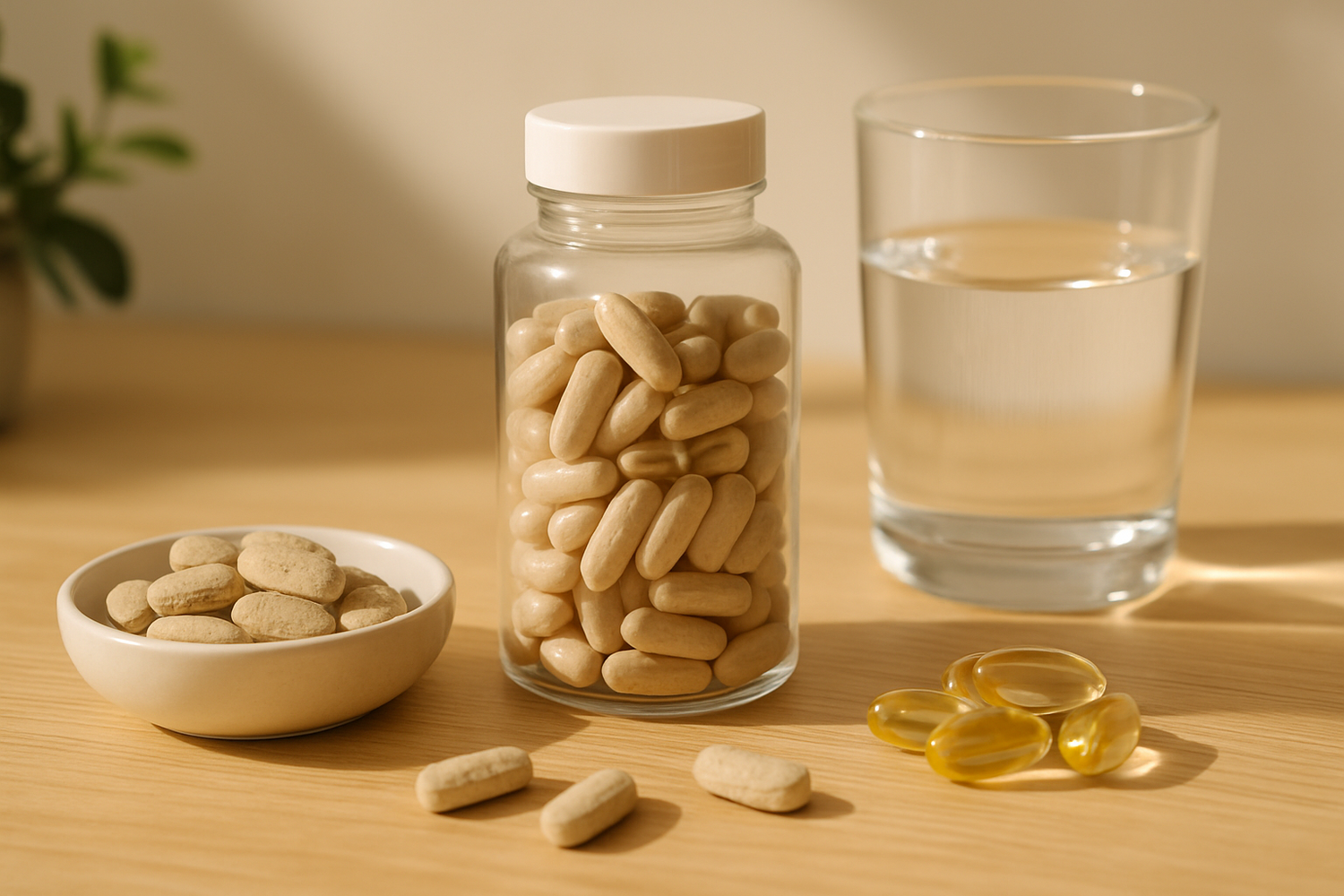
Cognitive supplements are ingestible products — typically capsules, tablets, or drinkable powders — containing nootropic ingredients that may help support memory, focus, mental clarity, and overall brain health.* The category has grown significantly in the UK in 2026, driven by rising awareness of brain fog and an expanding body of research validating specific brain support compounds. But not every product on the shelf deserves your attention. In this guide, we break down which cognitive supplements have genuine evidence behind them, what dosages matter, and how to separate real science from marketing noise.
Why Brain Fog Is Driving Demand for Cognitive Supplements in 2026
Brain fog — that frustrating sense of mental cloudiness, slow recall, and difficulty concentrating — is not a medical diagnosis, but it is a very real experience. A 2022 survey by the Office for National Statistics found that nearly one in five UK adults reported ongoing difficulties with concentration after viral illness.
Meanwhile, workplace demands, screen time, poor sleep, and chronic stress continue to place enormous loads on our cognitive systems. This is the context behind the surge in demand for vitamins for brain fog and broader nootropics.
"People aren't looking for a magic pill — they're looking for evidence-based ways to support the brain functions they rely on every day: working memory, sustained attention, processing speed, and mental energy."
The good news is that several ingredients have moved well beyond the "promising but unproven" stage. Let's examine what the research actually says.
The Key Ingredients in Cognitive Supplements (and Their Evidence)
Not all nootropic ingredients are equal. Below are the compounds with the strongest research profiles for cognitive enhancement, along with effective dosages and what the studies found.
Bacopa Monnieri
Bacopa monnieri is one of the most rigorously studied natural nootropics for brain support. It works by modulating acetylcholine and serotonin pathways while providing antioxidant protection to neurons through its active compounds, bacosides A and B.
A 2014 meta-analysis published in the Journal of Ethnopharmacology concluded that bacopa produced "significant improvement in memory free recall" and recommended it as a cognitive enhancer. The effective dose is 300–600 mg daily, standardised to 55% bacosides.
Notably, bacopa is a slow-build compound — most trials show benefits emerging after 8–12 weeks of consistent use. This is one reason that patience and daily consistency matter more than short bursts of supplementation.*
Citicoline (CDP Choline)
Citicoline provides the brain with choline — a precursor to acetylcholine, often called the "learning neurotransmitter" — and cytidine, which converts to uridine and may help support synaptic plasticity and membrane repair.*
A 2015 study published in NMR in Biomedicine using MRI imaging found that citicoline supplementation at 250–500 mg daily was associated with improved attention and psychomotor speed, alongside increased frontal lobe bioenergetics. This makes it one of the few cognitive supplements with direct neuroimaging evidence.
L-Theanine
L-theanine, an amino acid found naturally in tea leaves, promotes alpha brain wave activity — the neural signature of calm, focused alertness. It modulates GABA, serotonin, and dopamine pathways.*
It is particularly effective when paired with caffeine. A 2008 study in Nutritional Neuroscience found that combined L-theanine and caffeine "improved speed and accuracy of attention tasks" compared to either compound alone. The typical effective dose is 100–200 mg of L-theanine with 50–100 mg of caffeine.
Lion's Mane Mushroom
Lion's mane may help stimulate the production of Nerve Growth Factor (NGF) and Brain-Derived Neurotrophic Factor (BDNF) — proteins critical for neurogenesis and myelin repair.*
A 2009 randomised controlled trial in adults with mild cognitive impairment found significant cognitive function score gains compared to placebo, with benefits disappearing after supplementation stopped. Effective doses range from 500–1,000 mg daily.
Rhodiola Rosea
Rhodiola is an adaptogenic herb that acts on the HPA axis to help regulate cortisol and adrenaline response while supporting serotonin and dopamine availability.*
A 2000 study reported significant reductions in mental fatigue alongside gains in associative thinking, short-term memory, and calculation speed. The standard dose is 200–600 mg daily, standardised to 3% rosavins and 1% salidroside. The NHS vitamins and minerals guide provides further context on how nutrients interact with cognitive function.

Vitamin B12 (Methylcobalamin)
Vitamin B12 is essential for myelin sheath synthesis, DNA repair, and red blood cell formation. A 2016 study found that low B12 levels were "strongly associated with accelerated brain volume loss and cognitive decline in older adults."
The methylcobalamin form is preferred because it crosses the blood-brain barrier more effectively. Doses of 250–1,000 mcg daily are standard. This is one of the most accessible vitamins for brain fog, and deficiency is surprisingly common in the UK — particularly among adults over 50, vegans, and those on certain medications.
Phosphatidylserine
Phosphatidylserine is a phospholipid that forms a key structural component of neuronal cell membranes. It may help support neurological function and help modulate the cortisol stress response.*
Research suggests it plays a role in maintaining cell-to-cell communication in the brain, which is fundamental to memory and learning. Typical effective doses range from 50–100 mg daily.
Acetyl-L-Carnitine
Acetyl-L-carnitine may help support mitochondrial energy production within brain cells and has neuroprotective properties.* A 2020 review in Nutrients concluded that it may help benefit brain function,* while additional research published in 2020 linked it to enhanced cellular energy production.* The typical supplemental dose is around 500 mg daily.
| Ingredient | Primary Mechanism | Effective Daily Dose | Evidence Level | Time to Effect |
|---|---|---|---|---|
| Bacopa Monnieri | Acetylcholine modulation, antioxidant | 300–600 mg | Strong | 8–12 weeks |
| Citicoline | Choline precursor, membrane repair | 250–500 mg | Strong | Days to weeks |
| L-Theanine | Alpha wave promotion, GABA modulation | 100–200 mg | Strong | 30–60 minutes |
| Lion's Mane | NGF and BDNF stimulation | 500–1,000 mg | Moderate | 4–8 weeks |
| Rhodiola Rosea | HPA axis regulation, dopamine support | 200–600 mg | Strong | Days to weeks |
| Vitamin B12 | Myelin synthesis, DNA repair | 250–1,000 mcg | Strong | Weeks to months |
| Phosphatidylserine | Cell membrane integrity, cortisol modulation | 50–100 mg | Moderate | Weeks |
| Acetyl-L-Carnitine | Mitochondrial energy, neuroprotection | 500 mg | Moderate | Weeks |
What to Look for When Choosing Brain Support Supplements
The ingredient list is only part of the picture. How a cognitive supplement is formulated, dosed, and manufactured determines whether it will actually deliver results.
Clinical Dosing vs. Fairy Dusting
Many supplement brands list impressive nootropic ingredients on the label but include them at doses far below what was used in clinical trials. This practice — sometimes called "fairy dusting" — means you're paying for ingredients present in amounts too small to have any meaningful effect.
Always check that the dose per serving matches the research. For example, 50 mg of bacopa monnieri is essentially useless when trials used 300–600 mg.
No Proprietary Blends
A "proprietary blend" lists ingredients but hides their individual doses behind a single combined weight. This makes it impossible to verify whether you're getting effective amounts of each compound.
Transparent labelling — where every ingredient and its exact dose are clearly listed — is the minimum standard you should accept for any brain support supplement.
Format and Bioavailability
Drinkable supplements typically offer superior absorption compared to compressed tablets because the ingredients are already dissolved or suspended in liquid form, reducing the digestive breakdown required.
Some ingredients also benefit from specific bioavailability enhancers — for example, piperine (black pepper extract) has been shown to significantly increase the absorption of certain compounds.

Third-Party Testing
Independent testing for purity and potency ensures that what's on the label is actually in the product — and that contaminants like heavy metals or microbes are absent. UK-based brands that test for purity provide an additional layer of confidence. The Food Standards Agency offers guidance on supplement safety standards in the UK.
Lifestyle Factors That Amplify Cognitive Supplement Benefits
Cognitive supplements work best as part of a broader brain-health strategy. No single nootropic ingredient can compensate for chronic sleep deprivation, poor nutrition, or unmanaged stress. Here is what the evidence supports alongside supplementation.
- Sleep: 7–9 hours of quality sleep is non-negotiable for memory consolidation. If sleep is a challenge, addressing it should be your first priority — products like Noobru Lucid may help support natural sleep quality without sedating effects.*
- Physical exercise: Aerobic exercise increases BDNF levels — the same growth factor that lion's mane may help stimulate* — and has robust evidence for supporting memory and executive function.
- Stress management: Chronic cortisol elevation can affect hippocampal health, the brain's memory centre. Adaptogens like rhodiola and ashwagandha may help modulate the stress response,* but behavioural strategies (breathwork, boundaries, time in nature) are equally important.
- Diet: Mediterranean-style eating patterns rich in omega-3 fatty acids, polyphenols, and B vitamins are consistently associated with better cognitive outcomes in large cohort studies.
- Hydration: Even mild dehydration (1–2% body weight loss in fluid) may impair attention and working memory. This is one reason drinkable supplement formats can be particularly practical — they encourage water intake alongside active ingredients.
How Noobru Compares: A Transparent, Evidence-Based Approach
Noobru is a UK-based brand that formulates drinkable cognitive supplements with full clinical doses, no proprietary blends, and complete label transparency. Every ingredient and its exact amount are clearly listed, so you can cross-reference each one against the published research.
For those specifically dealing with brain fog, poor focus, or age-related cognitive concerns, Noobru Pro combines adaptogens and energising nootropics to help support sustained energy, mental clarity under pressure, and adrenal health* — without the crash associated with caffeine-heavy alternatives.
For broader health goals, Noobru offers targeted formulations:
- Noobru Shield — may help support immune resilience and antioxidant defence.*
- Noobru Zeus — formulated to help support men's hormonal health and prostate function.*
- Noobru Cheat — designed to help support blood sugar regulation and metabolic health.*
Each product is tested for purity and available on subscription with free delivery. The drinkable powder format also offers a practical advantage: potentially better absorption compared to compressed tablets, plus a built-in reminder to stay hydrated.
Frequently Asked Questions About Cognitive Supplements
Do cognitive supplements actually work?
Several nootropic ingredients found in cognitive supplements have meaningful clinical evidence. Bacopa monnieri, citicoline, and L-theanine have all demonstrated measurable support for memory, attention, or focus in randomised controlled trials.* Results depend heavily on the ingredient, dose, and formulation quality.
How long do cognitive supplements take to work?
It depends on the ingredient. L-theanine and citicoline may produce noticeable effects within hours or days. Bacopa monnieri typically requires 8–12 weeks of consistent use before memory benefits become apparent. Lion's mane mushroom also tends to require several weeks of daily supplementation.
Are cognitive supplements safe to take every day?
Most well-studied nootropic ingredients have strong safety profiles at recommended doses. However, you should always consult your healthcare provider before starting any supplement regimen, especially if you take prescription medication or have an existing health condition.
What vitamins help with brain fog?
Vitamin B12 is one of the most important vitamins for brain fog, particularly in the methylcobalamin form. Low B12 levels are strongly associated with cognitive decline and accelerated brain volume loss. B6 and folate also play key roles in neurotransmitter synthesis and homocysteine metabolism.
Can I take multiple nootropic supplements together?
Yes, many nootropic ingredients work synergistically. For example, L-theanine paired with caffeine may help support attention more than either alone.* However, combining supplements from multiple brands increases the risk of exceeding safe doses. A well-formulated stack from a single transparent brand is generally safer and more convenient.
Key Takeaways: Cognitive Supplements in 2026
- Best-evidenced nootropic ingredients: Bacopa monnieri, citicoline, L-theanine, lion's mane, rhodiola rosea, and vitamin B12 each have clinical data supporting their role in brain support.*
- Dosage is non-negotiable: Always verify a product contains clinically studied doses, not token "fairy dust" amounts.
- Transparency matters: Avoid proprietary blends — full label disclosure is the minimum standard for any trustworthy cognitive supplement.
- Supplements are not standalone solutions: They work best alongside quality sleep, regular exercise, stress management, and a nutrient-dense diet.
- Format affects absorption: Drinkable nootropics may offer better bioavailability and naturally encourage hydration.
- Choose UK-tested brands: Look for manufacturers that provide third-party purity testing and evidence-based formulations.
Ready to support your focus, energy, and mental clarity with clinically dosed, fully transparent nootropic formulations?* Noobru's drinkable brain support supplements are made in the UK with no proprietary blends and no guesswork.
Try Noobru risk-free with our 90-day money-back guarantee →References
- Kongkeaw, C., et al. (2014). Meta-analysis of randomized controlled trials on cognitive effects of Bacopa monnieri extract. Journal of Ethnopharmacology, 151(1), 528–535. PubMed.
- Silveri, M. M., et al. (2015). Citicoline enhances frontal lobe bioenergetics as measured by phosphorus magnetic resonance spectroscopy. NMR in Biomedicine, 21(10), 1066–1075. PubMed.
- Owen, G. N., et al. (2008). The combined effects of L-theanine and caffeine on cognitive performance and mood. Nutritional Neuroscience, 11(4), 193–198. PubMed.
- Mori, K., et al. (2009). Improving effects of the mushroom Yamabushitake on mild cognitive impairment. Phytotherapy Research, 23(3), 367–372. PubMed.
- Ferreira, G. C. & McKenna, M. C. (2020). L-carnitine and acetyl-L-carnitine roles and neuroprotection in developing brain. Neurochemical Research, 42(6), 1661–1675. PMC.
- Fielding, R., et al. (2020). L-carnitine supplementation in recovery after exercise. Nutrients, 10(3), 349. PubMed.
- Office for National Statistics (2022). Prevalence of ongoing symptoms following coronavirus (COVID-19) infection in the UK. ONS.
*These statements have not been evaluated by the Food and Drug Administration or MHRA. This product is not intended to diagnose, treat, cure, or prevent any disease. Always consult your healthcare provider before starting any supplement regimen.

Leave a comment
All comments are moderated before being published.
This site is protected by hCaptcha and the hCaptcha Privacy Policy and Terms of Service apply.