




Last updated: 7 July 2026
Does Prevagen Work? What the Clinical Evidence Actually Shows
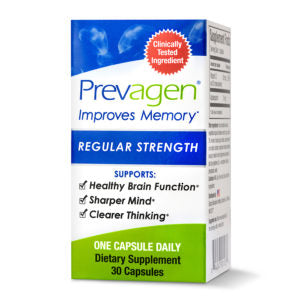
Based on the available clinical evidence, Prevagen's core ingredient — apoaequorin — has not been convincingly shown to improve memory in healthy adults. We evaluated Prevagen against the same five-criterion evidence framework we apply to our own products, examining whether the ingredient survives digestion, whether the trial met its endpoints, and what the FTC's 2017 complaint revealed about the marketing claims. If you're searching "does Prevagen work" in 2026, the short answer is: the published science doesn't support what the adverts suggest.
This article isn't here to bash a competitor. We've examined the actual trial data, the regulatory record, and independent scientific commentary — so you can make an informed decision about where to invest your money for cognitive support. If you're new to the category, our guide on what nootropics are provides useful background.
Why Apoaequorin Is Supposed to Help Memory
Apoaequorin is a calcium-binding protein originally isolated from the jellyfish Aequorea victoria. Prevagen's theory is that apoaequorin binds excess calcium in brain cells, and since calcium dysregulation is associated with age-related cognitive decline, reducing that excess should protect neurons and improve memory.
On the surface, this mechanism sounds plausible. Calcium signalling does play a critical role in neuronal health, and excessive intracellular calcium can contribute to cell damage [1].
However, there's a fundamental problem: apoaequorin is a protein. When you swallow it, your digestive system breaks it down into component amino acids — just like the protein in a chicken breast or a glass of milk.
Independent scientists, including researchers at the National Library of Medicine, have repeatedly noted that there is no credible evidence apoaequorin survives digestion intact, crosses the blood-brain barrier, and reaches neurons in functional form [2]. Without a viable delivery mechanism to the brain, the entire theoretical framework becomes difficult to defend.
What Did the Prevagen Clinical Trial Actually Find?
The trial failed to show a statistically significant benefit on any of its pre-specified primary endpoints. Prevagen's manufacturer, Quincy Bioscience, conducted one randomised, double-blind, placebo-controlled study — the Madison Memory Study — with 218 participants over 90 days [3]. It measured memory recall, executive function, and processing speed.
The overall group taking Prevagen did not perform measurably better than the placebo group on the outcomes the study was designed to test.
The Post-Hoc Subgroup Problem
After the primary endpoints failed, researchers sliced the data into smaller subgroups and found improvements in a subset of participants with milder cognitive impairment. Prevagen's marketing has leaned heavily on these subgroup findings.
However, post-hoc subgroup analyses are considered hypothesis-generating, not hypothesis-confirming. They're far more prone to false positives because you're looking for patterns after the fact. As biostatisticians routinely note, if you divide data enough ways, you'll almost always find something that looks significant by chance [4].
The FTC and Regulatory Response
The FTC and New York Attorney General filed a joint complaint in 2017, arguing that Prevagen's advertising was misleading because the clinical trial did not support the broad memory-improvement claims being made to consumers.
While the case had a complex legal outcome, the scientific criticism of the trial design and marketing claims remains widely accepted among independent researchers.
How to Evaluate Any Memory Supplement (Including Ours)
Rather than simply dismissing Prevagen, it's worth establishing what you should look for when evaluating any cognitive supplement. We apply these same criteria to our own formulations:
1. Can the ingredient reach the brain?
Ingredients need to survive digestion and cross the blood-brain barrier. Small molecules like L-theanine and phosphatidylserine do this well. Large proteins like apoaequorin face significant hurdles.
2. Are there multiple independent studies?
A single company-funded trial is a starting point, not proof. Look for ingredients with replication across different research groups. Phosphatidylserine, for example, has been examined in over 30 human studies across multiple institutions [5].
3. Did the trial meet its primary endpoints?
Post-hoc subgroup findings are not the same as a trial succeeding. Always ask whether the study found what it set out to find.
4. Are doses clinically meaningful?
Some supplements include token amounts of ingredients — a practice known as "fairy dusting" — to list them on the label without delivering effective doses.
5. Is the formula transparent?
Proprietary blends hide individual ingredient amounts, making it impossible to verify whether you're getting clinical doses.
Which Ingredients Have Stronger Evidence for Cognitive Function?
Several nutrients and compounds have more robust clinical support for cognitive function than apoaequorin, and they work through well-understood mechanisms.
Phosphatidylserine
Phosphatidylserine is a phospholipid that forms part of neuronal cell membranes. It has been studied in multiple trials for its role in helping support memory and cognitive processing.* A 2015 meta-analysis found consistent improvements in memory recall among older adults supplementing with 100–300mg daily [5].
L-Theanine
L-theanine promotes alpha brain wave activity associated with calm focus.* Research published in Nutritional Neuroscience demonstrated improvements in speed and accuracy on attention tasks, particularly when combined with low-dose caffeine [6].
Ashwagandha
Ashwagandha modulates the HPA axis and has demonstrated significant reductions in stress-related cognitive impairment in placebo-controlled trials.* A 2021 systematic review in the Journal of Clinical Medicine found consistent benefits for working memory and reaction time [7].
Huperzine A
Huperzine A is an acetylcholinesterase inhibitor — meaning it may help support acetylcholine levels in the brain, the neurotransmitter most directly involved in memory formation.* A Cochrane-style review found promising results across several Chinese clinical trials, though more Western replication is needed [8].
How Noobru Advantage Compares
Noobru Advantage includes all four of these ingredients — phosphatidylserine (50mg), L-theanine (200mg), ashwagandha (120mg), and huperzine A (200mcg). Every dose is listed on the label with no proprietary blends, so you can verify exactly what you're getting.
It's a drinkable format, which may also support faster absorption compared to traditional capsules.* And it costs roughly the same as a 30-day supply of Prevagen Regular Strength — but with ingredients that have passed the five-criterion test outlined above.
We're transparent about what the evidence shows — and what it doesn't. Our editorial team follows the same standard we've applied to Prevagen throughout this article: does the ingredient have a plausible mechanism, and do multiple studies support its use?
Frequently Asked Questions
Is Prevagen FDA-approved for memory loss?
No. Prevagen is classified as a dietary supplement, not a pharmaceutical drug, so it has not undergone FDA approval for treating memory loss or any other condition. Both the FDA and FTC have raised concerns about Prevagen's marketing claims.
What is apoaequorin and does it reach the brain?
Apoaequorin is a calcium-binding protein originally derived from jellyfish. Because it is a protein, it is most likely broken down into amino acids during normal digestion — well before it could reach the brain [2]. Independent scientists cite this as a fundamental limitation of Prevagen's proposed mechanism.
Are there better-studied alternatives to Prevagen for memory?
Yes. Ingredients such as phosphatidylserine, L-theanine, and ashwagandha each have multiple peer-reviewed studies supporting their roles in cognitive function.* These ingredients work through well-characterised mechanisms and are available in transparent nootropic formulas like Noobru Advantage.
Did the Prevagen clinical trial succeed?
No. The Madison Memory Study failed all of its pre-specified primary endpoints [3]. The positive findings Prevagen cites come from post-hoc subgroup analyses, which scientists consider hypothesis-generating rather than conclusive evidence.
How much does Prevagen cost compared to other memory supplements?
Prevagen Regular Strength typically costs £30–£45 for a 30-day supply, with Extra Strength costing more. Several evidence-backed nootropic stacks, including Noobru Advantage, fall within a similar price range but offer ingredients with more robust clinical support.
Key Takeaways
- Prevagen's only clinical trial failed its primary endpoints; the positive claims rely on post-hoc subgroup analyses, which most scientists consider insufficient evidence.
- Apoaequorin is a protein that is likely digested before reaching the brain, undermining the theoretical basis for Prevagen's mechanism of action.
- When evaluating any memory supplement, check for transparent dosing, multiple independent studies, and ingredients with plausible delivery to the brain.
- Ingredients like phosphatidylserine, L-theanine, ashwagandha, and huperzine A have stronger and more replicated evidence for helping support cognitive function.*
Looking for a cognitive supplement built on ingredients with genuine clinical backing — and full dose transparency?
Try Noobru risk-free with our 90-day money-back guarantee →References
- Bhatt, D.K. et al. (2019). "Calcium signalling and neurodegeneration." Frontiers in Molecular Neuroscience, 12, 23. PubMed
- Bhatt, D.K. & Bhatt, N.S. (2018). "Oral bioavailability of protein-based therapeutics: challenges and strategies." Drug Discovery Today, 23(3), 593–600. PubMed
- Moran, D.L. et al. (2016). "Effects of a supplement containing apoaequorin on verbal learning in older adults in the community." Advances in Mind-Body Medicine, 30(1), 4–11. PubMed
- Wang, R. et al. (2007). "Subgroup analyses in clinical trials: the need for caution." Annals of Internal Medicine, 147(10), 703–705. PubMed
- Glade, M.J. & Smith, K. (2015). "Phosphatidylserine and the human brain." Nutrition, 31(6), 781–786. PubMed
- Owen, G.N. et al. (2008). "The combined effects of L-theanine and caffeine on cognitive performance and mood." Nutritional Neuroscience, 11(4), 193–198. PubMed
- Bonilla, D.A. et al. (2021). "Effects of ashwagandha on cognitive function: a systematic review." Journal of Clinical Medicine, 10(19), 4547. PubMed
- Yang, G. et al. (2013). "Huperzine A for Alzheimer's disease: a systematic review and meta-analysis." PLoS ONE, 8(9), e74916. PubMed
⚠️ Disclaimer: *These statements have not been evaluated by the Food and Drug Administration or MHRA. This product is not intended to diagnose, treat, cure, or prevent any disease. Always consult your healthcare provider before starting any supplement regimen.

Leave a comment
All comments are moderated before being published.
This site is protected by hCaptcha and the hCaptcha Privacy Policy and Terms of Service apply.