




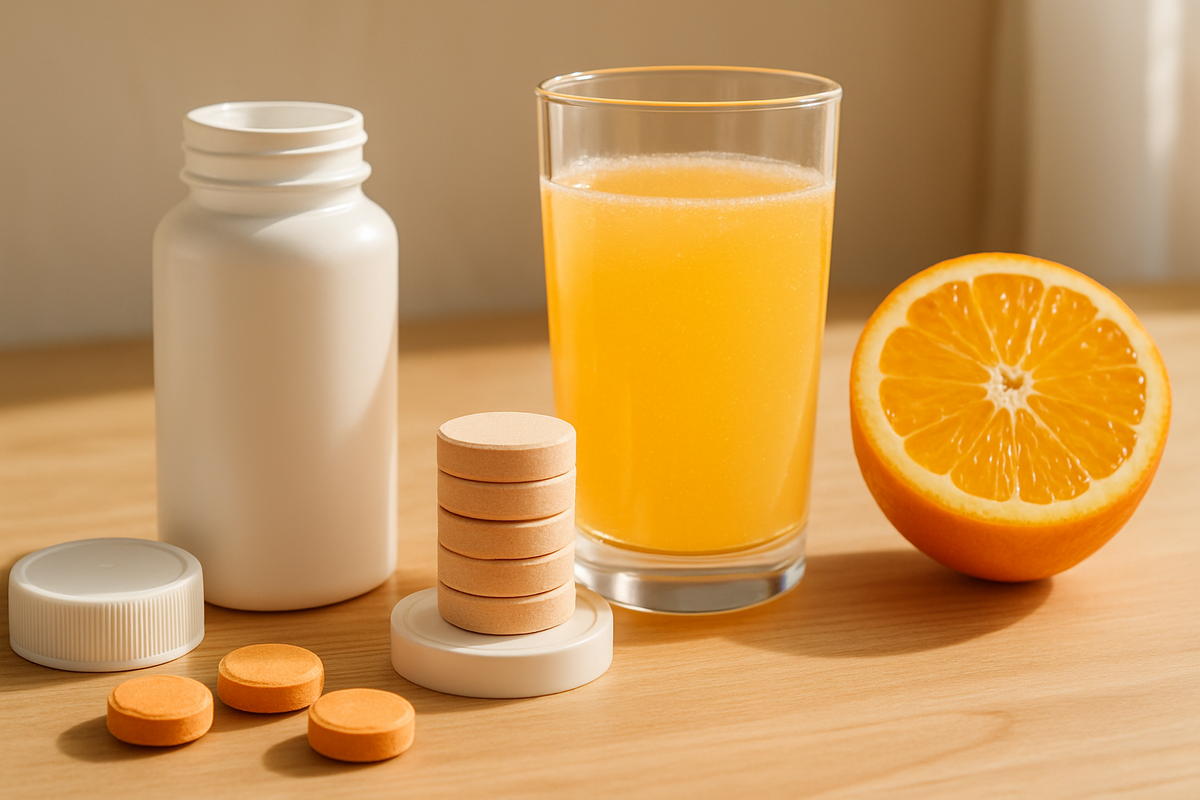
Emergency Vitamin C: Ranking the Fastest Forms by Hours-to-Effect
When you feel that telltale throat scratch, reaching for emergency vitamin C is one of the most common instincts in the UK — and the instinct is broadly sound. But most advice stops at "take more vitamin C" without addressing the variable that actually matters when the clock is ticking: how fast each form reaches your bloodstream. This article ranks every common delivery format by a single practical metric — hours to peak plasma concentration — and explains the absorption ceiling that makes dosing frequency more important than dosing size.
If you're already sniffling and want the short answer: dissolved, drinkable vitamin C formats reach effective plasma levels roughly 2–4 hours sooner than standard tablets, and splitting your daily total into smaller doses dramatically improves how much your body actually absorbs.
Why Vitamin C Matters for Immune Defence
Vitamin C (ascorbic acid) is a water-soluble antioxidant that the body can neither produce nor store in meaningful quantities. It may help support immune function through several documented mechanisms, including accumulation in phagocytic cells like neutrophils, support of the epithelial barrier against pathogens, and free-radical scavenging that helps protect immune cells during the inflammatory response.*
During infection, your body's vitamin C stores can deplete rapidly. A 2017 review in the journal Nutrients found that plasma vitamin C concentrations may drop by 50% or more during acute respiratory illness. This is precisely why the concept of emergency vitamin C — a high-dose loading strategy at the onset of symptoms — has gained traction.
The NHS recommends 40mg of vitamin C per day for general health, but that figure is a baseline to ward off deficiency, not an immune-optimisation dose. Most clinical trials investigating cold duration use between 1,000mg and 2,000mg per day.
Emergency Vitamin C Forms Ranked by Speed of Absorption
The speed at which vitamin C reaches effective plasma concentrations varies dramatically by delivery format. Here is how the most common forms compare, ranked from fastest to slowest based on pharmacokinetic data:

| Form | Typical Dose | Time to Peak Plasma Level | Practical Notes |
|---|---|---|---|
| Intravenous (IV) | 1,000–25,000mg | Immediate | Requires a clinical setting; not practical for home use |
| Dissolved powder / drinkable sachets | 500–1,000mg | 1–2 hours | Pre-dissolved; bypasses tablet disintegration; convenient at home |
| Chewable tablets | 250–1,000mg | 1.5–3 hours | Partial oral absorption begins in the mouth; palatability varies |
| Liposomal vitamin C | 500–1,000mg | 2–3 hours | Higher bioavailability at large doses; more expensive |
| Standard swallowable tablets | 500–1,000mg | 3–6 hours | Must disintegrate in the stomach first; widely available |
| Slow-release / time-release capsules | 500–1,500mg | 4–8 hours (sustained) | Designed for gradual release; poor choice for emergency loading |
The bottom line: dissolved, drinkable formats consistently reach peak plasma concentrations faster than solid tablets because they skip the disintegration step tablets require in the stomach. When you're reaching for emergency vitamin C at the first sign of a scratchy pharynx or stuffy nose, this difference of 2–4 hours can be genuinely meaningful.
What the Clinical Evidence Actually Shows
The Cochrane Collaboration's systematic review of vitamin C and colds — covering 29 randomised controlled trials and over 11,000 participants — remains the most robust evidence base. The conclusions were nuanced:
- Cold prevention: Regular vitamin C supplementation (≥200mg/day) did not significantly lower the incidence of colds in the general population, but it did lower incidence by roughly 50% in people under severe physical stress (marathon runners, soldiers, skiers).
- Cold duration: Regular supplementation was associated with an 8% shorter duration in adults and 14% in children — equivalent to roughly half a day fewer symptoms for the average respiratory illness.*
- Therapeutic use: Taking vitamin C after symptoms begin showed inconsistent results. However, given the low cost and safety profile, the reviewers noted it may still be worth trying on an individual basis.
Here is where emergency vitamin C becomes interesting. Several smaller trials suggest that early, high-dose loading — taking 1,000mg within the first few hours of symptom onset and maintaining 500–1,000mg every few hours on day one — may be more effective than standard once-daily dosing. The logic is pharmacological: rapidly replenishing depleted immune cells with ascorbic acid when demand is highest.
"Vitamin C may not be a silver bullet, but it's one of the best-evidenced, lowest-risk tools in the immune-support toolkit."
It is important to be straightforward about the limitations: no supplement can replace good hygiene, adequate sleep, and a balanced diet. Vitamin C may help support your body's natural defences, but it is not a cure for the common cold.*
The Absorption Ceiling: Why More Isn't Always Better
There is a critical detail most emergency vitamin C articles overlook: intestinal absorption of vitamin C is saturable. At a dose of around 200mg, absorption is nearly complete (~100%). At 500mg, it drops to approximately 73%. At 1,250mg taken as a single dose, absorption falls to around 46%.
This means swallowing a single 3,000mg mega-dose is significantly less efficient than splitting it into three 1,000mg doses across the day.

For an emergency vitamin C strategy to work effectively, frequency matters as much as quantity. If you're aiming for 2,000–3,000mg total in a day, split it into 3–4 doses taken every 3–4 hours. This approach maximises total absorption and maintains elevated plasma levels throughout the day rather than creating a single spike followed by rapid urinary excretion.
What to Take Alongside Vitamin C for Immune System Support
Vitamin C does not work in isolation. Your immune system relies on a network of nutrients, and a gap in any one can undermine the others. When assembling an emergency protocol for respiratory health, consider these evidence-backed companions:
- Zinc: Multiple meta-analyses indicate that zinc lozenges or syrup taken within 24 hours of cold onset may help shorten duration by approximately 1–2 days. Zinc and vitamin C work through complementary mechanisms — zinc supports T-cell function while vitamin C supports neutrophil activity.*
- Vitamin D3: A 2017 BMJ meta-analysis of 25 RCTs found that vitamin D supplementation was associated with a lower risk of acute respiratory tract infections, with the strongest effects in those who were deficient. Given that an estimated 1 in 5 UK adults has low vitamin D levels, this is particularly relevant for cold prevention strategies.*
- Elderberry: Standardised elderberry extract has shown modest but consistent associations with shorter cold duration in several small trials, likely due to its high anthocyanin content.*
- Echinacea: Research suggests echinacea possesses immunomodulatory properties that may help support the body's response to seasonal challenges.*
- Ginger: Organic ginger provides anti-inflammatory support that may help ease upper respiratory discomfort.*
The practical challenge is sourcing and combining all these individual supplements at the right doses — especially when you're already feeling rough and want something simple.
How Noobru Shield Fits Into an Emergency Vitamin C Strategy
Most emergency vitamin C products give you one thing: ascorbic acid in a high dose. Useful, but incomplete. Noobru Shield was formulated as a comprehensive immune-support drink that pairs 1,000mg of vitamin C with a carefully selected stack of complementary nutrients — all in a single drinkable sachet.*
Here is what the full Shield formula provides:
- Vitamin C (1,000mg) — the same clinical dose used in the Cochrane-reviewed cold-duration trials
- Zinc — may help support T-cell function and is widely studied for its role in cold duration*
- Vitamin D3 — particularly important for UK residents from October through March*
- Elderberry (50mg) — anthocyanin-rich berry with emerging evidence for respiratory health support*
- Echinacea (100mg) — traditionally used for immune resilience, with modern research supporting its immunomodulatory properties*
- Organic Ginger (100mg) — may help support comfort during seasonal illness*
- Organic Panax Ginseng (100mg) — adaptogenic herb with antimicrobial and stress-response properties*
- Astragalus (10mg) — traditional immune-supporting root with emerging clinical evidence*
- L-Theanine (150mg) — promotes calm alertness without sedation, supporting rest and recovery*
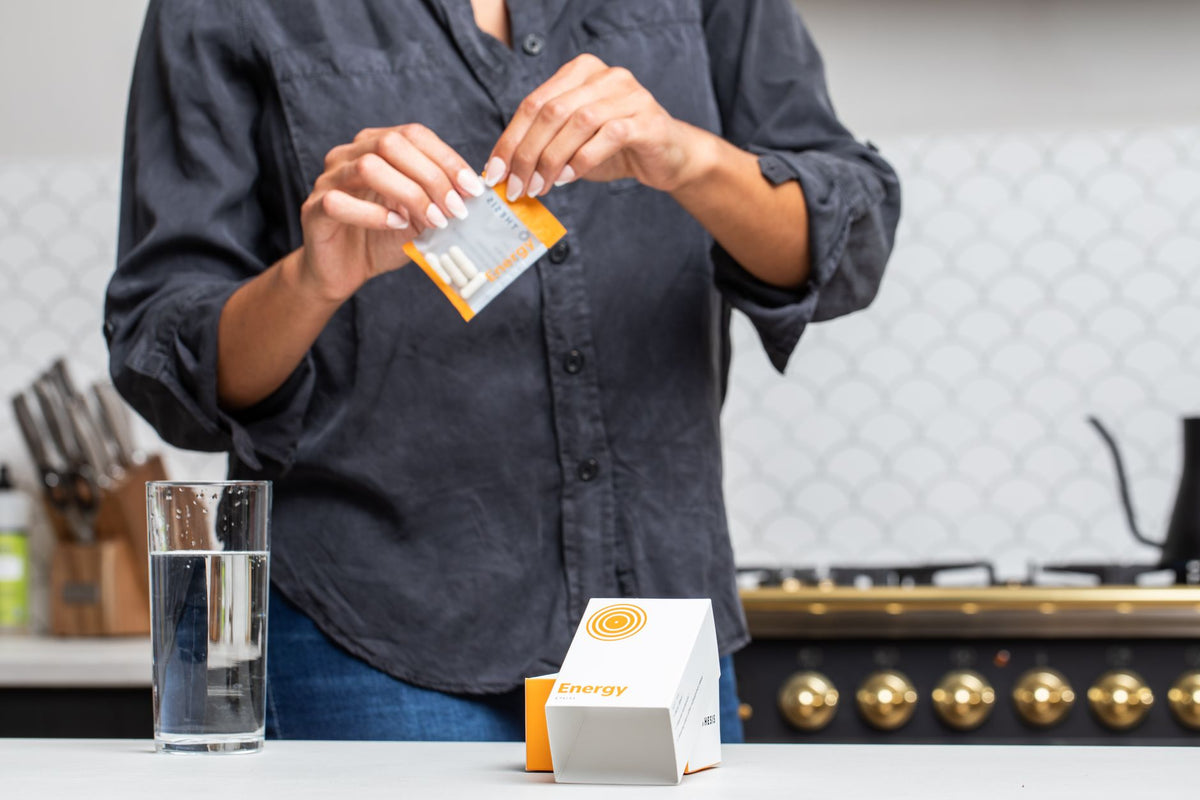
Because Shield is a dissolved drinkable format, it falls into the fastest-absorbing category for at-home use (1–2 hours to peak plasma concentration). No tablets to disintegrate. No capsules to break down. You mix, drink, and absorption begins almost immediately.
The inclusion of L-Theanine and Alpha GPC (100mg) also sets Shield apart from pure immune products. These nootropic compounds may help support mental clarity during illness, when brain fog and fatigue are often as debilitating as the physical symptoms.*
Practical Emergency Vitamin C Protocol for 2026
Based on the clinical evidence and pharmacokinetic data discussed above, here is a practical framework for using emergency vitamin C effectively:
- Act fast: Begin within the first 2–4 hours of noticing symptoms. The earlier you start, the more likely you are to see a meaningful effect on duration.
- Choose a dissolved format: Drinkable sachets or powders reach peak plasma levels 2–4 hours faster than tablets.
- Split your doses: Take 500–1,000mg every 3–4 hours rather than a single mega-dose. A total daily intake of 1,000–2,000mg is the sweet spot supported by evidence.
- Stack smart: Pair vitamin C with zinc, vitamin D3, and elderberry for a multi-pronged approach to immune system support.*
- Stay hydrated: Vitamin C is water-soluble and excreted via urine. Good hydration supports both absorption and overall recovery.
- Maintain for 5–7 days: Continue supplementation for the typical duration of a cold, then return to a maintenance dose.
"The goal isn't to overwhelm your body with mega-doses — it's to deliver clinically relevant amounts of vitamin C in the most absorbable format, at the most critical window, alongside nutrients that complement it."
Frequently Asked Questions
How much vitamin C should I take in an emergency?
Most clinical studies use 1,000–2,000mg per day at the onset of cold symptoms. Doses above 2,000mg per day are unlikely to provide additional benefit and may cause gastrointestinal discomfort. Split your dose across the day for better absorption.
Can emergency vitamin C actually stop a cold?
Vitamin C is unlikely to prevent a cold once you are already exposed, but regular supplementation and high-dose loading at onset may help shorten the duration by roughly 8–14% in adults.* The evidence is stronger for shortening illness than for preventing it entirely.
What is the fastest-absorbing form of vitamin C?
Intravenous vitamin C reaches peak plasma levels almost immediately, but for practical at-home use, dissolved ascorbic acid powder or drinkable sachets typically reach peak absorption within 1–3 hours — faster than standard tablets, which can take 3–6 hours.
Is 1,000mg of vitamin C too much to take at once?
For most healthy adults, 1,000mg at once is well-tolerated. The NHS sets a tolerable upper intake of 1,000mg per day, though short-term higher doses are generally considered safe. If you experience stomach upset, split the dose into 500mg portions taken a few hours apart.
Should I take vitamin C with food or on an empty stomach?
Vitamin C is absorbed well either way, but taking it with food can help reduce the risk of stomach irritation — especially at higher doses. If speed is your priority, taking it on an empty stomach with water may allow slightly faster absorption.
Key Takeaways
- Speed matters: When reaching for emergency vitamin C, dissolved drinkable formats absorb 2–4 hours faster than standard tablets.
- Dose smartly: Split 1,000–2,000mg across the day rather than taking one mega-dose. Absorption efficiency drops significantly above 500mg per single dose.
- Start early: The evidence favours beginning supplementation within the first few hours of symptom onset for respiratory illness.
- Stack for synergy: Vitamin C may work best alongside zinc, vitamin D3, elderberry, and echinacea for comprehensive immune system support.*
- Choose comprehensively: Products like Noobru Shield combine 1,000mg of vitamin C with nine additional immune-supporting ingredients in a fast-absorbing drinkable format.*
When cold season arrives, you want an emergency vitamin C strategy that works fast and covers all the bases. Noobru Shield delivers 1,000mg of vitamin C plus zinc, vitamin D3, elderberry, echinacea, and ginger in a single drinkable sachet — designed for rapid absorption when you need it most.*
Try Noobru risk-free with our 90-day money-back guarantee →References
- Carr, A.C. & Maggini, S. (2017). Vitamin C and Immune Function. Nutrients, 7(11), 1517. PubMed 29099763
- Hemilä, H. & Chalker, E. (2013). Vitamin C for preventing and treating the common cold. Cochrane Database of Systematic Reviews. Cochrane Library
- Martineau, A.R. et al. (2017). Vitamin D supplementation to prevent acute respiratory tract infections. BMJ, 356, i6583. PubMed 28202713
- Hawkins, J. et al. (2019). Black elderberry supplementation and respiratory health. Complementary Therapies in Medicine, 42, 361–365. PubMed 30670267
- David, S. & Cunningham, R. (2019). Echinacea for the prevention and treatment of upper respiratory tract infections. Journal of Pharmacy Practice, 32(3), 266–276. PubMed 29862902
*These statements have not been evaluated by the Food and Drug Administration or MHRA. This product is not intended to diagnose, treat, cure, or prevent any disease. Always consult your healthcare provider before starting any supplement regimen.

Leave a comment
All comments are moderated before being published.
This site is protected by hCaptcha and the hCaptcha Privacy Policy and Terms of Service apply.