




Ginkgo Biloba Supplement: What the Evidence Actually Says in 2026
A ginkgo biloba supplement is one of the most widely consumed herbal brain supplements in the world, taken by millions of people who want to support memory, focus, and circulation.* But the science behind this popular memory supplement is more nuanced than the marketing often suggests. Some trials show promising cognitive benefits — particularly for older adults — while the largest studies have been less convincing. In this guide, we break down exactly what the research says about ginkgo biloba benefits, proper dosages, potential side effects, and whether a multi-ingredient nootropic supplement might serve you better.
Key Takeaways
- Mixed evidence: A ginkgo biloba supplement may help support cerebral blood flow and offer antioxidant protection, but the evidence for standalone cognitive benefits is mixed.*
- Clinically studied dose: 120–240 mg daily of standardised extract (24% flavonoid glycosides, 6% terpene lactones), taken consistently for at least 8 weeks.
- Important drug interactions: Ginkgo has meaningful interactions with blood thinners and antidepressants — always consult your healthcare provider.
- Multi-ingredient approach: A brain supplement targeting neurotransmitter synthesis, neuroplasticity, energy production, and stress resilience may offer broader cognitive support than ginkgo alone.
- Quality matters: Look for transparency in dosing — avoid proprietary blends and unstandardised extracts that do not disclose exactly what you are taking.
What Is Ginkgo Biloba and How Does It Work?
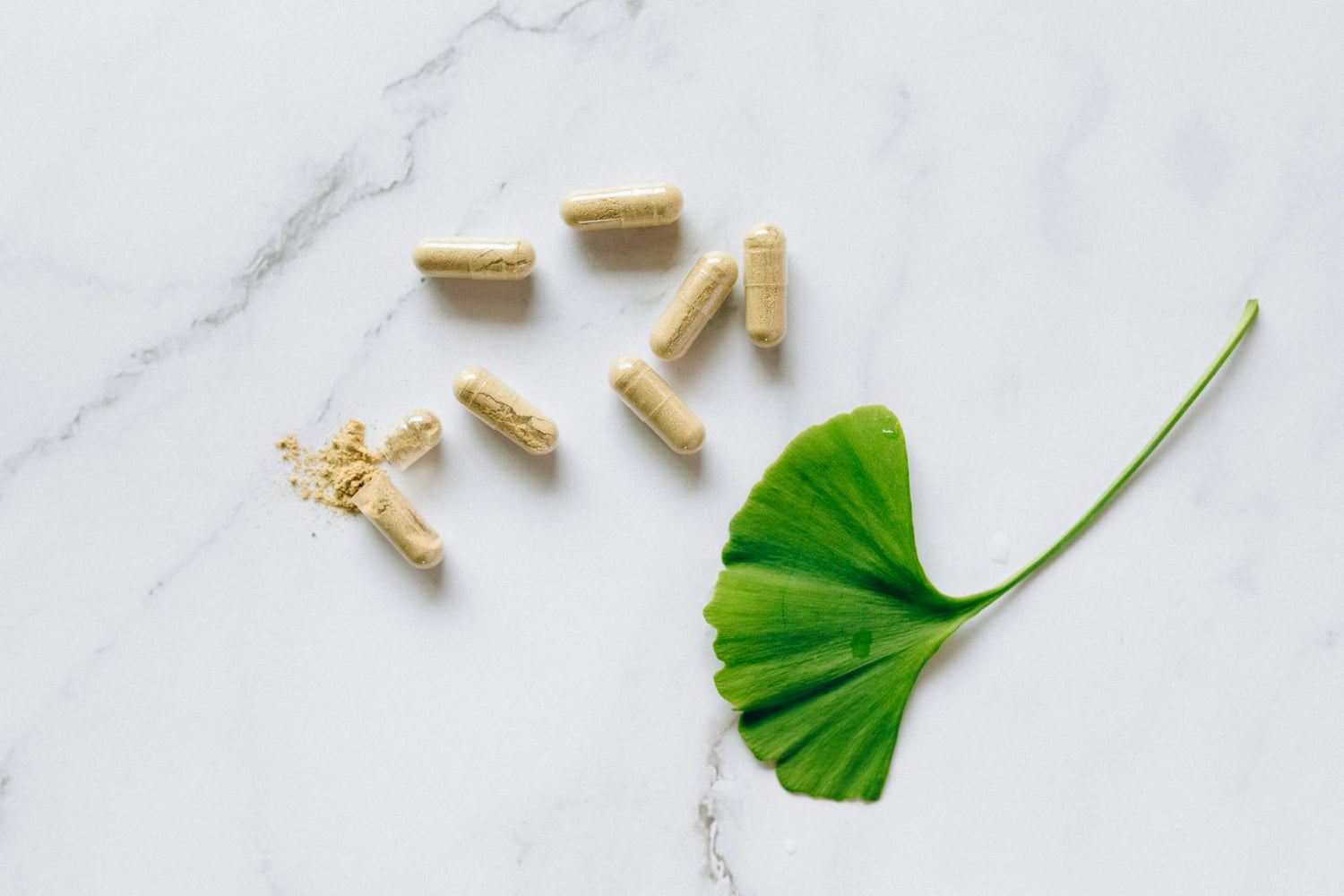
Ginkgo biloba is a herbal extract derived from the leaves of the maidenhair tree, one of the oldest living tree species on Earth. It is among the most researched natural brain health supplements, with hundreds of published clinical trials. The standardised extract — most commonly known as EGb 761 — contains two primary groups of active compounds: flavonoid glycosides (typically standardised to 24%) and terpene lactones (typically standardised to 6%), including ginkgolides and bilobalide.
In simple terms, these compounds may help the brain in four ways:
- Increased blood flow to the brain: Ginkgo may help widen small blood vessels and thin the blood slightly, potentially delivering more oxygen and nutrients to brain cells.*
- Antioxidant defence: The flavonoid content helps neutralise harmful free radicals, which may help protect brain cells from everyday damage.*
- Brain chemical support: Some research suggests ginkgo influences acetylcholine, serotonin, and norepinephrine — chemical messengers critical for learning, mood, and attention.*
- Reduced inflammation signalling: Ginkgolides block a substance called platelet-activating factor (PAF), which plays a role in inflammation and blood clotting.*
This multi-pathway mechanism is one reason ginkgo biloba has attracted so much research attention. However, how a compound works in a lab does not always translate to measurable real-world results — and that is where the evidence gets interesting.

What Does the Research Say About Ginkgo Biloba Benefits?
The evidence for ginkgo biloba as a cognitive support supplement is genuinely mixed, and being honest about that is important. Here is what the key research tells us.
The Case For Ginkgo
A 2014 systematic review and meta-analysis published in Clinical Interventions in Aging examined 21 trials involving over 2,600 patients with dementia or cognitive impairment. It found that 240 mg daily of EGb 761 was associated with statistically significant improvements in cognition and daily functioning compared to placebo [1]. Several smaller trials in healthy adults aged 45–65 have also shown modest improvements in processing speed, working memory, and attention after 6–12 weeks of supplementation.*
Ginkgo remains one of the most prescribed herbal supplements in Germany and France, where it is commonly used in clinical settings for cognitive symptoms.
The Case Against
The largest and most rigorous trial — the Ginkgo Evaluation of Memory (GEM) study published in JAMA in 2008 — followed 3,069 adults aged 72–96 for a median of 6.1 years. It found that 240 mg daily of EGb 761 did not reduce the incidence of dementia or Alzheimer's disease compared to placebo [2]. A subsequent analysis of the same group also found no significant reduction in cognitive decline rates.
The disconnect likely comes down to context: ginkgo may offer modest short-term cognitive support in certain populations, but it does not appear to help prevent long-term neurodegeneration in healthy older adults.
The Honest Summary
A ginkgo biloba supplement may help support cognitive function in certain contexts — particularly when blood flow to the brain is a contributing factor — but it is not a standalone solution for age-related cognitive decline.* The evidence is strongest for standardised extracts at 120–240 mg daily, used consistently for at least 8 weeks. If you are looking for a comprehensive brain supplement, ginkgo alone is unlikely to cover all bases.
Ginkgo Biloba Dosage: Getting It Right
The clinically studied dose of ginkgo biloba extract is 120–240 mg per day, typically split into two or three doses. Almost all positive trials used the standardised EGb 761 extract, which contains 24% flavonoid glycosides and 6% terpene lactones.
| Use Case | Typical Daily Dose | Duration Studied |
|---|---|---|
| General cognitive support | 120–180 mg | 6–12 weeks |
| Mild cognitive impairment | 240 mg | 12–24 weeks |
| Peripheral circulation | 120–160 mg | 6–12 weeks |
Key point: Not all ginkgo biloba supplements are created equal. Unstandardised leaf powders or teas contain highly variable levels of active compounds and may include ginkgolic acids — a potentially harmful component that should be limited to under 5 parts per million (ppm) in quality extracts. Always check for standardisation details on the label before purchasing any memory supplement.
Ginkgo Biloba Side Effects and Safety Considerations
Ginkgo biloba is generally well tolerated at standard doses, but it is not without risks. The most commonly reported side effects include headache, digestive discomfort, dizziness, and allergic skin reactions.
More importantly, ginkgo has blood-thinning properties due to its PAF-blocking activity. This means it can interact with:
- Anticoagulants (warfarin, heparin)
- Antiplatelet drugs (aspirin, clopidogrel)
- NSAIDs (ibuprofen, naproxen)
- SSRIs and other antidepressants (risk of serotonin syndrome in rare cases)
- Anticonvulsant medications
The NHS advises caution when combining herbal supplements with prescription medication. If you are taking any prescription drugs, consult your healthcare provider before adding a ginkgo biloba supplement to your routine. This is especially important before surgery, as ginkgo should be discontinued at least 36 hours beforehand to reduce bleeding risk.
Why a Multi-Ingredient Brain Supplement May Work Better
A multi-ingredient nootropic supplement that targets several cognitive pathways at once may offer broader support than ginkgo biloba alone.* Here is why.
The brain does not operate through a single pathway. Memory, focus, energy, and mental clarity depend on multiple interconnected systems — brain chemical production, cellular energy generation, the ability to form new neural connections, antioxidant defence, and stress resilience.
Ginkgo primarily addresses blood flow and antioxidant protection. But it does not meaningfully support acetylcholine production (the learning chemical), neuroplasticity (the brain's ability to form new connections), or cortisol regulation (the stress response that impairs cognition under pressure).
This is why many researchers and supplement formulators have moved towards multi-compound nootropic formulas that target several mechanisms simultaneously. Key ingredients that complement or may outperform ginkgo for cognitive support include:
- Bacopa monnieri — a 2014 meta-analysis found significant improvements in memory free recall, working through acetylcholine and serotonin pathways at 300–600 mg daily.* [3]
- Citicoline — a 2015 study demonstrated improved attention and processing speed, plus increased frontal lobe energy activity on brain imaging at 250–500 mg daily.* [4]
- Lion's mane mushroom — stimulates nerve growth factor (NGF) and brain-derived neurotrophic factor (BDNF), which help support the growth and maintenance of brain cells at 500–1,000 mg daily.*
- L-theanine — research shows that combining L-theanine with caffeine may help improve speed and accuracy of attention tasks beyond either compound alone.* [5]
- Rhodiola rosea — a clinical study found significant reductions in mental fatigue alongside improved associative thinking, short-term memory, and calculation at 200–600 mg daily.* [6]
- Phosphatidylserine — a building block of brain cell membranes that may help regulate the body's stress response and support healthy neurological function.*
The advantage of a well-formulated blend is that these ingredients address different bottlenecks in brain function simultaneously, rather than relying on a single compound to do all the heavy lifting.
How Noobru Compares to a Standalone Ginkgo Biloba Supplement
If you are considering a ginkgo biloba supplement primarily for cognitive support, it is worth evaluating whether a comprehensive nootropic formula might deliver better overall results.
Noobru's drinkable supplement range is designed around the multi-pathway approach described above, using clinically studied ingredients at full doses — not the trace amounts (known as "fairy dusting") that plague many brain supplement brands. Every formula is transparent: no proprietary blends, so you know exactly what you are getting and at what dose.
For cognitive performance, Noobru Pro combines adaptogens and energising nootropics to help support sustained energy, mental clarity, and stress management without the crash.* If stress and poor sleep are undermining your cognitive function, Noobru Lucid may help support healthy sleep patterns and reduce anxiety — both of which are foundational for memory consolidation and daytime focus.*
For broader health goals that intersect with brain health, Noobru Shield provides potent antioxidant protection,* Noobru Zeus supports male vitality for men over 40,* and Noobru Cheat helps manage post-meal blood sugar spikes that can contribute to brain fog and afternoon energy crashes.*
The drinkable format also offers a practical advantage: potentially better absorption than many tablets and capsules, and easier integration into your daily routine — just mix with water.
Frequently Asked Questions
How much ginkgo biloba should I take per day?
Most clinical trials use 120–240 mg of standardised ginkgo biloba extract (EGb 761) daily, typically split into two or three doses. Always follow the dosage on your specific product's label and consult your healthcare provider before starting.
How long does ginkgo biloba take to work?
Most studies assess outcomes after 6–12 weeks of consistent daily use. You are unlikely to notice meaningful cognitive effects from a ginkgo biloba supplement within the first few days.
Can I take ginkgo biloba with other supplements?
Ginkgo is often combined with other nootropic ingredients like bacopa monnieri, phosphatidylserine, or citicoline. However, ginkgo can interact with blood thinners, anticonvulsants, and certain antidepressants, so always check with your doctor first.
Is ginkgo biloba safe for long-term use?
Standardised ginkgo extract has been used in studies lasting up to six years with a generally good safety profile. That said, long-term use should be discussed with a healthcare professional, especially if you take prescription medication.
Does ginkgo biloba actually improve memory?
Evidence is mixed. Some smaller trials show modest benefits for memory and processing speed, particularly in older adults. However, the large-scale GEM study (2008) found no significant benefit for preventing cognitive decline in healthy older adults over six years.
Is ginkgo biloba better than other brain supplements?
Ginkgo primarily supports blood flow and antioxidant defence. Other nootropic ingredients like bacopa monnieri, citicoline, and lion's mane target different cognitive pathways. A multi-ingredient brain supplement may offer broader support than ginkgo alone.
Looking for cognitive support that goes beyond a single ingredient? Noobru's transparent, clinically dosed drinkable formulas are designed to target multiple pathways of brain performance — from focus and energy to sleep and stress resilience.*
Try Noobru risk-free with our 90-day money-back guarantee →References
- Gauthier S, Schlaefke S. Efficacy and tolerability of Ginkgo biloba extract EGb 761® in dementia: a systematic review and meta-analysis of randomized placebo-controlled trials. Clinical Interventions in Aging. 2014;9:2065–2077. doi:10.2147/CIA.S63381
- DeKosky ST, Williamson JD, Fitzpatrick AL, et al. Ginkgo biloba for Prevention of Dementia: A Randomized Controlled Trial. JAMA. 2008;300(19):2253–2262. doi:10.1001/jama.2008.683
- Kongkeaw C, Dilokthornsakul P, Thanarangsarit P, et al. Meta-analysis of randomized controlled trials on cognitive effects of Bacopa monnieri extract. Journal of Ethnopharmacology. 2014;151(1):528–535. PubMed:24252493
- McGlade E, Locatelli A, Hardy J, et al. Improved Attentional Performance Following Citicoline Administration in Healthy Adult Women. Food and Nutrition Sciences. 2012;3(6):769–773. doi:10.4236/fns.2012.36103
- Owen GN, Parnell H, De Bruin EA, Rycroft JA. The combined effects of L-theanine and caffeine on cognitive performance and mood. Nutritional Neuroscience. 2008;11(4):193–198. PubMed:18681988
- Spasov AA, Wikman GK, Mandrikov VB, et al. A double-blind, placebo-controlled pilot study of the stimulating and adaptogenic effect of Rhodiola rosea SHR-5 extract. Phytomedicine. 2000;7(2):85–89. PubMed:10839209
*These statements have not been evaluated by the Food and Drug Administration or MHRA. This product is not intended to diagnose, treat, cure, or prevent any disease. Always consult your healthcare provider before starting any supplement regimen.

Leave a comment
All comments are moderated before being published.
This site is protected by hCaptcha and the hCaptcha Privacy Policy and Terms of Service apply.