




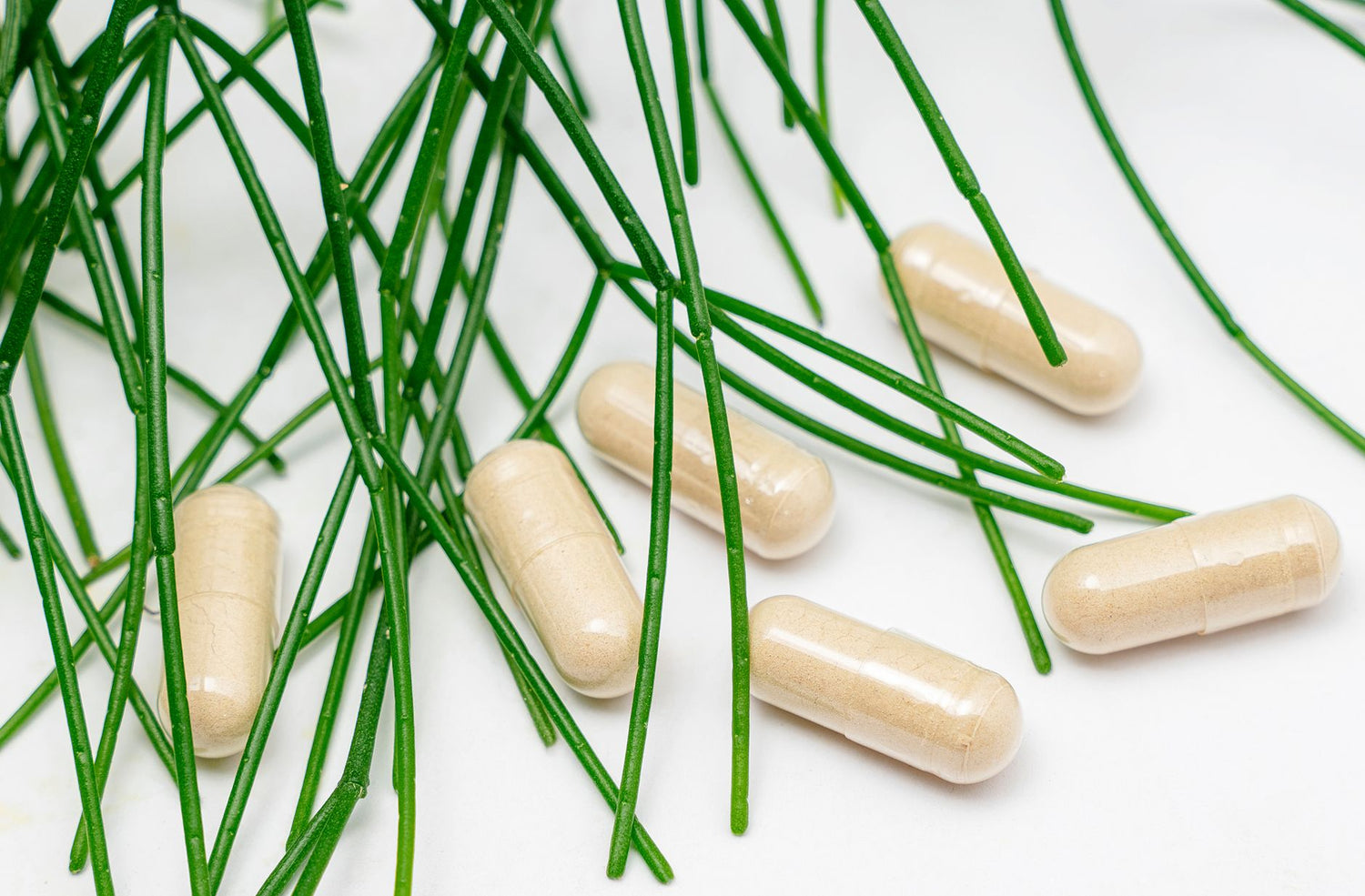
Most huperzine A supplement guides list the same handful of benefits and move on. This article takes a different approach: we evaluate huperzine A through the lens of its unusually long acetylcholine half-life — a pharmacological detail that changes how you should dose it, cycle it, and stack it with other nootropics. Getting the compound itself is easy; getting the protocol right is where most people go wrong.
Huperzine A is an alkaloid extracted from the Chinese club moss Huperzia serrata, and it has been studied for decades as an acetylcholinesterase inhibitor. In plain terms, it slows the breakdown of acetylcholine — the neurotransmitter most directly involved in memory encoding, focused attention, and learning.
Below, we cover the clinical evidence, practical dosing, stacking strategies, and what to look for in a huperzine A supplement in 2026.
How Huperzine A Works: The Acetylcholine Connection
Huperzine A works by reversibly inhibiting the enzyme acetylcholinesterase (AChE). This enzyme's sole job is to break down acetylcholine once it has delivered its signal across a synapse. By temporarily blocking AChE, huperzine A allows acetylcholine to remain active in the synaptic cleft for longer, potentially amplifying signals related to memory and attention.*
What makes huperzine A distinctive among cholinergic compounds is its selectivity and duration. It preferentially inhibits the G4 isoform of AChE found in the brain rather than the G1 isoform concentrated in peripheral tissues.
This selectivity is one reason it tends to produce fewer gastrointestinal side effects than some pharmaceutical AChE inhibitors at equivalent efficacy levels.
Crucially, huperzine A has a biological half-life of approximately 10–14 hours in humans — significantly longer than many nootropic compounds. This long half-life has two practical implications:
- You do not need to re-dose during the day.
- You should consider cycling to avoid receptor downregulation (more on this below).
What the Clinical Evidence Says
The bulk of huperzine A research comes from studies on age-related memory concerns and adolescent memory performance. The evidence base is moderate — strong enough to justify its widespread inclusion in nootropic formulas, but not yet at the level of a fully established pharmaceutical intervention.
Adolescent Memory Study
A 1999 randomised, double-blind trial published in Acta Pharmacologica Sinica gave 34 pairs of middle-school students either 100mcg of huperzine A or placebo daily for four weeks. The huperzine A group showed statistically significant improvements in memory quotient scores compared to controls.
Older Adult Phase II Trial
A 2011 phase II trial published in Neurology examined huperzine A at 200mcg twice daily (400mcg total) over 16 weeks. While the primary cognitive outcome did not reach statistical significance in the intention-to-treat analysis, secondary analyses of the per-protocol population showed meaningful improvements.
The compound was well tolerated across both studies. Several systematic reviews indexed on PubMed classify the overall evidence for huperzine A as "moderate," placing it among the most-studied natural AChE inhibitors available without prescription.
Evidence Strength at a Glance
| Outcome Measured | Evidence Level | Typical Dose Used | Study Duration |
|---|---|---|---|
| Memory performance (adolescents) | Moderate–Strong | 100mcg/day | 4 weeks |
| Cognitive function (older adults) | Moderate | 200–400mcg/day | 8–24 weeks |
| Neuroprotection (preclinical) | Promising (animal models) | N/A | Varies |
| General memory support (healthy adults) | Moderate | 100–200mcg/day | 4–12 weeks |
Dosage: Why 100–200mcg Is the Sweet Spot
The effective dose range for a huperzine A supplement in most research is 50mcg to 400mcg per day. However, the majority of positive cognitive outcomes in healthy adults cluster around 100–200mcg daily.*
Higher doses (400mcg+) are typically reserved for clinical research settings and carry a greater risk of cholinergic side effects such as nausea, muscle twitching, and excessively vivid dreams.
For general cognitive support — sharper recall, better sustained attention during work or study — 100–200mcg is well supported by the available literature.* This is the range used in most commercial nootropic formulas and aligns with the adolescent memory study referenced above.
The Case for Cycling
Because of huperzine A's long half-life and potent enzyme inhibition, many nootropic practitioners recommend cycling protocols. The two most common approaches:
- Five days on, two days off — aligned with a typical working week.
- Three weeks on, one week off — for those who prefer less frequent breaks.
The rationale is straightforward: continuous AChE inhibition can lead to compensatory upregulation of the enzyme, potentially reducing the compound's effectiveness over time. Periodic breaks may help maintain sensitivity.
While no controlled trial has directly compared cycling versus continuous dosing, the pharmacological logic is sound and widely accepted in the nootropics community.
Stacking Huperzine A: The Cholinergic Synergy Principle
A huperzine A supplement works best when it has ample acetylcholine to preserve. On its own, it prevents breakdown — but if your brain's choline supply is low, there may be less acetylcholine to protect in the first place.
This is why most evidence-based nootropic stacks pair huperzine A with a choline donor. I think of it as the "supply and protect" model: one ingredient builds, the other guards.
Common Stacking Partners
- Alpha GPC: A highly bioavailable choline source that crosses the blood-brain barrier efficiently. Alpha GPC increases acetylcholine production and neuronal membrane fluidity.* Combined with huperzine A's AChE inhibition, this creates the supply-and-protect dynamic.
- Choline bitartrate: A more affordable choline precursor. Less bioavailable than Alpha GPC but still provides the raw material for acetylcholine synthesis.*
- Phosphatidylserine: A phospholipid that may support neuronal membrane integrity and has been studied for its role in cortisol regulation and cognitive function.* It complements huperzine A by addressing cell-membrane health rather than neurotransmitter levels directly.
- Acetyl L-carnitine: May support mitochondrial energy production in neurons and has its own modest cholinergic activity.* Stacking it with huperzine A may support both the energy and signalling sides of cognitive performance.*
The key insight is that huperzine A is not a standalone solution — it is a force multiplier for your brain's existing cholinergic system. Pairing it with the right cofactors separates a well-designed stack from a single-ingredient gamble.
What to Look for in a Huperzine A Supplement in 2026
Not all huperzine A supplements are created equal. Here are the factors that matter most:
- Dose transparency: The exact mcg amount should be listed on the label — not hidden inside a "proprietary blend." Look for 100–200mcg per serving for cognitive support.*
- Standardised extract: Huperzine A should be standardised from Huperzia serrata, not listed vaguely as "club moss powder."
- Complementary ingredients: A formula pairing huperzine A with a choline source and synergistic nootropics will likely outperform huperzine A in isolation.
- Format and absorption: Drinkable formats generally offer faster absorption than tablets or capsules, as they bypass the disintegration step entirely.
- Third-party testing: Purity verification is especially important for botanical extracts, where contamination or incorrect species substitution can occur.
How Noobru Uses Huperzine A in Full-Stack Formulas
Rather than offering huperzine A as a standalone ingredient, Noobru integrates it into multi-compound formulas built around the cholinergic synergy principle described above. Here is how the two products differ — and when each one makes sense.
Noobru Advantage contains 200mcg of huperzine A — the upper end of the well-tolerated range — alongside phosphatidylserine (50mg), Alpha GPC, L-theanine (200mg), and ashwagandha (120mg).
This combination addresses both the neurotransmitter side (acetylcholine support*) and the neuronal membrane side (phosphatidylserine*) of cognitive function. The inclusion of vitamin B5 (30mg) is also notable, given research published in Biochemical and Biophysical Research Communications linking cerebral B5 deficiency to neurodegeneration.
Noobru Pro takes a different approach, pairing 100mcg of huperzine A with 500mg of acetyl L-carnitine, 150mg of Alpha GPC, and 200mg of rhodiola rosea.
Rhodiola is one of the best-studied adaptogens for mental fatigue, with research indexed on PubMed showing significant improvements in associative thinking, short-term memory, and calculation under stress. The lower huperzine A dose in Pro reflects its broader focus on energy and stress management rather than pure cognitive enhancement.
Both products use a drinkable sachet format for faster absorption, list every ingredient dose openly (no proprietary blends), and are tested for purity. They are formulated by the Noobru editorial team with input from nutritional science advisors.
Noobru Huperzine A Formulas Compared
| Feature | Noobru Advantage | Noobru Pro |
|---|---|---|
| Huperzine A dose | 200mcg | 100mcg |
| Primary choline source | Alpha GPC + Choline Bitartrate | Alpha GPC (150mg) + Choline Bitartrate |
| Key support ingredients | Phosphatidylserine, L-Theanine, Ashwagandha | Acetyl L-Carnitine, Rhodiola Rosea, Caffeine (40mg) |
| Best for | Memory clarity, brain fog, focus* | Energy, stress management, mental fatigue* |
| Format | Drinkable sachet | Drinkable sachet |
| Price | £49.95 | £55 |
Frequently Asked Questions
What does huperzine A actually do?
Huperzine A inhibits the enzyme acetylcholinesterase, which breaks down acetylcholine in the brain. This may help maintain higher levels of acetylcholine — a neurotransmitter involved in memory formation, learning, and attention.* It is extracted from the Chinese club moss Huperzia serrata.
What is the recommended dosage of huperzine A?
Most research uses doses between 50mcg and 400mcg daily. For general cognitive support, 100–200mcg is the most common range in nootropic supplements. Because of its long half-life (10–14 hours), many practitioners recommend cycling — for instance, five days on, two days off.
Can you take huperzine A with Alpha GPC or choline?
Yes, and many well-designed nootropic formulas deliberately combine them. Alpha GPC and choline bitartrate supply the raw material (choline) for acetylcholine production, while huperzine A slows its breakdown. This two-pronged approach may support more sustained acetylcholine activity than either ingredient alone.*
Are there side effects of huperzine A?
At recommended doses (50–400mcg), huperzine A is generally well tolerated. Potential side effects include nausea, diarrhoea, and vivid dreams — all signs of excess cholinergic activity. People taking acetylcholinesterase inhibitor medications should consult a healthcare provider before use.
How long does it take for huperzine A to work?
Huperzine A has a relatively fast onset compared to many nootropics. Some users report noticeable effects within 30–60 minutes of an oral dose. However, the cognitive support benefits documented in longer studies typically emerge over 8–12 weeks of consistent use.*
Key Takeaways
- Huperzine A is one of the most well-studied natural acetylcholinesterase inhibitors, with moderate evidence supporting its role in memory and cognitive function.*
- Its unusually long half-life (10–14 hours) means once-daily dosing is sufficient, but cycling protocols (5 days on, 2 off) may help maintain long-term effectiveness.
- The optimal dose for most healthy adults seeking cognitive support is 100–200mcg daily.*
- Huperzine A works best when stacked with a choline source (Alpha GPC, choline bitartrate) — the "supply and protect" approach to acetylcholine support.*
- Look for supplements with full dose transparency, standardised extracts, and complementary ingredients rather than huperzine A in isolation.
Noobru Advantage delivers 200mcg of huperzine A alongside Alpha GPC, phosphatidylserine, and L-theanine in a drinkable format designed for rapid absorption — no proprietary blends, every dose listed clearly.
Try Noobru risk-free with our 90-day money-back guarantee →References
- Sun QQ, et al. (1999). Huperzine-A capsules enhance memory and learning performance in 34 pairs of matched adolescent students. Acta Pharmacologica Sinica, 20(7), 601–603.
- Rafii MS, et al. (2011). A phase II trial of huperzine A in mild to moderate Alzheimer disease. Neurology, 76(16), 1389–1394. PubMed 21479349.
- Yang G, et al. (2013). Huperzine A for Alzheimer's disease: a systematic review and meta-analysis of randomized clinical trials. PLoS One, 8(9), e74916. PMC 4137276.
- Rubin EA, et al. (2018). Cerebral deficiency of vitamin B5 (d-pantothenic acid) as a potentially-reversible cause of neurodegeneration. Biochemical and Biophysical Research Communications. PubMed 30391757.
- Hung SK, Perry R, Ernst E. (2011). The effectiveness and efficacy of Rhodiola rosea L.: a systematic review of randomized clinical trials. Phytomedicine, 18(4), 235–244. PubMed 22228617.
*These statements have not been evaluated by the Food and Drug Administration or MHRA. This product is not intended to diagnose, treat, cure, or prevent any disease. Always consult your healthcare provider before starting any supplement regimen.

Leave a comment
All comments are moderated before being published.
This site is protected by hCaptcha and the hCaptcha Privacy Policy and Terms of Service apply.