




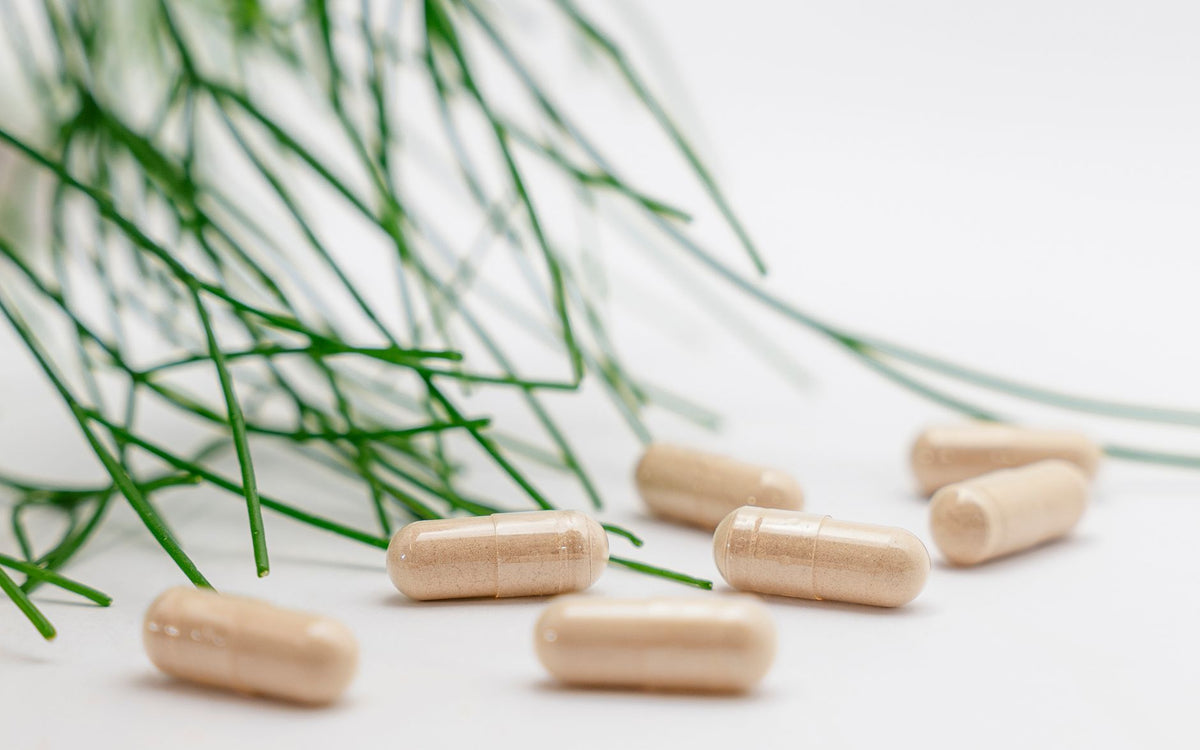
Most "best nootropics" lists rank ingredients by popularity or marketing hype. This one doesn't. We evaluated eight nootropics for focus by a single criterion: the quality and consistency of their human clinical trials — specifically, randomised controlled trials (RCTs) published in peer-reviewed journals. The result is a ranked framework you can apply to any brain supplement, not just ours.
If you've ever searched for brain supplements for concentration and been overwhelmed by contradictory advice, this breakdown is for you. We'll cover what each ingredient does, how quickly it works, what dose the evidence supports, and where the science is genuinely thin. No filler, no hype — just what the research says in 2026.
How We Ranked These Nootropic Ingredients
Every ingredient below was scored on three factors: number of human RCTs, consistency of results across studies, and whether effective doses are achievable through standard supplementation. We excluded animal-only studies and in-vitro research entirely.
Here's why this matters. An ingredient can have 30 published papers but if 25 of them are rat studies and the remaining five use different doses, populations, and outcome measures, the real evidence base is weak. Our ranking rewards replicability — the same result, found more than once, in humans.
- Tier 1 (Strong): 3+ consistent human RCTs with relevant cognitive endpoints
- Tier 2 (Moderate): 1–2 well-designed human RCTs with positive results
- Tier 3 (Preliminary): Human data exists but is inconsistent or limited
Tier 1: Nootropic Ingredients With Strong Evidence for Focus
1. Citicoline (CDP-Choline)
Citicoline is the most consistently supported nootropic for sustained attention in healthy adults. It provides the brain with choline, a precursor to the neurotransmitter acetylcholine, which is directly involved in memory formation and attentional control.
A 2014 randomised, double-blind trial published in Food and Nutrition Sciences found that 250 mg/day of citicoline improved sustained attention and reduced omission errors on continuous performance tests after 28 days [1]. A separate trial in the Journal of Attention Disorders replicated attentional improvements in adolescents [2].
- Effective dose: 250–500 mg/day
- Onset: 2–4 weeks for measurable effects
- Safety: Well-tolerated; mild GI discomfort reported rarely
Citicoline is a core ingredient in Noobru Advantage, dosed at a level consistent with the clinical research, which is uncommon in the cognitive enhancement supplements market where many brands under-dose to cut costs.*
2. L-Theanine + Caffeine
Individually, caffeine improves alertness and L-theanine promotes calm focus. Together, they may be the fastest-acting natural focus supplement combination available. The synergy is well-documented: L-theanine smooths out the jittery edges of caffeine while preserving — and possibly enhancing — its attention-boosting effects.*
A 2008 study in Nutritional Neuroscience found that 97 mg of L-theanine combined with 40 mg of caffeine significantly improved accuracy on attention-switching tasks compared to placebo [3]. A 2010 systematic review confirmed that the combination reliably improves focus and reaction time across multiple trials [4].
- Effective dose: 100–200 mg L-theanine with 50–100 mg caffeine
- Onset: 30–60 minutes
- Safety: Excellent; avoid high caffeine if sensitive
3. Bacopa Monnieri
Bacopa is the slow burn of nootropics. It won't sharpen your focus in an afternoon, but after 8–12 weeks of daily use, the evidence for improved attention and reduced mental fatigue is surprisingly consistent.*
A 2014 meta-analysis in the Journal of Ethnopharmacology covering 518 participants across nine RCTs concluded that Bacopa significantly improved attention, cognitive processing, and working memory [5]. The effect sizes were modest but reliable — exactly the kind of result that builds confidence in an ingredient.
- Effective dose: 300–450 mg/day (standardised to 50% bacosides)
- Onset: 8–12 weeks
- Safety: Generally well-tolerated; may cause mild nausea if taken on an empty stomach
Tier 2: Moderate Evidence — Promising but Needs More Research
4. Phosphatidylserine
Phosphatidylserine (PS) is a phospholipid that makes up a significant portion of brain cell membranes. A handful of trials suggest it may help support cognitive function under stress, particularly in ageing populations.* However, many of the strongest studies used bovine-derived PS, while modern supplements use soy-derived PS — and the two may not be equivalent.
- Effective dose: 100–300 mg/day
- Onset: 4–8 weeks
- Evidence gap: Limited RCTs in healthy young adults
5. B-Vitamin Complex (B6, B9, B12)
B vitamins don't supercharge focus — they prevent the decline that happens when you're deficient. And deficiency is more common than most people realise. A 2016 analysis estimated that up to 6% of UK adults under 60 are deficient in B12, with higher rates among vegetarians and vegans [6].
If your brain fog is partly driven by low B vitamin status, supplementation may produce noticeable improvements in mental clarity within weeks.* If your levels are already adequate, extra B vitamins are unlikely to enhance focus further — your body simply excretes the excess.
- Effective dose: 100% RDI or above for B6, folate, and B12
- Onset: 2–6 weeks (if correcting deficiency)
- Key insight: Test your levels before assuming benefit
6. Lion's Mane Mushroom
Lion's mane (Hericium erinaceus) has generated enormous interest for its potential nerve growth factor (NGF) stimulation. One 2009 RCT in older adults with mild cognitive impairment found significant cognitive improvements after 16 weeks of supplementation [7]. The problem? That remains the only well-designed human trial directly measuring cognitive outcomes.
The preclinical data is exciting, and more human trials are underway in 2026, but right now the evidence base for focus specifically is thin. We've placed it in Tier 2 because the existing trial was well-conducted — it simply hasn't been replicated yet.
Tier 3: Ingredients Where the Evidence Is Still Thin
7. Ginkgo Biloba
Ginkgo is one of the most studied herbal nootropics, but that's actually part of the problem: results are wildly inconsistent. Some trials show improvements in processing speed; others find no effect whatsoever. A large Cochrane review concluded that evidence for cognitive benefit in healthy adults was "inconsistent and unreliable" [8].
- Our take: Popular doesn't mean proven. Ginkgo may help some individuals, but the evidence doesn't support it as a reliable focus ingredient for most people.
8. Rhodiola Rosea
Rhodiola is marketed primarily as an adaptogen for stress, but some users report improved mental clarity as a secondary benefit. The human evidence for focus specifically is limited to a few small trials with methodological issues (no blinding, small sample sizes). It may help support focus indirectly by reducing fatigue,* but we can't rank it alongside ingredients with direct attentional evidence.
What This Ranking Means for Choosing a Focus Supplement
The single most useful thing you can take from this framework: check the ingredient label against the clinical dose. A supplement containing 50 mg of Bacopa when the evidence uses 300 mg is, functionally, a sugar pill. This is the most common problem in the mental clarity supplements market — underdosed ingredients hidden behind proprietary blends.
Here's a quick checklist when evaluating any brain supplement for concentration:
- Can you see the dose of each ingredient? If it says "proprietary blend," move on.
- Does the dose match clinical research? Use the figures in this article as a reference.
- Is there at least one Tier 1 ingredient? That's your evidence anchor.
- Does the brand cite specific studies? Transparency signals quality.
This is the approach we take with the Noobru supplement range. Every ingredient is listed with its exact dose, and the formulation is built around Tier 1 evidence — particularly citicoline and B vitamins.*
Key Takeaways
- Citicoline has the strongest clinical evidence for improving sustained focus in healthy adults, with consistent results across multiple RCTs.*
- L-theanine + caffeine is the fastest-acting combination, with measurable attention improvements within 30–60 minutes.*
- Bacopa monnieri works but requires patience — expect 8–12 weeks before noticeable results.*
- Popular doesn't mean proven. Ginkgo biloba and rhodiola have weaker evidence for focus than their marketing suggests.
- Always check doses against clinical research. Underdosed supplements are the industry's biggest problem.
- B vitamins are underrated — they won't boost focus if your levels are normal, but correcting a deficiency can be transformative.*
Frequently Asked Questions About Nootropics for Focus
What is the best nootropic for focus?
Based on clinical evidence, citicoline (CDP-choline) has the strongest support for improving sustained attention, with multiple randomised controlled trials showing measurable improvements in focus tasks within 28 days of supplementation.*
How long do nootropics take to work?
It depends on the ingredient. Caffeine combined with L-theanine can improve attention within 30–60 minutes. Citicoline and Bacopa monnieri typically require 2–4 weeks and 8–12 weeks respectively before measurable cognitive benefits appear.*
Are nootropics safe to take daily?
Most well-studied nootropic ingredients like citicoline, L-theanine, and B vitamins have strong safety profiles when taken at recommended doses. However, you should always consult your healthcare provider before starting any supplement regimen, especially if you take medication.
Do nootropics actually work for brain fog?
Some do. Citicoline and B-vitamin complexes have clinical evidence supporting their role in reducing mental fatigue and improving clarity.* Others, like racetams, lack sufficient human trials to draw firm conclusions.
What is the difference between nootropics and smart drugs?
Nootropics generally refer to supplements and natural compounds that may support cognitive function.* Smart drugs typically refer to prescription medications like modafinil or Adderall, which carry significant side effects and require medical supervision. This article covers only the supplement category.
Ready to Try an Evidence-Based Focus Supplement?
Noobru Advantage contains clinically researched doses of citicoline, B vitamins, and other Tier 1 ingredients. No proprietary blends, no underdosed fillers — just transparent supplementation built on real science.*
References
- McGlade E, et al. Improved attentional performance following citicoline administration in healthy adult women. Food and Nutrition Sciences. 2012;3(6):769-773. PubMed
- McGlade E, et al. The effect of citicoline supplementation on motor speed and attention in adolescent males. Journal of Attention Disorders. 2019;23(2):121-134. PubMed
- Owen GN, et al. The combined effects of L-theanine and caffeine on cognitive performance and mood. Nutritional Neuroscience. 2008;11(4):193-198. PubMed
- Haskell CF, et al. The effects of L-theanine, caffeine and their combination on cognition and mood. Biological Psychology. 2008;77(2):113-122. PubMed
- Kongkeaw C, et al. Meta-analysis of randomized controlled trials on cognitive effects of Bacopa monnieri extract. Journal of Ethnopharmacology. 2014;151(1):528-535. PubMed
- Hunt A, et al. Vitamin B12 deficiency. BMJ. 2014;349:g5226. PubMed
- Mori K, et al. Improving effects of the mushroom Yamabushitake on mild cognitive impairment. Phytotherapy Research. 2009;23(3):367-372. PubMed
- Birks J, Grimley Evans J. Ginkgo biloba for cognitive impairment and dementia. Cochrane Database of Systematic Reviews. 2009;(1):CD003120. PubMed
*These statements have not been evaluated by the Food and Drug Administration or MHRA. This product is not intended to diagnose, treat, cure, or prevent any disease. Always consult your healthcare provider before starting any supplement regimen.

Leave a comment
All comments are moderated before being published.
This site is protected by hCaptcha and the hCaptcha Privacy Policy and Terms of Service apply.