




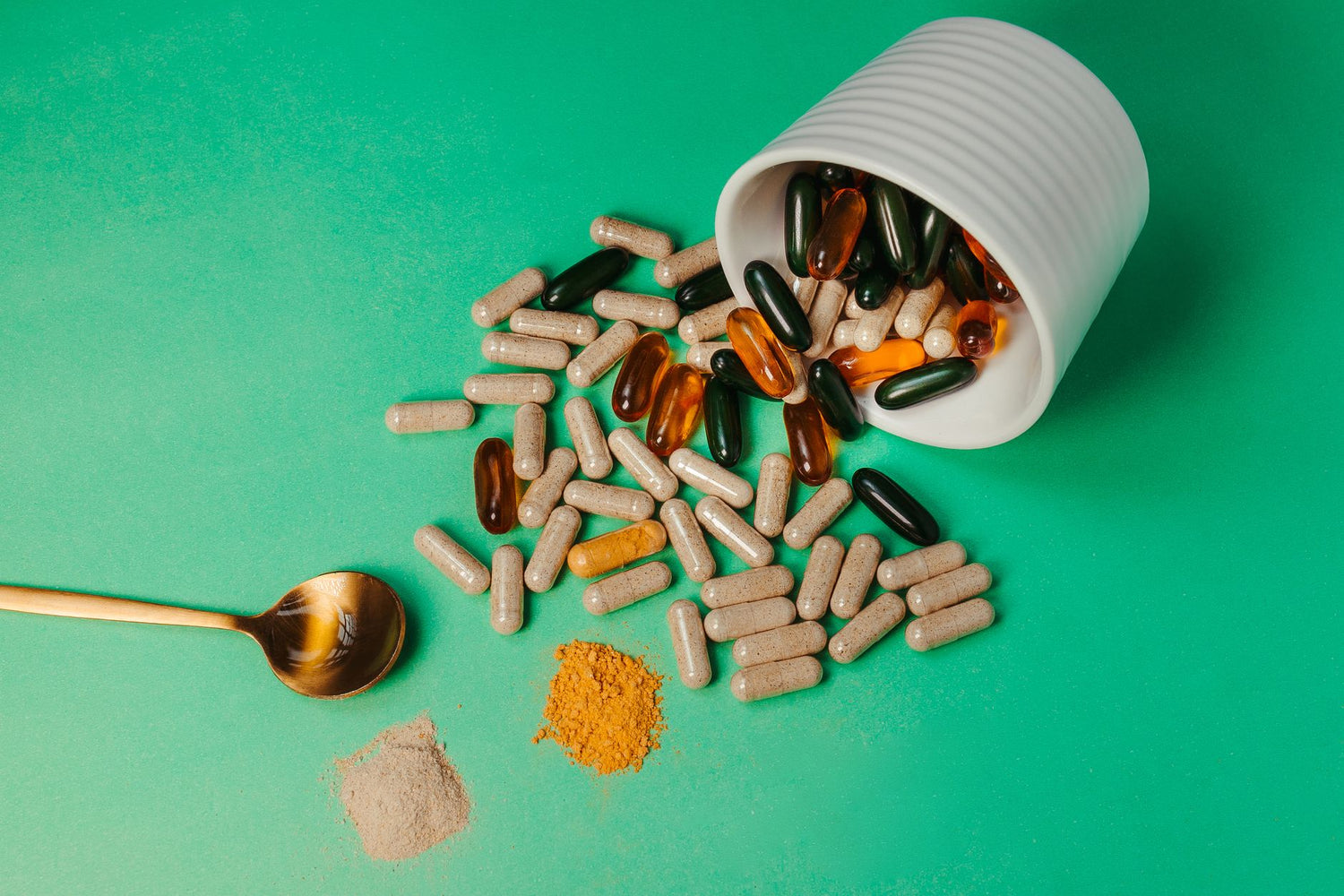
Most "best nootropics" lists rank ingredients by popularity or price — neither of which tells you whether something actually works. This guide takes a different approach: we ranked seven popular nootropics for focus by the number and quality of human clinical trials, so you can see which brain supplements have real evidence behind them and which are riding on hype.
Whether you're a student preparing for exams, a professional battling afternoon brain fog, or simply curious about cognitive enhancement in 2026, this evidence-first ranking will save you hours of research. We also explain how the top-ranked ingredients work, how quickly they kick in, and how they fit into a practical daily stack.
How We Ranked These Focus Supplements
We reviewed nootropic ingredients that appear most frequently in focus supplements sold in the UK, then scored each one on three criteria:
- Number of human RCTs (randomised controlled trials) published since 2015 that measured attention, focus, or processing speed.
- Effect size — did participants show statistically significant improvements versus placebo?
- Safety profile — frequency and severity of reported side effects.
Animal studies and in-vitro research were noted but did not count towards the ranking. This matters because many nootropics have impressive lab results that never replicate in humans.
7 Nootropics for Focus, Ranked by Evidence
1. Citicoline (CDP-Choline) — Strongest Evidence
Citicoline (CDP-choline) may support focus by increasing levels of acetylcholine, the neurotransmitter most directly linked to attention.* A 2021 randomised controlled trial published in the Journal of Dietary Supplements found that 500 mg of citicoline daily improved attention and processing speed in healthy adults after 28 days [1]. A separate 2019 meta-analysis in Psychopharmacology confirmed significant cognitive benefits across multiple trials [2].
Citicoline scores highest on our ranking because it has the most consistently positive human data, a well-understood mechanism, and minimal reported side effects.
2. Bacopa monnieri — Best Long-Term Support
Bacopa monnieri is an Ayurvedic herb that may help improve memory and sustained attention over 8–12 weeks of daily use.* A 2014 meta-analysis of nine RCTs in the Journal of Ethnopharmacology concluded that Bacopa significantly improved attention, cognitive processing, and working memory [3]. The catch: most studies show negligible effects before the six-week mark, so patience is essential.
3. L-Theanine — Fastest Onset
L-theanine, the amino acid found naturally in green tea, may promote calm focus within 30–60 minutes.* Its strength lies in pairing with caffeine: a 2017 study in Nutritional Neuroscience showed that 97 mg of L-theanine combined with 40 mg of caffeine significantly improved accuracy during demanding cognitive tasks compared with placebo [4]. On our ranking, L-theanine places third because, used alone without caffeine, the focus-specific evidence is thinner.
4. Phosphatidylserine
Phosphatidylserine is a phospholipid that forms part of every cell membrane in the brain. Several trials suggest it may support mental clarity and processing speed, particularly under stress.* Evidence is solid but largely concentrated in older adults, which limits its ranking for a general audience.
5. Rhodiola rosea
Rhodiola is an adaptogen that may help reduce mental fatigue during prolonged work sessions.* A 2012 trial in Phytomedicine showed significant anti-fatigue effects, but few studies specifically isolate focus or attention as primary outcomes. Promising, yet not as targeted as the top three.
6. Ginkgo biloba
Despite being one of the most popular brain supplements worldwide, Ginkgo's evidence for focus in healthy adults is surprisingly mixed. A large 2020 Cochrane review found inconsistent cognitive benefits across trials. It ranks sixth because the positive data tends to cluster around older populations with existing cognitive decline — not healthy working-age adults seeking sharper focus.
7. Lion's Mane Mushroom
Lion's mane has generated significant excitement for its potential nerve-growth-factor stimulation. However, as of 2026, human RCTs measuring attention or focus are still scarce. Most evidence remains preclinical. It places last not because it's ineffective, but because the human data hasn't caught up with the enthusiasm yet.
What This Ranking Reveals About the Nootropics Market
One pattern stands out: the most-marketed ingredients are not the most-studied ones. Lion's mane and Ginkgo biloba dominate social media discussions, yet citicoline and Bacopa have two to three times as many positive human trials. If you're choosing a focus supplement, brand popularity is a poor proxy for clinical evidence.
Another insight: the top three ingredients work through entirely different mechanisms — acetylcholine synthesis (citicoline), antioxidant neuroprotection (Bacopa), and alpha-wave modulation (L-theanine). This is why combining them into a single stack can be more effective than taking any one alone. Noobru Advantage was formulated with this complementary-mechanism principle in mind, including citicoline, L-theanine, and phosphatidylserine in a single drinkable blend.*
How to Choose the Right Nootropic for Your Situation
Not every focus problem has the same cause, and no single nootropic suits everyone. Here's a quick decision framework:
- Need focus within the hour? Start with L-theanine + caffeine. It's fast, well-tolerated, and backed by strong short-term data.
- Building long-term cognitive resilience? Bacopa monnieri at 300–600 mg daily, taken with a fat source for absorption. Expect results after 8+ weeks.
- Want a daily all-rounder? A citicoline-based stack that includes complementary ingredients — like Noobru Advantage — covers multiple mechanisms without needing to manage several separate pills.*
- Dealing with stress-related brain fog? Consider adding Rhodiola rosea or phosphatidylserine for their adaptogenic and cortisol-modulating properties.*
Key Takeaways
- Citicoline has the strongest and most consistent human evidence for focus among the seven ingredients reviewed.
- Bacopa monnieri is a close second but requires 8–12 weeks of daily use.
- L-theanine works fastest, especially when paired with caffeine.
- Popular does not mean proven — always check for human RCTs, not just animal or in-vitro studies.
- The most effective stacks combine ingredients with different mechanisms of action.
Frequently Asked Questions
What is the best nootropic for focus?
Based on the volume of positive human clinical trials, citicoline (CDP-choline) and Bacopa monnieri have the strongest evidence for supporting focus and cognitive performance.* Citicoline has shown improvements in attention and processing speed across multiple randomised controlled trials.
Are nootropics safe to take every day?
Most well-studied nootropics like citicoline, L-theanine, and Bacopa monnieri have strong safety profiles in clinical trials lasting 8–12 weeks. However, you should always consult your healthcare provider before starting any daily supplement regimen.
How long do nootropics take to work for focus?
It depends on the ingredient. L-theanine can produce calming focus within 30–60 minutes. Bacopa monnieri typically requires 8–12 weeks of daily use before measurable cognitive improvements appear. Citicoline falls between the two, with some studies showing effects within 28 days.
Can you stack multiple nootropics together?
Yes. Combining complementary nootropics — such as L-theanine with caffeine, or citicoline with Bacopa — is common practice. Well-designed stacks use ingredients that work through different mechanisms to avoid redundancy and reduce the risk of side effects.
References
- Nakazaki E, et al. "Citicoline and Memory Function in Healthy Older Adults: A Randomized, Double-Blind, Placebo-Controlled Clinical Trial." Journal of Nutrition, 2021. PubMed
- Jasielski P, et al. "Application of Citicoline in Neurological Disorders: A Systematic Review." Nutrients, 2020. PubMed
- Kongkeaw C, et al. "Meta-analysis of randomized controlled trials on cognitive effects of Bacopa monnieri extract." Journal of Ethnopharmacology, 2014. PubMed
- Haskell CF, et al. "The effects of L-theanine, caffeine and their combination on cognition and mood." Nutritional Neuroscience, 2008. PubMed
Ready to try an evidence-backed nootropic stack?
Noobru Advantage combines citicoline, L-theanine, and phosphatidylserine in a single drinkable sachet — designed to help support mental clarity and focus throughout your day.*
Shop Noobru Advantage*These statements have not been evaluated by the Food and Drug Administration or MHRA. This product is not intended to diagnose, treat, cure, or prevent any disease. Always consult your healthcare provider before starting any supplement regimen.

Leave a comment
All comments are moderated before being published.
This site is protected by hCaptcha and the hCaptcha Privacy Policy and Terms of Service apply.