




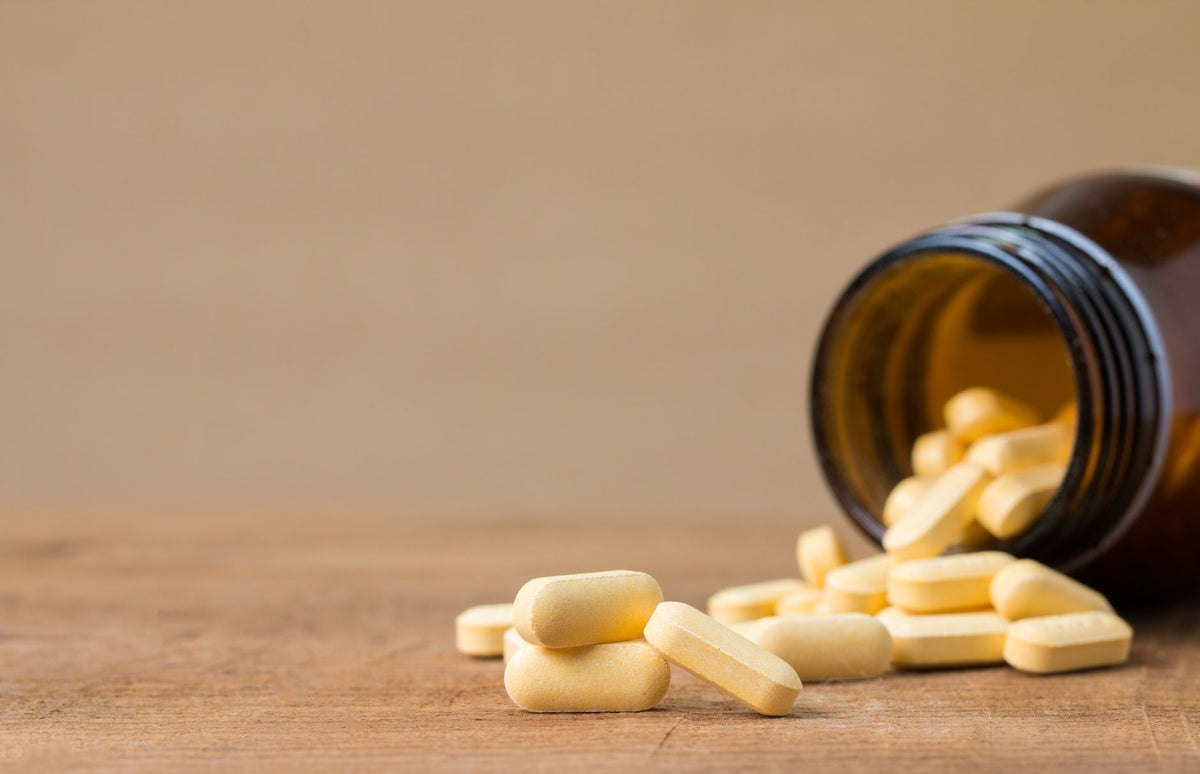
Primal Vitamins: An Ingredient-by-Ingredient Evidence Audit
Most primal vitamin reviews compare brands. This one doesn't. Instead, we've audited every major ingredient category found across primal vitamin formulas — organ extracts, adaptogens, B vitamins, minerals — against the specific clinical evidence each one carries in 2026. The result is a framework you can apply to any ancestral supplement on the shelf.
The primal vitamin market has exploded, but its core promise — that micronutrient deficiency can be addressed by mimicking ancestral nutrition — deserves scrutiny ingredient by ingredient. Some components have genuinely robust trial data. Others are coasting on caveman mythology at doses too low to matter. Here's what we found.

What Makes a Vitamin "Primal" — and Does the Label Matter?
A primal vitamin is any supplement designed to replicate the nutrient density of pre-agricultural diets. The label implies nose-to-tail nutrition, whole-food sourcing, and a rejection of synthetic fillers. But the label itself carries no regulatory meaning — any product can call itself "primal."
What typically lands in a primal vitamin formula:
- Desiccated organ extracts — liver, heart, kidney, and spleen powders
- Fat-soluble vitamins — A, D3, E, and K2 from whole-food sources
- B-complex vitamins — often food-based rather than synthetic
- Adaptogens — ashwagandha, rhodiola rosea, ginseng
- Minerals — zinc, magnesium, selenium, iron
- Antioxidant compounds — vitamin C, polyphenols, organ-derived CoQ10
The appeal is real. UK National Diet and Nutrition Survey data consistently flags widespread micronutrient deficiency in vitamin D, magnesium, and B12 — nutrients ancestral diets delivered in abundance. The question is whether primal vitamin products deliver them at doses that actually shift your biomarkers.
Ingredients with Strong Clinical Evidence
These are the primal vitamin ingredients where peer-reviewed research supports genuine benefit — provided the dose is right.
B Vitamins: The Most Defensible Inclusion
B vitamins may be the strongest evidence-backed reason to consider any primal vitamin formula.* They're also the easiest to underdose in capsule form.
Vitamin B5 (pantothenic acid) has been identified as a potentially reversible contributor to neurodegeneration when deficient, according to research published in Biochemical and Biophysical Research Communications (PubMed, 2019).
B6 and B12 may support cognitive health through homocysteine metabolism.* A review in the Annual Review of Nutrition (PubMed, 2016) found that elevated homocysteine — linked to low B vitamin status — is associated with accelerated brain volume loss in older adults.
The dosing problem: a liver capsule contains some B12, but clinical studies typically use 250–1000mcg of methylcobalamin. Most organ-extract capsules don't come close. If B vitamins are your priority, check the label for exact micrograms — not just "contains liver powder."
Vitamin D3: Essential, but Not Uniquely "Primal"
Our ancestors synthesised vitamin D through extensive sun exposure — something most UK adults conspicuously lack. The NHS recommends supplementing with at least 10mcg (400 IU) daily during autumn and winter.
Vitamin D3 may help support immune function, bone mineral density, and mood regulation.* It's included in most primal multivitamin formulas, though doses vary from 400 IU to 5,000 IU across products. This is one ingredient where the "primal" label adds nothing — D3 is D3 regardless of branding.
Adaptogens: Rhodiola and Ashwagandha
Rhodiola rosea and ashwagandha are frequently included in primal blends, and both carry robust trial data — when correctly dosed.
A systematic review in Phytomedicine confirmed rhodiola's role in helping manage stress and fatigue* (PubMed, 2012). Meanwhile, a 2012 trial published in the Indian Journal of Psychological Medicine showed ashwagandha root extract (300mg twice daily) produced significant reductions in serum cortisol and stress-assessment scores versus placebo* (PubMed, 2012).
Effective dose ranges: rhodiola requires 200–600mg standardised to 3% rosavins; ashwagandha needs 300–600mg of root extract. Many primal formulas bury these adaptogens inside a proprietary blend at undisclosed — and likely sub-clinical — amounts.

Zinc: Effective but Easy to Stack Too High
Zinc is a mineral cofactor that may help support both immune regulation and cognitive function.* A systematic review and meta-analysis in Nutrients examined zinc status and its relationship to autoimmunity (PubMed, 2019), reinforcing its role in healthy immune response.*
Ancestral diets were naturally rich in zinc from red meat and shellfish. Modern supplementation works, but the upper tolerable limit is 40mg daily. Stacking a primal vitamin with other zinc-containing supplements can push you past that threshold — watch for overlap.
Ingredients with Weak or Missing Evidence
"Ancestral" doesn't automatically mean "clinically validated." These ingredients sound compelling but lack the trial support to justify their inclusion at typical supplement doses.
Organ Meat Extracts in Capsule Form
Desiccated liver, heart, and spleen powders are the signature ingredient in primal vitamins — and the most oversold. Organ meats are undeniably nutrient-dense foods. But encapsulated organ extracts at typical supplement doses (500–3,000mg) are a different proposition.
A tablespoon of raw liver provides substantially more nutrition than most capsule servings. More critically, the supplement bioavailability of nutrients from freeze-dried organ powders versus whole-food consumption hasn't been rigorously compared in controlled clinical trials. Until it is, the "just like eating liver" marketing claim remains unverified.
Bone Marrow and Bovine Colostrum
Some primal formulas include bone marrow extract or bovine colostrum. While these are traditional foods with theoretical nutritional value, clinical evidence for their supplemental forms remains limited — mostly confined to animal studies or small pilot trials with significant methodological limitations.
Vague "Ancestral Blends" and Proprietary Complexes
Any product listing a proprietary "Primal Blend" or "Ancestral Complex" without specifying individual ingredient doses should raise an immediate red flag. Without dose transparency, you cannot assess whether you're getting clinically meaningful amounts or trace quantities — a practice the supplement industry calls "fairy dusting."
A useful rule of thumb: if a formula won't tell you how much of each ingredient it contains, it probably isn't containing enough to matter.
Five Criteria for Evaluating Any Primal Vitamin Formula
Whether you're assessing primal vitamins, paleo vitamins, or any ancestral supplement, these criteria separate effective products from expensive packaging:
- Dose transparency: Every ingredient should list its exact dose per serving. No proprietary blends. No exceptions.
- Clinical dosing: Compare listed doses against published trial data. A product containing 50mg of ashwagandha when studies use 300–600mg isn't going to deliver comparable results.*
- Supplement bioavailability: Check nutrient forms — methylcobalamin over cyanocobalamin for B12, magnesium glycinate over magnesium oxide. Look for absorption enhancers like piperine (black pepper extract), which has been shown to improve intestinal absorption of multiple nutrients* (PubMed, 2008).
- Third-party testing: Independent testing for purity and potency is especially important for organ-derived ingredients, where heavy metal and contaminant risk is elevated.
- Delivery format: Drinkable formats generally offer faster dissolution than compressed tablets, particularly for water-soluble vitamins and amino acids.*
Where Evidence-Based Supplementation and Ancestral Goals Overlap
The underlying goal of primal vitamins — addressing modern micronutrient deficiency with targeted, bioavailable nutrients — is sound. The execution is where most products falter. Undisclosed doses, unverified organ extract bioavailability, and proprietary blends undermine what could be a genuinely useful category.
One way to approach this honestly: use the ancestral framework to identify which nutrients matter, then source those nutrients from formats where dosing and absorption are verifiable. That's the approach Noobru takes — not because it's "primal," but because it's practical.
| Ancestral Nutrition Goal | Typical Primal Vitamin Approach | Evidence-Based Alternative |
|---|---|---|
| Stress adaptation | Undisclosed adaptogen blend | Noobru Pro — 200mg rhodiola rosea + ashwagandha at stated doses* |
| Cognitive support | Organ-derived nutrients (unverified dose) | Noobru Advantage — 200mg L-theanine, huperzine A, phosphatidylserine* |
| Immune resilience | Spleen extract + vitamin C | Noobru Shield — 1,000mg vitamin C, elderberry, echinacea, panax ginseng* |
| B vitamin status | Liver-derived B complex (variable dose) | Specified B vitamin doses across Noobru formulas* |
| Absorption | Varies by product format | Drinkable sachet format + piperine for enhanced supplement bioavailability* |
If you value organ meats in your diet, keep eating them — whole-food sources remain the gold standard. Pairing genuine whole-food nutrition with a targeted, transparently dosed supplement may offer the best of both approaches.*

Frequently Asked Questions About Primal Vitamins
What are primal vitamins?
Primal vitamins are supplements inspired by ancestral or paleo nutrition principles. They typically feature whole-food-sourced nutrients, organ meat extracts, adaptogens, and avoid synthetic fillers — aiming to replicate the micronutrient density of a hunter-gatherer diet.
Are primal vitamins better than regular multivitamins?
Not automatically. Some primal vitamin ingredients like B vitamins and adaptogens have genuine clinical evidence, but others — particularly organ extracts in capsule form — lack robust trials. Evaluate each ingredient individually rather than assuming "ancestral" means superior.
Do primal vitamins help with energy and focus?
Several ingredients commonly found in primal vitamin formulas — such as B vitamins, rhodiola rosea, and ashwagandha — have clinical evidence suggesting they may support energy and cognitive function.* Results depend on dosing and individual biochemistry.
Can I take primal vitamins alongside other supplements?
In most cases, yes, but check for ingredient overlap to avoid exceeding safe upper limits — particularly for fat-soluble vitamins like D3 and minerals like zinc. Always consult your healthcare provider before combining supplements.
What should I look for in a primal vitamin supplement?
Prioritise clinically studied doses, transparent labelling with no proprietary blends, third-party testing, and evidence-backed ingredients. Supplement bioavailability enhancers like piperine are a positive sign. Avoid vague "ancestral blend" marketing.
Is supplement bioavailability better in drinkable formats?
Drinkable formats bypass the tablet disintegration step, which may improve how quickly and completely water-soluble vitamins and amino acids are absorbed.* This is especially relevant for nutrients like B12 and vitamin C.
Key Takeaways
- Primal vitamins are built on a sound premise — modern micronutrient deficiency is real — but execution varies enormously between products.
- B vitamins, vitamin D3, zinc, and well-dosed adaptogens like rhodiola and ashwagandha have the strongest clinical evidence supporting supplementation.*
- Organ meat extracts, while nutrient-dense as whole foods, lack robust clinical evidence in encapsulated supplement form at typical doses.
- Supplement bioavailability matters as much as ingredient selection — the form, dose, and delivery method determine whether a nutrient actually reaches your bloodstream.
- Always prioritise dose transparency and clinical dosing over marketing claims about ancestral origins.
Looking for evidence-based nutrition at clinical doses — without the guesswork of proprietary blends? Explore Noobru's full range of drinkable supplements, each formulated with full ingredient transparency and backed by a no-questions-asked guarantee.
Try Noobru risk-free with our 90-day money-back guarantee →References
- Xu, J. et al. (2019). Cerebral deficiency of vitamin B5 (d-pantothenic acid) as a potentially-reversible cause of neurodegeneration. Biochemical and Biophysical Research Communications. PubMed
- Smith, A.D. & Refsum, H. (2016). Homocysteine, B Vitamins, and Cognitive Impairment. Annual Review of Nutrition. PubMed
- Sanna, A. et al. (2019). Zinc Status and Autoimmunity: A Systematic Review and Meta-Analysis. Nutrients. PubMed
- Ishaque, S. et al. (2012). Rhodiola rosea for physical and mental fatigue: a systematic review. Phytomedicine. PubMed
- Chandrasekhar, K. et al. (2012). A prospective, randomised double-blind, placebo-controlled study of safety and efficacy of ashwagandha root extract. Indian Journal of Psychological Medicine. PubMed
- Kesarwani, K. & Gupta, R. (2013). Bioavailability enhancers of herbal origin: An overview. Asian Pacific Journal of Tropical Biomedicine. PubMed
*These statements have not been evaluated by the Food and Drug Administration or MHRA. This product is not intended to diagnose, treat, cure, or prevent any disease. Always consult your healthcare provider before starting any supplement regimen.



Leave a comment
All comments are moderated before being published.
This site is protected by hCaptcha and the hCaptcha Privacy Policy and Terms of Service apply.