




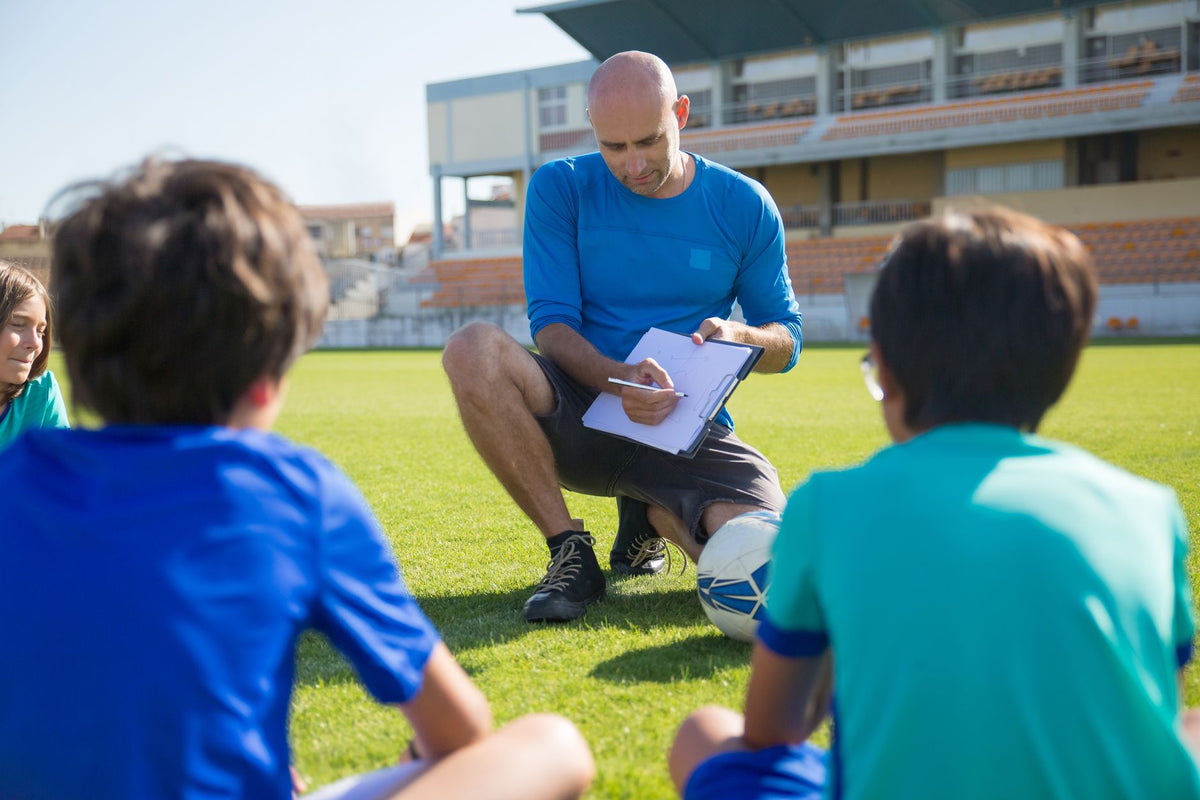
Sports mindset coaching teaches athletes the psychological techniques — visualisation, self-talk, arousal control, and attentional focus — that separate consistent performers from talented underachievers. But here's what most coaching guides leave out: each of those mental skills runs on a specific neurotransmitter pathway, and those pathways depend on nutritional raw materials. Mapping those dependencies explains why two athletes can follow the same coaching programme yet respond very differently.
This article connects each core pillar of sports mindset coaching to the brain chemistry that powers it, examines what peer-reviewed evidence says about each technique, and identifies where targeted nutrition may help athletes get more from their mental training in 2026.*
What Is Sports Mindset Coaching? A Clear Definition
Sports mindset coaching is a structured programme in which a trained practitioner helps athletes develop psychological skills that improve performance consistency, especially under pressure. It sits within the broader field of sport psychology but focuses specifically on trainable mental habits rather than clinical diagnosis.
A typical programme covers four core pillars:
- Visualisation (mental imagery) — rehearsing movements, scenarios, and successful outcomes in the mind's eye.
- Self-talk regulation — replacing negative internal dialogue with instructional or motivational cues.
- Arousal control — managing pre-competition nerves through breathing, progressive muscle relaxation, or centering techniques.
- Attentional focus — directing and sustaining attention on task-relevant cues while filtering distractions.
These aren't vague "believe in yourself" platitudes. Each pillar has a measurable neurological footprint — and that's where the story gets interesting.
The Neurochemistry Behind Each Coaching Pillar
Understanding the brain chemistry behind mental skills training helps explain why some athletes respond faster to coaching than others — and why nutrition is a legitimate performance variable, not just a wellness trend.
Visualisation and Acetylcholine
When an athlete vividly imagines executing a skill, the motor cortex activates in patterns remarkably similar to actual movement. This process depends heavily on acetylcholine — the neurotransmitter responsible for learning, memory encoding, and the sharpness of neural signalling.
Choline-based compounds like Alpha GPC and citicoline serve as precursors to acetylcholine production. A 2012 study in the Journal of the International Society of Sports Nutrition found that Alpha GPC supplementation enhanced physical and psychomotor performance in young adults* [1].
If an athlete's choline intake is insufficient, the neural "signal" during visualisation may be weaker — like trying to record a high-definition memory on a low-bandwidth connection. The sharper the internal rehearsal, the better it transfers to competition.
Self-Talk and Dopamine
Motivational and instructional self-talk engages the prefrontal cortex and reward circuitry. Dopamine is the primary currency here — it underpins motivation, reward anticipation, and the capacity to sustain effort when things get difficult.
L-Tyrosine, an amino acid precursor to dopamine, has been shown to help support cognitive performance under stressful conditions*. A 2015 review published in the Journal of Psychiatric Research concluded that tyrosine supplementation may help counteract working-memory decline caused by demanding situations [2].
This matters in practice: athletes under extreme pressure — penalty shootouts, final-set tiebreakers — can experience dopamine depletion. Positive self-talk feels hollow precisely when they need it most, not because the technique is flawed but because the neurochemical fuel has run low.
Arousal Control and GABA/Serotonin
Managing pre-competition nerves requires the inhibitory neurotransmitter GABA to modulate overactive stress circuits. Serotonin helps maintain emotional equilibrium alongside it.
Ashwagandha — one of the most studied adaptogens — has been shown to reduce cortisol levels and stress assessment scores significantly compared to placebo, partly through GABA receptor modulation. A 2012 randomised controlled trial found that 300 mg ashwagandha twice daily reduced perceived stress scores by 44% over 60 days* [3].
L-Theanine promotes alpha brain-wave activity associated with calm alertness, effectively lowering physiological arousal without causing sedation*. For an athlete needing to be calm but not sleepy, that distinction is critical.

Attentional Focus and Norepinephrine
Sustained selective attention depends on norepinephrine — the neurotransmitter that sharpens the brain's signal-to-noise ratio. Too little, and the athlete drifts. Too much (often triggered by anxiety), and they fixate on threats rather than opportunities.
Rhodiola rosea has demonstrated the ability to reduce mental fatigue and improve associative thinking and short-term memory in controlled studies*. A 2012 systematic review in BMC Complementary and Alternative Medicine found consistent evidence for rhodiola's anti-fatigue effects across multiple trials [4].
This matters for sports mindset coaching because focus drills are only effective if the underlying neurochemistry supports them. You can't train attention with a depleted attention system.
What the Evidence Says: Does Sports Mindset Coaching Actually Work?
Yes — with caveats about consistency and individual variation. A 2020 meta-analysis published in the International Review of Sport and Exercise Psychology found that psychological skills training programmes produced moderate-to-large effect sizes on competitive performance across a range of sports [5]. The most effective programmes shared three features:
- They lasted at least six weeks.
- They combined multiple techniques (e.g., visualisation plus self-talk, not one method in isolation).
- They were practised as consistently as physical drills.
The research also shows significant individual variability. Two athletes can follow the same coaching programme and respond very differently. While some of this comes from personality and prior experience, there's growing recognition that neurochemical readiness plays a role — the availability of the neurotransmitters these techniques require.
As one way of thinking about it: coaching techniques are software upgrades, but they still need compatible hardware to run on.
Practical Steps: Getting the Most From Sports Mindset Coaching in 2026
Whether you're working with a coach, using an app, or following a self-guided programme, these evidence-informed strategies can help you extract more value from your mental skills training.
1. Treat Mental Training Like Physical Training
Schedule 10–15 minutes of dedicated mental rehearsal on at least four days per week. Visualisation sessions are most effective when performed in a quiet environment, ideally within two hours of physical practice so the motor patterns are fresh.
Consistency matters more than session length. Ten minutes of deliberate, focused imagery outperforms thirty minutes of distracted daydreaming.
2. Build a Self-Talk Library
Write down 3–5 instructional cues ("drive through the hips", "smooth hands") and 2–3 motivational phrases ("I've done this a thousand times", "next ball"). Practise them during training — not just competition.
By the time you need them under pressure, they should be automatic. A self-talk cue that requires conscious effort to recall has already failed its job.
3. Use Breathing as Your Arousal Thermostat
Box breathing (4 seconds inhale, 4 hold, 4 exhale, 4 hold) is the simplest evidence-backed arousal control technique. Use it in the 5–10 minutes before competition and between plays or sets.
The vagal nerve stimulation from controlled exhales directly reduces sympathetic (fight-or-flight) activation. This isn't woo — it's basic autonomic physiology.

4. Prioritise Sleep for Memory Consolidation
Motor memory and emotional regulation are consolidated during deep sleep. A single night of poor sleep can reduce reaction time by up to 300 milliseconds and impair emotional regulation — undermining the benefits of the previous day's mindset work.
If sleep quality is an issue, targeted support may be worthwhile. Ingredients like ashwagandha (1000 mg), passionflower, and L-theanine have moderate evidence for helping support sleep quality without next-day grogginess*.
5. Support the Neurochemistry That Coaching Depends On
A diet rich in protein (providing amino acid precursors like tyrosine and tryptophan), omega-3 fatty acids, B vitamins, and choline sources gives your brain the raw materials to execute what you've rehearsed.
For many athletes, ensuring adequate intake of these nutrients through food alone is challenging — particularly during heavy training blocks when caloric demands are high but appetite may be suppressed. That's where targeted supplementation becomes practical rather than aspirational.
Where Noobru Fits Into a Mental Skills Programme
I want to be clear about framing here: no supplement replaces the work of showing up, doing the visualisation reps, and practising your self-talk cues until they're automatic. But if coaching techniques are the software, then brain-supporting nutrition is the maintenance programme that keeps the hardware running well.
Noobru Sprint combines 1253 mg taurine (a neuromodulator involved in stress response regulation* [6]), 200 mg ashwagandha, 100 mg caffeine balanced with L-theanine, and 100 mg L-tyrosine — providing dopamine precursors that may help sustain motivational self-talk under pressure*. The caffeine/L-theanine pairing is particularly relevant: a 2008 study found that this combination improved both speed and accuracy of attention tasks compared to either ingredient alone* [7].
Noobru Pro may suit athletes dealing with sustained stress or performance anxiety. Its formula includes 200 mg rhodiola rosea, 500 mg acetyl L-carnitine for mitochondrial energy support*, 150 mg Alpha GPC as an acetylcholine precursor* [1], and phosphatidylserine — studied for its role in modulating the cortisol response to physical and psychological stress*.
For athletes whose mental performance is compromised by poor sleep, Noobru Lucid provides 1000 mg ashwagandha, 200 mg passionflower, and 150 mg L-theanine — selected to help support restorative sleep without morning grogginess*.
Frequently Asked Questions
What does a sports mindset coach actually do?
A sports mindset coach teaches athletes structured psychological techniques — visualisation, self-talk scripts, arousal regulation, and attentional focus drills — to improve consistency under pressure. Sessions typically run 4–12 weeks, with skills practised alongside physical training.
Can nutrition really affect mental toughness?
Yes. Neurotransmitters like dopamine, serotonin, and acetylcholine underpin every mental skill a coach trains. If the raw materials for these chemicals are lacking — amino acids, B vitamins, choline — coaching techniques may be harder to embed and execute under stress.
How long does sports mindset coaching take to work?
Most athletes notice improved self-awareness within 2–4 weeks. Measurable performance gains — such as reduced anxiety scores or better competition consistency — typically emerge after 6–12 weeks of deliberate practice.
Is sports mindset coaching only for elite athletes?
Not at all. Recreational runners, weekend league footballers, and amateur cyclists all benefit. The techniques scale to any level because the underlying psychology — managing nerves, maintaining focus, recovering from setbacks — is universal.
What supplements may support athletic mental performance?
Ingredients with evidence for cognitive or stress-related benefits include L-theanine (calm focus), rhodiola rosea (stress resilience), ashwagandha (cortisol modulation), and phosphatidylserine (stress response support)*. Always consult a healthcare provider before starting any supplement.
Key Takeaways
- Sports mindset coaching is a structured, evidence-based approach to building mental toughness — not motivational fluff.
- Each of the four core pillars maps to a specific neurotransmitter: visualisation → acetylcholine, self-talk → dopamine, arousal control → GABA/serotonin, attentional focus → norepinephrine.
- Individual variation in coaching outcomes may partly reflect differences in neurochemical readiness — the availability of the right precursors and cofactors.
- Consistent practice (at least four sessions per week for six-plus weeks) is non-negotiable for results.
- Targeted nutrition — including amino acid precursors, adaptogens, and B vitamins — may help support the brain chemistry that makes coaching techniques trainable.*
Your mental game depends on the same brain that needs the right fuel. Noobru Sprint, Pro, and Lucid are formulated with clinically studied ingredients at transparent doses to help support focus, stress resilience, and recovery — the neurochemical foundations of every mental skill you train.*
Try Noobru risk-free with our 90-day money-back guarantee →References
- Bellar, D., LeBlanc, N.R. & Campbell, B. (2015). The effect of 6 days of alpha glycerylphosphorylcholine on isometric strength. Journal of the International Society of Sports Nutrition, 12, 42. doi:10.1186/s12970-015-0103-x
- Jongkees, B.J. et al. (2015). Effect of tyrosine supplementation on clinical and healthy populations under stress or cognitive demands — A review. Journal of Psychiatric Research, 70, 50–57. doi:10.1016/j.jpsychires.2015.08.014
- Chandrasekhar, K., Kapoor, J. & Anishetty, S. (2012). A prospective, randomized double-blind, placebo-controlled study of safety and efficacy of a high-concentration full-spectrum extract of Ashwagandha root in reducing stress and anxiety in adults. Indian Journal of Psychological Medicine, 34(3), 255–262. PubMed: 23439798
- Hung, S.K., Perry, R. & Ernst, E. (2011). The effectiveness and efficacy of Rhodiola rosea L.: A systematic review of randomized clinical trials. Phytomedicine, 18(4), 235–244. doi:10.1016/j.phymed.2010.08.014
- Brown, D.J. & Fletcher, D. (2017). Effects of psychological and psychosocial interventions on sport performance: A meta-analysis. Sports Medicine, 47(1), 77–99. doi:10.1007/s40279-016-0552-7
- Ripps, H. & Shen, W. (2012). Review: Taurine: A "very essential" amino acid. Molecular Vision, 18, 2673–2686. PubMed: 23170060
- Owen, G.N. et al. (2008). The combined effects of L-theanine and caffeine on cognitive performance and mood. Nutritional Neuroscience, 11(4), 193–198. doi:10.1179/147683008X301513
*These statements have not been evaluated by the Food and Drug Administration or MHRA. This product is not intended to diagnose, treat, cure, or prevent any disease. Always consult your healthcare provider before starting any supplement regimen.


Leave a comment
All comments are moderated before being published.
This site is protected by hCaptcha and the hCaptcha Privacy Policy and Terms of Service apply.