




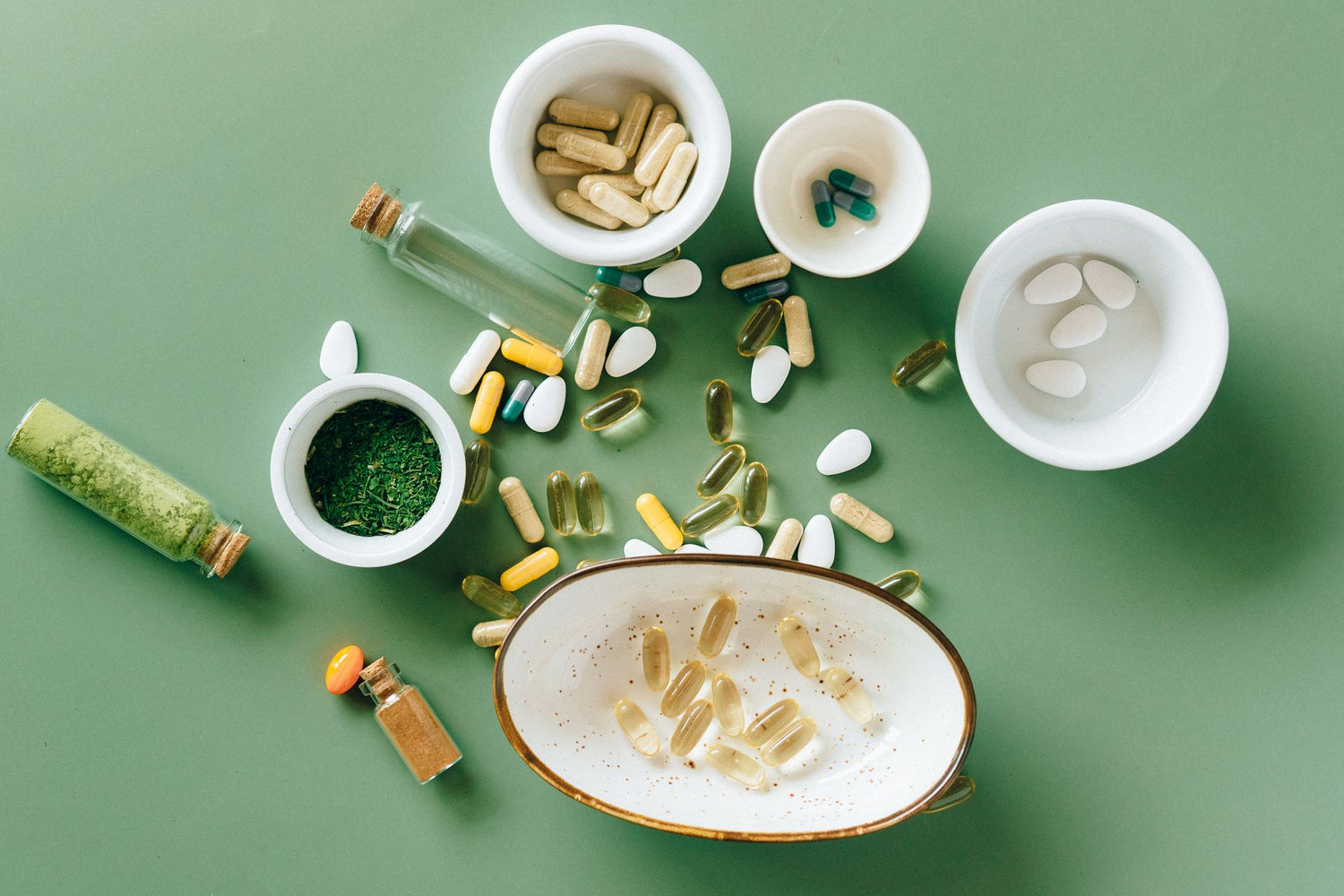
Vitamins for Concentration: Which Nutrients Actually Help You Focus?
The best vitamins for concentration include B12, B6, citicoline, and several well-researched nootropic compounds such as Bacopa monnieri and L-theanine. These cognitive function supplements support focus by maintaining neurotransmitter production, protecting neural pathways, and promoting the calm alertness needed for sustained attention. Not every supplement lives up to its label, though — so understanding the evidence behind each nutrient is essential before you spend a penny.
If you've been struggling with brain fog, distractibility, or that frustrating feeling of reading the same paragraph three times, you're not alone. A 2023 survey by the Mental Health Foundation found that poor concentration was among the top cognitive complaints reported by UK adults aged 25–55. The good news: specific vitamins and focus supplements have meaningful clinical support for helping your brain stay on task.
This guide breaks down the vitamins for concentration that are genuinely backed by science, explains how they work, and offers practical advice for choosing the right ones in 2026.
Why Concentration Fails: The Nutritional Connection
Poor concentration is rarely about willpower — it's usually a biological signal. Cognitive function depends on neurotransmitter signalling, neural membrane integrity, energy metabolism, and stress regulation. When any of these systems falter, focus suffers.
Several common nutritional gaps directly undermine your ability to concentrate:
- B vitamin deficiency — B12 and B6 are essential cofactors in neurotransmitter synthesis. Without adequate levels, your brain cannot produce sufficient acetylcholine, dopamine, or serotonin [1].
- Choline insufficiency — Most UK adults do not consume enough choline, the direct precursor to acetylcholine. Low choline intake is associated with reduced attention and working memory.
- Chronic stress and elevated cortisol — Prolonged stress depletes nutrients like magnesium and B vitamins while impairing prefrontal cortex function, the brain region responsible for sustained attention.
- Poor sleep quality — Even mild sleep deprivation impairs concentration more than moderate alcohol intoxication. Nutrients that support sleep quality indirectly bolster focus the following day.
Addressing these root causes — rather than simply reaching for caffeine — is what separates a lasting concentration strategy from a temporary fix.
The 7 Best Vitamins and Nutrients for Concentration
Below are the nutrients with the strongest evidence for supporting focus, attention, and mental clarity. Each entry includes the mechanism, effective dose range, and key research.
1. Vitamin B12 (Methylcobalamin)
Vitamin B12 is essential for myelin sheath synthesis — the insulating layer around neurons that determines signal speed. Low B12 is one of the most common and correctable causes of poor cognitive function.
A 2016 study published in Neurology found that low B12 levels are strongly associated with accelerated brain volume loss and cognitive decline in older adults [1]. The bioactive form, methylcobalamin, crosses the blood-brain barrier more effectively than cyanocobalamin. Effective dose: 250–1,000 mcg daily.
B12 deficiency is particularly common in the UK among vegetarians, vegans, and adults over 50 whose stomach acid production has declined.
2. Citicoline (CDP-Choline)
Citicoline is one of the most evidence-backed nootropics for concentration.* It provides choline (the precursor to acetylcholine) and cytidine, which converts to uridine to support synaptic plasticity and neural membrane repair.
A 2015 randomised controlled trial published in the Journal of Attention Disorders demonstrated that citicoline improved attention and psychomotor speed in healthy adults, with MRI scans confirming increased frontal lobe bioenergetics [2]. Effective dose: 250–500 mg daily.
3. Bacopa Monnieri
Bacopa monnieri is an Ayurvedic herb with strong evidence for enhancing memory and focus.* It works by modulating acetylcholine and serotonin pathways, while its active compounds — bacosides A and B — provide antioxidant protection to neurons.
A 2014 systematic review and meta-analysis in the Journal of Ethnopharmacology recommended Bacopa as a cognitive enhancer, noting significant improvement in memory free recall across nine high-quality studies [3]. Effective dose: 300–600 mg daily, standardised to 55% bacosides. Note that Bacopa typically requires 8–12 weeks of consistent use before benefits become apparent.
4. L-Theanine
L-theanine, an amino acid found naturally in green tea, promotes alpha brain wave activity — the mental state associated with calm, focused attention.* It modulates GABA, serotonin, and dopamine without causing drowsiness.
A 2008 study in Nutritional Neuroscience found that combined L-theanine and caffeine improved both speed and accuracy on attention-switching tasks versus either compound alone [4]. This makes L-theanine one of the most practical focus supplements for daily use. Effective dose: 100–200 mg daily.
5. Rhodiola Rosea
Rhodiola rosea is an adaptogenic herb that may help sustain concentration under stress.* It regulates the HPA axis (your body's central stress response system), moderates cortisol, and increases serotonin and dopamine availability.
A 2000 study in Phytomedicine demonstrated significant reduction in mental fatigue alongside improved associative thinking, short-term memory, and calculation ability in physicians during night shifts [5]. Effective dose: 200–600 mg daily, standardised to 3% rosavins and 1% salidroside.
6. Vitamin B6 (Pyridoxine / P-5-P)
Vitamin B6 is a critical cofactor in the synthesis of dopamine, norepinephrine, serotonin, and GABA — four neurotransmitters that directly influence attention, motivation, and mood stability.*
Without adequate B6, neurotransmitter production slows and concentration can deteriorate. The NHS recommends adults consume 1.2–1.4 mg of B6 daily, though the active form pyridoxal-5-phosphate (P-5-P) is better absorbed in supplement form. Food sources include poultry, fish, potatoes, and chickpeas.
7. Acetyl-L-Carnitine (ALCAR)
Acetyl-L-carnitine supports mitochondrial energy production in brain cells and acts as a neuroprotectant.* It also serves as a precursor to acetylcholine, the neurotransmitter most closely associated with learning and focused attention.
A 2020 systematic review in Psychopharmacology concluded that ALCAR supplementation may benefit cognitive function, particularly under conditions of cognitive fatigue or age-related decline [6]. Effective dose: approximately 500 mg daily.
What Actually Affects Your Ability to Concentrate
Vitamins are only part of the picture. Several lifestyle factors either amplify or undermine their effectiveness:
- Sleep quality: Even the best nootropics will not compensate for chronic sleep deprivation. Prioritise 7–9 hours nightly. Nutrients like magnesium glycinate and L-tryptophan may help support restful sleep* — which is the foundation Noobru Lucid was designed around.
- Hydration: Dehydration of just 1–2% body mass can measurably impair attention and working memory. A drinkable supplement format helps you stay hydrated while delivering key nutrients.
- Blood sugar stability: Post-meal glucose spikes and crashes are a leading cause of the afternoon concentration slump. If you're concerned about metabolic health, Noobru Cheat is formulated to help manage post-meal blood sugar spikes.*
- Stress management: Chronic stress elevates cortisol, impairing the prefrontal cortex. Adaptogens like Rhodiola rosea and ashwagandha may help modulate the stress response.*
- Exercise: Just 20 minutes of moderate aerobic exercise increases brain-derived neurotrophic factor (BDNF), which supports the neural pathways involved in concentration.
The most quotable rule in cognitive nutrition: "Fix the foundations first — no supplement can out-perform a sleep deficit, dehydration, or chronic stress."
How to Choose the Right Focus Supplement
The supplement market is crowded, and quality varies enormously. Here's what to look for when choosing vitamins for concentration and cognitive function supplements:
| Quality Marker | What to Look For | Red Flag |
|---|---|---|
| Ingredient doses | Clinical doses listed individually | "Proprietary blend" with hidden amounts |
| Bioavailability | Bioactive forms (e.g. methylcobalamin, P-5-P) | Cheapest forms with poor absorption |
| Transparency | Full ingredient label visible before purchase | Vague descriptions or missing labels |
| Purity testing | Third-party or in-house testing documented | No mention of testing at all |
| Format | Drinkable or capsule with proven absorption | Gummies with high sugar and low active dose |
It's also worth asking your GP for a blood test before supplementing. Checking B12, vitamin D, iron, and folate levels can reveal deficiencies directly sabotaging your concentration. Correcting a confirmed deficiency is the single most effective nutritional intervention you can make.
How Noobru Compares: A Drinkable Approach to Focus
Noobru is a UK-based drinkable supplement brand that takes a transparent, evidence-first approach to cognitive support. Every formula uses clinical doses with no proprietary blends, so you know exactly what you're getting.
For concentration specifically, Noobru Pro combines adaptogens and energising nootropics — including Rhodiola rosea and L-theanine — to help support sustained energy, mental clarity under pressure, and stress management.* These are the three pillars that directly underpin your ability to focus throughout the day.
The drinkable format offers a practical advantage: liquid nutrients are absorbed faster than tablets, and the act of preparing a drink becomes a simple ritual that anchors your focus routine. Each sachet mixes with water, helping you stay hydrated — a frequently overlooked concentration booster.
For men over 50 who notice concentration declining alongside other age-related changes, Noobru Zeus supports male vitality and hormonal health, which can indirectly influence cognitive sharpness.* And for those whose focus issues stem partly from weakened immune resilience and frequent illness, Noobru Shield provides daily antioxidant and immune support.*
Frequently Asked Questions
What is the best vitamin for concentration and focus?
There is no single best vitamin, but B12 (methylcobalamin) has some of the strongest evidence. Low B12 is linked to accelerated brain volume loss and cognitive decline [1]. Citicoline and Bacopa monnieri also have strong clinical support for improving attention and memory.
Can vitamins really help with brain fog?
Certain vitamins and nutrients may help reduce brain fog by addressing underlying deficiencies or supporting neurotransmitter production.* B vitamins, citicoline, and L-theanine have the most robust evidence for supporting mental clarity and reducing cognitive fatigue.
How long do vitamins for concentration take to work?
It depends on the nutrient. L-theanine may support calm focus within 30–60 minutes. Bacopa monnieri typically requires 8–12 weeks of consistent use. B vitamin deficiency correction can take several weeks of daily supplementation.
Are vitamins for concentration safe to take daily?
Most vitamins and nootropic nutrients discussed here are considered safe at recommended doses for healthy adults. Always consult your healthcare provider before starting any supplement, especially if you take medication or have a pre-existing condition.
Do I need a blood test before taking vitamins for focus?
It is a good idea to check for deficiencies — particularly B12, vitamin D, and iron — before supplementing. Your GP can arrange a simple blood test. Addressing a confirmed deficiency is often the single most effective way to improve concentration.
What is the difference between nootropics and vitamins for focus?
Vitamins like B12 and B6 correct nutritional deficiencies that impair cognitive function. Nootropics such as citicoline and Bacopa monnieri go further by actively modulating neurotransmitter systems and supporting neural membrane repair. Many effective focus supplements combine both approaches.
Key Takeaways
- B12 and B6 are foundational for neurotransmitter production and cognitive function.*
- Citicoline improves attention and frontal lobe energy metabolism [2].*
- Bacopa monnieri enhances memory and focus after 8–12 weeks of use [3].*
- L-theanine promotes calm alertness; pairs well with caffeine [4].*
- Rhodiola rosea helps sustain concentration under stress [5].*
- Sleep, hydration, blood sugar, and stress management amplify any supplement's effects.
- Check for deficiencies with your GP before supplementing — it's the highest-impact first step.
Ready to support your focus with a transparent, evidence-based formula? Noobru's drinkable supplements are made in the UK with clinical doses and no proprietary blends — so you know exactly what's working for your brain.
Try Noobru risk-free with our 90-day money-back guarantee →References
- Vogiatzoglou A, et al. Vitamin B12 status and rate of brain volume loss in community-dwelling elderly. Neurology. 2008;71(11):826-832. pubmed.ncbi.nlm.nih.gov/18779510
- McGlade E, et al. Improved attentional performance following citicoline administration in healthy adult women. Food and Nutrition Sciences. 2012;3(6):769-773. pubmed.ncbi.nlm.nih.gov/26267895
- Kongkeaw C, et al. Meta-analysis of randomized controlled trials on cognitive effects of Bacopa monnieri extract. Journal of Ethnopharmacology. 2014;151(1):528-535. pubmed.ncbi.nlm.nih.gov/24252493
- Owen GN, et al. The combined effects of L-theanine and caffeine on cognitive performance and mood. Nutritional Neuroscience. 2008;11(4):193-198. pubmed.ncbi.nlm.nih.gov/18681988
- Darbinyan V, et al. Rhodiola rosea in stress induced fatigue. Phytomedicine. 2000;7(5):365-371. pubmed.ncbi.nlm.nih.gov/11081987
- Pennisi M, et al. Acetyl-L-carnitine in dementia and other cognitive disorders: a critical update. Nutrients. 2020;12(5):1389. pmc.ncbi.nlm.nih.gov/articles/PMC7284336
*These statements have not been evaluated by the Food and Drug Administration (FDA) or the Medicines and Healthcare products Regulatory Agency (MHRA). This product is not intended to diagnose, treat, cure, or prevent any disease. Always consult your healthcare provider before starting any supplement regimen.


Leave a comment
All comments are moderated before being published.
This site is protected by hCaptcha and the hCaptcha Privacy Policy and Terms of Service apply.