




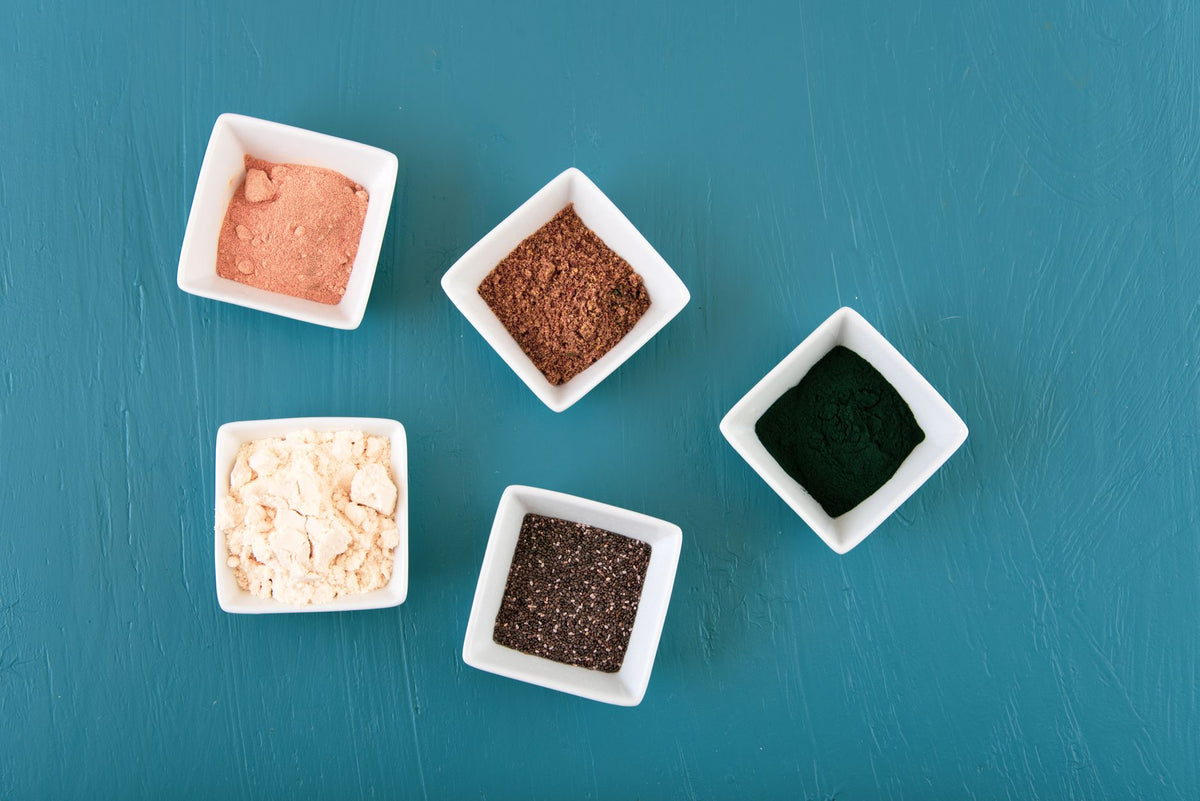
Most "best adaptogen supplements" articles list the same eight herbs, call them all "powerful," and leave you no closer to choosing one. This article takes a different approach: we ranked seven popular adaptogen supplements by the number and quality of published human clinical trials, so you can see which ingredients have genuine evidence behind them — and which are coasting on tradition alone.
Whether you're exploring adaptogen supplements for stress relief, sharper focus, or sustained energy in 2026, this evidence-first ranking will help you cut through the marketing noise and spend your money where the science actually points.
What Makes Something an Adaptogen Supplement?
An adaptogen supplement contains compounds that may help your body resist physical, chemical, and biological stressors.* The term was formalised by Soviet toxicologist Dr. Nikolai Lazarev in 1947, but it didn't gain a working scientific definition until pharmacologists Panossian and Wikman published their criteria in 2010 [1]. To qualify, a substance must:
- Be non-specific — it should increase resistance to a broad range of stressors, not just one.
- Be normalising — it should bring physiological functions back towards baseline regardless of the direction of change.
- Be non-toxic — it should not disturb normal body functions at typical doses.
This three-part definition immediately disqualifies many ingredients marketed as "adaptogenic." Caffeine, for example, fails the normalising criterion — it pushes the nervous system in one direction only. That's why the ranking below is limited to ingredients that meet all three criteria in at least one peer-reviewed publication.
How We Ranked These 7 Adaptogen Supplements
Rather than relying on popularity or traditional use, we scored each ingredient on three criteria:
- Number of human randomised controlled trials (RCTs) — animal studies excluded.
- Total participants across those trials — larger sample sizes carry more weight.
- Consistency of results — did outcomes agree across independent research groups?
We pulled data from PubMed and the Cochrane Library, focusing on trials published between 2005 and 2026. Here's where the seven most commonly supplemented adaptogens land.
1. Ashwagandha (Withania somnifera) — Strongest Evidence Base
Ashwagandha tops this ranking with at least 24 human RCTs and over 2,100 total participants as of 2026. It may help reduce perceived stress and support lower cortisol levels.*
The most cited trial is Chandrasekhar et al. (2012) [2], a 60-day, double-blind study of 64 adults with chronic stress. The ashwagandha group saw a 27.9% reduction in serum cortisol compared to placebo. A larger 2019 replication by Lopresti et al. with 240 participants confirmed significant improvements in stress, sleep quality, and morning cortisol [3].
Where it falls short: Most trials used the proprietary KSM-66 or Sensoril extracts. If your supplement doesn't specify its extract type, the dose-response data from these studies may not apply.
Practical dose range in trials: 300–600 mg/day of root extract, standardised to ≥5% withanolides.
2. Rhodiola Rosea — Best Evidence for Acute Fatigue
Rhodiola rosea has 15+ human trials and stands out for showing effects in acute, single-dose protocols — unusual among adaptogens, which typically require weeks of daily use.*
A 2012 systematic review in BMC Complementary Medicine [4] concluded that rhodiola may help with physical fatigue, cognitive fatigue, and mild-to-moderate stress.* Notably, Shevtsov et al. (2003) found significant improvements in mental work capacity after a single 370 mg dose during night-shift work [5].
Where it falls short: Evidence for long-term use beyond 12 weeks is thin. Most trials last 4–6 weeks.
Practical dose range in trials: 200–680 mg/day, standardised to 3% rosavins and 1% salidroside.
3. Lion's Mane (Hericium erinaceus) — Best Crossover With Nootropics
Lion's mane sits at the intersection of adaptogenic herbs and nootropic supplements. While its adaptogenic classification is debated (it doesn't modulate cortisol directly), its nerve growth factor (NGF) stimulation may help support cognitive function under stress.*
Mori et al. (2009) conducted a 16-week RCT with 30 older Japanese adults and found significantly improved cognitive function scores in the lion's mane group compared to placebo [6]. More recent trials in younger populations have shown promising results for mood support and reduced irritability.*
Where it falls short: Fewer than 10 human RCTs. Most cognitive claims still rely heavily on in-vitro and animal data showing NGF stimulation.
Practical dose range in trials: 750–3,000 mg/day of fruiting body extract.
4. Bacopa Monnieri — Slow Onset, Solid Memory Data
Bacopa has roughly 12 human RCTs, with the strongest evidence pointing towards memory consolidation and information retention.* A 2014 meta-analysis of 9 trials (518 participants) [7] found a significant effect on attention speed and cognitive processing.
The catch: Bacopa is slow. Nearly every positive trial ran for 8–12 weeks before significant effects appeared. If you're looking for quick results, this isn't your ingredient.
Practical dose range in trials: 300–450 mg/day, standardised to ≥55% bacosides.
5. Panax Ginseng — Established but Inconsistent
Panax ginseng has decades of research and dozens of trials, but results are surprisingly inconsistent across studies. A 2018 Cochrane-style review found that while ginseng may help support energy and immune function,* the effect sizes were small and varied significantly by preparation type [8].
The problem: "Ginseng" can mean wildly different things — red, white, fermented, and different ginsenoside profiles all produce different outcomes. Without knowing the exact preparation, comparing studies (or products) is nearly impossible.
Practical dose range in trials: 200–400 mg/day of standardised extract (≥4% ginsenosides).
6. Holy Basil (Tulsi) — Promising but Under-Studied
Holy basil (Ocimum sanctum) has roughly 5–6 human trials. The largest, a 2017 study of 150 participants, showed significant improvements in sleep, stress, and forgetfulness compared to placebo.* However, the trial design has been criticised for inadequate blinding.
Bottom line: Traditional use in Ayurvedic medicine spans centuries, but Western-standard clinical evidence is still catching up. Consider it a "watch this space" adaptogen.
Practical dose range in trials: 300–1,200 mg/day of leaf extract.
7. Reishi Mushroom (Ganoderma lucidum) — Weakest Human Evidence
Despite enormous popularity, reishi has very few well-designed human RCTs for its adaptogenic claims. Most research focuses on immune modulation rather than stress resilience, and a 2015 Cochrane review [9] of reishi for cancer patients found insufficient evidence to recommend it for any specific outcome.
Bottom line: Reishi may have benefits, but the human trial data doesn't currently support the bold claims made on many supplement labels.
Quick-Reference Evidence Table
| Adaptogen | Human RCTs | Primary Benefit* | Time to Effect |
|---|---|---|---|
| Ashwagandha | 24+ | Stress & cortisol support* | 4–8 weeks |
| Rhodiola Rosea | 15+ | Fatigue resistance* | 1 day – 6 weeks |
| Lion's Mane | ~8 | Cognitive support* | 8–16 weeks |
| Bacopa Monnieri | 12+ | Memory & attention* | 8–12 weeks |
| Panax Ginseng | 20+ | Energy support* | 4–8 weeks |
| Holy Basil | 5–6 | Stress & sleep support* | 4–6 weeks |
| Reishi | 3–4 | Immune modulation* | Unclear |
Why Drinkable Adaptogen Supplements May Have an Edge
Bioavailability matters as much as the ingredient itself. Several of the adaptogens above — particularly ashwagandha and lion's mane — show improved absorption when dissolved in liquid rather than compressed into tablets [10]. Drinkable formats also allow for combination formulas that pair complementary adaptogens with nootropic ingredients.
This is the approach behind the Noobru product range, which combines adaptogenic and nootropic ingredients in a drinkable format designed for daily use. If you're already stacking multiple capsules, a single adaptogen drink may simplify your routine while supporting absorption.*
Three Mistakes People Make With Adaptogen Supplements
1. Expecting overnight results
As the evidence table above shows, most adaptogens need 4–12 weeks of consistent daily use before delivering measurable benefits. Giving up after one week means you likely stopped before the ingredient had a chance to work.
2. Ignoring extract standardisation
A 500 mg ashwagandha capsule means nothing without knowing the withanolide percentage. The difference between a 1.5% and 5% extract is the difference between a sub-clinical dose and the dose used in actual trials. Always check the label for standardisation details.
3. Choosing by tradition instead of trials
An ingredient with 2,000 years of Ayurvedic use and zero human RCTs is not "proven" — it's untested by modern standards. Traditional use is a reasonable starting point for research hypotheses, but it's not a substitute for controlled trials.
Key Takeaways
- Ashwagandha has the strongest clinical evidence among adaptogen supplements for stress and cortisol support in 2026.*
- Rhodiola rosea is the only adaptogen with single-dose efficacy data for acute fatigue.*
- Lion's mane bridges adaptogens and nootropics, making it valuable if cognitive function is your primary goal.*
- Extract standardisation determines whether you're taking a clinical dose or an expensive placebo.
- Most adaptogens need 4–12 weeks of consistent use — plan accordingly.
- Drinkable formats may improve absorption of water-soluble adaptogenic compounds.*
Frequently Asked Questions About Adaptogen Supplements
What are adaptogen supplements?
Adaptogen supplements contain plant-derived compounds — such as ashwagandha, rhodiola, and lion's mane — that may help your body manage stress more effectively by modulating the hypothalamic-pituitary-adrenal (HPA) axis.* They are available as capsules, powders, and drinkable formulations.
How long do adaptogens take to work?
Most clinical trials show measurable effects within 4 to 8 weeks of daily use. Some adaptogens like rhodiola rosea have shown acute effects on fatigue within a single dose in certain studies, but sustained benefits typically require consistent use over at least 30 days.
Can you take multiple adaptogens together?
Yes, many adaptogen supplements combine multiple ingredients. Clinical research on combination formulas is limited compared to single-ingredient studies, but traditional use and preliminary evidence suggest that stacking complementary adaptogens — such as ashwagandha for calm and rhodiola for energy — may offer broader support.*
Are adaptogen supplements safe?
Adaptogens are generally well-tolerated in clinical trials, with mild gastrointestinal discomfort being the most commonly reported side effect. However, they can interact with medications — particularly thyroid drugs, immunosuppressants, and sedatives — so always consult your doctor before starting any adaptogen supplement.
What's the difference between adaptogens and nootropics?
Adaptogens specifically help your body resist and recover from stress, while nootropics broadly support cognitive function including memory, focus, and mental clarity.* Some ingredients like lion's mane and rhodiola rosea qualify as both, offering stress-modulating and cognitive benefits simultaneously.
References
- Panossian A, Wikman G. Effects of adaptogens on the central nervous system and the molecular mechanisms associated with their stress-protective activity. Pharmaceuticals. 2010;3(1):188-224. PubMed
- Chandrasekhar K, Kapoor J, Anishetty S. A prospective, randomized double-blind, placebo-controlled study of safety and efficacy of a high-concentration full-spectrum extract of ashwagandha root. Indian J Psychol Med. 2012;34(3):255-262. PubMed
- Lopresti AL, Smith SJ, Malvi H, Kodgule R. An investigation into the stress-relieving and pharmacological actions of an ashwagandha extract. Medicine. 2019;98(37):e17186. PubMed
- Hung SK, Perry R, Ernst E. The effectiveness and efficacy of Rhodiola rosea L.: a systematic review of randomized clinical trials. Phytomedicine. 2011;18(4):235-244. PubMed
- Shevtsov VA, et al. A randomized trial of two different doses of a SHR-5 Rhodiola rosea extract versus placebo and control of capacity for mental work. Phytomedicine. 2003;10(2-3):95-105. PubMed
- Mori K, Inatomi S, Ouchi K, et al. Improving effects of the mushroom Yamabushitake on mild cognitive impairment. Phytother Res. 2009;23(3):367-372. PubMed
- Kongkeaw C, et al. Meta-analysis of randomized controlled trials on cognitive effects of Bacopa monnieri extract. J Ethnopharmacol. 2014;151(1):528-535. PubMed
- Arring NM, et al. Ginseng as a treatment for fatigue: a systematic review. J Altern Complement Med. 2018;24(7):624-633. PubMed
- Jin X, et al. Ganoderma lucidum (Reishi mushroom) for cancer treatment. Cochrane Database Syst Rev. 2016;(4):CD007731. PubMed
- Lopresti AL. An investigation into the solubility and bioavailability profiles of ashwagandha extracts. J Funct Foods. 2021;85:104645.
Ready to Try Evidence-Backed Adaptogens?
Noobru's drinkable formulas combine clinically studied adaptogenic and nootropic ingredients — including ashwagandha, lion's mane, and rhodiola rosea — in a format designed for better absorption.* Explore the Noobru range →
*These statements have not been evaluated by the Food and Drug Administration or MHRA. This product is not intended to diagnose, treat, cure, or prevent any disease. Always consult your healthcare provider before starting any supplement regimen.

Leave a comment
All comments are moderated before being published.
This site is protected by hCaptcha and the hCaptcha Privacy Policy and Terms of Service apply.