




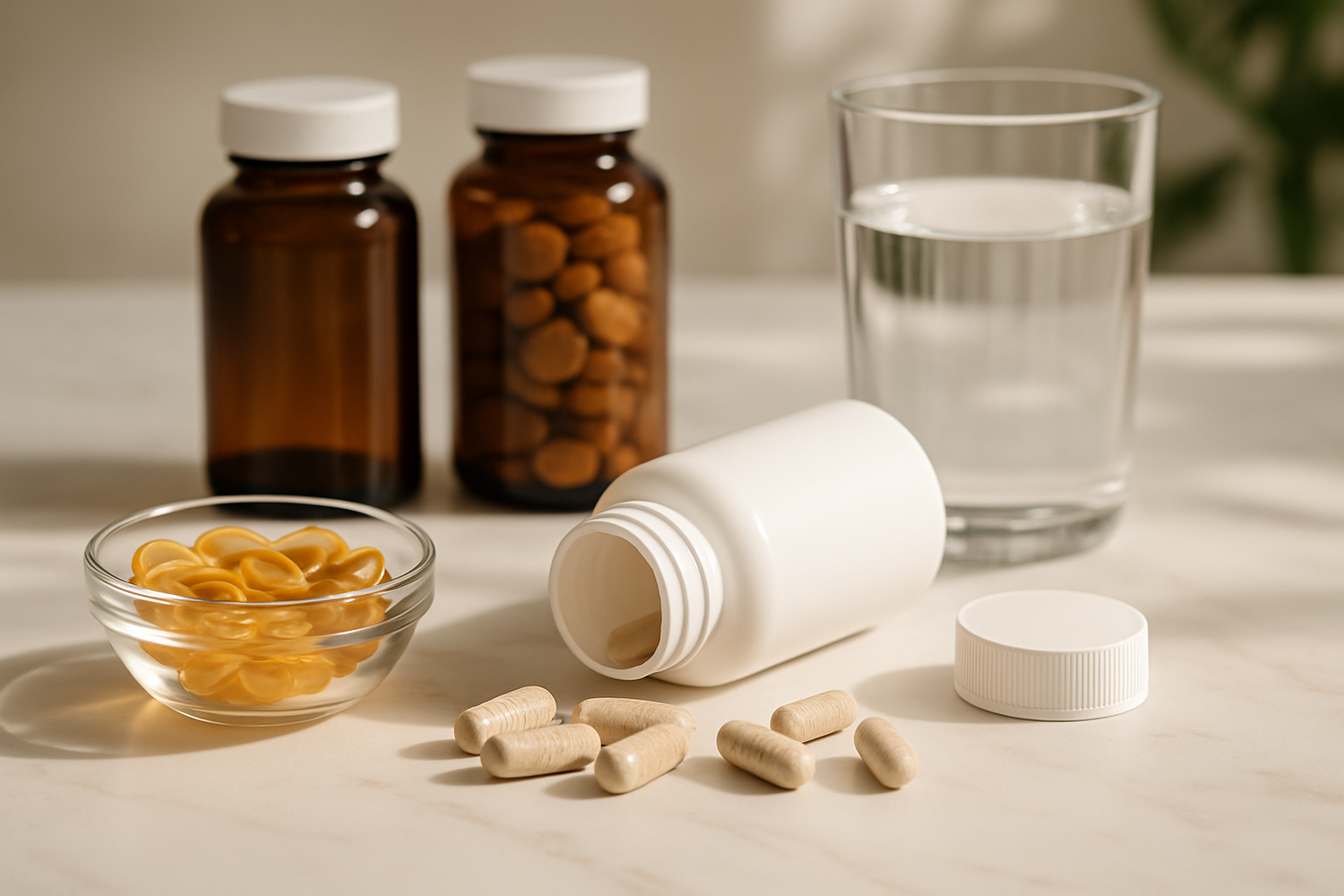
Focus supplements are dietary products containing nootropic ingredients that may help support concentration, attention, and mental clarity.* With an overwhelming number of options available in 2026, separating evidence-backed ingredients from marketing hype has never been more important.
The good news: several compounds — including citicoline, Bacopa monnieri, L-theanine, and Rhodiola rosea — have genuine clinical evidence behind them. The less good news: many focus supplements on the market use underdosed "fairy dust" amounts of these ingredients, hiding behind proprietary blends that make it impossible to verify what you're actually getting.
This guide breaks down what the research says about the most studied focus supplements in 2026, what doses actually matter, and how to choose a product that delivers real results rather than expensive placebo.
Why Focus Is Under Siege (And Why Supplements Are Booming)
Sustained attention is declining. The average UK adult now switches tasks every 47 seconds when working on a screen, according to attention research from the University of California, Irvine [1]. That's a dramatic decline from the early 2000s. Between notification overload, open-plan offices, and the cognitive demands of knowledge work, the ability to concentrate for extended periods has become a genuine competitive advantage.
It's no surprise, then, that the global nootropics market continues to grow year on year. But popularity doesn't equal efficacy. Understanding the basics of how focus works in the brain helps you evaluate which supplements are worth your money — and which are riding the trend.
In simple terms, your ability to concentrate depends on a balance of brain chemicals working together:
- Choline-based signalling — powers learning, memory, and the ability to hold attention on a single task
- Motivation and reward chemicals — drive you to start tasks, stay engaged, and see them through
- Alertness regulators — help your brain filter out distractions and maintain a state of readiness
- Calming systems — keep anxiety and mental noise in check so you can think clearly
The most effective focus supplements target one or more of these systems. Let's look at each top-tier ingredient individually.
The 6 Best Focus Supplements Backed by Clinical Evidence
1. Citicoline (CDP-Choline)
Citicoline is arguably the most well-researched nootropic for focus.* It provides choline — the raw material your brain uses to make its primary attention chemical — along with a compound called cytidine that may help support the repair and maintenance of brain cell membranes [2].
A 2015 randomised, double-blind study published in the Journal of Attention Disorders found that citicoline supplementation at 250–500 mg daily improved attention and psychomotor speed in healthy adults, with MRI imaging revealing increased energy activity in the brain's frontal lobe — the region most responsible for focus and decision-making [2]. That's not just subjective improvement — it's a measurable change in how the brain allocates energy.
According to Examine.com's citicoline review, the evidence for attention benefits is rated as "strong" based on multiple human trials.
Effective dose: 250–500 mg daily
2. Bacopa Monnieri
Bacopa monnieri is an Ayurvedic herb with strong evidence for supporting memory and cognitive function.* Its active compounds, called bacosides, work by enhancing communication between brain cells whilst providing antioxidant protection [3].
A 2014 meta-analysis of randomised controlled trials published in the Journal of Ethnopharmacology concluded that Bacopa demonstrated "significant improvement in memory free recall" and recommended it as a cognitive enhancer [3]. Importantly, Bacopa's benefits build up over time — most studies show meaningful results after 8–12 weeks of consistent use, not overnight.
As Healthline notes, Bacopa is one of the few herbal nootropics with a substantial body of human clinical trial data.
Effective dose: 300–600 mg daily (standardised to 55% bacosides)
3. L-Theanine (Especially Paired with Caffeine)
L-theanine is an amino acid found naturally in tea leaves. It promotes a specific type of brain wave activity associated with calm alertness — the relaxed-yet-sharp state that creative professionals and programmers often describe as "flow."
On its own, L-theanine may help promote relaxation without drowsiness.* But the real advantage appears when it's paired with caffeine. A 2008 study in Nutritional Neuroscience found that combined L-theanine and caffeine improved both speed and accuracy on attention tasks more effectively than either compound alone [4]. L-theanine essentially smooths out caffeine's jitteriness whilst preserving — and even enhancing — its focus-boosting effects.*
Effective dose: 100–200 mg L-theanine, often paired with 50–100 mg caffeine

4. Rhodiola Rosea
Rhodiola rosea is an adaptogenic herb that may help your body manage stress more effectively.* It works by regulating your stress hormones whilst simultaneously supporting the availability of mood-related brain chemicals and cellular energy production [5].
A landmark study published in Phytomedicine in 2000 found that Rhodiola supplementation produced a "significant reduction in mental fatigue" alongside "improved associative thinking, short-term memory, and calculation" [5]. This makes it particularly useful for maintaining focus during periods of high stress or sleep deprivation — common scenarios for professionals and students alike.*
A more recent 2012 systematic review published in BMC Complementary and Alternative Medicine confirmed these findings, noting consistent anti-fatigue effects across multiple trials [6].
Effective dose: 200–600 mg daily (standardised to 3% rosavins, 1% salidroside)
5. Lion's Mane Mushroom
Lion's mane mushroom takes a different approach to focus. Rather than directly affecting brain chemistry in the short term, it stimulates your body's production of nerve growth factors — proteins that help maintain, repair, and grow brain cells [7]. Think of it as long-term infrastructure investment for your brain.*
A 2009 clinical trial published in Phytotherapy Research found "significant improvements in cognitive function scores vs placebo" in adults with mild cognitive impairment after 16 weeks of supplementation [7]. Whilst most studies have been conducted in older populations, the brain-protective mechanisms are relevant across age groups.*
Effective dose: 500–1,000 mg daily
6. Acetyl L-Carnitine (ALCAR)
Acetyl L-carnitine may help support your brain cells' energy production — essentially helping them generate more fuel — whilst also providing neuroprotective benefits.* A 2020 review in Nutrients found evidence supporting its role in brain function and cellular energy metabolism, particularly during periods of high cognitive demand [8].
Effective dose: 500 mg daily
What to Look For (and Avoid) in Focus Supplements
The difference between a well-formulated focus supplement and a glorified multivitamin often comes down to three factors: dosing, standardisation, and absorption.
Clinical Dosing vs. Fairy Dusting
Many supplements include the right ingredients at the wrong doses. A product might list Bacopa monnieri on its label but contain only 50 mg — a fraction of the 300–600 mg used in clinical studies. If a brand hides behind a "proprietary blend" that lumps all ingredients into a single weight, there's no way to verify whether any individual ingredient reaches an effective dose.
What to do: Always check the label for individual ingredient amounts. If the brand won't disclose them, move on.
Standardised Extracts vs. Raw Powders
The active compounds within a plant can vary enormously depending on growing conditions, harvest timing, and extraction methods. Standardised extracts guarantee a minimum concentration of the specific compounds that research has shown to be effective — for example, Bacopa standardised to 55% bacosides, or Rhodiola standardised to 3% rosavins and 1% salidroside.
What to do: Look for standardisation percentages on the label. Raw herb powders are cheaper but far less reliable.
Bioavailability Enhancers
Some ingredients are poorly absorbed on their own. Piperine (black pepper extract) has been shown to enhance the bioavailability of numerous compounds [9]. A well-designed focus supplement will account for absorption, not just inclusion.
Lifestyle Factors That Amplify (or Undermine) Focus Supplements
Even the best focus supplements work within the context of your overall lifestyle.* No nootropic will compensate for chronically poor sleep, dehydration, or extreme stress. Here's what the research consistently shows matters most:
- Sleep quality: A single night of poor sleep impairs attention as much as moderate alcohol intoxication. If sleep is your bottleneck, addressing that first — potentially with a targeted sleep formula like Noobru Lucid — will amplify any other intervention.
- Hydration: Even mild dehydration (1–2% body weight loss) measurably reduces concentration and working memory. Drinkable supplements have an inherent advantage here — you're combining cognitive support with fluid intake.
- Stress management: Chronic stress directly impairs the brain region most critical for focus and executive control. Adaptogens like those found in Noobru Pro may help support a healthier stress response.*
- Blood sugar stability: Post-meal glucose spikes and crashes are a well-documented cause of the "afternoon slump." Products like Noobru Cheat may help support steadier blood sugar levels when taken with carbohydrate-containing meals.*
How Noobru Compares to Typical Focus Supplements
Noobru takes a different approach to most supplement brands in the UK market. Rather than offering a single "focus pill" with undisclosed doses, Noobru provides a range of drinkable nootropic formulations — each targeting specific aspects of cognitive performance with fully transparent ingredient lists and clinical-level dosing.
Here's how that translates in practice:
| Feature | Typical Focus Supplement | Noobru |
|---|---|---|
| Ingredient transparency | Often proprietary blends | Full doses listed — no proprietary blends |
| Dosing | Frequently underdosed | Clinical doses based on published research |
| Format | Capsules or tablets | Drinkable powder (better absorption + hydration) |
| Purity testing | Varies widely | Tested for purity |
| Approach | One-size-fits-all | Targeted formulations for specific needs |
For sustained energy and mental clarity under pressure, Noobru Pro combines adaptogens and energising nootropics to help support adrenal health without the caffeine crash.* For men over 50 looking to support overall vitality alongside cognitive health, Noobru Zeus offers a comprehensive male health formula.* And for immune resilience that keeps you performing year-round, Noobru Shield provides potent antioxidant support in a convenient drinkable format.*
Every Noobru product is UK-based, ships with free delivery on subscription, and comes with a 90-day money-back guarantee — so you can evaluate results over the 4–8 week window most nootropics need to demonstrate their full effects.
Frequently Asked Questions About Focus Supplements
What is the best supplement for focus and concentration?
The most evidence-backed focus supplements include citicoline, Bacopa monnieri, L-theanine (especially paired with caffeine), and Rhodiola rosea. The best choice depends on your specific needs — whether you want calm alertness, sustained attention, or reduced mental fatigue.
Do focus supplements actually work?
Several nootropic ingredients have robust clinical evidence supporting their effects on attention and cognitive performance. Citicoline, for example, has been shown to improve attention and psychomotor speed in randomised controlled trials [2]. However, results vary between individuals and depend on dosage, ingredient quality, and consistency of use.
How long do focus supplements take to work?
It depends on the ingredient. L-theanine may produce noticeable effects within 30–60 minutes, whilst Bacopa monnieri typically requires 8–12 weeks of consistent daily use to show measurable cognitive improvements. Most experts recommend committing to at least 4–8 weeks before judging results.
Are focus supplements safe to take every day?
Most well-researched nootropic ingredients like L-theanine, citicoline, and Bacopa monnieri have strong safety profiles at recommended doses. However, you should always consult your healthcare provider before starting any supplement, particularly if you take prescription medication.
Can I take focus supplements with caffeine?
Yes — in fact, L-theanine is specifically studied in combination with caffeine and the pairing may improve attention more effectively than either compound alone.* Other nootropics like citicoline and Rhodiola rosea are also generally considered compatible with moderate caffeine intake.
Key Takeaways: Choosing the Best Focus Supplements in 2026
- ✅ Top evidence-backed ingredients: Citicoline, Bacopa monnieri, L-theanine + caffeine, and Rhodiola rosea have the strongest clinical support for focus and concentration*
- ✅ Dosing is critical: Look for products that disclose individual ingredient amounts at clinically studied levels — avoid proprietary blends
- ✅ Consistency matters: Most focus-enhancing nootropics require daily use over 4–12 weeks to demonstrate their full effects
- ✅ Lifestyle amplifies results: Supplements work best alongside good sleep, hydration, stress management, and stable blood sugar
- ✅ Quality indicators to seek: Standardised extracts, transparent labels, third-party purity testing, and bioavailability enhancers
Ready to experience the difference that clinically dosed, transparent nootropic formulations can make for your focus and mental clarity?* Noobru's drinkable supplements are designed to fit seamlessly into your daily routine — and every order is backed by a full money-back guarantee.
Try Noobru risk-free with our 90-day money-back guarantee →References
- Mark, G., Gudith, D., & Klocke, U. (2008). The cost of interrupted work: more speed and stress. Proceedings of the SIGCHI Conference on Human Factors in Computing Systems. https://dl.acm.org/doi/10.1145/1357054.1357072
- McGlade, E. et al. (2015). The Effect of Citicoline Supplementation on Motor Speed and Attention in Adolescent Males. Journal of Attention Disorders, 23(2), 121–134. https://pubmed.ncbi.nlm.nih.gov/26168836/
- Kongkeaw, C. et al. (2014). Meta-analysis of randomized controlled trials on cognitive effects of Bacopa monnieri extract. Journal of Ethnopharmacology, 151(1), 528–535. https://pubmed.ncbi.nlm.nih.gov/24252493/
- Owen, G.N. et al. (2008). The combined effects of L-theanine and caffeine on cognitive performance and mood. Nutritional Neuroscience, 11(4), 193–198. https://pubmed.ncbi.nlm.nih.gov/18681988/
- Spasov, A.A. et al. (2000). A double-blind, placebo-controlled pilot study of the stimulating and adaptogenic effect of Rhodiola rosea SHR-5 extract on the fatigue of students. Phytomedicine, 7(2), 85–89. https://pubmed.ncbi.nlm.nih.gov/10839209/
- Ishaque, S. et al. (2012). Rhodiola rosea L. as a putative botanical antidepressant. BMC Complementary and Alternative Medicine, 12, 70. https://pubmed.ncbi.nlm.nih.gov/22643043/
- Mori, K. et al. (2009). Improving effects of the mushroom Yamabushitake (Hericium erinaceus) on mild cognitive impairment. Phytotherapy Research, 23(3), 367–372. https://pubmed.ncbi.nlm.nih.gov/18844328/
- Ferreira, G.C. & McKenna, M.C. (2017). L-Carnitine and Acetyl-L-carnitine Roles and Neuroprotection in Developing Brain. Neurochemical Research, 42(6), 1661–1675. https://pmc.ncbi.nlm.nih.gov/articles/PMC7284336/
- Shoba, G. et al. (1998). Influence of piperine on the pharmacokinetics of curcumin in animals and human volunteers. Planta Medica, 64(4), 353–356. https://pubmed.ncbi.nlm.nih.gov/9619120/
*These statements have not been evaluated by the Food and Drug Administration or MHRA. This product is not intended to diagnose, treat, cure, or prevent any disease. Always consult your healthcare provider before starting any supplement regimen.

Leave a comment
All comments are moderated before being published.
This site is protected by hCaptcha and the hCaptcha Privacy Policy and Terms of Service apply.