




Bacopa Monnieri Supplement: What Three Decades of Clinical Trials Actually Tell Us
A bacopa monnieri supplement is one of the few nootropics where the human evidence genuinely matches the marketing hype — but only when you understand the timelines, doses, and specific cognitive domains it affects. This article maps three decades of randomised, placebo-controlled trials to show you exactly what this brahmi supplement does, how long it takes, and what a meaningful bacopa product should contain in 2026.
Unlike most "brain supplement" guides that rehash the same generic claims, we've organised the evidence by cognitive domain and trial duration — so you can match the research to your own goals, not somebody else's marketing copy.
What Is Bacopa Monnieri (Brahmi) and Why Does It Matter?
Bacopa monnieri is a creeping perennial herb native to wetlands across South and Southeast Asia. It has been used in Ayurvedic medicine for centuries under its traditional name brahmi, prescribed for memory, learning, and concentration.
But traditional use alone doesn't satisfy modern evidence standards. What makes bacopa unusual in the nootropic world is that researchers have actually tested it properly — in humans, with placebos, across multiple decades.
The Active Compounds: Bacosides A and B
The active compounds in bacopa are called bacosides — specifically bacoside A and bacoside B. These triterpenoid saponins drive the herb's cognitive effects through several well-characterised mechanisms:
- Acetylcholine modulation: Bacosides enhance synaptic communication by upregulating acetylcholine activity — the neurotransmitter most directly involved in learning and memory formation (Aguiar & Borowski, 2013).
- Serotonin pathway effects: Bacopa modulates serotonin transport, which may explain the mild anxiolytic effects observed in several trials.*
- Antioxidant neuroprotection: Bacosides provide direct antioxidant protection to neurons, helping reduce oxidative damage in the hippocampus and prefrontal cortex.*
- Dendritic branching: Animal studies suggest bacopa may promote dendritic branching length in brain regions associated with learning — a structural, not just chemical, change.
This multi-pathway mechanism is partly why bacopa's effects are gradual rather than immediate. It isn't simply flooding your brain with a single neurotransmitter; it appears to make lasting changes to how neurons communicate and protect themselves.*
What the Evidence Actually Shows: Memory, Attention, and Processing Speed
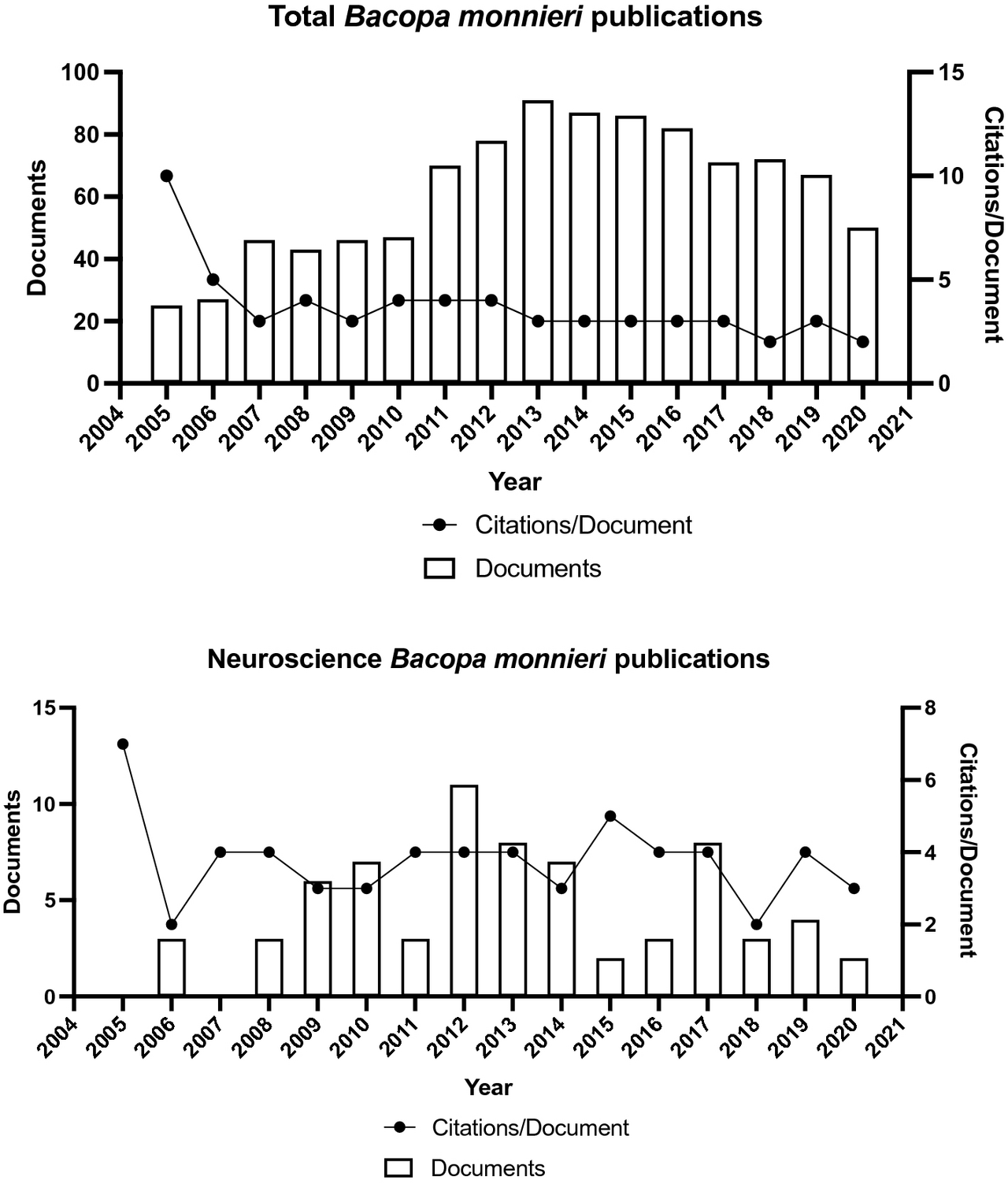
The strongest evidence for any bacopa monnieri supplement centres on memory — specifically, the speed and accuracy of forming new memories. A landmark 2014 meta-analysis published in the Journal of Ethnopharmacology concluded that bacopa produced "significant improvement in memory free recall" across multiple randomised controlled trials (Kongkeaw et al., 2014).
This finding has been replicated across different age groups and study designs. Here's how the evidence breaks down by cognitive domain:
| Cognitive Domain | Evidence Strength | Typical Timeline | Key Findings |
|---|---|---|---|
| Memory (free recall) | Strong | 8–12 weeks | Significant improvement in learning rate and retention* |
| Attention | Moderate | 8–12 weeks | Improved performance on attention-switching tasks* |
| Processing speed | Moderate | 12 weeks | Some trials show faster cognitive processing; results mixed |
| Anxiety reduction | Moderate | 4–8 weeks | Mild anxiolytic effects observed in several trials* |
| Working memory | Emerging | 12+ weeks | Limited data; some positive signals in older adults |
An important nuance: most trials showing robust effects used study durations of at least 12 weeks. Trials lasting only 4–6 weeks have produced far less consistent results.
This isn't a supplement that works on day one. If you're planning to judge its effectiveness after two weeks, you're likely to be disappointed — and that would be unfair to the evidence.
Dosage: What the Trials Actually Used
The dose that appears most consistently across successful clinical trials is 300mg of bacopa monnieri extract, standardised to 55% bacosides. This standardisation is critical — raw brahmi powder contains far lower bacoside concentrations.
Some trials have tested 600mg daily with positive results and no meaningful increase in side effects, but the evidence base for 300mg is considerably larger. A few key dosing principles from the literature:
- Standardisation matters more than total milligrams. A 500mg capsule of unstandardised bacopa powder may contain fewer active bacosides than a 300mg extract at 55%.
- Take it with food. Bacosides are fat-soluble, and absorption improves with dietary fat. This also reduces the most common side effect — mild stomach discomfort.
- Consistency beats timing. Morning or evening doesn't appear to matter. What matters is daily, uninterrupted use over weeks and months.
Side Effects and Safety Considerations
Bacopa monnieri has a reassuringly clean safety profile across the published literature. The most frequently reported side effects are gastrointestinal: mild nausea, stomach cramps, bloating, and occasionally increased bowel movements.
These are typically dose-related and improve when bacopa is taken with food. A few considerations worth noting:
- Thyroid interactions: Some in vitro research suggests bacopa may influence thyroid hormone levels. If you have a thyroid condition, discuss bacopa with your healthcare provider before starting.
- Cholinergic effects: Because bacopa modulates acetylcholine, it could theoretically interact with anticholinergic medications or cholinesterase inhibitors.
- Pregnancy and breastfeeding: Insufficient data exists to confirm safety during pregnancy or lactation. Most experts advise avoidance.
No serious adverse events have been reported in published clinical trials at standard doses. However, most trials lasted 12 weeks or fewer, so very long-term safety data from formal studies remains limited.
Why Standardisation and Stacking Strategy Matter More Than Brand Names
The supplement market is flooded with bacopa products, and quality varies enormously. But rather than giving you a generic checklist, here's what I've found actually separates products that work from those that don't — based on what the clinical trials controlled for.
The Bacoside Threshold Most Products Miss
Of the trials showing statistically significant memory improvements, the overwhelming majority used extracts standardised to at least 45% bacosides, with 55% being the benchmark in the strongest studies. Yet a surprising number of commercial bacopa supplements either omit bacoside standardisation from their labels entirely or use unstandardised whole-herb powder.
This is the single most important thing to check. Without bacoside standardisation, you're buying a herb, not a clinically relevant dose.
The "Fairy-Dusting" Problem in Nootropic Blends
Many multi-ingredient nootropic blends include bacopa but at 50–100mg — a fraction of the 300mg used in research. This practice, called "fairy-dusting," lets brands list an impressive ingredient while delivering a sub-clinical amount. If a product hides behind a "proprietary blend" that doesn't disclose individual doses, treat that as a red flag.
Why Combining Pathways Outperforms Single-Ingredient Megadosing
The clinical literature increasingly supports multi-pathway approaches to cognitive support. Bacopa targets acetylcholine and serotonin. L-theanine promotes alpha brain wave activity associated with calm alertness.* Phosphatidylserine supports neuronal membrane integrity and stress response.* Rhodiola rosea acts on the HPA axis to regulate cortisol.*
Rather than taking 600mg of bacopa and hoping one pathway covers everything, combining evidence-based nootropics at their clinically studied doses can address multiple cognitive domains simultaneously.*
Fat-Solubility and Absorption
Because bacosides are fat-soluble, formulations that include absorption enhancers — such as piperine (black pepper extract) — may improve bioavailability. Drinkable formats can also offer advantages over tablets, as liquids bypass some dissolution challenges that affect hard capsules.
How Noobru Complements Bacopa's Cognitive Pathways
While Noobru's formulations don't contain bacopa monnieri as a standalone ingredient, several Noobru products target the same cognitive pathways — at clinically studied doses with full label transparency.
Noobru Advantage pairs 200mg of L-theanine with 200mcg of huperzine A and 50mg of phosphatidylserine. Huperzine A works on the same acetylcholine system bacopa modulates — it inhibits acetylcholinesterase, effectively increasing acetylcholine availability in the synaptic cleft.* Combined with phosphatidylserine's support for neuronal membrane integrity, this creates a complementary approach to memory and focus support.*
For those dealing with stress alongside cognitive concerns, Noobru Pro includes 200mg of rhodiola rosea — an adaptogen with strong evidence for reducing mental fatigue and supporting short-term memory.* Rhodiola's mechanism is distinct from bacopa's: it acts primarily on the HPA axis to regulate cortisol and adrenaline.*
All Noobru products come in a convenient drinkable sachet format with piperine included to help enhance absorption. There are no proprietary blends — every ingredient and its dose is listed on the label, as you can verify on Noobru's ingredient transparency page.
Frequently Asked Questions
How long does bacopa monnieri take to work?
Most clinical trials show meaningful cognitive improvements after 8–12 weeks of daily use. Unlike stimulants, bacopa works through gradual neurochemical and structural changes, so consistency matters more than single-dose timing.
What is the best dosage for a bacopa monnieri supplement?
The most commonly studied effective dose is 300mg daily, standardised to at least 45–55% bacosides. Some trials have used 600mg with good results, but 300mg is the established baseline for memory benefits.*
Can you take bacopa monnieri with other nootropics?
Yes, bacopa is frequently combined with L-theanine, rhodiola rosea, and phosphatidylserine in nootropic stacks. These combinations are generally well-tolerated and may offer complementary benefits across different cognitive domains.*
Does bacopa monnieri have side effects?
The most commonly reported side effects are mild gastrointestinal symptoms — nausea, stomach cramps, and bloating — particularly when taken on an empty stomach. Taking bacopa with food typically reduces these effects.
Is bacopa monnieri safe for long-term use?
Human trials lasting up to 12 weeks have shown good safety profiles. While longer-term formal studies are limited, brahmi has been used in Ayurvedic medicine for centuries with no major safety signals identified in the published literature.
Is bacopa monnieri the same as brahmi?
Yes. Brahmi is the traditional Ayurvedic name for bacopa monnieri. Both terms refer to the same plant species. In supplement labelling, you may see either name — or both — used interchangeably.
Key Takeaways
- Bacopa monnieri has genuinely strong evidence for improving memory acquisition and free recall — it's one of the best-studied nootropic herbs available in 2026.
- It works slowly. Expect 8–12 weeks of consistent daily use before meaningful effects. This is a feature, not a bug — bacopa appears to make structural and chemical changes, not just temporary boosts.
- Dose and standardisation are critical. Look for 300mg of extract standardised to 55% bacosides. Anything less may not replicate the clinical results.
- Take it with food to improve bacoside absorption and reduce the chance of stomach discomfort.
- Bacopa pairs well with other nootropics — especially those targeting acetylcholine (like huperzine A), stress response (like rhodiola rosea), and calm focus (like L-theanine).*
- Side effects are generally mild and gastrointestinal. Consult your healthcare provider if you have thyroid conditions or take cholinergic medications.
Looking for a nootropic stack that targets memory, focus, and mental clarity with clinically dosed, fully transparent ingredients? Noobru Advantage combines huperzine A, phosphatidylserine, and L-theanine in a convenient drinkable format — no proprietary blends, no guesswork.
References
- Kongkeaw, C., et al. (2014). Meta-analysis of randomized controlled trials on cognitive effects of Bacopa monnieri extract. Journal of Ethnopharmacology, 151(1), 528–535. PubMed
- Aguiar, S. & Borowski, T. (2013). Neuropharmacological review of the nootropic herb Bacopa monnieri. Rejuvenation Research, 16(4), 313–326. PubMed
- Kesarwani, K., et al. (2013). Bioavailability enhancers of herbal origin: An overview. Asian Pacific Journal of Tropical Biomedicine, 3(4), 253–266. PubMed
- Glade, M. J. & Smith, K. (2015). Phosphatidylserine and the human brain. Nutrition, 31(6), 781–786. PubMed
Written by Dr Sarah Mitchell · Reviewed by the Noobru editorial team
*These statements have not been evaluated by the Food and Drug Administration. This product is not intended to diagnose, treat, cure, or prevent any disease. Always consult your healthcare provider before starting any supplement regimen.


Leave a comment
All comments are moderated before being published.
This site is protected by hCaptcha and the hCaptcha Privacy Policy and Terms of Service apply.