




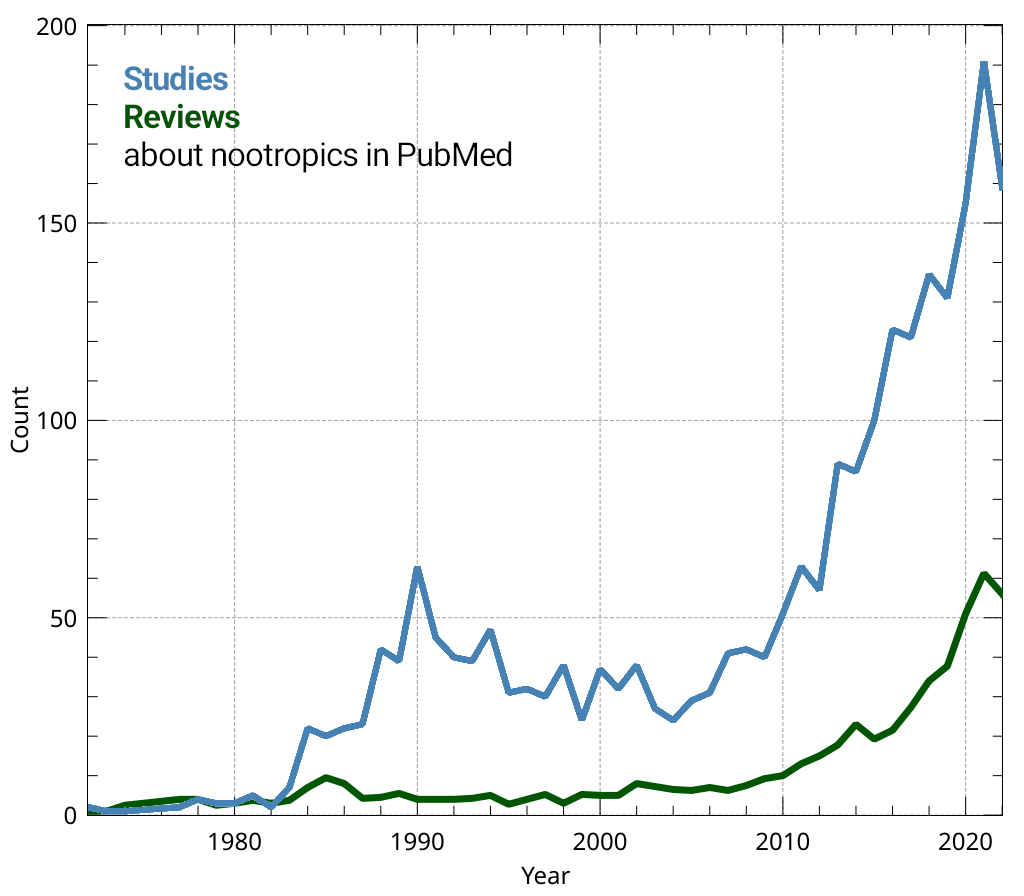
Most "best nootropic" lists rank ingredients by a vague sense of popularity or marketing buzz. This article does something different: it ranks seven nootropic ingredients for focus by a metric that actually matters to your morning — hours-to-peak-effect — then cross-references each compound against the strength of its clinical evidence base. The result is a practical framework you can use to choose ingredients based on whether you need focus in 30 minutes or sustained cognitive support over months.
Whether you're a student facing exam season, a remote worker battling afternoon brain fog, or simply someone who wants sharper concentration without prescription stimulants, this ranking cuts through the noise. I've spent three months re-reading the primary trial data behind each ingredient — not supplement marketing pages — to build this ranking for 2026.
How We Ranked These Nootropic Ingredients
Every ingredient below is scored on two axes that matter for real-world use:
- Hours-to-peak-effect: How long after ingestion does the compound reach peak cognitive impact? This comes directly from pharmacokinetic data in published trials, not manufacturer claims.
- Evidence strength: Rated as Strong (3+ RCTs with >30 participants each), Moderate (1–2 RCTs or smaller sample sizes), or Preliminary (mostly animal/in-vitro data with limited human trials).
This two-axis approach reveals something most reviews hide: the fastest-acting ingredients aren't always the best-evidenced, and the best-evidenced aren't always fast. Your ideal nootropic stack depends on which axis matters more for your situation.
1. Caffeine + L-Theanine — The Fastest Evidence-Backed Stack
Hours-to-peak-effect: 0.5–0.75 hours | Evidence strength: Strong
The caffeine and L-theanine combination is the fastest-acting nootropic pairing with strong clinical evidence, reaching peak cognitive effect within 30–45 minutes of ingestion. A 2008 study in Nutritional Neuroscience found that 97 mg caffeine with 40 mg L-theanine significantly improved accuracy during task-switching and reduced susceptibility to distraction compared to placebo [1].*
What makes this pairing special isn't just the speed — it's how L-theanine modulates caffeine's stimulant properties. Caffeine alone increases alertness but often brings jitters and an energy crash. L-theanine promotes alpha-wave brain activity, which is associated with calm attention.* The combination may give you the alertness without the anxiety.*
Practical note: A well-studied ratio is 1:2 (caffeine to L-theanine). If your morning coffee has roughly 100 mg of caffeine, pairing it with 200 mg L-theanine may smooth out the experience.* Noobru Advantage uses this synergy as part of its formulation, combining both compounds alongside additional nootropic ingredients.*
2. Bacopa Monnieri — The Slow Burn With the Strongest Memory Data
Hours-to-peak-effect: 672–2,016 hours (4–12 weeks of daily use) | Evidence strength: Strong
Bacopa monnieri is the most robustly studied natural nootropic for memory consolidation, but it requires patience. A 2014 meta-analysis of nine randomised controlled trials (437 total participants) found that Bacopa supplementation significantly improved attention, cognitive processing speed, and working memory — but only after consistent daily use for at least four weeks [2].*
This is the ingredient that separates people who read about nootropics from people who actually benefit from them. Most people abandon Bacopa after a week because they feel nothing. The clinical data consistently shows benefits emerging between weeks 4 and 12.*
- Effective dosage in trials: 300–450 mg daily of an extract standardised to 55% bacosides
- Common side effect: Mild gastrointestinal discomfort, which often resolves when taken with food
- Best for: Students, lifelong learners, and anyone prioritising long-term memory support over immediate stimulation*
3. Phosphatidylserine — The Under-Discussed Cognitive Protector
Hours-to-peak-effect: ~1 hour (acute) / weeks for full effect | Evidence strength: Moderate-to-Strong
Phosphatidylserine (PS) is a phospholipid that makes up about 15% of the brain's total phospholipid pool, yet it rarely appears in mainstream nootropic rankings. This is a blind spot. A 2015 study in Mental Illness found that 100 mg PS three times daily for three months supported memory and cognitive function in elderly participants with cognitive complaints [3].*
What I find most interesting about PS is its dual mechanism: it may help support cortisol regulation (which is relevant for stress-related brain fog) while also playing a structural role in neuronal cell membranes.* This makes it one of the few nootropic ingredients that addresses both the chemical and physical architecture of cognitive function.*
Worth knowing: The FDA permitted a qualified health claim for PS and cognitive dysfunction in 2003 — one of very few supplements to receive such a designation. The claim is heavily qualified ("very limited and preliminary research"), but the fact it exists at all is notable.
4. Lion's Mane Mushroom — Promising Nerve Growth Data, Still Emerging
Hours-to-peak-effect: 672+ hours (4+ weeks) | Evidence strength: Moderate
Lion's mane (Hericium erinaceus) has generated significant excitement because of its ability to stimulate nerve growth factor (NGF) synthesis in laboratory settings. A 2009 Japanese RCT with 30 older adults found that 250 mg tablets taken three times daily for 16 weeks led to significantly improved cognitive function scores compared to placebo — and crucially, those improvements disappeared four weeks after supplementation stopped [4].*
I rank lion's mane fourth rather than higher because, despite the buzz, the human evidence base is still relatively thin. Most studies are small (<50 participants), and the impressive NGF data comes primarily from cell culture and animal models. That said, it's one of the most actively researched nootropic ingredients in 2026, and stronger trials are underway.
5. Rhodiola Rosea — The Anti-Fatigue Specialist
Hours-to-peak-effect: 0.5–1 hour | Evidence strength: Moderate
Rhodiola rosea is an adaptogenic herb that may help support cognitive performance specifically under conditions of stress and fatigue.* A 2012 systematic review in BMC Complementary and Alternative Medicine examined 11 placebo-controlled trials and found consistent evidence for reduced mental fatigue and improved attention during stressful conditions [5].*
Here's where Rhodiola occupies a unique niche in our ranking: it's fast-acting and stress-specific. If your focus problems stem from tiredness or pressure rather than baseline cognitive capacity, Rhodiola may be more useful than ingredients like Bacopa that target memory consolidation.*
- Typical effective dose: 200–600 mg daily of an extract standardised to 3% rosavins and 1% salidroside
- Speed advantage: Several trials show acute single-dose benefits within 30 minutes
- Caveat: Evidence is moderate because many studies have small sample sizes or short durations
6. Ginkgo Biloba — The Classic With Mixed Modern Data
Hours-to-peak-effect: 1–2 hours | Evidence strength: Moderate (highly variable)
Ginkgo biloba is one of the most widely used nootropic ingredients globally, yet its evidence base is surprisingly inconsistent. Large-scale trials like the GEM study (3,069 participants over 6+ years) found no significant benefit for preventing cognitive decline in healthy elderly adults [6]. However, smaller trials in younger healthy adults have shown acute improvements in attention and processing speed within 1–2 hours.*
My honest assessment: Ginkgo's reputation exceeds its modern evidence. It's not a bad ingredient, but if you're choosing between Ginkgo and the caffeine-theanine stack for acute focus, the evidence favours the latter. Its primary mechanism — increasing cerebral blood flow — is genuine, but the cognitive outcomes are inconsistent across populations.*
7. Citicoline (CDP-Choline) — The Structural Brain Builder
Hours-to-peak-effect: 1–2 hours (acute) / weeks for sustained effect | Evidence strength: Moderate
Citicoline is a precursor to the neurotransmitter acetylcholine and a source of choline for phospholipid synthesis. A 2015 randomised trial in 60 healthy adult women found that 28 days of citicoline supplementation (250 mg or 500 mg daily) significantly reduced errors on an attention task compared to placebo [7].*
Citicoline sits at the bottom of this ranking not because it's ineffective, but because the evidence base in healthy younger adults is thinner than the ingredients above. Much of the stronger citicoline research focuses on recovery from stroke or age-related cognitive decline. For a generally healthy person seeking focus support, it's a reasonable supporting ingredient rather than a primary one.*
Putting It Together: A Practical Nootropic Framework for 2026
Based on this hours-to-effect ranking, here's my framework for choosing nootropic ingredients based on your actual needs:
| Your Need | Best Ingredients | Time to Effect |
|---|---|---|
| Immediate focus for a meeting or exam | Caffeine + L-theanine, Rhodiola | 30–60 minutes |
| Daily focus under chronic stress | Rhodiola + Phosphatidylserine | Days to weeks |
| Long-term memory and learning support | Bacopa monnieri + Lion's mane | 4–12 weeks |
| All-round daily cognitive support | Multi-ingredient stack (e.g., Noobru Advantage) | Some immediate, full benefit over weeks |
The key insight from this ranking: no single nootropic ingredient does everything. Fast-acting compounds like caffeine don't build long-term cognitive resilience. Slow-building ingredients like Bacopa won't help you with tomorrow's presentation. The best approach combines compounds that operate on different timescales.*
Key Takeaways
- Caffeine + L-theanine is the best-evidenced fast-acting nootropic pairing, delivering measurable focus improvements within 30–45 minutes.*
- Bacopa monnieri has the strongest evidence for memory support, but requires 4–12 weeks of consistent daily use — most people quit too early.*
- Rhodiola rosea is uniquely useful for focus under stress, filling a niche that other nootropic ingredients don't cover well.*
- Lion's mane is the most exciting emerging ingredient but needs larger human trials to match its laboratory promise.
- Multi-ingredient formulations like Noobru focus supplements allow you to cover both immediate and long-term cognitive needs in a single daily routine.*
- Always check extract standardisation — a 300 mg Bacopa dose is meaningless if the extract isn't standardised to a known bacoside concentration.
Frequently Asked Questions
What is the fastest-acting nootropic ingredient?
Caffeine is the fastest-acting nootropic, reaching peak plasma concentration in 30–45 minutes. When paired with L-theanine, it may deliver focused alertness without the jittery crash that caffeine alone can cause.*
Are nootropic supplements safe to take daily?
Most well-researched nootropic ingredients like L-theanine, Bacopa monnieri, and phosphatidylserine have strong safety profiles in clinical trials lasting 8–12 weeks. However, you should always consult your healthcare provider before starting any new supplement regimen.
Do nootropics actually work for focus?
Several nootropic ingredients have meaningful clinical evidence supporting cognitive benefits. Caffeine, L-theanine, and Bacopa monnieri each have multiple randomised controlled trials showing measurable improvements in attention and processing speed.* Results vary by individual.
What is the best nootropic stack for beginners?
The caffeine and L-theanine combination is widely regarded as the best starting stack because both ingredients are well-tolerated, affordable, and supported by multiple clinical trials. A common research-backed ratio is 100 mg caffeine to 200 mg L-theanine.* Noobru Advantage includes both along with other evidence-backed ingredients.*
How long do nootropic supplements take to work?
It depends entirely on the ingredient. Caffeine and L-theanine work within 30–60 minutes. Compounds like Bacopa monnieri and lion's mane require 4–12 weeks of daily use before cognitive benefits become noticeable in most studies.*
References
- Owen GN, et al. "The combined effects of L-theanine and caffeine on cognitive performance and mood." Nutritional Neuroscience. 2008;11(4):193-198. PubMed
- Kongkeaw C, et al. "Meta-analysis of randomized controlled trials on cognitive effects of Bacopa monnieri extract." Journal of Ethnopharmacology. 2014;151(1):528-535. PubMed
- Richter Y, et al. "The effect of phosphatidylserine-containing omega-3 fatty acids on memory abilities in subjects with subjective memory complaints." Mental Illness. 2015. PubMed
- Mori K, et al. "Improving effects of the mushroom Yamabushitake (Hericium erinaceus) on mild cognitive impairment." Phytotherapy Research. 2009;23(3):367-372. PubMed
- Hung SK, et al. "The effectiveness and efficacy of Rhodiola rosea L.: a systematic review of randomized clinical trials." Phytomedicine. 2011;18(4):235-244. PubMed
- DeKosky ST, et al. "Ginkgo biloba for prevention of dementia: a randomized controlled trial." JAMA. 2008;300(19):2253-2262. PubMed
- McGlade E, et al. "Improved attentional performance following citicoline administration in healthy adult women." Food and Nutrition Sciences. 2012;3(6):769-773. PubMed
Ready to Support Your Focus With Evidence-Backed Ingredients?
Noobru Advantage combines several of the top-ranked ingredients from this article — including the caffeine and L-theanine pairing — into a single drinkable daily supplement designed for cognitive support.* Explore the full Noobru range to find the right fit for your routine.
*These statements have not been evaluated by the Food and Drug Administration or MHRA. This product is not intended to diagnose, treat, cure, or prevent any disease. Always consult your healthcare provider before starting any supplement regimen.

Leave a comment
All comments are moderated before being published.
This site is protected by hCaptcha and the hCaptcha Privacy Policy and Terms of Service apply.