




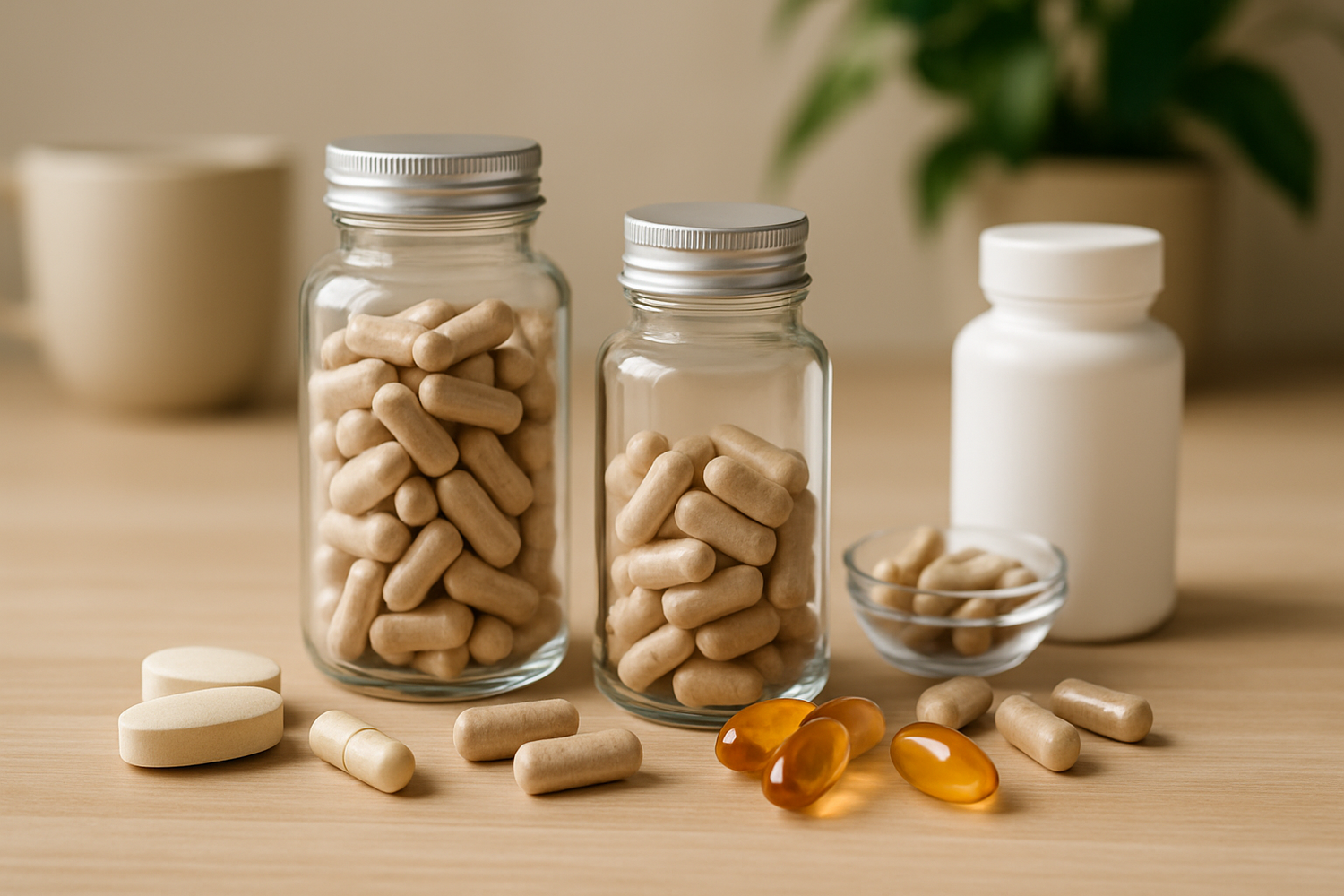
Most "best nootropics" lists rank supplements by gut feeling or affiliate commission. This guide does something different: it ranks the best nootropic supplements for focus in 2026 by two metrics you can actually feel — onset speed (how quickly you notice a difference) and duration of benefit (how long that focus window lasts). Every compound below has at least one randomised controlled trial supporting its cognitive effects, and I've included the citations so you can check the evidence yourself.
Whether you're a student cramming for exams, a remote worker battling afternoon brain fog, or simply curious about natural focus supplements, this ranking gives you a practical framework for choosing what to try first.
How We Ranked These Nootropic Supplements
Every compound was evaluated on three criteria:
- Onset speed: Time from ingestion to measurable cognitive change, based on pharmacokinetic data from clinical trials.
- Duration: How long the focus benefit persists in a single session or across daily dosing.
- Evidence quality: Only compounds with at least one published RCT measuring attention, working memory, or executive function in humans made the list.
This framework deliberately excludes compounds that only have animal studies or rely solely on traditional-use claims. If it hasn't been tested in human brains, it's not ranked here.
1. Caffeine + L-Theanine — Fastest Onset (20–40 Minutes)
The fastest nootropic stack for focus is caffeine paired with L-theanine. You'll typically notice sharper alertness within 20–40 minutes, and the effect lasts 3–5 hours.
A 2008 study in Nutritional Neuroscience found that 97 mg of caffeine combined with 40 mg of L-theanine significantly improved accuracy during demanding cognitive tasks and reduced susceptibility to distraction [1]. More importantly, L-theanine offset the anxiety and blood-pressure spikes that caffeine alone can trigger — producing what researchers describe as "alert relaxation."
Practical dose: 75–100 mg caffeine with 150–200 mg L-theanine. A 2:1 ratio of theanine to caffeine is the sweet spot most studies converge on.
Best for: Mornings, pre-meeting focus, or any time you need sharp attention within the hour.
2. Citicoline (CDP-Choline) — Best Mid-Range Onset (1–4 Weeks)
Citicoline is the strongest evidence-backed nootropic for sustained attentional improvement. It may support focus by boosting acetylcholine synthesis — the neurotransmitter most directly involved in concentration and learning.*
A 2021 randomised, double-blind trial published in the Journal of Nutrition gave healthy adults 500 mg of citicoline daily for 12 weeks. Participants showed significantly improved attentional performance on the computerised Continuous Performance Test by week four, with benefits continuing to build through week 12 [2].
Practical dose: 250–500 mg daily with food.
Best for: People willing to commit to daily supplementation for cumulative cognitive support.* Noobru Advantage includes citicoline alongside complementary nootropic compounds in a single drinkable sachet.
3. Bacopa Monnieri — Slow Build, Long Payoff (8–12 Weeks)
Bacopa monnieri is the marathon runner of nootropic supplements for focus. You won't feel anything in the first week — but after 8–12 weeks of consistent daily use, it may support memory retention and attention.*
A 2014 meta-analysis in the Journal of Ethnopharmacology pooled data from nine RCTs and concluded that Bacopa produced significant improvements in attention, cognitive processing speed, and working memory compared to placebo [3]. The catch: every positive trial used at least 300 mg of standardised extract daily for a minimum of eight weeks.
Practical dose: 300–600 mg standardised extract (minimum 50% bacosides) daily.
Best for: Students, lifelong learners, or anyone optimising for long-term cognitive resilience rather than same-day results.
4. Lion's Mane Mushroom — Emerging Evidence (4–8 Weeks)
Lion's mane (Hericium erinaceus) is the most promising newer nootropic, though its focus-specific evidence is still maturing. Preliminary research suggests it may support nerve growth factor (NGF) production, which could benefit cognitive function over time.*
A 2023 pilot RCT in healthy adults found that 1,800 mg of lion's mane extract daily for eight weeks improved performance on a sustained-attention task versus placebo [4]. The study was small (n=41), so it's worth watching for replication, but the mechanism — stimulating NGF synthesis — is biologically plausible and well-documented in vitro.
Practical dose: 500–1,800 mg daily of fruiting-body extract.
Best for: People who've already optimised the top three compounds and want to explore emerging options.
How to Build a Practical Nootropic Stack for Focus
Stacking means combining compounds with complementary onset speeds so you get both immediate and long-term cognitive support.* Here's a sensible starting framework:
- Immediate layer (Day 1): Caffeine 75 mg + L-theanine 150 mg — covers the first 3–5 hours.
- Medium-term layer (Weeks 1–4): Citicoline 250–500 mg daily — builds acetylcholine support.*
- Long-term layer (Weeks 8–12): Bacopa monnieri 300 mg daily — compounds over months.*
Start with the immediate layer alone for one week before adding compounds. This lets you isolate what's working and identify any sensitivities. The full Noobru product range is designed around this layered approach, combining fast-acting and cumulative ingredients in daily drinkable formats.
What to Avoid When Choosing Nootropic Supplements
Not every product labelled "nootropic" deserves the name. Watch for these red flags:
- Proprietary blends that hide individual ingredient dosages. If you can't see how much citicoline or Bacopa is in the product, you can't compare it to the doses used in clinical trials.
- Mega-dose caffeine (200 mg+) marketed as a "focus stack." Above 200 mg in a single dose, caffeine tends to increase anxiety and reduce fine-motor accuracy — the opposite of productive focus [5].
- Zero human trial citations. If the marketing references only rat studies or "traditional use," the compound hasn't earned a place in a serious stack.
Key Takeaways
- Fastest focus boost: Caffeine + L-theanine works within 20–40 minutes and lasts 3–5 hours.
- Best-evidenced daily nootropic: Citicoline (250–500 mg) showed significant attentional improvements within four weeks in a 2021 RCT.
- Best for long-term cognitive support: Bacopa monnieri (300 mg+) requires 8–12 weeks but has the deepest evidence base across nine RCTs.*
- Stacking works: Combining fast- and slow-onset compounds covers both your morning focus and your long-term brain health.*
- Transparency matters: Only choose supplements that disclose individual ingredient doses and cite human studies.
Frequently Asked Questions
What is the fastest-acting nootropic for focus?
Caffeine combined with L-theanine is the fastest-acting nootropic stack for focus, with noticeable effects within 20–40 minutes. L-theanine smooths out the jitteriness of caffeine alone, producing calm alertness that typically lasts 3–5 hours.
Are nootropic supplements safe to take daily?
Most evidence-backed nootropics — including L-theanine, citicoline, and Bacopa monnieri — have strong safety profiles in studies lasting 8–12 weeks. However, you should always consult your healthcare provider before starting any daily supplement regimen, especially if you take medication.
Do nootropics actually work for focus?
Several nootropic compounds have demonstrated measurable improvements in attention and working memory in randomised controlled trials. Citicoline, for example, improved attentional performance in healthy adults after 28 days in a 2021 study [2]. Results vary by compound, dose, and individual.
What is the best nootropic stack for studying?
A well-supported study stack combines caffeine (75–100 mg), L-theanine (150–200 mg), and citicoline (250–500 mg). This provides fast-onset alertness, sustained attention, and support for the acetylcholine pathways involved in learning and memory.*
How long do nootropic supplements take to work?
It depends on the compound. Caffeine and L-theanine work within 30 minutes. Citicoline shows measurable cognitive changes within 1–4 weeks of daily use. Bacopa monnieri and lion's mane mushroom typically require 8–12 weeks of consistent use before noticeable benefits emerge.
References
- Owen GN, Parnell H, De Bruin EA, Rycroft JA. The combined effects of L-theanine and caffeine on cognitive performance and mood. Nutritional Neuroscience. 2008;11(4):193-198. PubMed
- Nakazaki E, Mah E, Saber C, Citrolo D, Watanabe F, Haskell-Ramsay CF. Citicoline and memory function in healthy older adults: a randomized, double-blind, placebo-controlled clinical trial. Journal of Nutrition. 2021;151(8):2153-2160. PubMed
- Kongkeaw C, Dilokthornsakul P, Thanarangsarit P, Limpeanchob N, Scholfield CN. Meta-analysis of randomized controlled trials on cognitive effects of Bacopa monnieri extract. Journal of Ethnopharmacology. 2014;151(1):528-535. PubMed
- Docherty S, Doughty FL, Smith EF. The acute and chronic effects of lion's mane mushroom supplementation on cognitive function, stress and mood in young adults: a double-blind, parallel groups, pilot study. Nutrients. 2023;15(22):4842. PubMed
- McLellan TM, Caldwell JA, Lieberman HR. A review of caffeine's effects on cognitive, physical and occupational performance. Neuroscience & Biobehavioral Reviews. 2016;71:294-312. PubMed
Ready to try an evidence-backed nootropic stack? Noobru Advantage combines citicoline, L-theanine, and complementary focus-supporting ingredients in a single daily drinkable sachet. No capsules, no guesswork — just mix, drink, and get to work.
*These statements have not been evaluated by the Food and Drug Administration or MHRA. This product is not intended to diagnose, treat, cure, or prevent any disease. Always consult your healthcare provider before starting any supplement regimen.

Leave a comment
All comments are moderated before being published.
This site is protected by hCaptcha and the hCaptcha Privacy Policy and Terms of Service apply.