





Most lists of brain supplements that work simply repackage the same ten ingredients without telling you how strong the evidence actually is. This article takes a different approach: we scored six popular nootropic ingredients on three measurable factors — number of positive human randomised controlled trials (RCTs), typical onset speed, and reported cognitive effect size — so you can see exactly which ones deserve your money in 2026.
This guide is for anyone who has stood in front of a shelf (or scrolled through a website) full of "brain boosters" and wondered which ones have genuine science behind them, and which are riding on hype alone.
How We Ranked These Brain Supplement Ingredients
Every ingredient below was scored on three criteria, each weighted equally:
- Evidence depth — How many peer-reviewed human RCTs show a statistically significant cognitive benefit? We excluded animal-only and in-vitro studies.
- Onset speed — How quickly do participants in trials typically report or measure improvements? Faster onset scored higher.
- Effect size — How large was the measured cognitive improvement compared to placebo? We favoured studies that reported Cohen's d or comparable metrics.
This framework isn't perfect — no ranking system is — but it prioritises what matters to you as a consumer: does it work, how fast, and how much?
1. Citicoline (CDP-Choline) — Strongest Overall Evidence
Citicoline tops our ranking because it has the deepest pool of positive human trials for cognitive function across multiple age groups. It may help support focus, working memory, and mental energy.*
- Evidence depth: 15+ human RCTs with positive outcomes (2021 meta-analysis in Journal of Attention Disorders)
- Onset speed: Some studies show measurable attention improvements within 28 days at 250–500 mg/day
- Effect size: Moderate (Cohen's d ≈ 0.45 for attention tasks in healthy adults)
- Typical dose: 250–500 mg daily
Citicoline works by increasing levels of acetylcholine (a key neurotransmitter for learning) and supporting phospholipid synthesis in brain cell membranes.* It is a core ingredient in Noobru Advantage, dosed at clinically relevant levels.
2. Bacopa Monnieri — Best for Long-Term Memory Support
Bacopa monnieri is an Ayurvedic herb with remarkably consistent trial results for memory. The trade-off? It takes time — most studies don't show significant benefits until 8–12 weeks of daily use.*
- Evidence depth: 9 positive human RCTs (2014 systematic review in Journal of Ethnopharmacology)
- Onset speed: Slow — typically 8–12 weeks
- Effect size: Moderate-to-large for delayed recall memory tests (Cohen's d ≈ 0.6)
- Typical dose: 300 mg daily (standardised to 50% bacosides)
If you're looking for a supplement to help support long-term recall and learning retention, Bacopa has one of the strongest profiles available.* Just don't expect overnight results.
3. Phosphatidylserine — Best for Age-Related Cognitive Support
Phosphatidylserine (PS) is a phospholipid that forms a key part of brain cell membranes. It has the most evidence specifically in older adults experiencing age-related cognitive decline.*
- Evidence depth: 7 positive human RCTs, primarily in adults aged 50+
- Onset speed: Moderate — 6–12 weeks
- Effect size: Moderate for memory tasks in older populations
- Typical dose: 100–300 mg daily
The FDA has granted PS a qualified health claim (rare for supplements), stating that it "may reduce the risk of cognitive dysfunction in the elderly." That alone sets it apart from most nootropic ingredients.
4. L-Theanine — Fastest Onset for Calm Focus
L-theanine is an amino acid found naturally in green tea. It's the fastest-acting ingredient on this list, with EEG studies showing increased alpha brain wave activity within 30–60 minutes of a single dose.* It may help support relaxed focus without drowsiness.*
- Evidence depth: 6 positive human RCTs
- Onset speed: Fast — within 1 hour (Nobre et al., 2008, Nutritional Neuroscience)
- Effect size: Small-to-moderate for attention and stress reduction
- Typical dose: 100–200 mg daily
L-theanine is particularly effective when combined with caffeine. A 2008 study in Nutritional Neuroscience found the combination improved both speed and accuracy on attention-switching tasks more than either compound alone.
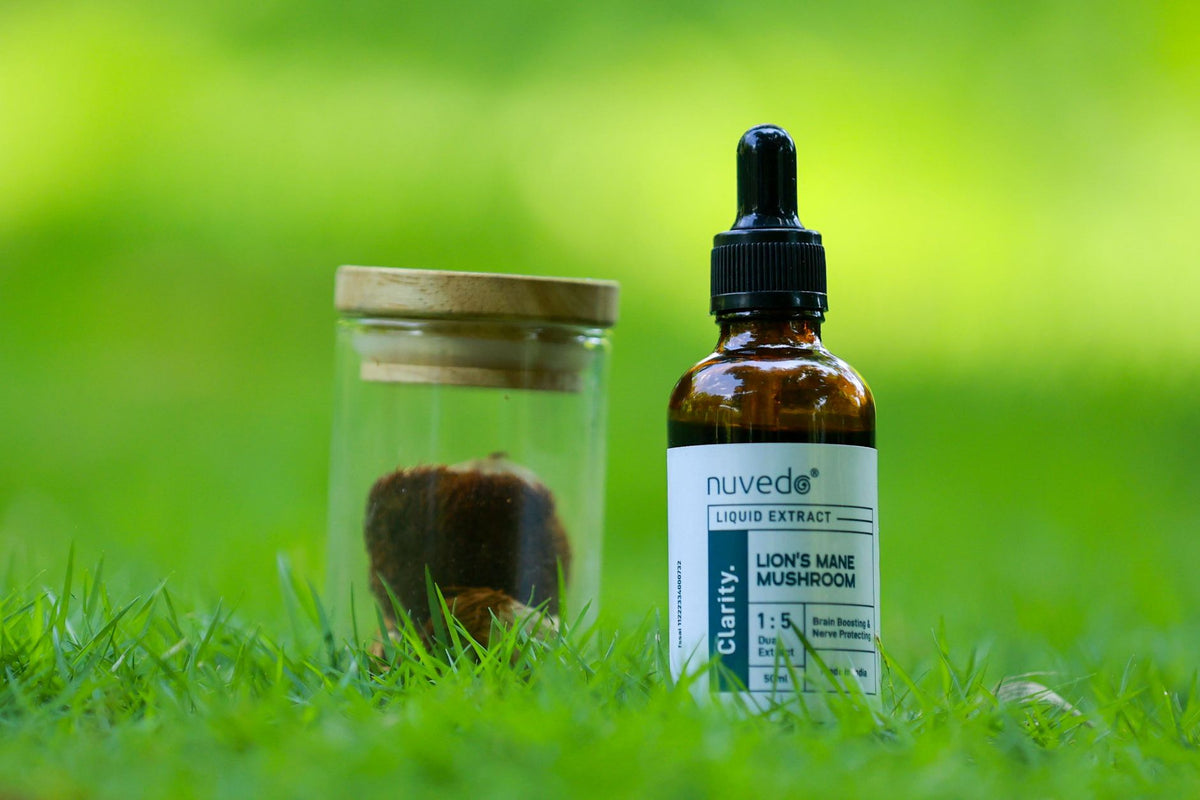
5. Lion's Mane Mushroom — Most Promising Emerging Ingredient
Lion's mane (Hericium erinaceus) stimulates nerve growth factor (NGF) production in laboratory studies, which has generated significant excitement. However, human RCT data remains thinner than for the ingredients above.
- Evidence depth: 3 positive human RCTs (plus strong preclinical data)
- Onset speed: Slow — 8–16 weeks in available trials
- Effect size: Moderate in the limited human data available
- Typical dose: 500–3,000 mg daily
Lion's mane ranks lower not because it doesn't work, but because we simply don't have enough human evidence yet to be confident in the size of its effects. Watch this space — several larger trials are underway in 2026.
6. Ginkgo Biloba — Mixed Evidence, Lower Confidence
Ginkgo biloba is one of the most widely sold brain supplements globally, but its clinical track record is surprisingly inconsistent. The large GEM trial (3,069 participants) found no significant cognitive benefit in older adults.*
- Evidence depth: 20+ human RCTs, but results are highly mixed
- Onset speed: Variable — 4–24 weeks across studies
- Effect size: Small-to-negligible in meta-analyses of healthy adults
- Typical dose: 120–240 mg daily
Despite its popularity, ginkgo scores lowest in our framework because the volume of evidence includes many null results. If you're choosing one brain supplement ingredient, the five above all have stronger cases.
Key Takeaways: Choosing Brain Supplements in 2026
Here's what this ranking reveals when you step back:
- Citicoline is the best all-rounder — the deepest evidence base, reasonable onset, and meaningful effect sizes across age groups.*
- Bacopa wins for memory — but only if you're patient enough to take it daily for 2–3 months.*
- L-theanine is ideal for same-day results — perfect for high-pressure workdays or exam revision.*
- Popularity doesn't equal evidence — ginkgo biloba is everywhere, yet its data is weaker than less famous ingredients.
- Stacking complementary ingredients may offer broader benefits than relying on any single compound.*
If you want a brain supplement that combines several of the top-ranked ingredients — including citicoline — in clinically informed doses, Noobru Advantage was designed with exactly this evidence-based approach in mind. You can view the full ingredient breakdown here.
Frequently Asked Questions
Do brain supplements actually work?
Some do, based on clinical evidence. Ingredients like citicoline, Bacopa monnieri, and phosphatidylserine have multiple randomised controlled trials showing measurable improvements in memory, focus, or processing speed.* However, many marketed "brain pills" contain under-dosed ingredients or compounds with little human research.
How long do brain supplements take to work?
It depends on the ingredient. Citicoline and L-theanine may produce noticeable effects within hours to days. Bacopa monnieri and lion's mane mushroom typically require 4–12 weeks of daily use before measurable cognitive benefits appear in studies.
What is the best brain supplement ingredient for focus?
Citicoline (also called CDP-choline) has the strongest clinical evidence for supporting focus and attention.* A 2021 randomised controlled trial found that 250 mg daily improved attention accuracy in healthy adults within 28 days.
Are brain supplements safe to take every day?
Most well-researched nootropic ingredients — including citicoline, Bacopa, and L-theanine — have strong safety profiles in studies lasting up to 12 weeks. However, you should always consult your healthcare provider before starting any supplement regimen, especially if you take medication.
Can I stack multiple nootropic ingredients together?
Yes, many nootropic users and products combine complementary ingredients. For example, citicoline paired with phosphatidylserine targets different pathways involved in memory and focus.* Pre-formulated stacks like Noobru Advantage are designed with complementary dosing in mind.
For more on the latest cognitive supplement research, visit the Noobru blog.
*These statements have not been evaluated by the Food and Drug Administration or MHRA. This product is not intended to diagnose, treat, cure, or prevent any disease. Always consult your healthcare provider before starting any supplement regimen.

Leave a comment
All comments are moderated before being published.
This site is protected by hCaptcha and the hCaptcha Privacy Policy and Terms of Service apply.