




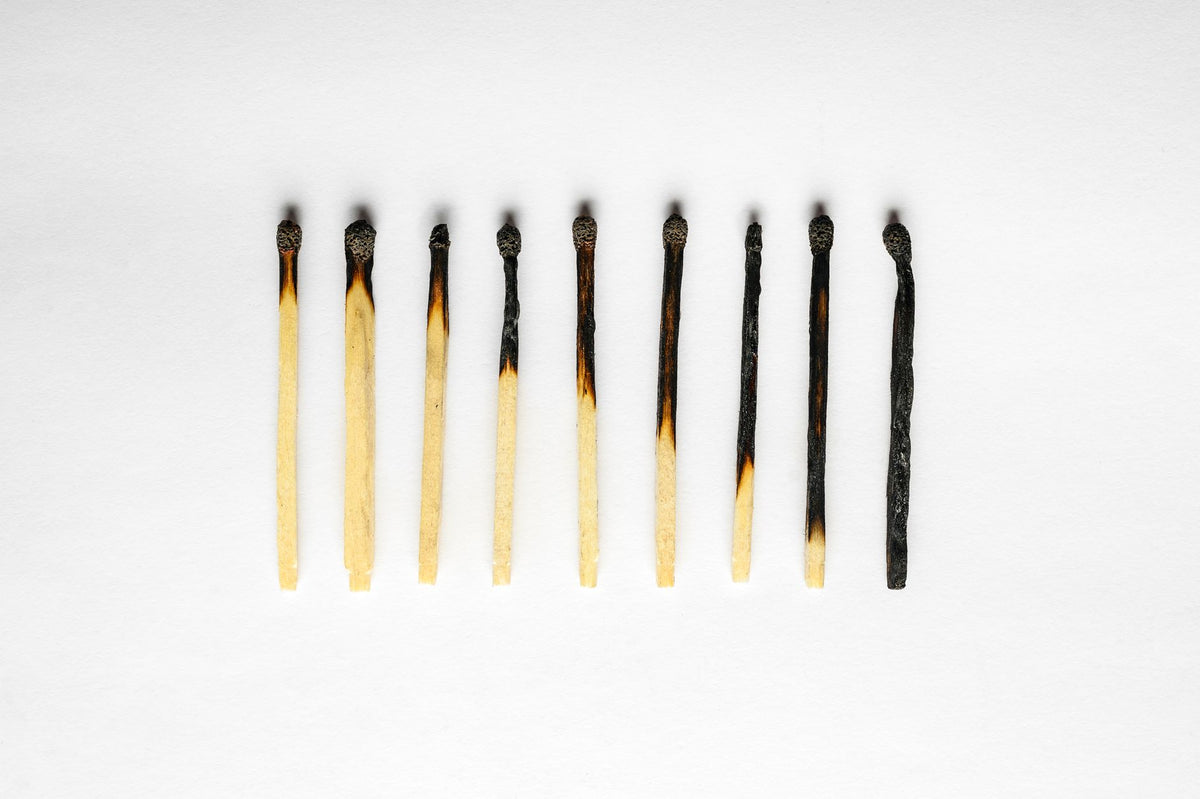
Burn Out at Work: What's Actually Happening in Your Brain — and What the Research Says About Recovery
Most burnout advice stops at "set better boundaries" and "practise self-care" — as if the problem is purely behavioural. It isn't. Burn out at work is a measurable neurochemical state involving HPA-axis dysregulation, progressive neurotransmitter depletion, and structural brain changes visible on imaging. This article maps each stage of that biological cascade to the specific recovery strategy the research supports, so you can target what's actually broken rather than guessing.
The World Health Organisation classified burnout as an "occupational phenomenon" in 2019, defining it through three dimensions: emotional exhaustion, depersonalisation, and reduced professional efficacy. A 2024 CIPD survey found 76% of UK employees reported moderate-to-high work-related stress. But prevalence figures only tell part of the story — understanding the neuroscience beneath the symptoms is what makes recovery strategies in 2026 genuinely effective.
The Neuroscience of Workplace Burnout: Why Your Brain Gets Stuck
Burnout begins in the hypothalamic-pituitary-adrenal (HPA) axis — your body's central stress command centre. When you encounter a stressor, the hypothalamus triggers a cascade ending with cortisol release from your adrenal glands.
In short bursts, cortisol is useful. It sharpens focus, mobilises energy, and suppresses non-essential functions. The problem starts when the stress never stops.
What chronic cortisol does to your brain
Weeks or months of elevated cortisol creates a paradox. Your HPA axis becomes dysregulated — cortisol output may flatten or become blunted (hypocortisolism), losing its normal daily rhythm.
Simultaneously, sustained cortisol exposure depletes three critical neurotransmitters:
- Dopamine — the molecule behind motivation and goal-directed behaviour — drops, explaining why nothing feels worth the effort
- Serotonin production is impaired, contributing to the emotional flatness that defines burnout
- Acetylcholine — critical for memory and sustained attention — suffers, which is why you can't hold a thought
This is why burned-out professionals describe a distinctive triad: you can't concentrate, you can't be bothered, and you can't remember why you cared.
Structural brain changes: the imaging evidence
Neuroimaging studies have shown that chronic occupational stress is associated with thinning of the prefrontal cortex and enlargement of the amygdala (Savic, 2018 — Biological Psychiatry). This means burnout reshapes the brain areas governing decision-making, emotional regulation, and threat perception.
You become measurably worse at rational thinking and more reactive to negative stimuli. The encouraging news: research suggests these changes may be at least partially recoverable with sustained intervention — though recovery requires targeting the right mechanisms.
Recognising the Signs of Burn Out at Work: The Four-Stage Progression
Burnout rarely arrives overnight. It follows a predictable trajectory. Recognising your current stage determines which recovery strategies matter most.
Stage 1: The Honeymoon Fades
Initial enthusiasm gives way to subtle strain. You need caffeine to reach baseline rather than enhance performance. Weekends feel shorter. You're still functioning — but the effort required is quietly climbing.
What's happening biologically: Cortisol output increases but the HPA axis is still responsive. Neurotransmitter levels are mildly suppressed but functional.
Stage 2: Chronic Stress Takes Hold
Physical symptoms emerge: persistent fatigue, disrupted sleep, tension headaches, digestive issues. Cognitively, you struggle with tasks that once felt automatic. Irritability seeps into interactions with colleagues and family.
What's happening biologically: HPA-axis rhythm begins to flatten. Dopamine and serotonin depletion becomes measurable. Sleep architecture starts deteriorating.
Stage 3: Burnout Proper
Emotional exhaustion dominates. You feel detached from your work, cynical about outcomes, and unable to summon energy for deep thinking. Performance drops — creating a vicious cycle of stress about underperforming.
What's happening biologically: Full HPA-axis dysregulation. Prefrontal cortex function is compromised. Amygdala reactivity increases.
Stage 4: Habitual Burnout
Without intervention, burnout becomes chronic. Physical health deteriorates — weakened immunity, chronic pain, increased cardiovascular risk. Mental health conditions like anxiety may develop as secondary consequences.
At this stage, recovery typically requires extended time away from the workplace environment and professional support.
Five Evidence-Based Recovery Strategies for Workplace Burnout
Effective recovery addresses both external causes (workload, workplace environment, boundaries) and internal consequences (neurochemical imbalance, sleep disruption, physical depletion). Here's what the evidence actually supports — matched to the biology described above.
1. Restore Your Sleep Architecture
Sleep is where neurological repair happens. During deep sleep, the glymphatic system clears metabolic waste, cortisol levels reset, and neurotransmitter stores replenish. Yet burnout frequently disrupts sleep — creating a recovery bottleneck.
Prioritise sleep hygiene aggressively:
- Consistent bed and wake times, even on weekends
- No screens for 60 minutes before bed
- Cool, dark room (16–18°C is optimal)
- No caffeine after midday
If racing thoughts keep you awake, research supports calming compounds like ashwagandha, which has been shown to help reduce stress scores and serum cortisol levels compared to placebo*, and L-theanine, which promotes alpha brain-wave activity associated with calm alertness* (Hidese et al., 2019 — Nutrients).
2. Set Non-Negotiable Recovery Boundaries
Burnout is a systemic problem, not an individual failing — but individual boundaries remain the first line of defence in any workplace environment.
This means:
- A hard stop time for work communications
- At least one full day per week without any work contact
- Protected time for activities that genuinely restore you (not just numb you)
Evidence from occupational psychology consistently shows that psychological detachment from work during off-hours is one of the strongest predictors of burnout recovery (Sonnentag & Fritz, 2007 — Journal of Occupational Health Psychology). The critical word is detachment — not merely being physically absent, but mentally disengaging from work-related thoughts.
3. Support Your Stress Response System
Adaptogens are compounds that help the body adapt to stress by modulating the HPA axis. The two most studied for occupational stress are rhodiola rosea and ashwagandha.
Rhodiola rosea (200–600mg daily, standardised to 3% rosavins) has demonstrated significant reductions in mental fatigue and improvements in short-term memory and calculation in controlled trials* (Ishaque et al., 2012 — BMC Complementary and Alternative Medicine).
Ashwagandha (300–600mg daily of root extract) has shown significant reductions in stress assessment scores and serum cortisol levels versus placebo*. Phosphatidylserine has also shown promise in helping support the body's cortisol response*.
These aren't overnight solutions. Most clinical trials show benefits emerging over four to eight weeks of consistent use. They work best as part of a broader recovery strategy — not as a standalone fix.
4. Rebuild Depleted Neurochemistry Through Nutrition
Chronic stress burns through B vitamins, magnesium, vitamin C, and amino acid precursors at an accelerated rate. A 2016 study found low B12 levels were strongly associated with accelerated brain volume loss and cognitive decline*.
Prioritise nutrient-dense whole foods:
- Oily fish — omega-3s for neuronal membrane integrity
- Dark leafy greens — folate and magnesium
- Eggs — choline for acetylcholine synthesis
- Coloured vegetables — antioxidants to combat oxidative stress from chronic cortisol
Research into B5 deficiency has linked it to neurodegeneration (Biochemical and Biophysical Research Communications)*. Ginseng has also been studied for its effects on stress-related mood changes and HPA-axis function (Lee & Rhee, 2017 — Journal of Ginseng Research)*.
5. Reintroduce Physical Activity — Strategically
Exercise is one of the most potent interventions for burnout recovery, but intensity matters. If you're deeply burned out, high-intensity training can worsen HPA-axis dysregulation.
Start with low-to-moderate intensity: walking, swimming, yoga, or cycling at a conversational pace. The goal is to stimulate BDNF (brain-derived neurotrophic factor), which supports neuroplasticity and may help support recovery from cortisol-associated prefrontal cortex thinning* — without adding another stressor to an overloaded system.
Aim for 150 minutes per week of moderate activity, in line with NHS guidelines. As energy and resilience return, gradually increase intensity.
Workplace Environment Changes That Actually Reduce Burnout Risk
Individual recovery strategies are essential — but they're fighting an uphill battle if your workplace environment is generating unsustainable stress. Research into organisational burnout interventions highlights three structural factors with the strongest evidence:
- Workload autonomy — having genuine control over how and when you complete tasks reduces cortisol variability significantly
- Role clarity — ambiguous expectations are a reliable burnout driver; clear remit and success criteria lower HPA-axis activation
- Recovery-positive culture — workplaces that actively discourage after-hours emails and normalise breaks see measurably lower burnout rates
If your organisation is resistant to these changes, document what you can control. Even small modifications — a 15-minute midday walk, a "no meetings" morning block — compound over time.
Where Targeted Supplementation Fits In
No supplement replaces structural changes to your workplace environment or professional mental health support. But targeted nutritional support may help your body recover from the neurochemical consequences of chronic stress faster*.
Noobru Pro combines 200mg of rhodiola rosea — within the clinically studied dose range — with ashwagandha, L-theanine, phosphatidylserine, and a full B-vitamin complex. It also includes 500mg of acetyl L-carnitine for mitochondrial energy support* and N-acetyl L-tyrosine, a precursor to dopamine and norepinephrine*.
For those whose burnout picture centres on disrupted sleep, Noobru Lucid contains 1000mg of ashwagandha alongside passion flower, valerian, magnesium glycinate, and L-tryptophan (a serotonin and melatonin precursor) to help support restorative sleep without next-day grogginess*.
Both products list every ingredient and dose on the label — no proprietary blends. They're formulated as one element of a broader recovery approach alongside the strategies above. If you're new to nootropics, that linked guide explains how these compounds work.
Noobru Pro and Noobru Lucid sachets on a clean desk beside a glass of water, natural editorial-style lighting" width="800" height="450" loading="lazy" />Frequently Asked Questions
What are the first signs of burn out at work?
The earliest signs are emotional exhaustion that doesn't resolve after a weekend off, growing cynicism towards your role, and a noticeable productivity drop despite working the same hours. Physical symptoms like disrupted sleep, tension headaches, and difficulty concentrating typically follow.
How long does it take to recover from workplace burnout?
Recovery timelines depend on severity. Mild burnout may improve within a few weeks of meaningful changes. Severe burnout involving full HPA-axis dysregulation can take three to twelve months. Early intervention shortens recovery significantly.
Is burnout the same as depression?
Burnout and depression share symptoms like fatigue and low motivation, but they are distinct. Burnout is tied to chronic workplace stress and tends to improve when work conditions change. Depression persists across all life domains. If you suspect depression, consult your GP.
Can supplements help with burnout?
Certain adaptogens like rhodiola rosea and ashwagandha have clinical evidence supporting their role in managing stress responses and cortisol levels*. They don't replace addressing root causes, but may help support resilience while you make structural changes*.
Should I quit my job if I'm burned out?
Not necessarily. Many people recover through firmer boundaries, workload restructuring, or addressing specific stressors. However, if your workplace environment is structurally toxic and resistant to change, leaving may be the most effective long-term strategy. A GP or occupational health professional can help you assess your situation.
Key Takeaways: Matching Recovery to Biology
- Burnout is biological, not a character flaw. Chronic workplace stress dysregulates the HPA axis, depletes neurotransmitters, and physically reshapes brain structures involved in decision-making and emotional regulation.
- Early recognition shortens recovery dramatically. The four stages — from fading enthusiasm to habitual exhaustion — follow a predictable pattern. Intervening at stages one or two can cut recovery time from months to weeks.
- Recovery strategies must be both structural and biological. Address external causes (boundaries, workload, workplace environment) while simultaneously supporting sleep, nutrition, and stress-response systems.
- Adaptogens have genuine clinical evidence. Rhodiola rosea and ashwagandha have demonstrated significant stress-management effects in controlled studies — but they work best over four to eight weeks as part of a broader approach*.
- Seek professional help if symptoms persist. Burnout can develop into clinical anxiety or depression. Your GP can assess your situation and refer you to occupational health or mental health services.
If chronic workplace stress has left you running on empty, targeted adaptogen and nootropic support may help your body recover faster*. Noobru Pro combines rhodiola rosea, ashwagandha, and a full B-vitamin complex at clinically relevant doses — all in a convenient drinkable format.
Try Noobru Risk-Free With Our 90-Day Money-Back Guarantee →References
- Savic, I. (2018). Structural changes of the brain in relation to occupational stress. Cerebral Cortex, 28(12), 4369–4381. PubMed
- Ishaque, S. et al. (2012). Rhodiola rosea for physical and mental fatigue: a systematic review. BMC Complementary and Alternative Medicine, 12, 70. PubMed
- Hidese, S. et al. (2019). Effects of L-theanine administration on stress-related symptoms and cognitive functions. Nutrients, 11(10), 2362. PubMed
- Sonnentag, S. & Fritz, C. (2007). The Recovery Experience Questionnaire. Journal of Occupational Health Psychology, 12(3), 204–221. PubMed
- Lee, S. & Rhee, D-K. (2017). Effects of ginseng on stress-related depression, anxiety, and the hypothalamic-pituitary-adrenal axis. Journal of Ginseng Research, 41(4), 589–594. PubMed
- Cerebral deficiency of vitamin B5 as a potentially-relevant cause of neurodegeneration. Biochemical and Biophysical Research Communications.
- CIPD (2026). Health and Wellbeing at Work Report. CIPD
*These statements have not been evaluated by the Food and Drug Administration or MHRA. This product is not intended to diagnose, treat, cure, or prevent any disease. Always consult your healthcare provider before starting any supplement regimen.

Leave a comment
All comments are moderated before being published.
This site is protected by hCaptcha and the hCaptcha Privacy Policy and Terms of Service apply.