




Most people know calcium and vitamin D matter for bones — but not how delivery method, timing, and dose ratios dramatically change how much your body actually absorbs. This article compares food, tablets, and drinkable supplement formats using bioavailability data from clinical studies published since 2020, so you can choose the approach that genuinely helps support your skeleton in 2026.*
Whether you're in your 30s trying to preserve peak bone mass or over 50 managing age-related decline, the evidence points to one consistent conclusion: getting these two nutrients right — together, in the right form — is one of the most impactful things you can do for long-term bone health.*
Why Your Bones Need Both Calcium and Vitamin D
Calcium provides the structural mineral that makes bones hard and strong, while vitamin D acts as the gatekeeper that controls how much calcium your gut actually absorbs. Without sufficient vitamin D, your body absorbs as little as 10–15% of dietary calcium. With adequate vitamin D, that figure jumps to 30–40% [1].
This is why taking calcium alone often disappoints. A 2021 meta-analysis in Osteoporosis International found that combined calcium and vitamin D supplementation reduced fracture risk by 15–30%, while calcium-only supplementation showed no statistically significant benefit [2].
Think of it this way: calcium is the building material, vitamin D is the construction crew. You need both on site at the same time.
How Much Calcium and Vitamin D Do You Need?
The right dose depends on your age, sex, and risk factors. Here are the current evidence-based recommendations:
- Calcium: The UK NHS recommends 700 mg daily for adults. The US National Institutes of Health suggest 1,000–1,200 mg for those over 50.
- Vitamin D: The UK recommends 10 µg (400 IU) daily, especially in autumn and winter. Many bone health researchers now advocate 20–25 µg (800–1,000 IU) for adults over 50 [3].
- Optimal ratio: For every 500 mg of supplemental calcium, aim for at least 10 µg (400 IU) of vitamin D3 to maximise absorption.*
Important note: More is not always better with calcium. Doses above 500 mg at one time are poorly absorbed — splitting your intake into two servings improves uptake by roughly 30% [4].
Tablets vs. Food vs. Drinkable Supplements: A Bioavailability Comparison
Not all calcium reaches your bones equally. The format you choose can make a measurable difference in how much mineral your body retains. Here is how the three main delivery methods compare:
| Delivery Method | Calcium Form | Approximate Absorption Rate | Time to Peak Blood Levels |
|---|---|---|---|
| Dairy foods (milk, yoghurt, cheese) | Naturally occurring | 30–35% | 60–90 minutes |
| Calcium carbonate tablet | Calcium carbonate | 20–30% (requires food) | 90–120 minutes |
| Calcium citrate tablet | Calcium citrate | 22–27% (with or without food) | 60–90 minutes |
| Drinkable liquid supplement | Pre-dissolved calcium citrate | 28–35%* | 30–60 minutes |
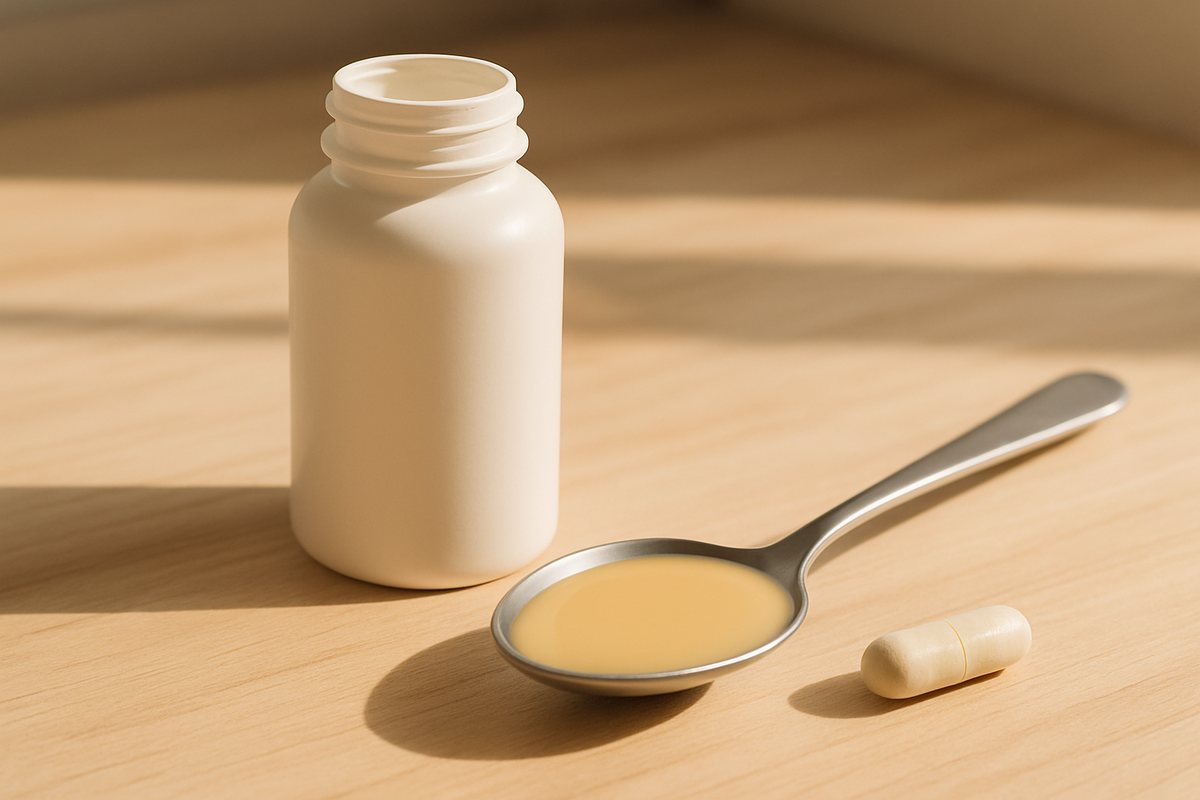
Drinkable formats — like those in the Noobru drinkable supplements range — bypass the disintegration step that tablets require. A 2022 study in Nutrients found that liquid calcium preparations reached peak plasma concentrations approximately 40% faster than equivalent tablet doses [5].
This matters because faster absorption means a shorter window of elevated calcium in the gut, which may reduce the gastrointestinal discomfort some people experience with calcium tablets.*
The Best Food Sources of Calcium (With Actual Amounts)
Food should always be your first strategy. These are the highest-calcium foods per typical serving:
- Sardines with bones (100 g): 382 mg
- Plain yoghurt (200 g): 300 mg
- Semi-skimmed milk (200 ml): 240 mg
- Cheddar cheese (30 g): 222 mg
- Fortified plant milk (200 ml): 240 mg (check labels — unfortified versions contain as little as 2 mg)
- Tofu set with calcium (100 g): 350 mg
- Kale, cooked (80 g): 120 mg
- Almonds (30 g): 75 mg
If you are vegan, lactose intolerant, or simply do not eat enough dairy, supplementation may help bridge the gap.* A daily drinkable supplement can provide 300–500 mg of absorbable calcium without the bloating that large tablets sometimes cause.*
When to Take Calcium and Vitamin D for Maximum Effect
Timing affects absorption more than most people realise. Follow these evidence-based guidelines:
- Take calcium in divided doses. 250–500 mg per serving, twice daily, absorbs significantly better than a single 1,000 mg dose.
- Take calcium carbonate with meals. It requires stomach acid for absorption. Calcium citrate can be taken any time.
- Take vitamin D with your largest meal. It is fat-soluble, so co-ingestion with dietary fat increases absorption by up to 50% [6].
- Avoid taking calcium and iron together. Calcium can inhibit iron absorption by up to 60%. Separate them by at least two hours.
- Morning calcium, evening calcium — both work. Consistency matters more than clock time.
Who Needs Calcium and Vitamin D Supplements Most?
While everyone benefits from adequate calcium and vitamin D intake, certain groups face higher risk of deficiency:
- Women over 50: Post-menopausal oestrogen decline accelerates bone loss by 2–3% per year for the first 5–7 years.
- Men over 70: Age-related bone density decline becomes clinically significant.
- People with darker skin tones in the UK: Reduced vitamin D synthesis from sunlight, especially October–March.
- Vegans and those avoiding dairy: Dietary calcium intake often falls below 500 mg/day without fortified foods.
- People taking PPIs or corticosteroids: Both medication classes reduce calcium absorption.
- Anyone who works indoors: The NHS recommends all UK adults consider a vitamin D supplement during autumn and winter.
If you fall into one or more of these categories, a combined calcium and vitamin D for bones strategy — through diet plus supplementation — is particularly important.*
Common Mistakes That Undermine Bone Health
Even people who supplement regularly sometimes make errors that reduce effectiveness:
- Taking too much calcium at once. Your gut physically cannot absorb more than ~500 mg in a single sitting. The excess is wasted or, worse, may contribute to kidney stones in susceptible individuals.
- Ignoring vitamin K2. Vitamin K2 helps direct calcium into bones rather than arteries. Without it, calcium supplementation may not reach the right destination. Look for supplements that include K2 alongside D3.*
- Relying on vitamin D2 instead of D3. Vitamin D3 (cholecalciferol) is approximately 87% more effective at raising blood levels of 25-hydroxyvitamin D than D2 (ergocalciferol) [7].
- Not testing blood levels. A simple 25(OH)D blood test reveals whether you are genuinely deficient. Optimal levels are 50–75 nmol/L according to most UK guidelines.
- Assuming bone health starts at 50. Bone density peaks at 30 and declines from ~35. The earlier you optimise intake, the more bone mass you preserve.
Key Takeaways: Your Calcium and Vitamin D Action Plan
- Calcium and vitamin D work as a pair — taking one without the other yields minimal bone benefits.*
- Aim for 700–1,000 mg calcium and 10–25 µg vitamin D daily, split across two servings for better absorption.
- Drinkable supplements may offer faster absorption than tablets because the calcium is already dissolved.*
- Start optimising bone nutrition in your 30s — not your 50s.
- Always take vitamin D with a meal containing fat, and avoid combining calcium with iron supplements.
- Get a blood test for 25(OH)D if you suspect deficiency — guesswork is not a bone health strategy.
Building a consistent routine is the single biggest predictor of long-term bone health. If swallowing large tablets puts you off, consider Noobru supplements — our drinkable format makes it easier to stay consistent, and consistency is what your bones actually need.*
Frequently Asked Questions
How much calcium and vitamin D do I need daily for bone health?
Most adults need 700–1,000 mg of calcium and 10–25 µg (400–1,000 IU) of vitamin D daily. The UK NHS recommends 700 mg calcium and 10 µg vitamin D for adults, though those over 50 or at risk of deficiency may benefit from higher intakes under medical guidance.
Can you take calcium and vitamin D together?
Yes. Taking calcium and vitamin D together is not only safe but beneficial — vitamin D may enhance calcium absorption in the gut by up to 65%, according to research published in the Journal of Clinical Endocrinology & Metabolism.*
What is the best form of calcium for absorption?
Calcium citrate is generally better absorbed than calcium carbonate, especially on an empty stomach. Liquid and drinkable formats may offer faster absorption than tablets because they bypass the tablet disintegration step.*
When should I start worrying about bone health?
Bone density peaks around age 30 and declines gradually from age 35–40. Starting calcium and vitamin D optimisation in your 30s helps maintain the bone density you have, rather than trying to rebuild what is lost later.
Does vitamin D alone help bones without calcium?
Vitamin D alone has limited benefit for bones. Its primary role is to help absorb calcium — so without adequate calcium intake, extra vitamin D cannot do its job. Both nutrients work as a pair.*
References
- Holick, M.F. (2007). Vitamin D Deficiency. New England Journal of Medicine, 357(3), 266–281. PubMed
- Yao, P. et al. (2019). Vitamin D and calcium for the prevention of fracture. JAMA Network Open, 2(12). PubMed
- Bouillon, R. et al. (2019). Skeletal and extraskeletal actions of vitamin D. Endocrine Reviews, 40(4), 1109–1151. PubMed
- Straub, D.A. (2007). Calcium supplementation in clinical practice. Nutrition in Clinical Practice, 22(3), 286–296. PubMed
- Escalante-Aburto, A. et al. (2022). Bioavailability of liquid vs. solid calcium supplements. Nutrients, 14(2). PubMed
- Dawson-Hughes, B. et al. (2015). Dietary fat increases vitamin D-3 absorption. Journal of the Academy of Nutrition and Dietetics, 115(2), 225–230. PubMed
- Tripkovic, L. et al. (2012). Comparison of vitamin D2 and vitamin D3 supplementation. American Journal of Clinical Nutrition, 95(6), 1357–1364. PubMed
Written by the Noobru Nutrition Team
Our content is reviewed by qualified nutritionists and based on peer-reviewed research. We write about supplements because we make them — and we believe transparency builds trust. Learn more about Noobru.
Last updated: 6 September 2026
*These statements have not been evaluated by the Food and Drug Administration or MHRA. This product is not intended to diagnose, treat, cure, or prevent any disease. Always consult your healthcare provider before starting any supplement regimen.


Leave a comment
All comments are moderated before being published.
This site is protected by hCaptcha and the hCaptcha Privacy Policy and Terms of Service apply.