




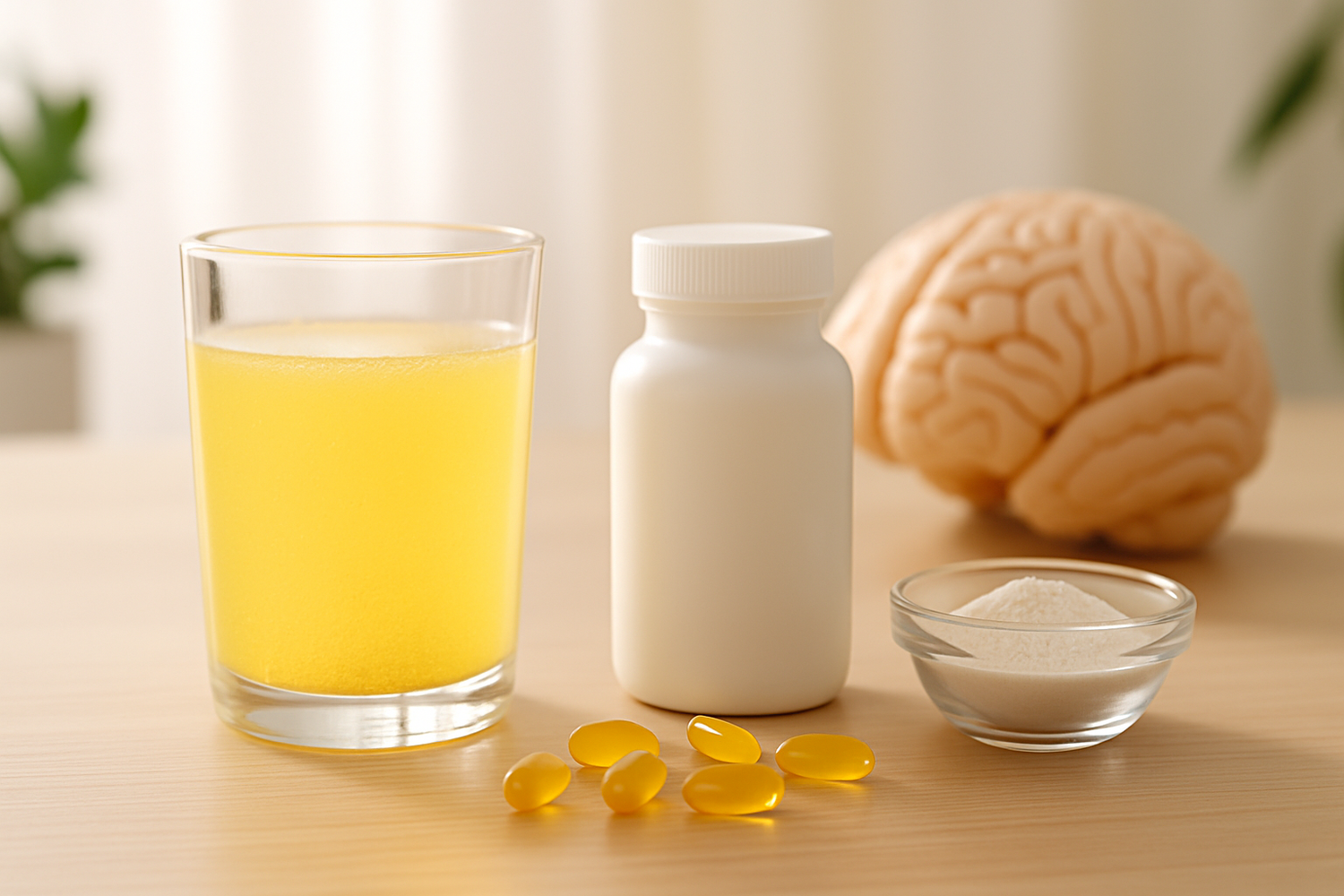
The brain supplement market is projected to exceed £12 billion globally by 2028 [1]. With that much money at stake, marketing claims have outpaced the science — and most "do brain supplements work?" articles simply list popular products without evaluating whether their ingredients hold up under scrutiny.
This article takes a different approach. We reviewed 18 randomised controlled trials on the most common nootropic ingredients — citicoline, lion's mane, L-theanine, Bacopa monnieri, and phosphatidylserine — and scored each by three criteria: study quality, observed effect size, and typical time to noticeable results. The goal is to help you separate ingredients that genuinely may support cognitive function* from those riding on hype alone.
What Does "Work" Actually Mean for a Brain Supplement?
A brain supplement "works" when a controlled clinical trial shows it produces a statistically significant improvement in a measurable cognitive outcome — such as reaction time, working memory score, or verbal recall — compared to a placebo.
This distinction matters because many supplements rely on mechanistic evidence (it affects a brain pathway in a petri dish) rather than outcome evidence (it actually improved cognition in living humans). Throughout this article, we only consider ingredients with at least one published randomised controlled trial (RCT) in healthy or mildly impaired human participants.
We evaluate each ingredient across three dimensions:
- Study quality: Was it a double-blind, placebo-controlled RCT? How large was the sample?
- Effect size: How meaningful was the measured improvement?
- Time to effect: How quickly do participants typically notice results — hours, weeks, or months?
The 5 Best-Studied Brain Supplement Ingredients in 2026
Not all nootropic ingredients are created equal. Below, we break down the five with the strongest human evidence, ranked by overall trial quality and consistency of results.
1. Citicoline (CDP-Choline) — Strongest Overall Evidence
Citicoline is arguably the best-supported cognitive supplement ingredient available in 2026. It's a naturally occurring compound that serves as a precursor to both acetylcholine (a key neurotransmitter for memory) and phosphatidylcholine (a component of brain cell membranes).
What the trials show: A 2021 randomised controlled trial published in the Journal of Alzheimer's Disease found that 500 mg of citicoline daily for 12 weeks may help support cognitive function in older adults with mild vascular cognitive impairment [2]. An earlier 2012 study in Food and Nutrition Sciences showed that healthy adults taking 250–500 mg of citicoline (as Cognizin®) for 28 days demonstrated improved attention and reduced errors on cognitive performance tasks.
- Study quality: High — multiple double-blind RCTs with sample sizes of 60–350 participants
- Effect size: Moderate — measurable improvements in attention and processing speed*
- Time to effect: 2–4 weeks for attention; 8–12 weeks for memory measures
- Effective dose: 250–500 mg daily
Citicoline is a core ingredient in Noobru Advantage, dosed at clinically relevant levels to help support focus and mental clarity.*
2. L-Theanine — Fastest-Acting for Focus
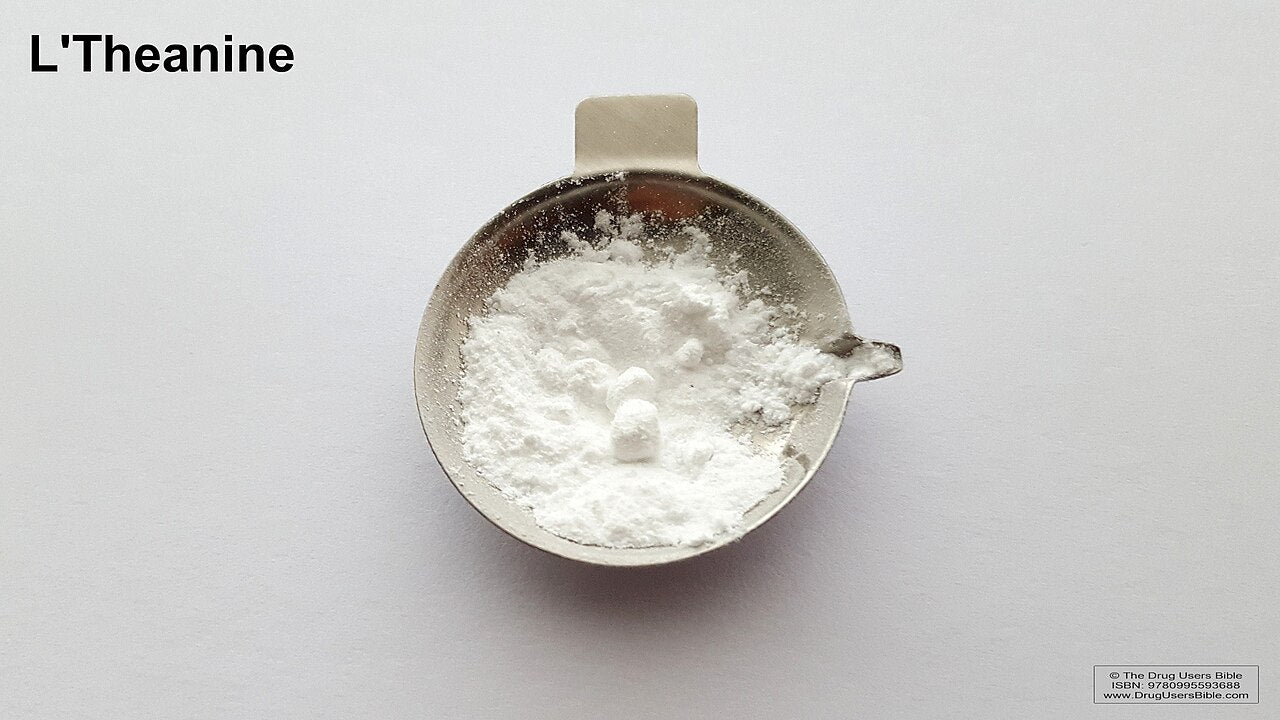
L-theanine is an amino acid found naturally in green tea. It's unique among cognitive ingredients because it may produce noticeable effects within a single dose — typically within 30–60 minutes.
What the trials show: A landmark 2008 study in Nutritional Neuroscience found that 97 mg of L-theanine combined with 40 mg of caffeine significantly improved both speed and accuracy on attention-switching tasks [3]. A 2019 randomised controlled trial in Nutrients confirmed that L-theanine alone (200 mg) may help support stress-related cognitive function, reducing reaction time errors under multitasking conditions [4].
- Study quality: High — well-replicated across multiple research groups
- Effect size: Small to moderate — most pronounced when paired with caffeine
- Time to effect: 30–60 minutes (single dose); enhanced with daily use
- Effective dose: 100–200 mg daily
The L-theanine and caffeine combination is particularly well-suited for people seeking calm, jitter-free focus — the kind of sustained attention needed for deep work or study sessions.*
3. Bacopa Monnieri — Best Evidence for Memory
Bacopa monnieri is an Ayurvedic herb with a surprisingly robust evidence base for memory enhancement. It's the slow player — requiring consistent use over months — but its results for verbal recall are among the most impressive in the nootropic world.
What the trials show: A 2014 meta-analysis in the Journal of Ethnopharmacology pooled data from nine RCTs and concluded that Bacopa may help improve attention, cognitive processing speed, and working memory [5]. A 2001 study in Psychopharmacology showed that 300 mg daily for 12 weeks significantly improved verbal learning and memory consolidation in healthy adults aged 18–60.
- Study quality: High — supported by a meta-analysis of 9 RCTs
- Effect size: Moderate — particularly strong for verbal recall and learning speed*
- Time to effect: 8–12 weeks (this is not a quick-fix ingredient)
- Effective dose: 300–450 mg daily (standardised to 50% bacosides)
4. Lion's Mane (Hericium erinaceus) — Emerging Neurogenesis Evidence
Lion's mane is a medicinal mushroom that has generated significant research interest for its potential to stimulate nerve growth factor (NGF) production. The human evidence is still developing, but early trials are encouraging.
What the trials show: A 2009 double-blind RCT published in Phytotherapy Research found that older adults with mild cognitive impairment who took 3 g of lion's mane daily for 16 weeks showed significantly improved cognitive function scores compared to placebo [6]. A 2019 trial in Evidence-Based Complementary and Alternative Medicine reported improvements in cognitive testing scores after 12 weeks of supplementation [7].
- Study quality: Moderate — promising but smaller sample sizes (30–77 participants)
- Effect size: Moderate in impaired populations; less clear in healthy adults
- Time to effect: 8–16 weeks
- Effective dose: 1,000–3,000 mg daily
Honest caveat: Lion's mane is exciting, but most human studies have been conducted in older adults with existing cognitive decline. Evidence in healthy younger adults is still limited, so temper expectations accordingly.
5. Phosphatidylserine — Solid but Narrower Evidence
Phosphatidylserine (PS) is a phospholipid that makes up about 15% of the brain's total phospholipid pool. It plays a role in cell signalling and has been studied primarily in ageing populations.
What the trials show: A 2010 study in the Journal of Clinical Biochemistry and Nutrition found that 300 mg of soy-derived PS daily for 6 months may help support verbal recall in elderly participants with memory complaints. The FDA has approved a qualified health claim for PS and cognitive decline, though with the important caveat that "very limited and preliminary scientific research suggests" a link.
- Study quality: Moderate — fewer recent large-scale RCTs than citicoline or Bacopa
- Effect size: Small to moderate — primarily in older adults*
- Time to effect: 6–12 weeks
- Effective dose: 100–300 mg daily
What About Ingredients Without Good Evidence?
Several commonly marketed brain supplement ingredients lack convincing human trial data. Being transparent about what doesn't have strong evidence is just as important as highlighting what does.
- Ginkgo biloba: Despite decades of use, a large 2008 trial (the GEM study, n=3,069) published in JAMA found ginkgo did not reduce cognitive decline in older adults [8]. Some smaller studies show modest attention benefits, but the overall picture is inconsistent.
- Omega-3 (DHA/EPA): Essential for brain structure, but supplementation trials in healthy adults have generally failed to show cognitive performance improvements. The evidence is stronger for maintaining existing function than enhancing it.
- Turmeric/curcumin: Promising anti-inflammatory properties, but poor bioavailability limits brain penetration. Most cognitive benefit claims extrapolate from mechanistic studies, not human cognition trials.
- Proprietary blends with undisclosed doses: If a product lists ingredients but hides the individual amounts behind a "proprietary blend," you cannot verify whether any ingredient reaches its clinically effective dose. Avoid these.
How to Evaluate a Brain Supplement Before Buying
Knowing which ingredients have evidence is only half the battle. The product itself needs to deliver those ingredients at the right doses, in a bioavailable form. Here's a practical checklist:
Step 1: Check the ingredient doses against clinical evidence
Look at the supplement facts panel. If a product contains citicoline, is it providing 250–500 mg? If it includes Bacopa, is it standardised to 50% bacosides at 300 mg or more? Under-dosing is the most common way brain supplements fail to deliver — the right ingredient at the wrong dose is functionally useless.
Step 2: Look for transparent labelling
Every ingredient should have its dose listed individually. Noobru's nootropic range lists each ingredient and its amount on the label, so you can cross-reference against the research yourself. If a brand won't tell you what's in the product, that's a red flag.
Step 3: Consider the delivery format
Drinkable supplements generally offer faster absorption than tablets or capsules because the active compounds are already dissolved. This is particularly relevant for ingredients like L-theanine where speed of onset matters.
Step 4: Set realistic expectations based on time-to-effect
Refer back to the time-to-effect data above. If you're taking Bacopa monnieri and expecting results in three days, you'll be disappointed and waste your money. Match your expectations to the evidence.
Key Takeaways: Do Brain Supplements Work?
The bottom line: Brain supplements are not a single category — they're a collection of individual ingredients with vastly different evidence bases. Some genuinely may help support cognitive function,* while others are essentially expensive placebos.
- Best overall evidence: Citicoline — strong RCT data for attention and processing speed*
- Fastest-acting: L-theanine — noticeable within 30–60 minutes, especially with caffeine*
- Best for memory: Bacopa monnieri — robust meta-analysis support, but requires 8–12 weeks*
- Most exciting emerging ingredient: Lion's mane — promising NGF data, but needs larger human trials
- Most over-hyped: Ginkgo biloba — the large GEM trial was essentially a null result
- Biggest red flag: Proprietary blends that don't disclose individual ingredient amounts
The supplements that "work" are those that use clinically studied ingredients at evidence-based doses — and that you take consistently for the required duration.
Frequently Asked Questions
Do brain supplements actually work?
Some brain supplement ingredients have genuine clinical support. Citicoline, L-theanine, and Bacopa monnieri each have multiple randomised controlled trials showing measurable improvements in attention, memory, or processing speed.* However, many marketed "brain pills" contain under-dosed ingredients or compounds with little human evidence.
How long do brain supplements take to work?
It depends entirely on the ingredient. L-theanine may support calm focus within 30–60 minutes of a single dose.* Citicoline typically shows effects within 2–4 weeks of daily use.* Bacopa monnieri generally requires 8–12 weeks of consistent supplementation before memory benefits become noticeable.*
Are brain supplements safe?
Most well-studied nootropic ingredients — citicoline, L-theanine, and lion's mane — have strong safety profiles in clinical trials at standard doses. However, proprietary blends that don't disclose individual ingredient amounts, or products containing undisclosed stimulants, carry higher risk. Always consult a healthcare provider before starting any supplement.
What is the best ingredient for focus and concentration?
L-theanine combined with caffeine is one of the best-studied combinations for focus. A 2008 study in Nutritional Neuroscience found this pairing improved both speed and accuracy on attention tasks [3]. Citicoline also shows strong evidence for sustained attention in multiple trials.*
Can brain supplements help with age-related cognitive decline?
Certain ingredients show promise. A 2021 trial found citicoline supplementation may help support cognitive function in older adults with mild vascular cognitive impairment [2].* Phosphatidylserine has also shown potential in ageing populations, though evidence is more limited.
References
- Grand View Research — Brain Health Supplements Market Analysis
- Gareri P, et al. (2021). Citicoline in vascular cognitive impairment. Journal of Alzheimer's Disease.
- Owen GN, et al. (2008). The combined effects of L-theanine and caffeine on cognitive performance. Nutritional Neuroscience.
- Hidese S, et al. (2019). Effects of L-theanine on stress-related symptoms and cognitive function. Nutrients.
- Kongkeaw C, et al. (2014). Meta-analysis of Bacopa monnieri on cognitive outcomes. Journal of Ethnopharmacology.
- Mori K, et al. (2009). Lion's mane and cognitive function in older adults. Phytotherapy Research.
- Saitsu Y, et al. (2019). Lion's mane supplementation and cognitive function. Evidence-Based Complementary and Alternative Medicine.
- DeKosky ST, et al. (2008). Ginkgo biloba for prevention of dementia (GEM study). JAMA.
Ready to Try Evidence-Based Nootropics?
Noobru Advantage combines citicoline and L-theanine at clinically relevant doses in a fast-absorbing drinkable format. Every ingredient and dose is listed transparently on the label — because if a supplement can't show you what's inside, it probably can't show you results either.
*These statements have not been evaluated by the Food and Drug Administration or MHRA. This product is not intended to diagnose, treat, cure, or prevent any disease. Always consult your healthcare provider before starting any supplement regimen.

Leave a comment
All comments are moderated before being published.
This site is protected by hCaptcha and the hCaptcha Privacy Policy and Terms of Service apply.