




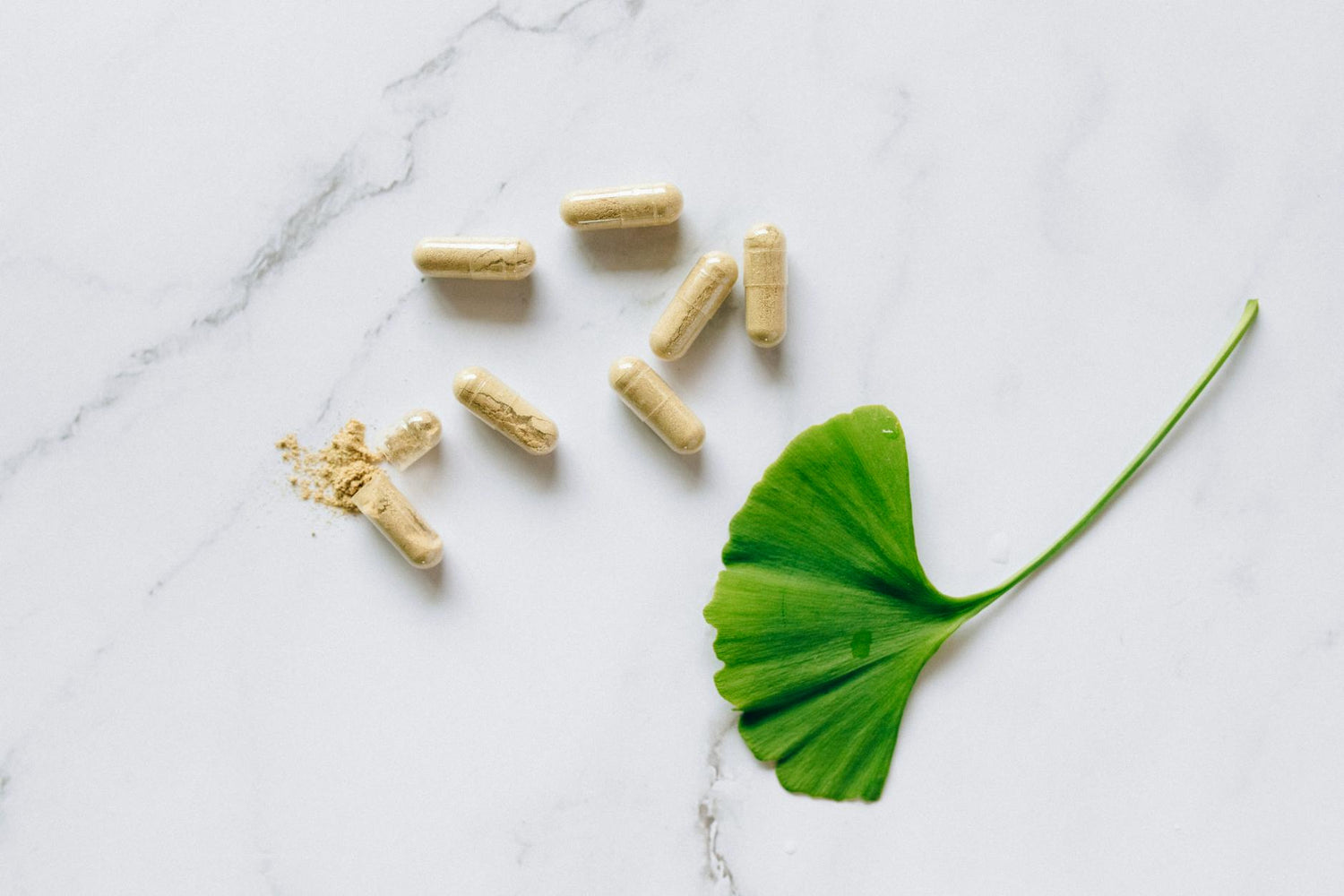
Ginkgo Biloba Supplement: What 6 Key Trials Actually Show About Cognitive Benefits
Most articles about ginkgo biloba supplements list benefits as though they're all equally proven. They're not. When you rank ginkgo's cognitive claims by actual clinical effect size and study quality, a far more honest picture emerges — one where ginkgo delivers genuine promise for some brain health outcomes and clearly disappoints for others. If you're considering a ginkgo biloba supplement in 2026, this evidence-first breakdown will help you decide whether it deserves a spot in your routine or whether your money is better spent on other nootropic approaches.
Ginkgo biloba is one of the oldest living tree species on Earth, and its leaf extract has been used in traditional medicine for centuries. Today, it remains one of the best-selling herbal supplements in the UK and globally. But popularity doesn't equal efficacy — and when the question is cognitive decline or memory loss, you need data, not marketing.
What Is Ginkgo Biloba and How Does It Work?
Ginkgo biloba extract (GBE) contains two primary groups of active compounds: flavone glycosides (powerful antioxidants) and terpene lactones (including ginkgolides and bilobalide). These compounds work through several mechanisms relevant to brain health.
First, ginkgo may help support cerebral blood flow by promoting vasodilation and reducing blood viscosity — meaning more oxygen and glucose can reach brain tissue.* Second, the flavonoid content provides antioxidant protection that may help shield neurons from oxidative damage [1].* Third, ginkgolides — particularly ginkgolide B — act as platelet-activating factor (PAF) antagonists, which may help reduce inflammation in neural tissue.*
Standardised ginkgo biloba supplements typically contain 24% flavone glycosides and 6% terpene lactones. This standardisation matters enormously: unstandardised products can vary wildly in active compound content, which partly explains inconsistent study results.
The Evidence, Ranked: Where Ginkgo Biloba Delivers (and Where It Doesn't)
Not all of ginkgo's claimed benefits stand on equal footing. Below is how the major cognitive claims stack up when you examine the clinical evidence by effect size, study quality, and consistency of results.
| Claimed Benefit | Evidence Strength | Key Finding | Confidence Level |
|---|---|---|---|
| Cognitive support in existing mild impairment | Moderate–Strong | Consistent improvements in attention and processing speed in MCI populations [2] | Moderate |
| Cerebral blood flow improvement | Moderate | Measurable increases in cerebral perfusion in several imaging studies [1] | Moderate |
| Anxiety reduction | Moderate | One well-designed trial showed significant reduction in GAD symptoms at 480 mg/day [3] | Low–Moderate |
| Memory enhancement in healthy adults | Weak–Mixed | The large GEM trial (n=3,069) found no significant benefit over placebo [4] | Low |
| Dementia prevention | Weak | No reduction in dementia incidence in the 6-year GEM trial [4] | Low |
| Tinnitus relief | Very Weak | Most controlled studies show no significant improvement over placebo | Very Low |
The bottom line is stark: if you're a healthy adult hoping ginkgo will sharpen your memory or prevent cognitive decline, the largest clinical trial ever conducted says otherwise. But if you already experience mild cognitive impairment, the picture looks more encouraging.
Where ginkgo shows genuine promise
The strongest evidence for ginkgo biloba supplements comes from studies involving older adults who already have mild cognitive impairment (MCI). A 2010 meta-analysis published in Phytomedicine examined 9 randomised controlled trials and found that 240 mg/day of EGb 761 produced statistically significant improvements in cognition and daily living activities in people with existing cognitive decline [2].
Ginkgo's effects on cerebral blood flow are also reasonably well documented. Imaging studies have confirmed measurable increases in blood perfusion to frontal and parietal brain regions after supplementation [1] — providing a plausible mechanism for the cognitive effects observed in some trials.
Where the evidence falls short
The largest and longest ginkgo trial ever conducted — the Ginkgo Evaluation of Memory (GEM) study — followed 3,069 adults aged 72–96 for a median of 6.1 years [4]. The result was unambiguous: 240 mg/day of ginkgo biloba did not reduce the overall incidence of dementia or Alzheimer's disease compared to placebo.
It also failed to slow cognitive decline in participants with normal cognition at baseline. This is a critical finding for healthy adults considering a ginkgo biloba supplement purely for memory enhancement or to prevent memory loss.
Dosage, Timing, and What to Look For
If you decide to try ginkgo biloba, getting the dosage and formulation right is essential. The clinically studied dose is 120–240 mg per day of standardised extract, typically split into two or three doses taken with meals.
Most positive trials used EGb 761 at 240 mg/day. Look for products standardised to 24% flavone glycosides and 6% terpene lactones — this is the composition used in the vast majority of clinical research.
Products that don't specify standardisation levels should be viewed with scepticism. The active compound content may be insufficient to produce any meaningful effect.
Ginkgo biloba appears to require consistent use over 8–24 weeks before cognitive effects become apparent. This isn't a supplement that works overnight — anyone expecting acute, noticeable results is likely to be disappointed.
Safety, Side Effects, and Drug Interactions
Ginkgo biloba is generally well tolerated. The most commonly reported side effects in clinical trials include mild headache, gastrointestinal discomfort, and dizziness. However, there are important safety considerations that many brain health supplement guides overlook.
- Blood-thinning effects: Ginkgo's PAF-antagonist properties mean it may increase bleeding risk, particularly when combined with anticoagulants or antiplatelet medications like warfarin, aspirin, or clopidogrel. If you take any blood-thinning medication, consult your healthcare provider before using ginkgo.
- Surgery: Most surgeons recommend discontinuing ginkgo at least two weeks before any planned surgical procedure due to the theoretical bleeding risk.
- Seizure threshold: Case reports suggest ginkgo may lower the seizure threshold, particularly in people already prone to seizures or taking medications that affect seizure risk.
- Drug interactions: Beyond blood thinners, ginkgo may interact with certain antidepressants (SSRIs, MAOIs), antidiabetic medications, and some anti-seizure drugs. A conversation with your GP or pharmacist is always worthwhile before adding ginkgo to an existing medication regimen.
How Ginkgo Compares to Other Nootropic Ingredients
Ginkgo biloba doesn't exist in a vacuum. Several other well-studied nootropic compounds target similar cognitive outcomes — often with stronger or more consistent evidence in healthy populations. If you're new to cognitive supplementation, our primer on what nootropics are and how they work provides useful context.
Bacopa monnieri has arguably the most robust evidence for memory enhancement in healthy adults. A 2014 meta-analysis found significant improvements in memory free recall at doses of 300–600 mg/day (standardised to 55% bacosides), with effects typically emerging after 8–12 weeks [5]. Unlike ginkgo, bacopa's benefits have been demonstrated in younger, healthy populations — not just those with existing cognitive decline.
Citicoline takes a different mechanistic approach, providing choline (a precursor to the neurotransmitter acetylcholine) and cytidine (which converts to uridine for synaptic plasticity). A 2015 study demonstrated improved attention and psychomotor speed alongside increased frontal lobe bioenergetics visible on MRI [6] — a level of mechanistic validation that ginkgo hasn't achieved.
Rhodiola rosea offers something ginkgo doesn't: significant reduction in mental fatigue alongside improved short-term memory and calculation under stress. A landmark study from 2000 found these benefits at doses of 200–600 mg/day, making rhodiola particularly relevant for high-pressure cognitive tasks.
Phosphatidylserine is a cell membrane phospholipid that has shown promise for cortisol modulation and cognitive support, particularly in ageing populations — though more large-scale trials are needed.
The most quotable way to summarise it: Ginkgo is a decent supporting actor for brain health, but the clinical evidence crowns bacopa and citicoline as the leads — especially if you're a healthy adult.
Why a Multi-Ingredient Approach May Outperform Ginkgo Alone
A single-ingredient ginkgo biloba supplement addresses primarily one mechanism: cerebral blood flow and antioxidant protection. But cognitive performance is multifactorial — it depends on neurotransmitter availability, neuronal energy production, stress resilience, and synaptic plasticity working in concert.
This is the core limitation of any standalone nootropic ingredient, not just ginkgo. The clinical literature consistently shows that different compounds shine for different cognitive domains. Bacopa for memory encoding, citicoline for attention and mental energy, rhodiola for fatigue resistance — no single ingredient covers all of those pathways.
Noobru Pro, for example, combines adaptogens and energising nootropics designed to help support sustained energy and mental clarity under pressure.* Rather than relying on a single compound, the formula targets multiple cognitive pathways simultaneously — with each ingredient dosed at its clinically studied level.
Transparency matters here too. Many supplement brands — including ginkgo products — use "fairy-dusted" amounts that look impressive on labels but fall well below the doses used in clinical research. Noobru uses no proprietary blends, so you can verify every ingredient dose against the published evidence yourself.
That said, we're not claiming that Noobru replaces medical advice, or that any supplement is a guaranteed solution. If you're experiencing significant cognitive decline or memory loss, your first step should always be a conversation with your GP — not a supplement purchase.
Noobru Pro dissolving in a glass of water on a tidy desk beside a laptop and notebook" width="800" height="450" loading="lazy" />Frequently Asked Questions About Ginkgo Biloba Supplements
Does ginkgo biloba actually improve memory?
The evidence is mixed. Some trials show modest improvements in working memory and recall among older adults with existing cognitive decline [2], but large-scale studies like the GEM trial found no significant benefit for healthy adults looking to prevent memory loss [4].
How long does it take for ginkgo biloba to work?
Most clinical trials showing positive results used ginkgo for 8 to 24 weeks before measuring cognitive improvements. You're unlikely to notice meaningful effects within the first few days or even weeks of use.
What is the correct dosage for a ginkgo biloba supplement?
The most commonly studied dose is 120–240 mg per day of standardised extract (containing 24% flavone glycosides and 6% terpene lactones), typically split into two or three doses with meals.
Can you take ginkgo biloba with other nootropics?
Ginkgo is often combined with other cognitive support compounds like bacopa monnieri or phosphatidylserine. However, ginkgo can interact with blood-thinning medications and certain antidepressants, so always consult your healthcare provider before combining supplements.
Is ginkgo biloba safe for long-term use?
Ginkgo biloba is generally well tolerated in studies lasting up to 6 years [4]. The most common side effects are mild gastrointestinal discomfort and headache. It should be avoided before surgery due to its blood-thinning properties.
Summary: What You Should Remember About Ginkgo Biloba in 2026
- A ginkgo biloba supplement may help support cognitive function in older adults with existing mild impairment, but evidence for healthy adults is weak [2] [4].*
- The optimal dose is 120–240 mg/day of extract standardised to 24% flavone glycosides and 6% terpene lactones.
- The largest trial ever conducted (GEM, n=3,069) found ginkgo did not prevent dementia or slow cognitive decline in healthy older adults [4].
- Ginkgo has meaningful drug interactions, particularly with blood thinners — always consult your healthcare provider.
- Other nootropic ingredients like bacopa monnieri, citicoline, and rhodiola rosea have stronger or more consistent evidence for cognitive enhancement in healthy populations [5] [6].
- Multi-ingredient nootropic formulas may offer broader brain health support than ginkgo alone by targeting multiple cognitive pathways simultaneously.*
Looking for a comprehensive nootropic that goes beyond single-ingredient supplements? Noobru's drinkable formulas combine clinically supported doses of multiple cognitive ingredients — with full label transparency and no proprietary blends.
Explore Noobru's full range — 90-day money-back guarantee →References
- Ahlemeyer B, Krieglstein J. Neuroprotective effects of Ginkgo biloba extract. Cellular and Molecular Life Sciences. 2003;60(9):1779-1792. PubMed
- Weinmann S, Roll S, Schwarzbach C, Vauth C, Willich SN. Effects of Ginkgo biloba in dementia: systematic review and meta-analysis. BMC Geriatrics. 2010;10:14. PubMed
- Woelk H, Arnoldt KH, Kieser M, Hoerr R. Ginkgo biloba special extract EGb 761 in generalized anxiety disorder and adjustment disorder with anxious mood. Journal of Psychiatric Research. 2007;41(6):472-480. PubMed
- DeKosky ST, Williamson JD, Fitzpatrick AL, et al. Ginkgo biloba for prevention of dementia: a randomized controlled trial (GEM study). JAMA. 2008;300(19):2253-2262. PubMed
- Kongkeaw C, Dilokthornsakul P, Thanarangsarit P, Limpeanchob N, Scholfield CN. Meta-analysis of randomized controlled trials on cognitive effects of Bacopa monnieri extract. Journal of Ethnopharmacology. 2014;151(1):528-535. PubMed
- Silveri MM, Dikan J, Ross AJ, et al. Citicoline enhances frontal lobe bioenergetics as measured by phosphorus magnetic resonance spectroscopy. NMR in Biomedicine. 2008;21(10):1066-1075. PubMed
*These statements have not been evaluated by the Food and Drug Administration or MHRA. This product is not intended to diagnose, treat, cure, or prevent any disease. Always consult your healthcare provider before starting any supplement regimen.

Leave a comment
All comments are moderated before being published.
This site is protected by hCaptcha and the hCaptcha Privacy Policy and Terms of Service apply.