





Nutritional neuroscience researcher, PhD (King's College London). Sarah reviews Noobru's ingredient research and writes evidence-based content on cognitive health and stress physiology.
Last updated: 1 November 2026
If you've searched how to get rid of excess cortisol, you've probably found the same recycled advice everywhere: meditate, sleep more, cut caffeine. None of it tells you how fast each method actually works — or in what order to try them. This guide is different. We rank seven cortisol-lowering methods by their clinically documented time to measurable hormonal change, from 20 minutes to 8 weeks, so you can build a layered protocol that offers both immediate relief and long-term adaptation.
Excess cortisol isn't just a "stress" problem. Chronically elevated levels are linked to impaired memory, weight gain around the midsection, disrupted sleep, and weakened immune function. The speed at which you can start lowering cortisol depends on which lever you pull first — and most people pull the slowest ones without realising faster options exist.

Key Takeaways
- Fastest cortisol drop: Diaphragmatic breathing measurably lowers salivary cortisol within 20–30 minutes
- Best free method: A 20-minute moderate walk reduces cortisol and boosts focus for 1–2 hours afterwards
- Nutrition matters same-day: Magnesium, omega-3s, and vitamin C may help support cortisol metabolism within hours*
- Sleep is the multiplier: Even one night of improved sleep lowers next-morning cortisol levels
- Supplements take patience: Ashwagandha and phosphatidylserine may help reduce cortisol over 4–8 weeks, not overnight*
- Stack, don't pick one: Layering fast-acting and slow-acting methods creates a compounding effect no single intervention can match
1. Diaphragmatic Breathing: Cortisol Drops Within 20–30 Minutes
The fastest way to get rid of excess cortisol is controlled diaphragmatic breathing. It activates the vagus nerve, shifting your autonomic nervous system from sympathetic ("fight or flight") to parasympathetic ("rest and digest") dominance — and it works within a single session.
A 2017 randomised controlled trial published in Frontiers in Psychology found that 20 sessions of diaphragmatic breathing training significantly reduced salivary cortisol levels compared to controls, with acute reductions measurable after individual sessions [1]. A 2023 Stanford study confirmed that "cyclic sighing" — a specific pattern of double-inhale through the nose followed by a long exhale — was the most effective breathing technique for reducing physiological stress markers [2].
Protocol to try today: Inhale through your nose for 4 seconds, hold for 4 seconds, exhale slowly through your mouth for 6–8 seconds. Repeat for 5 minutes. Do this before stressful meetings or whenever you notice tension building.
2. Moderate Exercise: Baseline Cortisol Lower Within 1–3 Days
Moderate exercise is one of the most reliable ways to lower cortisol naturally — but intensity matters. High-intensity sessions temporarily raise cortisol during the workout. Moderate-intensity movement (brisk walking, easy cycling, swimming) lowers it.
A 2019 meta-analysis in Psychoneuroendocrinology reviewing 37 studies concluded that regular moderate exercise reduced resting cortisol concentrations, with measurable changes appearing within the first few sessions [3]. A separate 2018 study in The Journal of the Endocrine Society found that outdoor exercise produced greater cortisol reductions than indoor exercise, likely due to the additional calming effect of natural environments.
Action step: Schedule a 20–30 minute walk outdoors before your most stressful part of the day. This costs nothing and produces a cortisol-lowering effect that lasts 1–2 hours. It also helps improve focus naturally.
3. Cortisol-Lowering Nutrition: Effects Within 2–6 Hours
Specific nutrients play direct roles in cortisol metabolism, and what you eat today influences your hormonal profile by this evening. This isn't about a vague "eat healthy" recommendation — certain micronutrients have targeted cortisol-modulating effects.*

A 2020 study in Nutrients found that supplementation with 400 mg of magnesium daily significantly reduced serum cortisol in stressed adults [4]. Separately, a Harvard Health review noted that vitamin C (1,000–1,500 mg) may help blunt the cortisol response to acute stressors when taken beforehand.*
Cortisol-supporting meal framework:
- Magnesium sources: Pumpkin seeds, spinach, dark chocolate (>70% cocoa), almonds
- Omega-3 fatty acids: Salmon, mackerel, sardines, walnuts (reduce neuroinflammation that drives cortisol)
- Vitamin C: Bell peppers, kiwi, strawberries, broccoli
- Complex carbohydrates: Porridge oats, sweet potato, wholegrain bread (stabilise blood glucose — glucose crashes trigger cortisol spikes)
- Probiotic-rich foods: Kefir, sauerkraut, natural yoghurt (the gut-brain axis influences HPA-axis activity)
Avoid the trap of eliminating cortisol-spiking foods (caffeine, sugar) without adding cortisol-modulating ones. Both matter, but addition is usually more sustainable than restriction.
4. Social Connection and Laughter: Measurable Within Hours
This is the cortisol intervention that almost no supplement article mentions — yet the evidence is remarkably strong. Positive social interaction and genuine laughter reduce cortisol through oxytocin release and vagal nerve activation.
A 2003 study in Alternative Therapies in Health and Medicine found that anticipation of watching a humorous video reduced cortisol by 39% and adrenaline by 70% [5]. More recently, a 2021 meta-analysis confirmed that social support is one of the most consistent predictors of lower diurnal cortisol patterns.
Practical application: This doesn't mean "socialise more" as a vague prescription. Schedule one genuine, non-transactional conversation per day — a phone call with a friend, a meal with a partner without screens, or even a brief chat with a colleague. The cortisol effect is dose-dependent: regularity beats duration.
5. Sleep Optimisation: Next-Morning Cortisol Change Within 1–3 Nights
Cortisol follows a circadian rhythm — it should peak within 30 minutes of waking (the "cortisol awakening response") and decline throughout the day. Poor sleep flattens this curve, keeping cortisol elevated when it should be dropping.
Research from the University of Pennsylvania demonstrated that restricting sleep to 6 hours per night for 14 nights significantly elevated afternoon cortisol levels, yet participants reported feeling "fine" [6]. You may have normalised a cortisol profile that's quietly undermining your health.
Three changes that restore healthy cortisol rhythm fastest:
- Fix your wake time — more important than bedtime. A consistent wake time recalibrates your cortisol awakening response within 2–3 days.
- Stop screens 60 minutes before bed — blue light suppresses melatonin onset by an average of 90 minutes, delaying the evening cortisol decline.
- Keep your bedroom at 16–18°C — core body temperature drop is a primary sleep initiation signal, and overheated sleep raises overnight cortisol.
If racing thoughts at bedtime are the problem, the diaphragmatic breathing technique from Method 1 does double duty here. Five minutes of slow breathing before lights-out helps lower both cortisol and heart rate.
6. Adaptogenic Supplementation: Gradual Cortisol Reduction Over 4–8 Weeks
Adaptogens are botanical compounds that may help modulate the hypothalamic-pituitary-adrenal (HPA) axis — the system that controls cortisol output.* They don't work overnight. Their value lies in gradually recalibrating your stress-response baseline over weeks of consistent use.
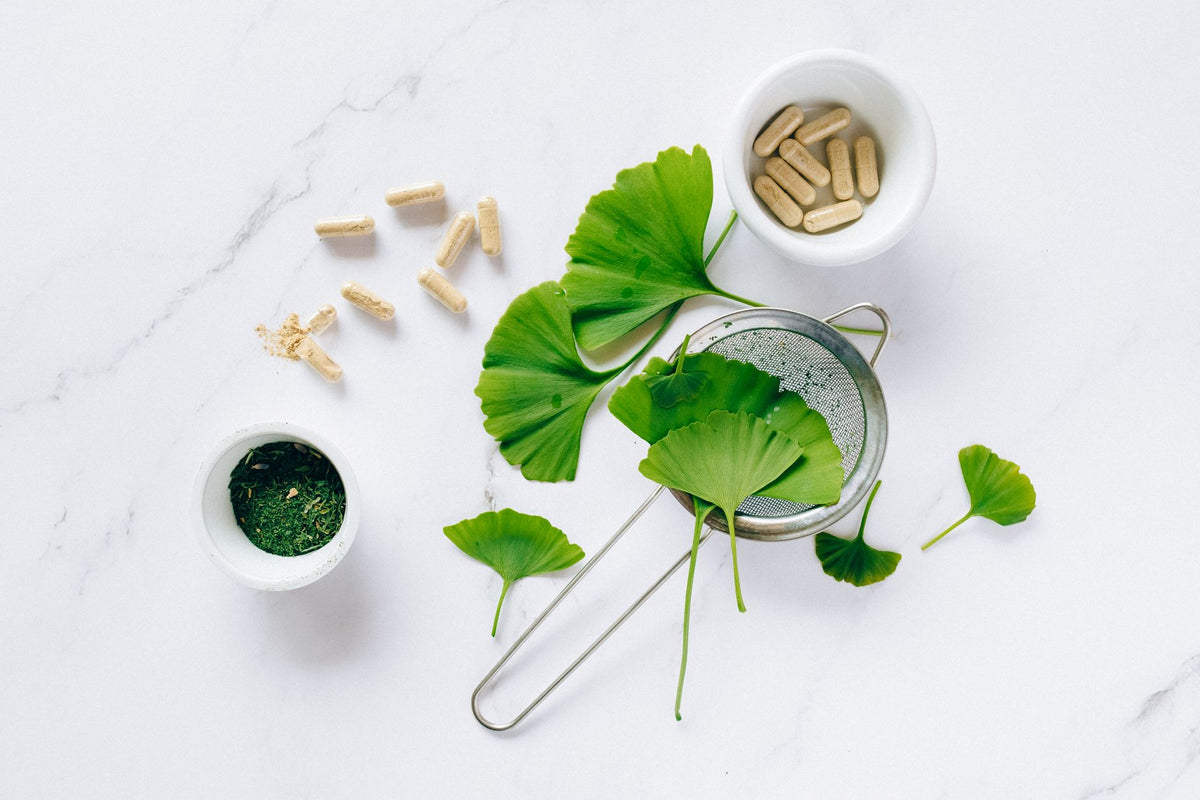
- Ashwagandha (300–600 mg/day): The most-studied adaptogen for cortisol. A 2019 systematic review of five randomised controlled trials found that ashwagandha root extract reduced serum cortisol by 11–32% after 8 weeks [7]. The KSM-66 extract has the strongest evidence base.*
- Phosphatidylserine (100–300 mg/day): A phospholipid that blunts the cortisol response to physical and psychological stress. A 2008 study in The Journal of the International Society of Sports Nutrition found that 600 mg/day reduced exercise-induced cortisol by 20% after 10 days [8].*
- B-vitamin complex: B5 (pantothenic acid) is sometimes called the "anti-stress vitamin" because of its role in adrenal function. B6, B9, and B12 support neurotransmitter synthesis that counterbalances cortisol's cognitive effects.*
Noobru Advantage combines several of these ingredients — including L-theanine and B vitamins — in clinically informed dosages, removing the guesswork of sourcing and stacking individual compounds.* If you're looking to get rid of excess cortisol through supplementation, a combined formula is more practical than buying five separate bottles.
7. Building a Daily Cortisol-Management Protocol: The Compounding Effect
No single method on this list will normalise your cortisol alone. The most effective approach layers fast-acting techniques (breathing, movement) on top of foundational habits (sleep, nutrition) while giving slower-acting supplements time to build.
Example daily cortisol-lowering stack:
- 6:30 AM: Wake at a consistent time (cortisol rhythm anchor)
- 6:45 AM: 5 minutes of diaphragmatic breathing (immediate vagal activation)
- 7:00 AM: 20-minute outdoor walk (moderate exercise + natural light exposure)
- 7:30 AM: Breakfast with magnesium-rich foods, omega-3s, and complex carbs
- 8:00 AM: Noobru Advantage dissolved in water (L-theanine + nootropic blend for calm focus)*
- 12:30 PM: Non-transactional social interaction during lunch
- 10:00 PM: Screens off, bedroom at 16–18°C, 5 minutes breathing before sleep
Within two weeks, you're benefiting from at least six of the seven methods simultaneously. The breathing and walking work within the first hour. Sleep improvements compound over 2–3 nights. Adaptogenic supplements begin showing measurable cortisol changes around week four. The protocol is the product — no single ingredient or habit carries the load alone.
High cortisol doesn't just affect stress — it impairs cognitive function too. If brain fog is a symptom you're experiencing alongside stress, our guide on how to get rid of brain fog fast uses the same time-to-effect ranking framework.
Frequently Asked Questions
What is the fastest way to lower cortisol naturally?
Diaphragmatic breathing is the fastest natural method, with studies showing measurable salivary cortisol reductions within 20–30 minutes of a single session [1]. Combining it with a short walk outdoors amplifies the effect by engaging both vagal activation and natural-environment exposure.
How long does it take for cortisol levels to return to normal?
After an acute stressor, cortisol typically returns to baseline within 40–60 minutes. Chronically elevated cortisol from ongoing stress can take 2–8 weeks of consistent lifestyle and dietary changes to normalise — which is why a layered protocol matters more than any single intervention.
Does ashwagandha really lower cortisol?
Yes. A 2019 systematic review of five RCTs found that 300–600 mg of ashwagandha root extract per day reduced serum cortisol by an average of 11–32% after 8 weeks of supplementation [7], though individual results vary.* The KSM-66 standardised extract has the most clinical support.
What foods help reduce cortisol?
Foods rich in omega-3 fatty acids (oily fish, walnuts), magnesium (dark leafy greens, pumpkin seeds), and vitamin C (bell peppers, kiwi) have the strongest evidence for supporting healthy cortisol metabolism. Pair them with complex carbohydrates to prevent blood glucose crashes, which independently trigger cortisol spikes.
Can exercise lower cortisol or does it raise it?
Both — and intensity determines which. High-intensity exercise temporarily raises cortisol during the session. Moderate exercise (20–30 minutes of brisk walking or easy cycling) lowers baseline cortisol levels over days and weeks [3]. For cortisol management specifically, consistency matters more than intensity.
References
- Ma X, et al. "The effect of diaphragmatic breathing on attention, negative affect and stress in healthy adults." Frontiers in Psychology. 2017;8:874. PubMed
- Balban MY, et al. "Brief structured respiration practices enhance mood and reduce physiological arousal." Cell Reports Medicine. 2023;4(1):100895. PubMed
- Beserra AHN, et al. "Can physical exercise modulate cortisol level in subjects with depression? A systematic review and meta-analysis." Psychoneuroendocrinology. 2019;104:191-199. PubMed
- Pickering G, et al. "Magnesium status and stress: The vicious circle concept revisited." Nutrients. 2020;12(12):3672. PubMed
- Berk LS, et al. "Modulation of neuroimmune parameters during the eustress of humor-associated mirthful laughter." Alternative Therapies in Health and Medicine. 2001;7(2):62-72. PubMed
- Van Dongen HPA, et al. "The cumulative cost of additional wakefulness." Sleep. 2003;26(2):117-126. PubMed
- Lopresti AL, et al. "An investigation into the stress-relieving and pharmacological actions of an ashwagandha extract: A randomized, double-blind, placebo-controlled study." Medicine. 2019;98(37):e17186. PubMed
- Starks MA, et al. "The effects of phosphatidylserine on endocrine response to moderate intensity exercise." Journal of the International Society of Sports Nutrition. 2008;5:11. PubMed
*These statements have not been evaluated by the Food and Drug Administration or MHRA. This product is not intended to diagnose, treat, cure, or prevent any disease. Always consult your healthcare provider before starting any supplement regimen.


Leave a comment
All comments are moderated before being published.
This site is protected by hCaptcha and the hCaptcha Privacy Policy and Terms of Service apply.