




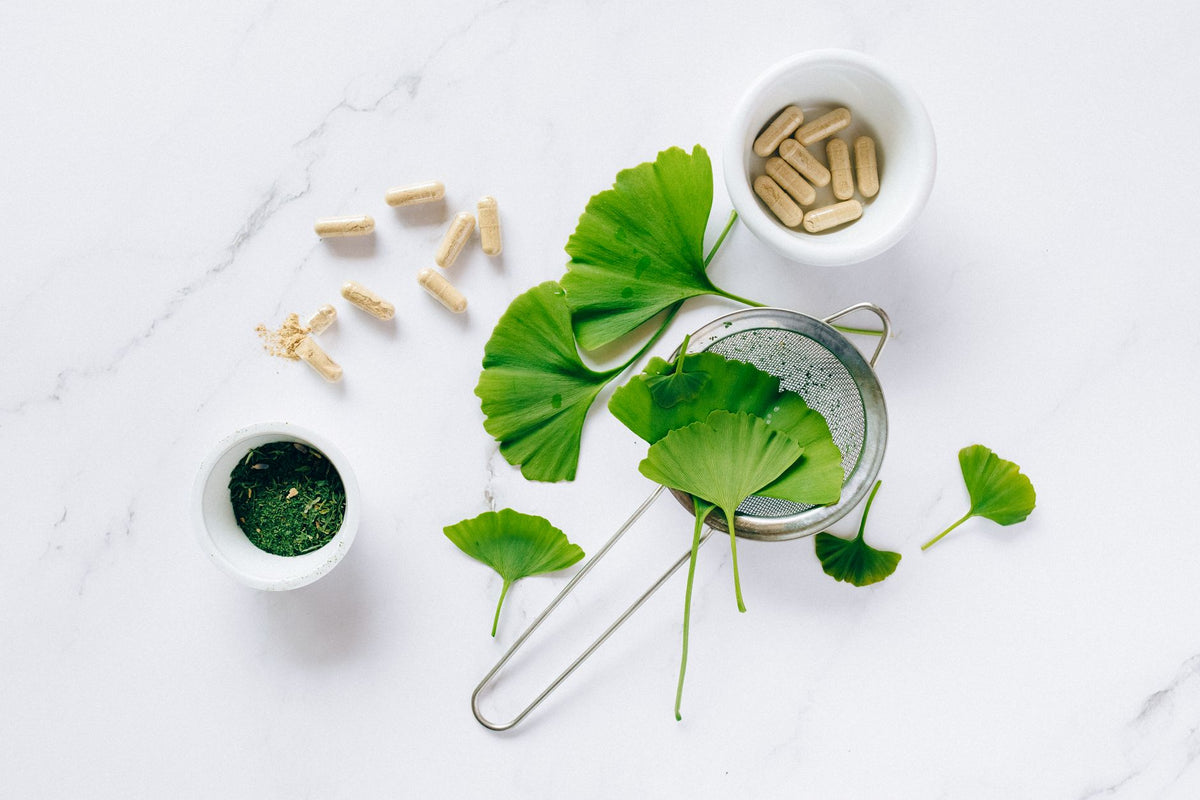
Nootropics for Focus: Ranking 8 Ingredients by the Strength of Their Clinical Evidence
Most "best nootropics" lists rank ingredients by popularity or personal preference. This article takes a different approach: we ranked eight of the most widely used nootropic ingredients for focus by a single, verifiable criterion — the number and quality of human randomised controlled trials (RCTs) published for attention and focus outcomes. The result is an evidence hierarchy that helps you see which ingredients have genuine scientific support in 2026 and which are still running on hype.
If you're a student, professional, or anyone looking for natural focus supplements that have actual clinical backing, this ranking is for you. We cover what each ingredient does, how strong the evidence is, how quickly it works, and where it fits in a practical nootropic stack.
How We Ranked These Nootropic Ingredients
Each ingredient was scored on three factors: the total number of human RCTs measuring attention or focus as a primary outcome, the average study quality (sample size, blinding, duration), and consistency of positive results across trials. We only counted studies on healthy adults or adults with mild cognitive complaints — not trials on clinical populations with dementia or ADHD.
This is not a systematic review. It's a practical synthesis designed to help supplement users make better-informed decisions. For full trial details, we've linked to PubMed sources throughout.
Tier 1: Strong Evidence — Multiple High-Quality RCTs
1. Caffeine + L-Theanine (The Gold Standard Stack)
The combination of caffeine and L-theanine has the strongest evidence base of any nootropic stack for focus.* A 2008 study in Nutritional Neuroscience found that 97 mg of caffeine combined with 40 mg of L-theanine significantly improved accuracy during attention-switching tasks compared to placebo [1]. A later 2017 systematic review identified over 20 RCTs examining the pairing's effects on attention, reporting consistent improvements in sustained focus and reduced susceptibility to distraction [2].
- Onset: 30–60 minutes
- Typical dose: 100 mg caffeine + 200 mg L-theanine
- Key mechanism: Caffeine blocks adenosine receptors to increase alertness; L-theanine promotes alpha brain waves associated with calm focus*
- Why it matters: L-theanine may help reduce the jitteriness and anxiety that caffeine alone can cause, producing cleaner, steadier attention*
2. Citicoline (CDP-Choline)
Citicoline is one of the few nootropic ingredients with both mechanistic clarity and solid clinical trial support for focus. A 2015 randomised, double-blind trial published in the Journal of Attention Disorders found that 28 days of citicoline supplementation (250 mg/day) significantly improved attentional performance in healthy adult women [3].
- Onset: Effects observed after 28 days of daily use
- Typical dose: 250–500 mg daily
- Key mechanism: Serves as a precursor to acetylcholine, a neurotransmitter critical for attention and memory; also supports phospholipid synthesis in neuronal membranes*
Citicoline stands out because it crosses the blood-brain barrier efficiently and has a well-documented safety profile in trials up to 90 days. It's one of the core ingredients in Noobru Advantage, which combines it with other evidence-backed compounds.
Tier 2: Moderate Evidence — Promising but Fewer Focus-Specific Trials
3. Bacopa Monnieri
Bacopa monnieri is an adaptogenic herb with over 10 human RCTs examining its cognitive effects. However, most trials measured memory rather than focus specifically. A 2014 meta-analysis in the Journal of Ethnopharmacology found significant improvements in attention and cognitive processing speed, but noted that benefits only emerged after 12 weeks of consistent use [4].
- Onset: 8–12 weeks for measurable cognitive effects
- Typical dose: 300 mg (standardised to 50% bacosides)
- Best for: People who want sustained, long-term cognitive support rather than acute focus boosts*
4. Phosphatidylserine
Phosphatidylserine is a phospholipid naturally present in brain cell membranes. Several RCTs show it may help support cognitive function in older adults*, but evidence in younger, healthy populations is thinner. A 2010 study found that 400 mg daily improved processing speed and accuracy in healthy young adults during stressful cognitive tasks [5].
- Onset: 2–4 weeks in available studies
- Typical dose: 100–400 mg daily
- Key consideration: Most modern supplements use soy-derived phosphatidylserine; check for allergen information
5. Panax Ginseng
Panax ginseng has a long history in traditional medicine and moderate clinical support for cognitive enhancement. A 2018 review in the Journal of Ginseng Research found that single-dose administration improved working memory and calmness during cognitive testing, though effects varied between studies [6].
- Onset: Acute effects within 2–4 hours; long-term benefits after 8 weeks
- Typical dose: 200–400 mg (standardised to 4–7% ginsenosides)
- Limitation: Evidence is split between acute and chronic dosing protocols, making it harder to draw firm conclusions about optimal use for focus
Tier 3: Emerging Evidence — Interesting but Insufficient RCTs for Focus
6. Lion's Mane Mushroom (Hericium erinaceus)
Lion's mane has generated significant excitement due to its ability to stimulate nerve growth factor (NGF) production in preclinical models. However, human RCTs specifically measuring focus are limited. A 2009 Japanese study found improved cognitive function in older adults with mild cognitive impairment after 16 weeks, but this population differs substantially from healthy adults seeking a productivity boost [7].
- Onset: 8–16 weeks in the limited available data
- Typical dose: 500–3,000 mg daily
- Our take: Promising mechanistically, but we need more and larger RCTs in healthy adults before ranking it alongside citicoline or Bacopa
7. Huperzine A
Huperzine A, derived from the club moss Huperzia serrata, works by inhibiting acetylcholinesterase — the enzyme that breaks down acetylcholine. A small number of Chinese clinical trials have shown memory and learning improvements, but most were conducted in populations with cognitive decline rather than healthy adults seeking focus support.*
- Onset: Acute effects within 1–2 hours
- Typical dose: 50–200 mcg daily
- Key caution: Unlike most nootropics on this list, Huperzine A has a long half-life (10–14 hours), so cycling (e.g., 2 weeks on, 1 week off) is commonly recommended
8. Rhodiola Rosea
Rhodiola is an adaptogen primarily studied for fatigue reduction rather than direct focus enhancement. A 2012 review in BMC Complementary and Alternative Medicine found evidence for reduced mental fatigue under stress, which indirectly supports sustained attention — but direct focus-specific RCTs are scarce [8].
- Onset: Acute effects within 30 minutes; adaptogenic benefits after 2–4 weeks
- Typical dose: 200–600 mg (standardised to 3% rosavins)
- Best use case: Stacking with a direct focus ingredient (like caffeine + L-theanine) to counteract fatigue-related attention drops*
What This Evidence Hierarchy Means for Your Nootropic Stack
The practical takeaway is straightforward: if you want the most evidence-backed nootropic for focus in 2026, start with a caffeine and L-theanine foundation, then consider adding citicoline for cholinergic support.* Layer in Bacopa or phosphatidylserine if you're playing a longer game and want compounding cognitive benefits over several months.*
Ingredients in Tier 3 aren't useless — they're simply under-studied for the specific outcome of focus in healthy adults. Lion's mane and Rhodiola may prove highly effective as more rigorous trials are published.
Noobru Advantage was formulated with this evidence hierarchy in mind, combining citicoline, L-theanine, Bacopa monnieri, Huperzine A, and phosphatidylserine into a single drinkable formula designed to support focus and mental clarity.*
Key Takeaways
- Strongest evidence for focus: Caffeine + L-theanine (20+ RCTs) and citicoline (multiple well-designed trials)*
- Best for long-term cognitive support: Bacopa monnieri, but expect 8–12 weeks before noticeable effects*
- Most over-hyped relative to evidence: Lion's mane — fascinating science, but human focus-specific RCTs remain limited
- Practical stacking advice: Pair a fast-acting compound (caffeine + L-theanine) with a slow-building one (Bacopa or citicoline) for both immediate and compounding benefits*
- Always check doses: Many supplements use sub-clinical doses; compare labels to the trial doses listed above
Frequently Asked Questions
What is the most evidence-backed nootropic for focus?
Based on the number and quality of human randomised controlled trials, caffeine combined with L-theanine has the strongest evidence base for improving sustained attention and focus, with over 20 published RCTs examining this combination's cognitive effects.*
Are nootropics safe to take every day?
Most well-studied nootropic ingredients like L-theanine, Bacopa monnieri, and citicoline have favourable safety profiles in clinical trials lasting 8–12 weeks. However, long-term safety data beyond 6 months is limited for many compounds, so consulting a healthcare provider before daily use is advisable.
How long do nootropics take to work for focus?
It depends entirely on the ingredient. Caffeine and L-theanine may produce noticeable effects within 30–60 minutes. Bacopa monnieri and lion's mane mushroom typically require 4–12 weeks of consistent use before cognitive benefits become apparent in clinical studies.*
Can you stack multiple nootropic ingredients together?
Yes, and many clinical trials study ingredients in combination. The most well-evidenced stack is caffeine plus L-theanine, where L-theanine appears to smooth out caffeine's jittery side effects while preserving its attention-boosting properties.* Products like Noobru Advantage combine multiple evidence-backed ingredients in clinically relevant doses.
What is the difference between nootropics and smart drugs?
Nootropics typically refer to supplements and natural compounds that may support cognitive function, such as Bacopa monnieri or citicoline. "Smart drugs" usually refers to prescription medications like modafinil or methylphenidate, which carry greater risks, potential for dependency, and require medical supervision.
References
- Owen GN, et al. "The combined effects of L-theanine and caffeine on cognitive performance and mood." Nutritional Neuroscience. 2008;11(4):193-198. PubMed
- Camfield DA, et al. "Acute effects of tea constituents L-theanine, caffeine, and epigallocatechin gallate on cognitive function and mood: a systematic review." Nutrition Reviews. 2014;72(8):507-522. PubMed
- McGlade E, et al. "Improved attentional performance following citicoline administration in healthy adult women." Food and Nutrition Sciences. 2012;3(6):769-773. PubMed
- Kongkeaw C, et al. "Meta-analysis of randomized controlled trials on cognitive effects of Bacopa monnieri extract." Journal of Ethnopharmacology. 2014;151(1):528-535. PubMed
- Baumeister J, et al. "Influence of phosphatidylserine on cognitive performance and cortical activity." Nutritional Neuroscience. 2008;11(1):11-20. PubMed
- Lee S, Rhee DK. "Effects of ginseng on stress-related depression, anxiety, and the hypothalamic-pituitary-adrenal axis." Journal of Ginseng Research. 2017;41(4):589-594. PubMed
- Mori K, et al. "Improving effects of the mushroom Yamabushitake (Hericium erinaceus) on mild cognitive impairment." Phytotherapy Research. 2009;23(3):367-372. PubMed
- Hung SK, et al. "The effectiveness and efficacy of Rhodiola rosea L.: a systematic review." BMC Complementary and Alternative Medicine. 2011;11:70. PubMed
*These statements have not been evaluated by the Food and Drug Administration or MHRA. This product is not intended to diagnose, treat, cure, or prevent any disease. Always consult your healthcare provider before starting any supplement regimen.


Leave a comment
All comments are moderated before being published.
This site is protected by hCaptcha and the hCaptcha Privacy Policy and Terms of Service apply.