




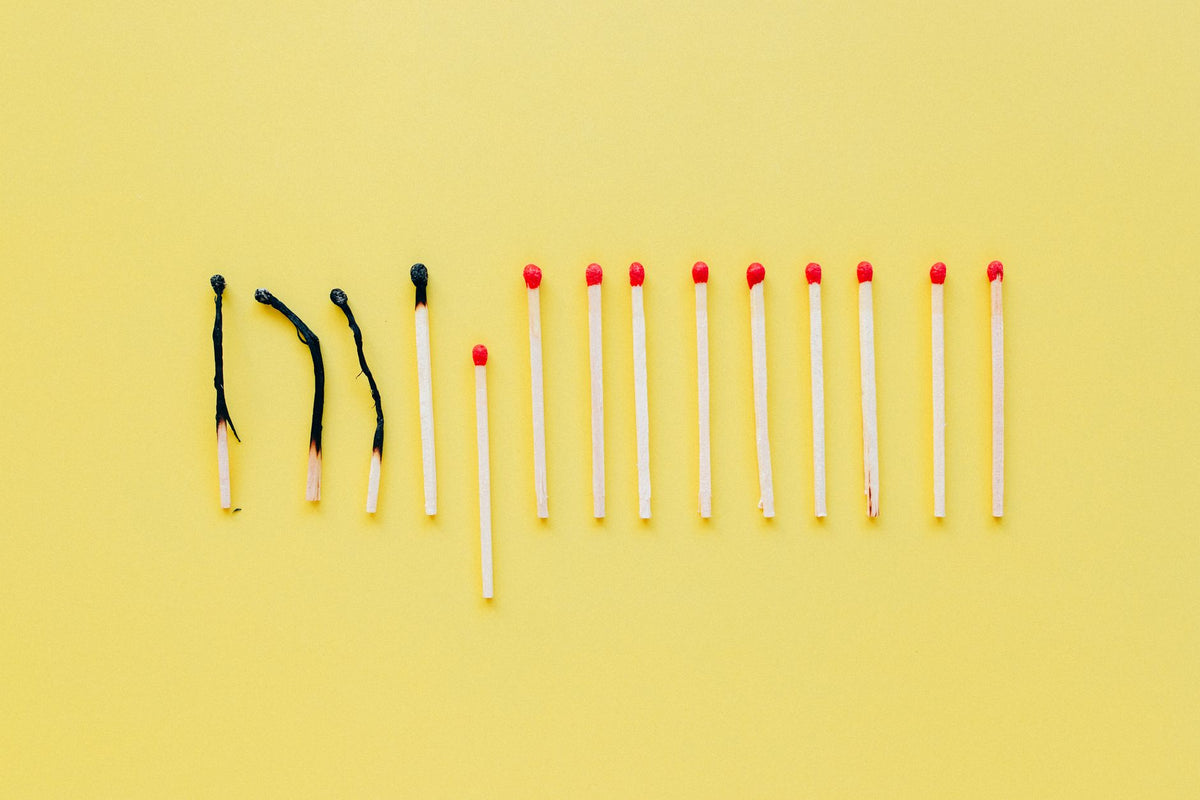
Most articles about the levels of burnout recycle Freudenberger and North's 12-stage model from the 1970s — a framework designed for clinical psychologists, not for someone at their desk wondering "Is this normal tiredness or something worse?" This guide takes a different approach: we've distilled the research into five practical levels of burnout mapped to their specific cognitive symptoms, and matched each level to the type of intervention — lifestyle, nutritional, or professional — that has the strongest evidence for that stage.
Understanding which level of burnout you're experiencing matters because the right response at stage two is completely wrong at stage five. A productivity hack won't fix chronic HPA-axis dysfunction, and taking time off won't help if you return to the same conditions that broke you down. Let's walk through each stage so you can identify where you are — and what actually helps.
What Is Burnout, and Why Does It Progress in Levels?
Burnout is a state of chronic physical and emotional exhaustion caused by prolonged, unmanaged stress — most commonly (but not exclusively) related to work. The World Health Organisation classified burnout as an "occupational phenomenon" in ICD-11, defining it through three dimensions: energy depletion, mental distance from one's job, and reduced professional effectiveness.
Burnout doesn't arrive overnight. It progresses through recognisable levels because the body's stress-response system — the hypothalamic-pituitary-adrenal (HPA) axis — adapts in stages. Early on, cortisol surges help you power through. Over time, the system becomes dysregulated: cortisol patterns flatten, neurotransmitter balance shifts, and cognitive performance deteriorates. This is why burnout feels like a slow fade rather than a sudden crash.
The 5 Levels of Burnout: Symptoms and Warning Signs
These five levels synthesise Freudenberger's original work with more recent burnout research, including the Maslach Burnout Inventory framework, into a progression that's easier to self-assess. Each level builds on the last — and each requires a different response.
Level 1: The Honeymoon Phase — "I've Got This"
This stage doesn't feel like burnout at all. You're energised, committed, and voluntarily working long hours. Creativity feels high. You may be starting a new role, project, or business, and the drive feels sustainable.
What's happening underneath: Cortisol and adrenaline are elevated but functional. Your brain is running on novelty-driven dopamine. This stage is only a problem if you don't establish sustainable habits while motivation is high.
Cognitive signs to watch:
- Difficulty "switching off" at evenings and weekends
- Skipping meals or sleep without noticing the effects
- Subtle neglect of non-work relationships and hobbies
What helps at this level: Boundary-setting, sleep hygiene, and honest self-monitoring. This is the only stage where prevention is straightforward.
Level 2: Onset of Stress — "Something Feels Off"
The enthusiasm from level one starts to curdle. Some days feel fine; others bring a vague heaviness that coffee can't shift. You begin noticing that your cognitive function isn't quite what it was.
What's happening underneath: Your stress-response system is starting to work harder to maintain baseline performance. Sleep quality is likely declining, even if sleep quantity looks normal.
Cognitive signs:
- Occasional difficulty concentrating — rereading paragraphs, losing your train of thought
- Mild irritability or impatience with colleagues
- Procrastination on tasks you'd normally find manageable
- Physical tension: headaches, jaw clenching, stiff neck
What helps at this level: Lifestyle adjustments remain effective. Prioritise sleep (7–9 hours), introduce regular exercise, and consider nutritional support for your stress response*. L-theanine, an amino acid found in tea, has been shown in multiple trials to help promote calm alertness without sedation — a 2019 randomised controlled trial in Nutrients found that 200 mg daily for four weeks significantly reduced stress-related symptoms and improved cognitive function compared to placebo [1].
Level 3: Chronic Stress — "I'm Running on Empty"
This is where burnout starts to feel inescapable. The bad days now outnumber the good ones. What used to be occasional tiredness has become a persistent state of depletion that weekends can't fix.
What's happening underneath: Chronic cortisol elevation is beginning to impair hippocampal function (memory) and prefrontal cortex activity (decision-making, focus). A 2020 study in Scientific Reports found that individuals with chronic occupational stress showed measurable reductions in working memory and cognitive flexibility [2].
Cognitive signs:
- Persistent brain fog — struggling to recall words, names, or recent conversations
- Emotional exhaustion: feeling drained before the day begins
- Cynicism or detachment from work that once felt meaningful
- Increased reliance on caffeine, alcohol, or comfort eating
- Frequent illness — colds, infections, slow healing
What helps at this level: Lifestyle changes are necessary but often insufficient alone. This is the stage where targeted nutritional support and professional guidance become important. Phosphatidylserine (PS), a phospholipid critical to brain-cell membrane integrity, has been studied for its potential to moderate cortisol response — a 2004 trial published in the European Journal of Clinical Pharmacology found that 400 mg PS daily blunted the cortisol response to mental stress [3]*. Speaking to your GP about your symptoms is also advisable at this stage.
Level 4: Burnout — "I Can't Do This Anymore"
At this level, you're no longer stressed about work — you're fundamentally unable to engage with it. The difference between level 3 and level 4 is the shift from struggling to cope to actively shutting down. This is burnout proper.
What's happening underneath: The HPA axis may now be showing signs of blunted cortisol response — the "flatline" pattern associated with burnout, where the body stops mounting an appropriate stress response. Neuroimaging studies have shown thinning of the prefrontal cortex in individuals with clinical burnout [4].
Cognitive signs:
- Severe concentration difficulties — inability to follow conversations or complete routine tasks
- Emotional numbness or depersonalisation
- Complete loss of motivation and sense of purpose
- Physical symptoms: chronic insomnia, digestive issues, chest tightness
- Social withdrawal — cancelling plans, avoiding calls
What helps at this level: Professional support is essential — this means a GP appointment as a minimum, and ideally referral to a psychologist or therapist experienced with burnout. Cognitive behavioural therapy (CBT) has the strongest evidence base for burnout recovery at this stage. Workplace adjustments (reduced hours, role changes, or medical leave) may be necessary. Nutrition and supplements are supportive, not curative, at this level.
Level 5: Habitual Burnout — "This Is Just Who I Am Now"
The most dangerous level of burnout is the one that no longer feels like burnout. At this stage, chronic exhaustion, detachment, and cognitive impairment have become your baseline. You may have forgotten what normal energy and engagement feel like.
What's happening underneath: Prolonged burnout at this level overlaps significantly with clinical depression. A 2022 meta-analysis in The Lancet found substantial symptom overlap between severe burnout and major depressive disorder, with some researchers arguing they exist on the same spectrum [5].
Cognitive signs:
- Persistent sadness, emptiness, or hopelessness
- Severe cognitive decline affecting daily functioning
- Chronic physical health problems
- Identity loss — "I don't know who I am outside of work"
What helps at this level: Sustained professional treatment — therapy, possibly medication, and significant life restructuring. Recovery at this stage is measured in months to years, not weeks. If you recognise yourself here, please contact your GP or call the Samaritans (116 123, free, 24/7).
The Cognitive Cost of Burnout: What the Research Shows
Burnout doesn't just make you feel tired — it measurably degrades the cognitive functions you need most at work. Understanding this helps explain why "just pushing through" makes burnout worse, not better.
A 2021 systematic review in Frontiers in Psychology examined 17 studies on the cognitive effects of occupational burnout and found consistent impairments in three areas [6]:
- Executive function: Planning, decision-making, and task prioritisation — the exact skills your job demands most
- Working memory: Holding and manipulating information in your head — why you keep forgetting what you walked into a room for
- Attentional control: Filtering distractions and sustaining focus — why a five-minute email takes 30 minutes
This cognitive impairment creates a vicious cycle: burnout reduces your ability to work efficiently, so you work longer hours to compensate, which deepens the burnout. Recognising which level of burnout you're in is the first step to breaking this cycle.
Nutritional Support for Stress and Cognitive Resilience
While no supplement can cure burnout — that requires addressing the root causes — certain nutrients have evidence for supporting your brain's stress response and cognitive performance during demanding periods*.
- L-theanine: Promotes alpha brain-wave activity associated with calm focus. May help reduce the physiological stress response without causing drowsiness* [1].
- Phosphatidylserine: May help moderate cortisol output during periods of mental stress, supporting clearer thinking under pressure* [3].
- B vitamins: Essential cofactors in neurotransmitter synthesis. Chronic stress depletes B vitamins, and a 2019 meta-analysis found B-vitamin supplementation may help reduce perceived stress [7]*.
- Magnesium: Involved in over 300 enzymatic processes, including those regulating the HPA axis. Low magnesium status is associated with heightened stress reactivity.
Noobru Advantage contains several of these compounds — including L-theanine and phosphatidylserine at doses informed by clinical research — in a drinkable format designed for daily use. It won't fix the structural causes of burnout (no supplement can), but it may help support cognitive resilience during stressful periods when paired with the lifestyle and professional strategies described above*.
When to Seek Professional Help
If you're at level 3 or beyond, self-help strategies alone are unlikely to be enough. Here are the clearest signals that it's time to talk to a professional:
- Symptoms have persisted for more than four weeks despite lifestyle changes
- You're using alcohol, drugs, or other substances to cope
- You're experiencing persistent low mood, hopelessness, or suicidal thoughts
- Physical symptoms (chest pain, digestive problems, chronic headaches) are worsening
- Your relationships, work performance, or daily functioning are significantly impaired
Your GP can assess whether your symptoms meet the criteria for a burnout-related condition and refer you for appropriate support, including talking therapies available through the NHS.
Key Takeaways: Levels of Burnout at a Glance
- Burnout progresses through five recognisable levels, from initial over-commitment to chronic, identity-altering exhaustion. Each level requires a different response.
- The cognitive damage is measurable. Research shows burnout impairs executive function, working memory, and attentional control — the skills most critical to professional performance.
- Early levels (1–2) respond well to lifestyle changes: better sleep, exercise, boundary-setting, and targeted nutritional support* such as L-theanine and phosphatidylserine.
- Mid-to-advanced levels (3–5) require professional intervention. CBT has the strongest evidence base; workplace changes and medical support may be necessary.
- No supplement replaces addressing root causes. Nutrition supports your brain's resilience, but recovery means changing the conditions that caused the burnout.
- "Pushing through" makes burnout worse, not better. The cognitive impairment it causes reduces efficiency, creating a cycle that can only be broken by deliberately stepping back.
Frequently Asked Questions
What are the 5 levels of burnout?
The five levels are: the honeymoon phase (early over-commitment), onset of stress (first physical and mental symptoms), chronic stress (persistent fatigue and irritability), burnout (severe cognitive and emotional impairment), and habitual burnout (embedded physical and psychological collapse). Each level has distinct cognitive symptoms and requires different recovery strategies.
How do I know which level of burnout I'm in?
Early levels show as occasional tiredness, difficulty switching off from work, and mild concentration problems. Middle levels bring persistent brain fog, irritability, cynicism, and sleep disruption. Advanced levels involve emotional numbness, chronic illness, and the inability to function at your previous capacity. If bad days consistently outnumber good ones, you're likely at level 3 or beyond.
Can you recover from burnout without quitting your job?
Yes, particularly at levels 1–3. Recovery strategies include enforcing boundaries around working hours, optimising sleep, regular exercise, nutritional support*, and addressing specific workplace stressors. However, levels 4–5 often require significant changes — reduced hours, role adjustments, or medical leave — and professional therapeutic support.
How long does burnout recovery take?
Recovery timelines depend on severity. Level 1–2 burnout may resolve within 4–6 weeks with consistent lifestyle adjustments. Level 3 chronic stress typically takes 2–3 months. Level 4–5 habitual burnout can take 6–12 months or longer, particularly when it overlaps with clinical depression or anxiety disorders.
Does nutrition affect burnout recovery?
Nutritional status plays a meaningful role in stress resilience and cognitive function. B vitamins, magnesium, L-theanine, and phosphatidylserine have all been studied for their potential to support the body's stress response and cognitive performance under pressure*. Nutrition works best as one component of a broader recovery strategy, not as a standalone solution.
References
- Hidese S, Ogawa S, Ota M, et al. Effects of L-theanine administration on stress-related symptoms and cognitive functions in healthy adults: a randomized controlled trial. Nutrients. 2019;11(10):2362. PubMed
- Savic I, Perski A, Osika W. MRI shows that exhaustion syndrome due to chronic occupational stress is associated with partially reversible cerebral changes. Scientific Reports. 2020;10:18526. Nature
- Hellhammer J, Fries E, Buss C, et al. Effects of soy lecithin phosphatidic acid and phosphatidylserine complex (PAS) on the endocrine and psychological responses to mental stress. Stress. 2004;7(2):119–126. PubMed
- Savic I. Structural changes of the brain in relation to occupational stress. Cerebral Cortex. 2015;25(6):1554–1564. PubMed
- Schonfeld IS, Bianchi R. Burnout and depression: two entities or one? Journal of Clinical Psychology. 2016;72(1):22–37. PubMed
- Deligkaris P, Panagopoulou E, Montgomery AJ, Masoura E. Job burnout and cognitive functioning: a systematic review. Work & Stress. 2014;28(2):107–123. Taylor & Francis
- Young LM, Pipingas A, White DJ, et al. A systematic review and meta-analysis of B vitamin supplementation on depressive symptoms, anxiety, and stress. Nutrients. 2019;11(9):2232. PubMed
Supporting your brain through stressful periods?
Noobru Advantage combines L-theanine, phosphatidylserine, and other research-backed ingredients in a daily drinkable format — designed to help support cognitive resilience when you need it most*.
*These statements have not been evaluated by the Food and Drug Administration or MHRA. This product is not intended to diagnose, treat, cure, or prevent any disease. Always consult your healthcare provider before starting any supplement regimen.


Leave a comment
All comments are moderated before being published.
This site is protected by hCaptcha and the hCaptcha Privacy Policy and Terms of Service apply.