




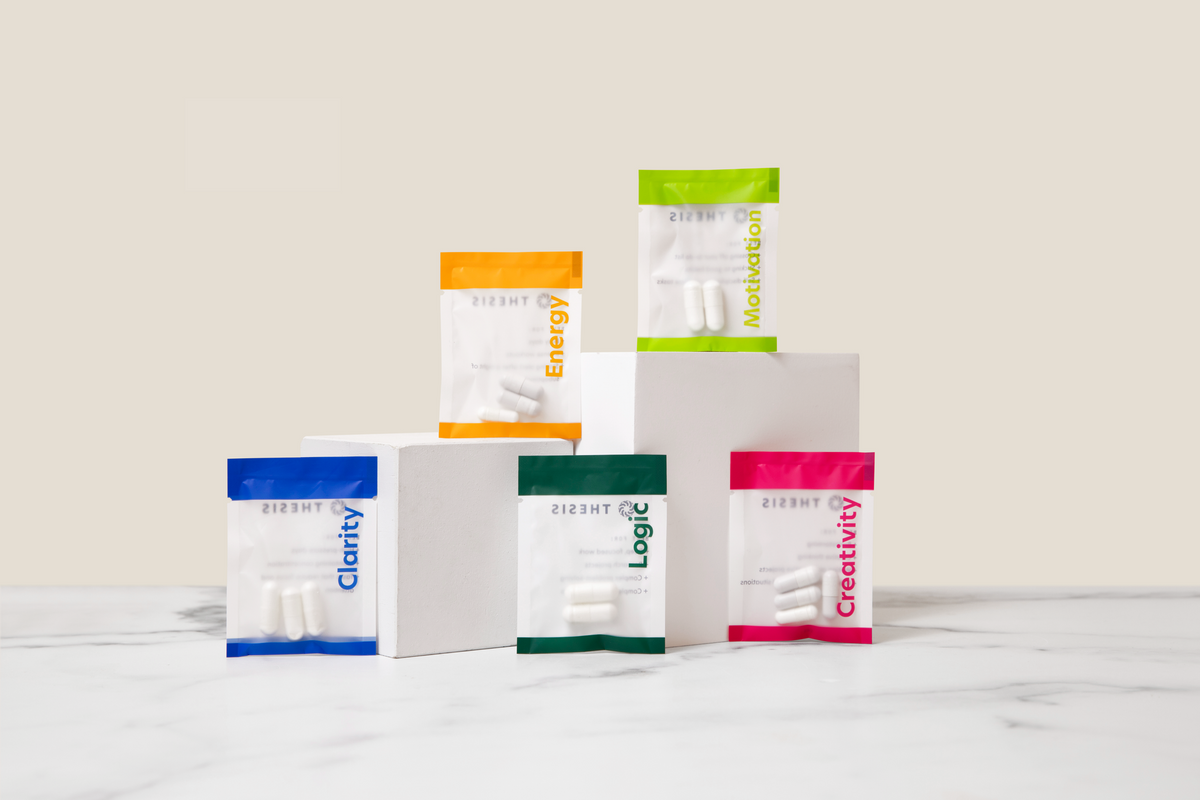
Most "best nootropics for focus" lists rank ingredients by popularity or brand deals. This one doesn't. We evaluated seven of the most common nootropics for focus using a single criterion: How strong is the clinical trial evidence that this ingredient actually improves attention or concentration in healthy adults?
The result is a three-tier framework — Strong, Moderate, and Preliminary — so you can judge the quality of proof behind each ingredient, not just the marketing. If you're a professional, student, or anyone exploring natural focus supplements, this ranking gives you a faster route to ingredients worth your time and money in 2026.
How We Ranked These Nootropic Ingredients
We sorted each ingredient into one of three evidence tiers based on the number, size, and quality of human clinical trials focused on attention or focus outcomes:
- 🟢 Strong Evidence: Two or more randomised controlled trials (RCTs) in healthy adults showing statistically significant improvements in attention, focus, or working memory.
- 🟡 Moderate Evidence: At least one well-designed RCT with positive focus-related outcomes, plus supporting mechanistic research.
- 🔴 Preliminary Evidence: Promising animal or in-vitro data, but human trials are small, few, or show mixed results for focus specifically.
This isn't a system we invented from thin air — it mirrors how systematic reviews in nutritional neuroscience categorise evidence strength [1]. The key distinction: we're evaluating focus and attention specifically, not general "brain health."
🟢 Strong Evidence: Nootropics With Consistent Trial Support
1. Citicoline (CDP-Choline)
Citicoline is the ingredient with the most consistent clinical evidence for focus in healthy adults.* A 2015 randomised, double-blind trial published in Food and Nutrition Sciences found that 28 days of citicoline supplementation (250 mg/day) significantly improved sustained attention and reduced omission errors on the CPT-II attention test [1].
A separate RCT in adolescent males showed similar attention improvements at 500 mg/day over 28 days [2]. The mechanism is well-understood: citicoline donates choline for acetylcholine synthesis — the neurotransmitter most directly tied to focused attention.
Practical note: Citicoline is one of the core ingredients in Noobru Advantage, which combines it with complementary nootropic compounds in a drinkable format.*
2. L-Theanine + Caffeine
Individually, caffeine improves alertness and L-theanine promotes calm focus. Together, they're the most well-studied nootropic combination available.* A 2008 study in Nutritional Neuroscience showed the L-theanine and caffeine combination improved both speed and accuracy of attention tasks while reducing susceptibility to distraction [3].
Multiple subsequent trials have replicated this finding. The typical effective dose is 100 mg L-theanine with 50–100 mg caffeine — roughly equivalent to a cup of green tea combined with a half-cup of coffee, though precise dosing via supplementation is more reliable.
Why it matters: If you already drink coffee but find it makes you jittery, adding L-theanine may help you retain the focus benefit while smoothing out the anxious edge.* This combination is included in the Noobru Advantage formula.
🟡 Moderate Evidence: Promising But Not Yet Definitive
3. Bacopa Monnieri
Bacopa monnieri has strong evidence for memory — but its case for focus specifically is moderate.* A 2014 meta-analysis of nine RCTs concluded that bacopa improved attention and cognitive processing speed, though effect sizes varied and most trials used older adult populations [4].
The caveat: bacopa takes time. Most trials showing benefits used 300 mg daily (standardised to 55% bacosides) for 8–12 weeks. If you need results by next Tuesday, bacopa isn't your ingredient. If you're building a long-term cognitive support routine, the evidence is genuinely encouraging.*
4. Phosphatidylserine
This phospholipid is a structural component of brain cell membranes. A small number of trials suggest phosphatidylserine (100–300 mg/day) may support cognitive function under stress and improve processing speed in younger adults.* However, the most robust trials have focused on age-related cognitive decline rather than focus in healthy working-age populations.
Our take: Useful as part of a multi-ingredient formula, but the standalone evidence for focus in healthy adults isn't as strong as citicoline or L-theanine + caffeine.
5. Rhodiola Rosea
Rhodiola is an adaptogen with moderate evidence for reducing mental fatigue and maintaining focus during prolonged stressful tasks.* A 2012 trial showed that 400 mg of rhodiola extract reduced fatigue-related attention errors during night shifts [5]. Its mechanism appears to involve cortisol modulation rather than direct neurotransmitter support.
Best for: People whose focus problems are driven by stress or fatigue rather than baseline attention deficits.
🔴 Preliminary Evidence: Interesting but Unproven for Focus
6. Lion's Mane Mushroom
Lion's mane (Hericium erinaceus) stimulates nerve growth factor (NGF) production in laboratory studies — a genuinely exciting mechanism. However, human trials specifically measuring focus or attention in healthy adults are scarce. The most-cited trial (Mori et al., 2009) tested older adults with mild cognitive impairment, not focus in healthy populations [6].
More human trials are underway. For now, lion's mane is better described as a neuroprotective ingredient rather than a proven focus enhancer.
7. Ginkgo Biloba
Despite being one of the most popular cognitive enhancement supplements worldwide, ginkgo's evidence for focus is surprisingly thin. A large Cochrane review found inconsistent results across trials, and the most rigorous studies (including the GEM trial with 3,000+ participants) showed no significant cognitive benefit in healthy adults [7].
Our honest assessment: Ginkgo's reputation outpaces its evidence. The money is better spent on ingredients in the green or yellow tiers above.
Quick-Reference Comparison: All 7 Nootropics Ranked
| Ingredient | Evidence Tier | Time to Effect | Best For |
|---|---|---|---|
| Citicoline | 🟢 Strong | 2–4 weeks | Sustained attention* |
| L-Theanine + Caffeine | 🟢 Strong | 30–60 minutes | Alert, calm focus* |
| Bacopa Monnieri | 🟡 Moderate | 8–12 weeks | Memory & processing speed* |
| Phosphatidylserine | 🟡 Moderate | 4–6 weeks | Cognitive function under stress* |
| Rhodiola Rosea | 🟡 Moderate | Same day | Fatigue-related focus loss* |
| Lion's Mane | 🔴 Preliminary | 4–8 weeks (estimated) | Neuroprotection* |
| Ginkgo Biloba | 🔴 Preliminary | Variable | Insufficient evidence for focus |
Key Takeaways: What This Ranking Means for You
- If you want the fastest focus boost: L-theanine + caffeine acts within an hour and has strong trial support.*
- If you want sustained daily focus improvement: Citicoline at 250–500 mg/day is the best-evidenced single ingredient for attention over weeks of use.*
- If your focus problems come from stress or fatigue: Rhodiola rosea targets the cause rather than the symptom.*
- If you want a long-term cognitive routine: Bacopa monnieri's 8–12 week timeline rewards consistency.*
- Skip the hype: Ginkgo biloba's evidence doesn't justify its reputation for focus in healthy adults.
A well-formulated nootropic stack combines ingredients from different evidence tiers and mechanisms. Noobru Advantage was designed around this principle — pairing strong-evidence ingredients like citicoline and L-theanine in a convenient drinkable format.* Explore all Noobru products to find the right fit for your routine.
Frequently Asked Questions About Nootropics for Focus
What is the best nootropic for focus based on clinical evidence?
Citicoline (CDP-choline) has the most consistent clinical evidence for supporting focus and attention in healthy adults. Multiple randomised controlled trials show measurable improvements in attention tasks at doses of 250–500 mg daily.* Learn more about how nootropics work.
How long do nootropics take to work for focus?
It depends on the ingredient. Caffeine and L-theanine produce noticeable effects within 30–60 minutes. Bacopa monnieri and lion's mane typically require 4–12 weeks of consistent daily use before cognitive benefits appear in clinical studies.
Are nootropic supplements safe to take daily?
Most well-studied nootropic ingredients — including citicoline, L-theanine, and bacopa monnieri — show strong safety profiles in clinical trials lasting up to 12 weeks. Always consult your healthcare provider before starting any supplement regimen, especially if you take medication.
Can you stack multiple nootropics together?
Yes, and some combinations have synergistic evidence. The most well-supported stack is L-theanine with caffeine.* Purpose-built formulations like Noobru Advantage combine several evidence-backed ingredients in clinically informed ratios.
What is the difference between nootropics and smart drugs?
"Nootropics" generally refers to supplements and natural compounds that may support cognitive function.* "Smart drugs" typically refers to prescription medications (modafinil, methylphenidate) used off-label for cognitive enhancement. This article covers only non-prescription, supplement-grade ingredients.
References
- McGlade E, et al. "Improved Attentional Performance Following Citicoline Administration in Healthy Adult Women." Food and Nutrition Sciences. 2012;3(6):769–773. PubMed
- McGlade E, et al. "The Effect of Citicoline Supplementation on Motor Speed and Attention in Adolescent Males." Journal of Attention Disorders. 2019;23(2):121–134. PubMed
- Owen GN, et al. "The combined effects of L-theanine and caffeine on cognitive performance and mood." Nutritional Neuroscience. 2008;11(4):193–198. PubMed
- Kongkeaw C, et al. "Meta-analysis of randomized controlled trials on cognitive effects of Bacopa monnieri extract." Journal of Ethnopharmacology. 2014;151(1):528–535. PubMed
- Shevtsov VA, et al. "A randomized trial of two different doses of a SHR-5 Rhodiola rosea extract versus placebo and control of capacity for mental work." Phytomedicine. 2003;10(2–3):95–105. PubMed
- Mori K, et al. "Improving effects of the mushroom Yamabushitake (Hericium erinaceus) on mild cognitive impairment." Phytotherapy Research. 2009;23(3):367–372. PubMed
- Birks J, Grimley Evans J. "Ginkgo biloba for cognitive impairment and dementia." Cochrane Database of Systematic Reviews. 2009;(1):CD003120. PubMed
*These statements have not been evaluated by the Food and Drug Administration or MHRA. This product is not intended to diagnose, treat, cure, or prevent any disease. Always consult your healthcare provider before starting any supplement regimen.



Leave a comment
All comments are moderated before being published.
This site is protected by hCaptcha and the hCaptcha Privacy Policy and Terms of Service apply.