




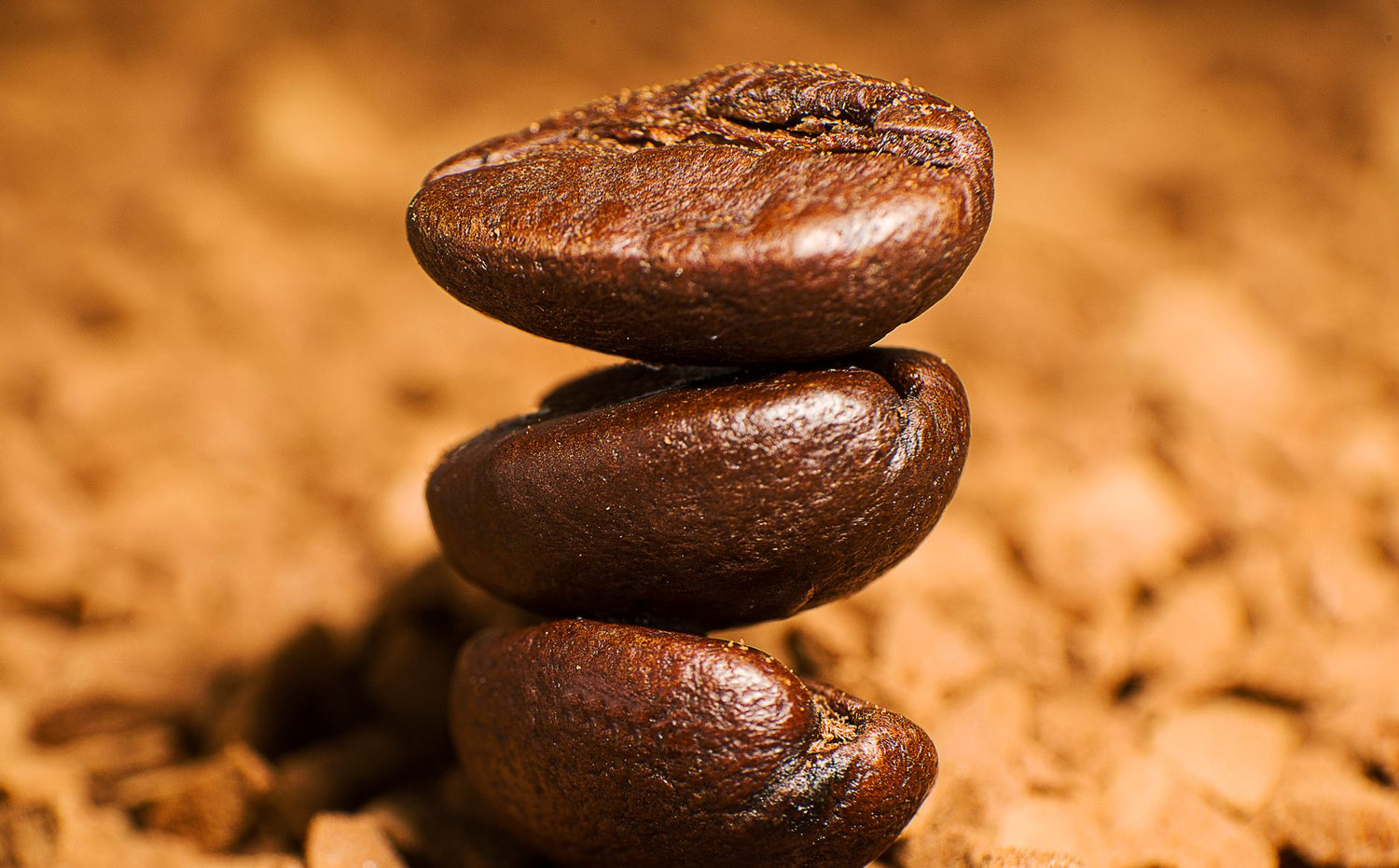
The L-theanine and caffeine stack is one of the most well-studied nootropic pairings available — and one of the few where the clinical evidence genuinely supports the hype. But here's what nearly every article on this topic gets wrong: they parrot a "200mg L-theanine with 100mg caffeine" recommendation without mentioning that the landmark study actually used 100mg with 50mg, and that the ideal ratio shifts depending on your genetics, the cognitive demand you're facing, and when you take it. This guide provides a personalised framework — not a one-size-fits-all number.
How the L-Theanine and Caffeine Stack Works
L-theanine and caffeine target complementary neurochemical pathways, which is why they produce effects together that neither achieves alone. Understanding the basic mechanism takes about sixty seconds and makes every dosing decision easier.
Caffeine blocks adenosine receptors — adenosine is the molecule that accumulates during waking hours and makes you feel sleepy. By blocking it, caffeine delays drowsiness and increases alertness. It also triggers a modest release of adrenaline and cortisol, which is why higher doses can produce jitteriness, a racing heart, and that anxious "wired" feeling.
L-theanine, an amino acid found naturally in tea leaves, works through a different route. It promotes alpha brain wave activity — the neural pattern associated with calm, relaxed alertness (the same state experienced during meditation). It does this by influencing GABA (the brain's primary calming neurotransmitter), serotonin, and dopamine, without producing sedation*.
When you combine the two, L-theanine effectively takes the edge off caffeine's stress response while preserving — and in some cases enhancing — its cognitive benefits*. I think of it this way: caffeine is the engine; L-theanine is the steering wheel. Without L-theanine, caffeine can produce unfocused energy — heightened arousal without improved accuracy. The nootropic pairing channels that arousal into sustained, productive attention*.
What the Clinical Evidence Actually Shows
The L-theanine and caffeine stack has stronger clinical backing than most nootropic combinations. But citations get passed around without context, so here are the studies that matter — and what they actually found.
The landmark 2008 study published in Nutritional Neuroscience (Owen et al.) tested 27 participants on attention-switching tasks. The combination of L-theanine (100mg) and caffeine (50mg) significantly improved both speed and accuracy compared to placebo and to either compound in isolation. Crucially, L-theanine reduced susceptibility to distraction during a demanding memory task — suggesting it supports sustained focus, not just transient alertness*. You can read the full study on PubMed.
A 2010 study in Nutritional Neuroscience by Einöther et al. replicated these findings with a larger sample and confirmed that the caffeine and theanine timing window — both taken simultaneously, about 30 minutes before testing — produced reliable improvements in attention and task-switching accuracy. The Einöther et al. study is worth reading if you want to understand the dose-response relationship more deeply.
Separately, an open-label study in Acta Neuropsychiatrica examined chronic L-theanine administration and found improvements in sleep quality, cognitive function, and general wellbeing*. While this study used L-theanine without caffeine, it demonstrated that theanine benefits alone are significant — particularly for relaxation and sleep support when you don't want stimulation.
A comprehensive review by Examine.com summarises the broader evidence base, noting that L-theanine's effects on alpha wave activity are consistently replicated across multiple trials — one of the more robust findings in the nootropic literature.
The Ratio Question: Why "2:1" Isn't Always Right
Nearly every article on this topic recommends a blanket 2:1 ratio of L-theanine to caffeine (200mg:100mg). That's a reasonable starting point — but it's worth knowing that the actual study ratio was 100mg:50mg, which is still 2:1 but at half the dose most people assume. Your ideal ratio depends on three factors.
1. Your Caffeine Sensitivity
Caffeine metabolism is largely governed by a liver enzyme called CYP1A2 (pronounced "sip one A two" — genuinely). People with the "fast" variant clear caffeine quickly and tolerate higher doses without anxiety. People with the "slow" variant — roughly half the population — process caffeine more slowly and are more prone to jitteriness and sleep disruption. You don't need a genetic test to know which you are: if one cup of coffee makes you wired, you're likely a slow metaboliser. In that case, consider a 3:1 or 4:1 ratio — for example, 200mg L-theanine with just 50mg caffeine.
2. The Cognitive Task
The type of work matters more than most guides acknowledge. For sustained attention tasks (deep writing, coding, analysis), a higher L-theanine proportion may help maintain calm focus over longer periods*. For tasks requiring rapid switching and high alertness — gaming, high-pressure meetings, exam conditions — a closer-to-equal ratio preserves the stimulant edge you need.
3. Caffeine and Theanine Timing
Caffeine has a half-life of approximately 5–6 hours in most adults. Taking 100mg at 3pm means roughly 50mg is still circulating at 8–9pm. If you're using the stack in the afternoon, reduce the caffeine component and lean more heavily on L-theanine to avoid sleep disruption. For more on caffeine half-life and sleep, the Sleep Foundation's caffeine guide is a solid reference.
| Scenario | Ratio (L-Theanine : Caffeine) | Example Dose |
|---|---|---|
| Standard morning focus | 2:1 | 200mg : 100mg |
| Caffeine-sensitive individual | 3:1 or 4:1 | 200mg : 50–65mg |
| High-alertness task (exams, gaming) | 1.5:1 | 150mg : 100mg |
| Afternoon use (after 2pm) | 3:1 or 4:1 | 200mg : 50mg |
| Evening wind-down | L-theanine only | 150–200mg : 0mg |
How to Time Your Stack for Maximum Effect
Both compounds act relatively quickly — plan to take them 20 to 30 minutes before you need peak focus. Caffeine reaches peak blood concentration within 30–45 minutes, while L-theanine crosses the blood-brain barrier and begins influencing alpha wave production within a similar window.
For most people, taking both simultaneously is the simplest and most effective approach. However, there's a case for staggered timing if caffeine hits you hard and fast. If you get a rapid spike of alertness followed by a crash, try taking L-theanine 15–20 minutes before caffeine. This gives it a head start on modulating your calming neurotransmitters, potentially smoothing the caffeine onset curve.
If you're a multi-cup-coffee person, here's a practical tip I've found works well: take a single 200mg dose of L-theanine with your first cup, rather than redosing with each subsequent coffee. L-theanine's calming effects are sustained over several hours, so one dose typically covers a two- or three-cup morning.
Four Common Mistakes That Undermine the Stack
Even a well-evidenced nootropic pairing can underperform if implemented carelessly. These are the errors I see most often:
- Under-dosing L-theanine: Many "focus" supplements include 50mg or less — well below the 100–200mg range used in clinical studies. At sub-clinical doses, the calming effects are negligible, and you're essentially just taking caffeine with a label.
- Ignoring caffeine from other sources: If you're drinking three coffees a day and adding a 100mg caffeine supplement, your total intake may exceed 400mg — the upper limit recommended by the European Food Safety Authority (EFSA). Always count total daily caffeine, including tea, energy drinks, and pre-workouts.
- Expecting it to replace sleep: No nootropic stack compensates for chronic sleep deprivation. The theanine-caffeine combination supports focus during normal wakefulness — it does not substitute for the 7–9 hours your brain needs for memory consolidation. That sentence bears repeating.
- Using it too late in the day: Even with L-theanine's calming properties, the caffeine component will still disrupt sleep if taken after mid-afternoon for most people. Switch to L-theanine alone for evening relaxation*.
Stacking Further: What Pairs Well With L-Theanine and Caffeine
The theanine-caffeine combination is a foundation — arguably the best-evidenced nootropic pairing in 2026. But it addresses only two pathways: adenosine blockade and alpha wave promotion. Experienced users often build on it with compounds that target additional systems. Here are the additions with the most credible evidence:
- Alpha GPC: A choline compound that increases acetylcholine production — the neurotransmitter most directly involved in learning and memory*. At 150mg+, it adds a cholinergic (memory-supporting) dimension the basic stack lacks.
- Rhodiola rosea: An adaptogen shown to reduce mental fatigue and support performance under stress*. Particularly useful for high-pressure work environments or periods of sustained demand.
- Phosphatidylserine: Supports neurological function and may help manage the cortisol (stress hormone) response*. A useful addition for people who experience caffeine-induced anxiety even with L-theanine on board.
- N-Acetyl L-Tyrosine: A precursor to dopamine and norepinephrine, supporting cognitive performance under stress*. It complements the stack by addressing catecholamine pathways that neither L-theanine nor caffeine directly target.
This is where pre-formulated stacks start to make sense. Building your own means sourcing four or five individual supplements, cross-referencing doses, and trusting multiple suppliers. A single product that combines them at clinical doses simplifies the process considerably. Noobru Pro, for instance, pairs L-theanine with 40mg of caffeine, 200mg of Rhodiola rosea, and Acetyl L-Carnitine — the lower caffeine dose makes it particularly well-suited for caffeine-sensitive users or afternoon use*. Noobru Sprint takes a different approach: L-theanine with 100mg caffeine, citicoline, and 1253mg taurine, designed for high-intensity cognitive and physical tasks where rapid alertness matters*. Both use fully transparent ingredient labels — no proprietary blends — and come in single-serve sachets.
Frequently Asked Questions
What is the best ratio of L-theanine to caffeine?
The most commonly studied ratio is 2:1 (L-theanine to caffeine), typically 200mg L-theanine with 100mg caffeine. However, if you are caffeine-sensitive, a 3:1 or 4:1 ratio may better counteract jitteriness. The ideal ratio depends on your individual tolerance, cognitive task, and time of day.
Can I take L-theanine with my morning coffee?
Yes. A standard cup of brewed coffee contains roughly 80–100mg of caffeine, making it a convenient vehicle for the stack. Simply take 150–200mg of L-theanine alongside your coffee. Many people find this the easiest way to use the pairing daily.
How long does the L-theanine and caffeine stack take to work?
Most users report noticeable effects within 30–45 minutes. Caffeine reaches peak blood levels within 30–45 minutes, and L-theanine begins promoting alpha brain wave activity within a similar window. Take both together 20–30 minutes before you need peak focus.
Does L-theanine reduce the effectiveness of caffeine?
No. Research suggests L-theanine modulates caffeine's anxiety-producing effects without blunting its alertness-promoting properties*. The combination appears to improve both speed and accuracy of attention tasks compared to either compound alone.
Is it safe to take L-theanine and caffeine every day?
Both compounds have well-established safety profiles at typical supplemental doses. L-theanine at 100–400mg daily and moderate caffeine intake (up to 400mg daily per EFSA guidelines) are generally considered safe. Always consult your healthcare provider before starting any new supplement regimen.
What are the benefits of L-theanine alone without caffeine?
L-theanine alone may help support relaxation, reduce stress-related tension, and improve sleep quality without causing drowsiness*. It promotes alpha brain wave activity associated with calm alertness, making it useful as an evening wind-down supplement or for anyone who wants to avoid stimulants entirely. Noobru Advantage is caffeine-free and contains 200mg of L-theanine for this purpose.
Key Takeaways
- The L-theanine and caffeine stack is one of the best-evidenced nootropic combinations, with clinical data showing improvements in both speed and accuracy of attention tasks*.
- The commonly cited 2:1 ratio is a solid starting point, but the actual landmark study used 100mg:50mg — and your optimal ratio depends on caffeine sensitivity, task type, and time of day.
- Caffeine is the engine; L-theanine is the steering wheel. Together, they produce focused energy rather than scattered stimulation*.
- Both compounds act within 30–45 minutes. Take them together 20–30 minutes before you need peak focus.
- Building on the basic stack with adaptogens like Rhodiola rosea or cholinergics like Alpha GPC addresses a wider range of cognitive needs*.
- No nootropic stack replaces sleep. Use the stack to sharpen focus during normal wakefulness, not to push through exhaustion.
*These statements have not been evaluated by the Food and Drug Administration or MHRA. This product is not intended to diagnose, treat, cure, or prevent any disease. Always consult your healthcare provider before starting any supplement regimen.
Looking for a clinically dosed L-theanine and caffeine stack without the hassle of mixing individual supplements? Noobru's drinkable formulas combine both at transparent doses, with complementary nootropics for focus, energy, and stress support*.
Explore Noobru's full range — risk-free with our 90-day money-back guarantee →References
- Owen GN, Parnell H, De Bruin EA, Rycroft JA. The combined effects of L-theanine and caffeine on cognitive performance and mood. Nutritional Neuroscience. 2008;11(4):193-198. PubMed
- Einöther SJL, Martens VEG, Rycroft JA, De Bruin EA. L-Theanine and caffeine improve task switching but not intersensory attention or subjective alertness. Appetite. 2010;54(2):406-409. PubMed
- Hidese S, Ogawa S, Ota M, et al. Effects of chronic L-theanine administration in patients with major depressive disorder. Acta Neuropsychiatrica. 2017;29(2):72-79. PubMed
- Panossian A, Wikman G. Effects of adaptogens on the central nervous system and the molecular mechanisms associated with their stress-protective activity. Pharmaceuticals. 2010;3(1):188-224. PubMed
Reviewed by the Noobru Editorial Team.

Leave a comment
All comments are moderated before being published.
This site is protected by hCaptcha and the hCaptcha Privacy Policy and Terms of Service apply.