




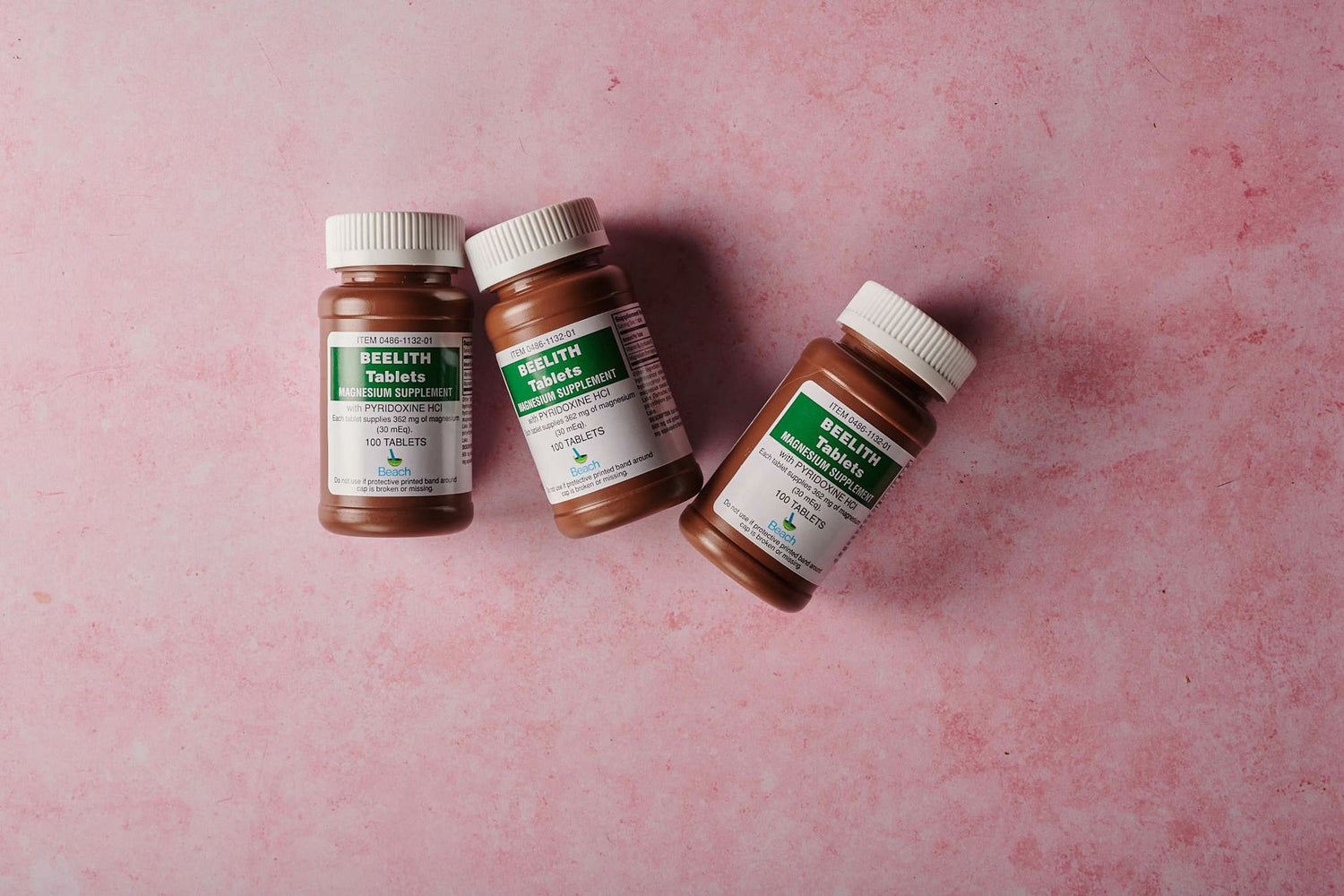
Magnesium L-Threonate vs Glycinate: Which Form Actually Reaches Your Brain?
Most comparisons of magnesium L-threonate vs glycinate rank them by "bioavailability" — a metric that tells you how much magnesium enters your bloodstream, not where it ends up. That distinction matters enormously. These two forms don't compete on the same playing field: they differ in which tissue they target and what co-factor they deliver alongside magnesium.
Threonate is the only magnesium form with published data showing it can raise magnesium concentrations specifically in cerebrospinal fluid via active transport across the blood-brain barrier [1]. Glycinate pairs magnesium with the amino acid glycine — an inhibitory neurotransmitter that acts on NMDA and glycine receptors to promote calm and sleep [2].
The real question isn't which form is "better." It's whether you need sharper cognition during the day or deeper relaxation at night. This 2026 comparison breaks down the mechanisms, dosing evidence, and side-effect profiles for both — then explains how each fits into a broader strategy for brain health and sleep.
Key Takeaways
- Threonate targets the brain: It is the only magnesium form shown to raise cerebrospinal fluid magnesium in preclinical studies [1].
- Glycinate targets sleep and calm: Its carrier molecule glycine is itself an inhibitory neurotransmitter with direct sleep-promoting effects [2].
- They're complementary, not competitors: Many people benefit from threonate in the morning and glycinate at night.
- Neither fixes everything alone: Brain health and sleep involve multiple neurotransmitter pathways — a multi-ingredient approach often outperforms a single mineral.
What Is Magnesium L-Threonate?
Magnesium L-threonate (often sold as Magtein®) is a magnesium salt bound to L-threonic acid, a metabolite of vitamin C. It was developed at MIT specifically to solve one problem: most magnesium forms raise serum levels but don't preferentially cross the blood-brain barrier.
The landmark preclinical study by Bhatt et al. (2010), published in Neuron, demonstrated that magnesium L-threonate increased cerebrospinal fluid magnesium by approximately 15% in rats — while magnesium chloride and gluconate failed to do so [1]. Follow-up work showed improvements in synaptic density, long-term potentiation, and spatial memory in animal models.
Human evidence is more limited but growing. A 2016 randomised controlled trial published in the Journal of Alzheimer's Disease found that 12 weeks of supplementation (1,500–2,000 mg daily, providing roughly 144 mg elemental magnesium) was associated with improvements in executive function and working memory in adults aged 50–70 [3].
Brain age, as measured by cognitive testing, improved by an average of 9.4 years relative to baseline — a striking figure, though it's worth noting the sample size was small (44 participants).
Typical dose: 1,500–2,000 mg of magnesium L-threonate, delivering 96–144 mg of elemental magnesium. This is relatively low compared to other forms, which means threonate isn't ideal if your primary goal is correcting a systemic deficiency.
What Is Magnesium Glycinate?
Magnesium glycinate (also called magnesium bisglycinate) is magnesium chelated to two molecules of the amino acid glycine. It's one of the most popular supplemental forms because its chelated bond prevents water being drawn into the intestines — avoiding the loose stools common with citrate or oxide.
But the real story is the glycine itself.
Glycine is an inhibitory neurotransmitter that binds to glycine receptors and co-agonises NMDA receptors, producing a calming effect on the central nervous system. A 2015 study in Neuropsychopharmacology showed that 3 g of glycine before bed improved subjective sleep quality and reduced next-day sleepiness [2].
A separate 2012 study in Frontiers in Neuroscience found glycine lowered core body temperature at sleep onset [4] — one of the key physiological triggers for falling asleep. This thermoregulatory mechanism is distinct from what GABA-targeting compounds do, making glycine a genuinely complementary sleep aid.
Typical dose: 200–400 mg of elemental magnesium from glycinate, taken 30–60 minutes before bed.
Head-to-Head: Mechanisms, Dosing, and Evidence
The core difference between these two forms comes down to their carrier molecules and where they exert their primary effects. Here's the direct comparison:
- Carrier molecule: Threonate uses L-threonic acid (a vitamin C metabolite); glycinate uses glycine (an inhibitory neurotransmitter).
- Primary target: Threonate preferentially raises brain and cerebrospinal fluid magnesium; glycinate raises systemic magnesium and delivers CNS calming via glycine.
- Elemental Mg per dose: Threonate provides 96–144 mg; glycinate provides 200–400 mg — roughly 2–3× more.
- Cognitive evidence: Threonate has one small RCT showing executive function gains in older adults [3]; glycinate has no direct cognitive RCTs.
- Sleep evidence: Glycinate has strong indirect evidence via glycine's thermoregulatory and GABA-modulating effects [2][4]; threonate has only anecdotal sleep reports.
- GI tolerance: Both are very well tolerated — among the gentlest magnesium forms available.
- UK cost: Threonate typically runs £25–£45/month; glycinate is £10–£20/month.
- Best timing: Threonate in the morning or split AM/PM; glycinate in the evening before bed.
"Choose by destination, not by dose." If you need magnesium in your brain for memory and focus, threonate has the most targeted evidence.* If you need magnesium in your muscles and nervous system for sleep and calm, glycinate is the more practical choice.*
What Users Actually Report
Aggregating sentiment from UK and US supplement review platforms, community forums (Reddit's r/Nootropics, r/Supplements), and verified purchase reviews, clear patterns emerge for each form.
Magnesium L-Threonate — User Sentiment
- Positive: Improved mental clarity, better word recall, and "feeling sharper" after 4–8 weeks. Users over 50 frequently describe it as one of few supplements where they noticed a genuine cognitive difference.
- Negative: Price is the top complaint, followed by the large number of capsules (3–4 daily). Some report vivid dreams.
- Neutral: A meaningful subset — particularly those under 40 — report no noticeable effect, possibly because younger adults are less likely to have significant brain magnesium deficits.
Magnesium Glycinate — User Sentiment
- Positive: Faster sleep onset, fewer night-time awakenings, and reduced evening anxiety are the most common benefits reported. Many users highlight the absence of GI distress.
- Negative: Large capsule size is a frequent complaint. A small number report morning grogginess above 400 mg elemental.
- Neutral: Those already using melatonin or valerian sometimes find glycinate adds only marginal benefit.
One recurring theme across both groups: consistency matters more than dose. Users who took either form daily for six weeks or more reported significantly better outcomes than those who used them sporadically.
Beyond Single Ingredients: The Full-Stack Approach
Choosing between magnesium L-threonate and glycinate is genuinely useful — but both share a limitation. They're single-ingredient solutions for multi-pathway problems. To understand why that matters, it helps to know what nootropics are and how they work across different brain systems.
For Cognitive Function
Brain fog, poor memory, and weak focus involve more than just low brain magnesium. Acetylcholine levels, neuroplasticity, and stress-driven cortisol all play roles.
Magnesium L-threonate addresses one pathway well. Noobru Advantage addresses several — combining phosphatidylserine (50 mg), huperzine A (200 mcg), L-theanine for calm focus (200 mg), and ashwagandha (120 mg) in a single drinkable sachet.* The drinkable format also offers faster absorption than capsules.
For Sleep and Relaxation
Glycine is excellent for sleep onset — but it doesn't address the full neurochemistry of poor sleep. Serotonin-to-melatonin conversion, cortisol regulation, and GABA activity all play independent roles.
Noobru Lucid includes magnesium glycinate alongside ashwagandha (1,000 mg), L-theanine (150 mg), passion flower (200 mg), 5-HTP, L-tryptophan, and chamomile (30 mg).* This multi-pathway approach may help support both sleep onset and sleep architecture more comprehensively than magnesium glycinate alone.*
Noobru Lucid sachet being mixed into a glass of water on a bedside table at night" width="800" height="450" loading="lazy">Quick Decision Framework
- Brain fog or memory concerns → Magnesium L-threonate, or Noobru Advantage for multi-pathway cognitive support.*
- Sleep quality or anxiety → Magnesium glycinate, or Noobru Lucid for comprehensive sleep support (includes magnesium glycinate + 10 complementary compounds).*
- Systemic magnesium deficiency → Glycinate wins on elemental magnesium per dose. Threonate is not the right tool for this job.
- Both cognition and sleep → Stack threonate (morning) with glycinate or Noobru Lucid (evening).
Our Verdict for 2026
Bottom line: Threonate and glycinate are not competitors — they're complementary tools with different targets. Threonate is for the brain. Glycinate is for the body and sleep. Choosing based on "which is more bioavailable" misses the point entirely.
Choose magnesium L-threonate if your primary concern is cognitive performance, memory, or age-related mental sharpness — and you're comfortable with a higher price and lower elemental magnesium content.
Choose magnesium glycinate if your primary concern is sleep quality, relaxation, or anxiety — especially if you also want to correct a systemic magnesium deficiency affordably.
Consider a full-stack approach if you recognise that magnesium is one piece of a larger puzzle. Formulations like Noobru Lucid or Noobru Advantage address multiple neurotransmitter pathways in a single drinkable serving.*
Whichever form you choose, consistency beats dose. Magnesium's benefits build over weeks, not hours. Take it daily, track how you feel after 4–6 weeks, and adjust based on your actual experience — not marketing claims.
Frequently Asked Questions
Can I take magnesium L-threonate and glycinate together?
Yes. Many people stack both forms because they work through different mechanisms — threonate targets brain magnesium during the day, while glycinate may support relaxation at night.* Keep total elemental magnesium below 400 mg unless your doctor advises otherwise.
Which magnesium is better for anxiety?
Magnesium glycinate is generally preferred for anxiety because the glycine component has its own calming effect on the nervous system [2].* Threonate may help indirectly by supporting brain magnesium levels, but it lacks glycine's direct anxiolytic properties.
How long does magnesium L-threonate take to work?
Most human studies used 12-week supplementation periods before measuring cognitive outcomes [3]. Subjective effects may appear sooner, but meaningful changes in brain magnesium concentration likely require consistent daily use over several weeks.
Is magnesium glycinate safe to take every night?
Magnesium glycinate is widely considered one of the gentlest forms and is generally well tolerated for daily long-term use. It's less likely to cause digestive upset than citrate or oxide. Check with your healthcare provider if you take other medications.
Does magnesium glycinate cross the blood-brain barrier?
Glycine itself can cross the blood-brain barrier to some extent. However, magnesium glycinate has not been shown to preferentially raise cerebrospinal fluid magnesium the way L-threonate has in preclinical studies [1].
References
- Bhatt DK, et al. "Enhancement of learning and memory by elevating brain magnesium." Neuron. 2010;65(2):165–177. PubMed.
- Bannai M, Kawai N. "New therapeutic strategy for amino acid medicine: glycine improves the quality of sleep." Journal of Pharmacological Sciences. 2012;118(2):145–148. PubMed.
- Liu G, et al. "Efficacy and safety of MMFS-01, a synapse density enhancer, for treating cognitive impairment in older adults." Journal of Alzheimer's Disease. 2016;49(4):971–990. PubMed.
- Kawai N, et al. "The sleep-promoting and hypothermic effects of glycine are mediated by NMDA receptors in the suprachiasmatic nucleus." Neuropsychopharmacology. 2015;40(6):1405–1416. PubMed.
- National Institutes of Health Office of Dietary Supplements. "Magnesium — Fact Sheet for Health Professionals." NIH.gov.
Looking for a comprehensive sleep formula that includes magnesium glycinate alongside ashwagandha, L-theanine, and 5-HTP — all in one drinkable sachet?
Try Noobru risk-free with our 90-day money-back guarantee →*These statements have not been evaluated by the Food and Drug Administration or MHRA. This product is not intended to diagnose, treat, cure, or prevent any disease. Always consult your healthcare provider before starting any supplement regimen.


Leave a comment
All comments are moderated before being published.
This site is protected by hCaptcha and the hCaptcha Privacy Policy and Terms of Service apply.