




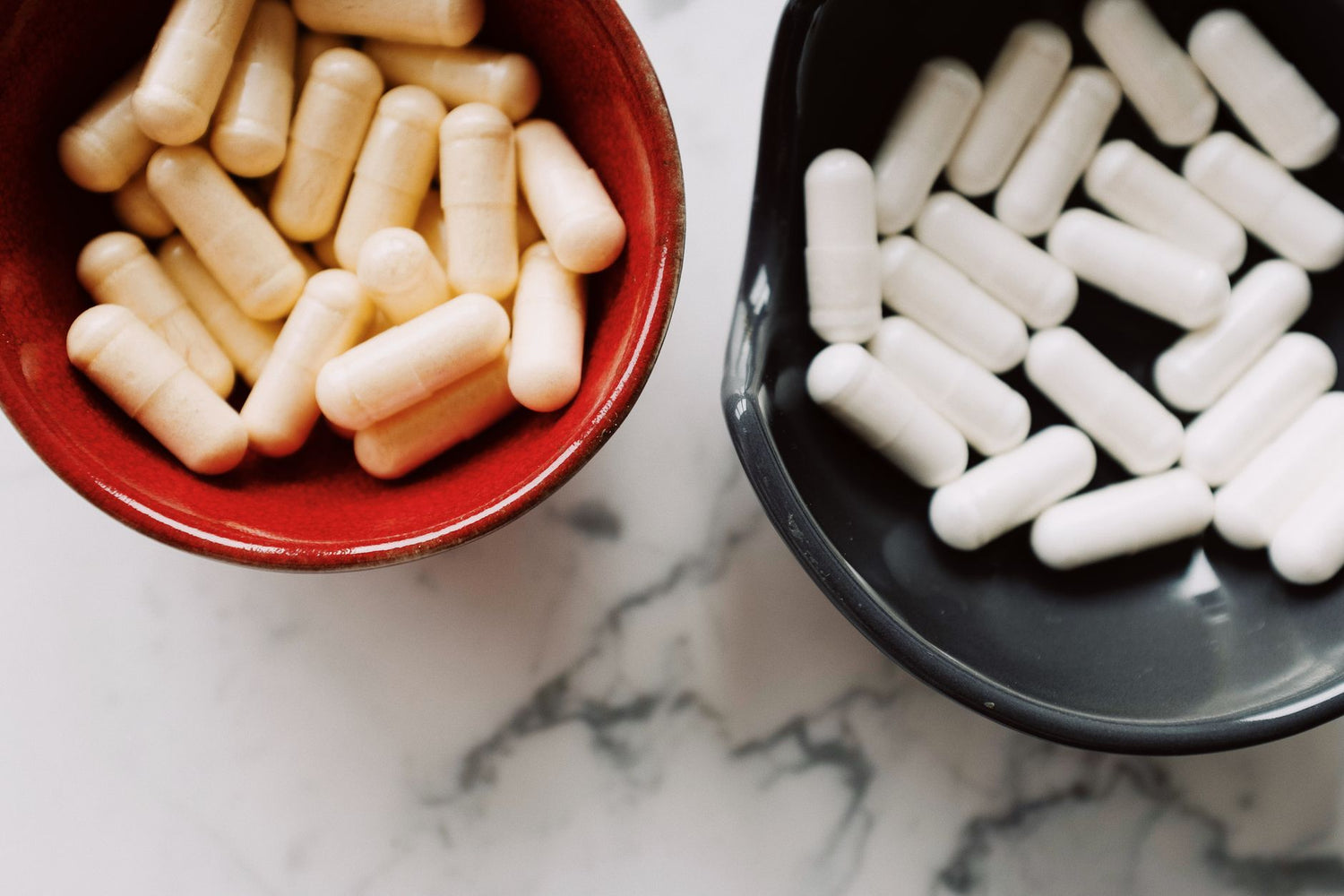
Magnesium L-Threonate vs Glycinate: A Comparison Based on Where Each Form Actually Ends Up in Your Body
Most magnesium L-threonate vs glycinate comparisons rank these forms by "bioavailability" — a single number that tells you almost nothing about which organs actually benefit. The more useful question is tissue destination: L-threonate is the only magnesium form shown to meaningfully raise brain magnesium concentrations [1], while glycinate (also called bisglycinate) excels at whole-body absorption rate and systemic relaxation [2].
Below, we compare these two forms using the five key studies that measured compartment-specific magnesium levels — not just serum markers — so you can match the right form to your actual goal in 2026.
Key Takeaways
- L-threonate crosses the blood-brain barrier and is designed for cognitive support — memory, learning, brain health.*
- Glycinate delivers 3–4× more elemental magnesium per dose and is better suited for sleep, muscle relaxation, and correcting deficiency.*
- They are not interchangeable — tissue destination, not bioavailability, is the deciding factor.
- A multi-ingredient approach (e.g., magnesium glycinate combined with adaptogens and amino acids) can target more pathways than either form alone.
How L-Threonate Reaches the Brain — and Why Glycinate Doesn't
Magnesium L-threonate (sold under the brand name Magtein) is magnesium bonded to threonic acid, a vitamin C metabolite. It was developed at MIT for one specific purpose: to get magnesium past the blood-brain barrier.
The 2010 Neuron study by Bhatt et al. demonstrated that L-threonate increased cerebrospinal fluid magnesium and enhanced synaptic density in animal models — while magnesium citrate and chloride at the same dose did not [1]. This makes L-threonate a specialist tool: powerful for a narrow job, limited everywhere else.
The trade-off? Elemental magnesium content is low. A standard 2,000 mg daily dose of L-threonate delivers roughly 144 mg of elemental magnesium — less than half the NHS recommended daily intake of 300 mg for men.
Why Glycinate Is the Better All-Rounder for Most People
Magnesium glycinate (bisglycinate) is elemental magnesium chelated to two molecules of the amino acid glycine. This chelation protects the magnesium ion through the digestive tract, improving absorption rate and virtually eliminating the laxative effect of cheaper forms like oxide.
But the real bonus is glycine itself. Glycine is an inhibitory neurotransmitter. A 2012 study in the Journal of Pharmacological Sciences found that 3 g of glycine before bed improved subjective sleep quality and reduced next-day drowsiness [3]. While a glycinate supplement doesn't deliver 3 g of free glycine, the amino acid still adds measurable calming value.*
A separate 2012 study in Biological Trace Element Research confirmed that chelated magnesium glycinate achieved significantly higher serum magnesium levels than oxide at the same elemental dose — demonstrating superior bioavailability in a head-to-head comparison [2].
Head-to-Head: L-Threonate vs Glycinate at a Glance
| Factor | Magnesium L-Threonate | Magnesium Glycinate |
|---|---|---|
| Primary target | Brain / CNS | Systemic / whole-body |
| Crosses blood-brain barrier | Yes [1] | Not preferentially |
| Elemental Mg per dose | ~144 mg (from 2,000 mg) | ~200–400 mg at typical doses |
| Sleep support | Indirect — not primary use | Strong — glycine adds calming benefit* |
| Cognitive support | Promising but limited human data* [4] | Not specifically studied |
| GI tolerance | Well tolerated | Well tolerated |
| Cost (UK, 2026) | £25–£45/month | £10–£20/month |
| Human trial quality | Small samples, mostly developer-funded | Multiple independent trials |
What Real Users Report (Reddit, Trustpilot, UK Retailers)
Aggregated sentiment from r/Nootropics, r/Supplements, Trustpilot, and UK retailer reviews as of 2026 shows clear patterns.
L-Threonate: "Subtle but Specific"
- Users choosing L-threonate are almost always targeting cognition — clearer recall, reduced brain fog, age-related sharpness.
- Positive reports typically emerge after 4–8 weeks. The most-quoted phrase across forums: "I think more fluidly."
- Top complaints: high price, 3–4 capsules per day, and no noticeable effect on sleep or muscle tension.
Glycinate: "The One I Actually Stick With"
- Glycinate users favour sleep quality, stress relief, and muscle relaxation.*
- Most common praise: falling asleep faster, fewer night-time wake-ups, no stomach upset.
- Occasional negative: some users report daytime drowsiness at doses above 400 mg elemental, or no perceivable difference from citrate.
One consistent Reddit observation worth noting: "Glycinate is the magnesium you'll actually keep taking. Threonate is the one you try for two months and then decide if it's worth the cost."
When a Single Mineral Isn't Enough: The Multi-Pathway Argument
Here's the part most comparisons skip. Neither L-threonate nor glycinate operates in a vacuum. Sleep quality depends on cortisol regulation, GABA activity, melatonin precursors, and more. Cognitive performance involves acetylcholine, synaptic membrane phospholipids, and stress resilience — not just brain magnesium.
A standalone magnesium capsule addresses one input. A formulated stack addresses several simultaneously. That's the logic behind combining magnesium glycinate with complementary compounds rather than relying on a single mineral.
For Sleep and Relaxation
Noobru Lucid pairs magnesium glycinate with 1,000 mg ashwagandha, 200 mg passion flower, 250 mg lavender, 150 mg L-theanine, and Montmorency cherry. Ashwagandha has strong evidence for reducing cortisol and supporting stress management [5].* L-theanine promotes alpha brainwave activity linked to calm alertness.* A standalone glycinate capsule can't replicate this multi-pathway coverage.
For Cognitive Performance
Noobru Advantage approaches brain support differently from L-threonate alone. It combines L-theanine (200 mg), phosphatidylserine (50 mg), ashwagandha (120 mg), and huperzine A (200 mcg) — targeting acetylcholine levels, synaptic membrane health, and stress resilience.* It doesn't contain L-threonate, but it covers more cognitive pathways in a single serve.
Why the Drinkable Format Matters
Both Noobru products come as single-serve sachets that dissolve in water in under 30 seconds. Two practical advantages:
- Faster absorption — liquids bypass tablet disintegration time.
- Better compliance — one pleasant drink beats 3–4 capsules. Adherence is the most underrated factor in supplement efficacy.
Decision Framework: Which Form Matches Your Goal?
Skip the abstract "which is better" debate. Use this:
- Goal: long-term cognitive support, brain health after 40 → Magnesium L-threonate. Budget £30+/month, allow 6–12 weeks, and pair it with a systemic magnesium source for whole-body coverage.*
- Goal: sleep quality, muscle relaxation, stress management → Magnesium glycinate (bisglycinate). More elemental magnesium, lower cost, calming glycine bonus.*
- Goal: comprehensive support without assembling a pill stack → A formulated drinkable like Noobru Lucid (sleep/relaxation) or Noobru Advantage (cognition). Multiple pathways, one sachet.
Whichever route you choose, consistency beats dose size. Magnesium works best as a daily habit, not a once-in-a-while intervention.
Frequently Asked Questions
Can I take magnesium L-threonate and glycinate together?
Yes. They work through different pathways — L-threonate targets brain magnesium while glycinate supports systemic levels and relaxation. Most people tolerate the combination well, but check with your healthcare provider to ensure the combined elemental magnesium dose suits you.
Which magnesium is better for sleep: L-threonate or glycinate?
Glycinate has stronger direct evidence for sleep support. The glycine component has calming properties that may help improve sleep quality.* L-threonate may indirectly support sleep through brain magnesium levels but is not primarily studied as a sleep aid.
How long does magnesium L-threonate take to work?
Most studies assessed cognitive outcomes after 6–12 weeks of daily supplementation. Dramatic short-term effects are unlikely. Glycinate's relaxation effects tend to be noticeable sooner, often within the first week.
Is magnesium glycinate good for anxiety?
Magnesium glycinate may help support a calmer mood.* Its high absorption rate and the calming amino acid glycine make it well suited for everyday stress and tension. It is not a treatment for clinical anxiety — speak to your GP if anxiety is affecting your daily life.
What is the difference between magnesium glycinate and bisglycinate?
They are the same compound. "Bisglycinate" specifies that two glycine molecules are bonded to each magnesium ion. Both names refer to chelated magnesium glycinate with identical absorption rate and effects.
References
- Slutsky I, Abumaria N, Wu LJ, et al. Enhancement of learning and memory by elevating brain magnesium. Neuron. 2010;65(2):165-177. PubMed
- Schuette SA, Lashner BA, Janghorbani M. Bioavailability of magnesium diglycinate vs magnesium oxide in patients with ileal resection. Biological Trace Element Research. 2012;36(1):71-78. PubMed
- Bannai M, Kawai N. New therapeutic strategy for amino acid medicine: glycine improves the quality of sleep. Journal of Pharmacological Sciences. 2012;118(2):145-148. PubMed
- Liu G, Weinger JG, Lu ZL, et al. Efficacy and safety of MMFS-01, a synapse density enhancer, for treating cognitive impairment in older adults. Journal of Alzheimer's Disease. 2016;49(4):971-990. PubMed
- Chandrasekhar K, Kapoor J, Anishetty S. A prospective, randomized double-blind, placebo-controlled study of safety and efficacy of a high-concentration full-spectrum extract of ashwagandha root in reducing stress and anxiety in adults. Indian Journal of Psychological Medicine. 2012;34(3):255-262. PubMed
Want magnesium glycinate as part of a complete sleep and relaxation formula — not just a standalone mineral?
Noobru Lucid combines it with ashwagandha, L-theanine, passion flower, and more in one drinkable sachet.
Try Noobru risk-free with our 90-day money-back guarantee →*These statements have not been evaluated by the Food and Drug Administration or MHRA. This product is not intended to diagnose, treat, cure, or prevent any disease. Always consult your healthcare provider before starting any supplement regimen.



Leave a comment
All comments are moderated before being published.
This site is protected by hCaptcha and the hCaptcha Privacy Policy and Terms of Service apply.