




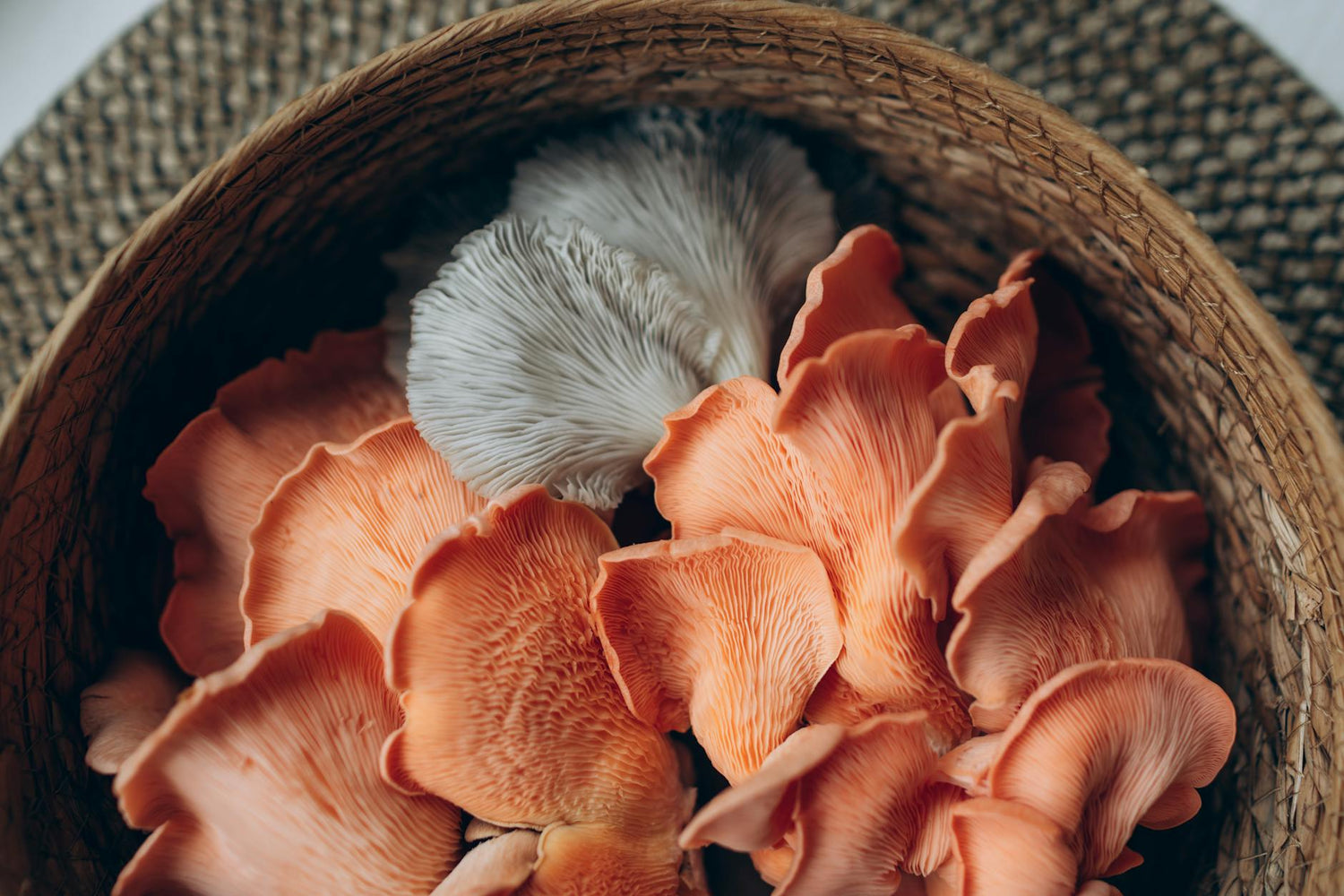
Lion's mane benefits have attracted serious scientific attention over the past decade — and for good reason. Hericium erinaceus, the white, shaggy medicinal mushroom used for centuries in East Asian medicine, is now backed by a growing body of research linking it to improved cognitive function, nerve regeneration, mood support, and more.* This guide covers nine evidence-based lion's mane benefits, the research behind each one, practical dosage guidance, and how to choose a quality supplement.
What Is Lion's Mane Mushroom?
Lion's mane (Hericium erinaceus) is an edible medicinal mushroom recognised by its distinctive cascading white spines. It grows naturally on hardwood trees across North America, Europe, and Asia, and has been a staple in traditional Chinese and Japanese medicine for hundreds of years.
What makes lion's mane unique among nootropic compounds is its two signature bioactive groups: hericenones (found in the fruiting body) and erinacines (found in the mycelium). Both are able to cross the blood-brain barrier and stimulate the production of nerve growth factor (NGF) — a protein essential for the survival, growth, and maintenance of neurons.
"Lion's mane is one of the only natural compounds known to stimulate NGF synthesis in the brain," noted a landmark study published in the Journal of Agricultural and Food Chemistry.
9 Science-Backed Lion's Mane Benefits
The lion's mane mushroom benefits below are drawn from peer-reviewed research, including human clinical trials where available. Each benefit reflects the current state of the evidence as of 2026.
1. May Support Memory and Cognitive Function*
Lion's mane's most studied benefit is its potential to help support memory and overall cognitive function.* A widely cited 2009 double-blind, placebo-controlled trial published in Phytotherapy Research found that Japanese adults aged 50–80 with mild cognitive impairment who took 750 mg of lion's mane extract three times daily for 16 weeks scored significantly higher on cognitive function tests compared to the placebo group [1].
Notably, cognitive scores declined again four weeks after supplementation stopped — suggesting that consistent, ongoing use may be important for sustained benefit.*
2. Stimulates Nerve Growth Factor (NGF) Production*
NGF is critical for maintaining the health and function of neurons throughout the brain and peripheral nervous system. Lion's mane is the only well-documented natural dietary source shown to stimulate NGF synthesis.* Both hericenones and erinacines have demonstrated this effect in laboratory and animal studies [2].
This NGF-boosting mechanism is considered the primary driver behind many of the other lion's mane benefits listed here, from neuroprotection to mood support.
3. Helps Support Focus and Mental Clarity*
A 2023 clinical trial from the University of Queensland, published in the Journal of Neurochemistry, found that lion's mane extract improved cognitive performance in healthy adults. Researchers linked the improvements to enhanced neurite outgrowth — the process by which neurons extend connections to one another [3].
For people experiencing brain fog or mental fatigue, lion's mane may offer meaningful support as part of a broader cognitive health strategy.*
4. May Protect Against Age-Related Cognitive Decline*
Age-related cognitive decline is driven in part by reduced NGF levels and increased neuroinflammation. Animal studies have shown that lion's mane supplementation may help protect against these processes.* A 2020 study in Nutrients found that lion's mane reduced markers of oxidative stress and inflammation in the brain tissue of ageing mice, alongside measurable improvements in memory performance [4].
While human trials on long-term neuroprotection are still limited, the existing preclinical evidence is compelling enough that multiple research teams are pursuing larger clinical studies.
5. Supports Mood and Emotional Wellbeing*
Lion's mane may help support a positive mood.* A 2010 study published in Biomedical Research found that women who consumed lion's mane cookies for four weeks reported significantly lower levels of irritability and anxiety compared to a placebo group [5]. The researchers suggested that NGF modulation and reduced inflammation may underlie these mood-related effects.
A separate 2019 study on overweight adults observed reduced symptoms of depression and anxiety after eight weeks of lion's mane supplementation, alongside improvements in the pro-BDNF pathway — a biological marker associated with mood regulation [6].
6. Supports Gut Health via the Gut-Brain Axis*
Lion's mane has demonstrated gastroprotective properties in multiple studies.* Research shows it may help support the integrity of the stomach lining and promote the growth of beneficial gut bacteria.* A study in the International Journal of Medicinal Mushrooms found that lion's mane extract inhibited the growth of H. pylori — a bacterium linked to gastric ulcers — while supporting mucosal health [7].
Given the well-established role of the gut-brain axis in cognitive function, lion's mane's gut health benefits may partly explain its effects on mental clarity and mood.*
7. May Support Immune Function*
Lion's mane contains beta-glucans — polysaccharides known to modulate immune activity.* Animal research published in Food & Function found that lion's mane supplementation enhanced intestinal immune system activity by increasing beneficial gut bacteria and stimulating immune cell responses [8].
While human immune studies remain limited, the combination of anti-inflammatory, antioxidant, and prebiotic properties positions lion's mane as a promising functional food for overall immune support.*
8. May Aid Nerve Repair and Peripheral Nerve Health*
Beyond the brain, NGF plays a vital role in the peripheral nervous system. Animal studies have shown that lion's mane may help accelerate nerve regeneration following injury.* A study in Evidence-Based Complementary and Alternative Medicine found that rats given lion's mane extract showed faster recovery of crushed peroneal nerves compared to controls [9].
This finding has prompted interest in lion's mane as a potential complementary approach for supporting peripheral nerve health, though human clinical trials are needed to confirm these effects.*
9. Provides Antioxidant and Anti-Inflammatory Support*
Chronic low-grade inflammation and oxidative stress are linked to cognitive decline, mood disorders, and accelerated ageing. Lion's mane has demonstrated significant antioxidant activity in laboratory studies, helping to neutralise free radicals and reduce inflammatory biomarkers.* A 2012 evaluation of 14 mushroom species ranked lion's mane among the top four for antioxidant capacity [10].
Lion's Mane Dosage: How Much Should You Take?
There is no universally established dose, but clinical studies provide useful guidance. Most successful human trials have used between 500 mg and 3,000 mg per day of lion's mane extract, typically standardised for hericenones and erinacines.
| Goal | Typical Dosage Range | Study Duration |
|---|---|---|
| General cognitive support* | 500–1,000 mg/day | 8–16 weeks |
| Mild cognitive impairment* | 750–3,000 mg/day | 16 weeks |
| Mood and wellbeing support* | 500–2,000 mg/day | 4–8 weeks |
Consistency matters more than dose size. Benefits in clinical trials emerged after weeks of daily use — not from occasional supplementation.
How to Choose a Quality Lion's Mane Supplement
Not all lion's mane supplements are equal. The quality of extract significantly affects whether you experience any meaningful benefits. Look for these markers:
- Fruiting body extract (not just mycelium on grain) — fruiting bodies contain higher concentrations of hericenones
- Standardised for active compounds — products should specify beta-glucan or hericenone content
- Dual extraction (hot water + alcohol) — this method captures both water-soluble and fat-soluble bioactives
- Third-party tested — verified for purity, potency, and absence of heavy metals
- No unnecessary fillers — check ingredient lists for bulking agents or excessive additives
Noobru Advantage includes lion's mane alongside complementary nootropic ingredients such as phosphatidylserine, B vitamins, and huperzine A — formulated to help support cognitive function, focus, and mental clarity as part of your daily routine.*
Lion's Mane Side Effects and Safety
Lion's mane has an excellent safety profile. It has been consumed as a culinary ingredient in East Asia for centuries, and clinical trials lasting up to 16 weeks have reported no serious adverse effects.
Rare, mild side effects may include:
- Mild digestive discomfort (usually temporary)
- Nausea at higher doses
- Skin irritation in people with mushroom or mould allergies
Precautions: If you are taking anticoagulant or antiplatelet medication, consult your healthcare provider before using lion's mane, as it may have mild blood-thinning properties. Pregnant or breastfeeding individuals should also seek medical advice before supplementing.
Key Takeaways: Lion's Mane Benefits at a Glance
- Unique mechanism: Lion's mane stimulates NGF production — supporting neuron health from the inside out*
- Strongest evidence: Memory, cognitive function, and focus in adults with mild impairment*
- Emerging research: Mood support, gut health, immune function, and nerve repair*
- Effective dosage: 500–3,000 mg/day of quality extract, taken consistently for 8–16 weeks
- Safety: Well tolerated with no serious side effects in clinical trials
- Quality matters: Choose fruiting body extracts, dual-extracted, with third-party testing
If you're looking to incorporate lion's mane benefits into your daily routine, explore the Noobru product range — designed to help support mental performance, focus, and clarity with research-backed ingredients.*
Frequently Asked Questions About Lion's Mane Benefits
What are the main benefits of lion's mane?
The main lion's mane benefits include supporting cognitive function, memory, focus, nerve health, mood, gut health, and immune function.* Research suggests it stimulates nerve growth factor (NGF) production, which is essential for brain cell maintenance and repair.
How long does lion's mane take to work?
Most studies show cognitive improvements after 8–16 weeks of consistent daily supplementation. Some people report subtle improvements in focus and mental clarity within 2–4 weeks, though individual responses vary.
What is the recommended lion's mane dosage?
Clinical studies have typically used 500 mg to 3,000 mg per day of lion's mane extract. A common effective dose in research is 750 mg to 1,000 mg taken daily, though the optimal amount depends on the extract concentration and individual needs.
Can you take lion's mane every day?
Yes. Lion's mane has been consumed daily as a food and supplement in East Asian cultures for centuries. Clinical trials lasting up to 16 weeks with daily use have reported no serious adverse effects. Consistency is important, as benefits appear to build over time.*
Does lion's mane help with brain fog?
Lion's mane may help with brain fog by supporting NGF production and reducing neuroinflammation.* A 2023 University of Queensland study found that lion's mane improved cognitive performance in participants, with researchers linking the effects to enhanced neurite outgrowth.
Are there any side effects of lion's mane?
Lion's mane is generally well tolerated. Rare side effects may include mild digestive discomfort, nausea, or skin irritation in people with mushroom allergies. Anyone taking blood-thinning medication should consult a healthcare provider before use, as lion's mane may have mild antiplatelet effects.
References
- Mori, K. et al. (2009). Improving effects of the mushroom Yamabushitake (Hericium erinaceus) on mild cognitive impairment. Phytotherapy Research, 23(3), 367–372. PubMed
- Lai, P.L. et al. (2013). Neurotrophic properties of the lion's mane medicinal mushroom. Journal of Agricultural and Food Chemistry, 61(32), 7844–7851. PubMed
- Chong, P.S. et al. (2026). Hericium erinaceus promotes neurotrophic activity via neurite outgrowth enhancement. Journal of Neurochemistry, 164(6), 793–814. PubMed
- Ratto, D. et al. (2019). Hericium erinaceus improves recognition memory and induces hippocampal and cerebellar neurogenesis in frail mice. Nutrients, 11(4), 715. PubMed
- Nagano, M. et al. (2010). Reduction of depression and anxiety by 4 weeks Hericium erinaceus intake. Biomedical Research, 31(4), 231–237. PubMed
- Vigna, L. et al. (2019). Hericium erinaceus improves mood and sleep disorders in patients with overweight. Evidence-Based Complementary and Alternative Medicine, 2019, 7861297. PubMed
- Wang, M. et al. (2015). A polysaccharide isolated from Hericium erinaceus prevents alcohol-induced gastric ulcers. International Journal of Medicinal Mushrooms, 17(4), 321–332. PubMed
- Sheng, X. et al. (2017). Immunomodulatory effects of Hericium erinaceus derived polysaccharides. Food & Function, 8(3), 1020–1027. PubMed
- Wong, K.H. et al. (2012). Neuroregenerative potential of lion's mane mushroom. Evidence-Based Complementary and Alternative Medicine, 2012, 370536. PubMed
- Abdullah, N. et al. (2012). Evaluation of selected culinary-medicinal mushrooms for antioxidant and ACE inhibitory activities. Evidence-Based Complementary and Alternative Medicine, 2012, 464238. PubMed
*These statements have not been evaluated by the Food and Drug Administration or MHRA. This product is not intended to diagnose, treat, cure, or prevent any disease. Always consult your healthcare provider before starting any supplement regimen.

Leave a comment
All comments are moderated before being published.
This site is protected by hCaptcha and the hCaptcha Privacy Policy and Terms of Service apply.