




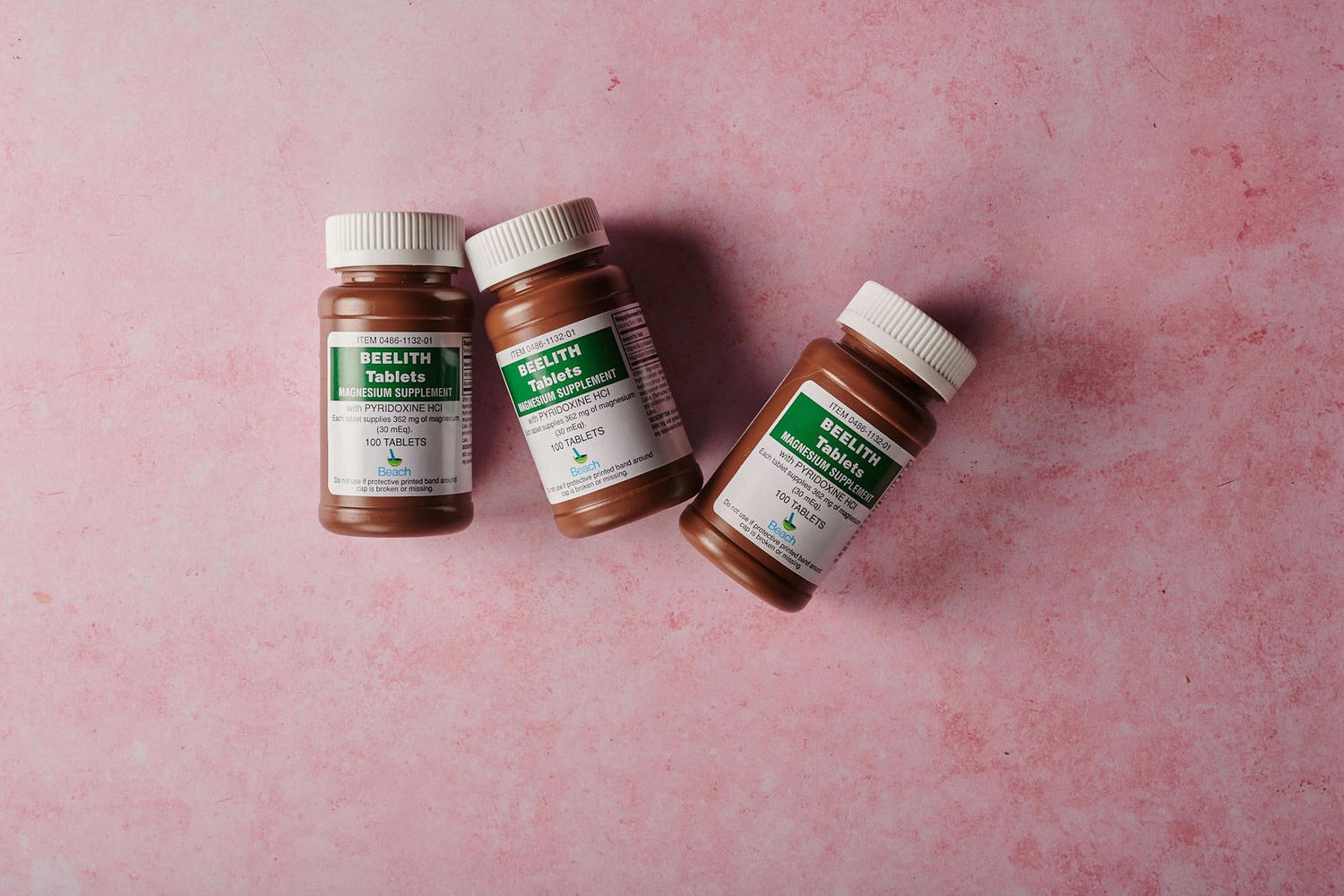
Magnesium Glycinate Benefits: Why Pharmacokinetic Data Says This Form Wins
There are at least eleven commercially available forms of magnesium — yet most "best magnesium" articles treat them as interchangeable. They are not. When you rank them by pharmacokinetic bioavailability (the percentage of elemental magnesium that actually reaches your bloodstream), magnesium glycinate consistently outperforms oxide, citrate, and carbonate [1]. What makes it even more interesting is its dual mechanism: the glycine amino acid carrier is itself a calming neurotransmitter, meaning you get two active compounds from a single molecule.
This article breaks down exactly how magnesium glycinate absorption works, compares it head-to-head against four other popular forms using clinical data, and tells you the specific dosage, timing, and scenarios where it genuinely earns its premium price — and the situations where a different form might actually serve you better.
What Is Magnesium Glycinate, and Why Does the Carrier Molecule Matter?
Magnesium glycinate (also called magnesium bisglycinate) is elemental magnesium chelated — chemically bonded — to two molecules of the amino acid glycine. This chelation is what separates it from inorganic forms like magnesium oxide, where the magnesium is bound to oxygen.
Why does the carrier matter? Three reasons:
- Absorption pathway: Chelated magnesium uses amino acid transport channels in the small intestine, not the same ion channels that inorganic forms compete for. This avoids the bottleneck that limits oxide absorption to roughly 4% [2].
- Gentle on the gut: Because less magnesium stays in the intestinal lumen, glycinate causes significantly less osmotic diarrhoea than citrate or oxide.
- Dual-action delivery: Once absorbed, the glycine molecule is released and acts independently — crossing the blood-brain barrier and binding to inhibitory NMDA and glycine receptors. This is why people report a calming effect that other magnesium forms don't produce as strongly.*
Think of it this way: choosing magnesium oxide for relaxation is like posting a letter without a stamp. The magnesium is there, but most of it never arrives.
Magnesium Glycinate vs Citrate vs Oxide: A Bioavailability Comparison
The differences between magnesium forms are not subtle — they can vary by a factor of ten in actual absorption. Here is how the five most common forms compare based on published human bioavailability studies:
| Form | Elemental Mg Content | Estimated Bioavailability | Best Use Case |
|---|---|---|---|
| Glycinate (bisglycinate) | ~14% | High (amino acid pathway) | Sleep, stress, muscle recovery* |
| Citrate | ~16% | Moderate-High | General supplementation, constipation |
| Taurate | ~9% | Moderate-High | Cardiovascular support* |
| L-Threonate | ~8% | Moderate (crosses BBB) | Cognitive function* |
| Oxide | ~60% | Low (~4%) | Laxative effect, heartburn |
Notice the paradox with oxide: it contains the most elemental magnesium per gram (60%), but absorbs so poorly that you retain far less than glycinate's 14%. A 2003 study in the Journal of the American College of Nutrition found that magnesium oxide delivered only 4% bioavailability compared to the chelated forms [2]. That study shaped the entire chelated magnesium industry.
The comparison between magnesium glycinate vs citrate is closer. Citrate absorbs well, but it has an osmotic laxative effect that makes it uncomfortable at higher doses. If your primary goals are sleep and stress management, glycinate is the stronger choice. If regularity is what you need, citrate wins.*
How Magnesium Glycinate May Help Support Sleep Quality
Magnesium glycinate may support better sleep through two distinct mechanisms that work simultaneously — and this is the point most articles miss.*
Mechanism 1: Magnesium and GABA. Magnesium binds to GABA-A receptors, enhancing the activity of gamma-aminobutyric acid (GABA), the brain's primary inhibitory neurotransmitter. A 2012 randomised controlled trial published in the Journal of Research in Medical Sciences found that 500 mg of magnesium supplementation significantly improved subjective sleep quality, sleep time, and melatonin concentration in elderly participants [3].*
Mechanism 2: Glycine and thermoregulation. A 2006 study in Sleep and Biological Rhythms demonstrated that 3 g of glycine before bed reduced core body temperature and helped participants fall asleep faster [4]. Your body needs to drop its core temperature by approximately 1°C to initiate sleep — glycine accelerates this process by dilating peripheral blood vessels.*
This dual mechanism is unique to the glycinate form. Magnesium citrate gives you the magnesium half but not the glycine half. Magnesium threonate crosses the blood-brain barrier effectively but does not provide glycine's thermoregulatory benefit.
Magnesium Glycinate for Stress and Anxiety: What the Evidence Shows
Magnesium glycinate may help support a healthier stress response by modulating the hypothalamic-pituitary-adrenal (HPA) axis — the system responsible for cortisol release.*
A 2017 systematic review in Nutrients analysed 18 studies and concluded that magnesium supplementation showed a beneficial trend for individuals experiencing subjective anxiety, although the authors noted that study quality was mixed and more rigorous trials were needed [5]. This is an honest reading of the evidence: promising, not definitive.
What we can say with more confidence:
- Magnesium deficiency is clearly linked to increased anxiety symptoms — correcting a deficiency produces measurable improvements.*
- The glycine carrier adds an independent anxiolytic effect. Glycine acts as an inhibitory neurotransmitter in the brainstem and spinal cord.*
- Roughly 50% of adults in the UK fail to meet the Reference Nutrient Intake for magnesium from diet alone, according to the National Diet and Nutrition Survey.
If you are already sufficient in magnesium, supplementation is unlikely to produce a dramatic calming effect. But if you are among the estimated half of adults who are falling short, glycinate is one of the most efficient ways to close that gap.*
Magnesium Glycinate Dosage: How Much Do You Actually Need?
The optimal magnesium glycinate dosage depends on the gap between what you eat and what you need — not on a one-size-fits-all number.
UK recommended intakes (NHS):
- Adult men: 300 mg elemental magnesium per day
- Adult women: 270 mg elemental magnesium per day
Key calculation most people get wrong: Magnesium glycinate is only about 14.1% elemental magnesium by weight. So a capsule labelled "500 mg magnesium glycinate" contains roughly 70 mg of actual magnesium. You need to read labels carefully — look for the elemental magnesium figure, not the compound weight.
Practical supplementation range: Most people benefit from 200–400 mg elemental magnesium from glycinate, taken in divided doses (morning and evening) or as a single dose 30–60 minutes before bed. Starting at the lower end and increasing gradually helps you find the dose that works without GI discomfort.
At Noobru, we include magnesium in carefully dosed formulations designed to complement dietary intake rather than overwhelm it. You can explore our full range of Noobru supplements to find the right fit for your routine.*
When Magnesium Glycinate Is Not the Best Choice
Honest advice: magnesium glycinate is not always the right form. Here are three scenarios where another option may serve you better:
- You need a laxative effect. If constipation is your primary issue, magnesium citrate or magnesium oxide will be more effective because their lower absorption means more magnesium stays in the colon, drawing water in osmotically.
- You want cognitive-specific benefits. Magnesium L-threonate (Magtein®) is the only form with published data showing it can increase brain magnesium levels in animal models [6]. If cognitive function is your primary goal, threonate may be worth the higher cost.*
- Budget is your top priority. Magnesium oxide costs roughly one-fifth per gram of elemental magnesium compared to glycinate. If you are only correcting a severe deficiency and GI side effects don't bother you, oxide delivers more magnesium per penny — just with lower retention.
Choosing the right magnesium form is not about finding the "best" one in absolute terms. It is about matching the form to your specific goal.
Magnesium Glycinate Side Effects and Safety
Magnesium glycinate is widely regarded as one of the safest and most tolerable magnesium forms. The most commonly reported side effects are mild and dose-dependent:
- Drowsiness: Expected when taking glycinate in the evening, as both magnesium and glycine have calming properties. Avoid driving after taking high doses.*
- Mild GI discomfort: Rare with glycinate, but possible at very high doses (above 600 mg elemental).
- Drug interactions: Magnesium can reduce the absorption of certain antibiotics (tetracyclines, fluoroquinolones) and bisphosphonates. Space doses at least 2 hours apart.
The European Food Safety Authority (EFSA) sets a tolerable upper intake level of 250 mg supplemental magnesium per day for adults, though this figure specifically refers to easily dissociable magnesium salts and some researchers argue chelated forms should have a higher threshold. When in doubt, consult your GP or pharmacist.
Key Takeaways
- Magnesium glycinate is the best-absorbed form for people seeking sleep, stress, and muscle recovery support — thanks to its amino acid transport pathway.*
- The glycine carrier is not inert. It provides independent calming and thermoregulatory benefits that no other magnesium form offers.*
- Read labels for elemental magnesium, not total compound weight. A "500 mg magnesium glycinate" capsule contains only ~70 mg of actual magnesium.
- Glycinate is not always superior. Citrate wins for constipation, threonate for cognition, and oxide for budget-conscious deficiency correction.
- Up to 50% of UK adults may not get enough magnesium from diet alone — making targeted supplementation a practical strategy.*
- Take it 30–60 minutes before bed for the best sleep-related results, starting at 200 mg elemental and adjusting upward.*
Frequently Asked Questions About Magnesium Glycinate
What is magnesium glycinate good for?
Magnesium glycinate may help support sleep quality, stress reduction, muscle recovery, and overall relaxation.* Its high bioavailability means more magnesium reaches your cells compared to cheaper forms like oxide.
Is magnesium glycinate better than citrate?
For sleep and relaxation, magnesium glycinate is generally considered superior because the glycine amino acid carrier itself has calming properties.* Citrate is better suited for digestive regularity, as it draws water into the intestines.
When should I take magnesium glycinate?
Most people benefit from taking magnesium glycinate 30–60 minutes before bed. The glycine component may help lower core body temperature, which is a natural signal for sleep onset.*
Can magnesium glycinate cause side effects?
Magnesium glycinate is one of the gentlest forms on the stomach. Unlike oxide or citrate, it rarely causes diarrhoea or cramping. However, doses above 400 mg elemental magnesium per day should be discussed with a healthcare provider.
How much magnesium glycinate should I take daily?
The NHS recommends 300 mg of elemental magnesium per day for adult men and 270 mg for women. Since magnesium glycinate is roughly 14% elemental magnesium by weight, you would need approximately 2,000 mg of the compound to reach 280 mg elemental.
Ready to Try a Better Form of Magnesium?
Noobru's formulations use carefully selected, bioavailable ingredients — including chelated magnesium and glycine — designed to support your sleep, focus, and daily recovery.* Explore the full range here →
References
- Schuette SA, Lashner BA, Janghorbani M. Bioavailability of magnesium diglycinate vs magnesium oxide in patients with ileal resection. JPEN J Parenter Enteral Nutr. 1994;18(5):430–435. PubMed
- Firoz M, Graber M. Bioavailability of US commercial magnesium preparations. Magnes Res. 2001;14(4):257–262. PubMed
- Abbasi B, Kimiagar M, Sadeghniiat K, et al. The effect of magnesium supplementation on primary insomnia in elderly: A double-blind placebo-controlled clinical trial. J Res Med Sci. 2012;17(12):1161–1169. PubMed
- Inagawa K, Hiraoka T, Kohda T, et al. Subjective effects of glycine ingestion before bedtime on sleep quality. Sleep and Biological Rhythms. 2006;4(1):75–77. DOI
- Boyle NB, Lawton C, Dye L. The effects of magnesium supplementation on subjective anxiety and stress — a systematic review. Nutrients. 2017;9(5):429. PubMed
- Slutsky I, Abumaria N, Wu LJ, et al. Enhancement of learning and memory by elevating brain magnesium. Neuron. 2010;65(2):165–177. PubMed
*These statements have not been evaluated by the Food and Drug Administration or MHRA. This product is not intended to diagnose, treat, cure, or prevent any disease. Always consult your healthcare provider before starting any supplement regimen.


Leave a comment
All comments are moderated before being published.
This site is protected by hCaptcha and the hCaptcha Privacy Policy and Terms of Service apply.