




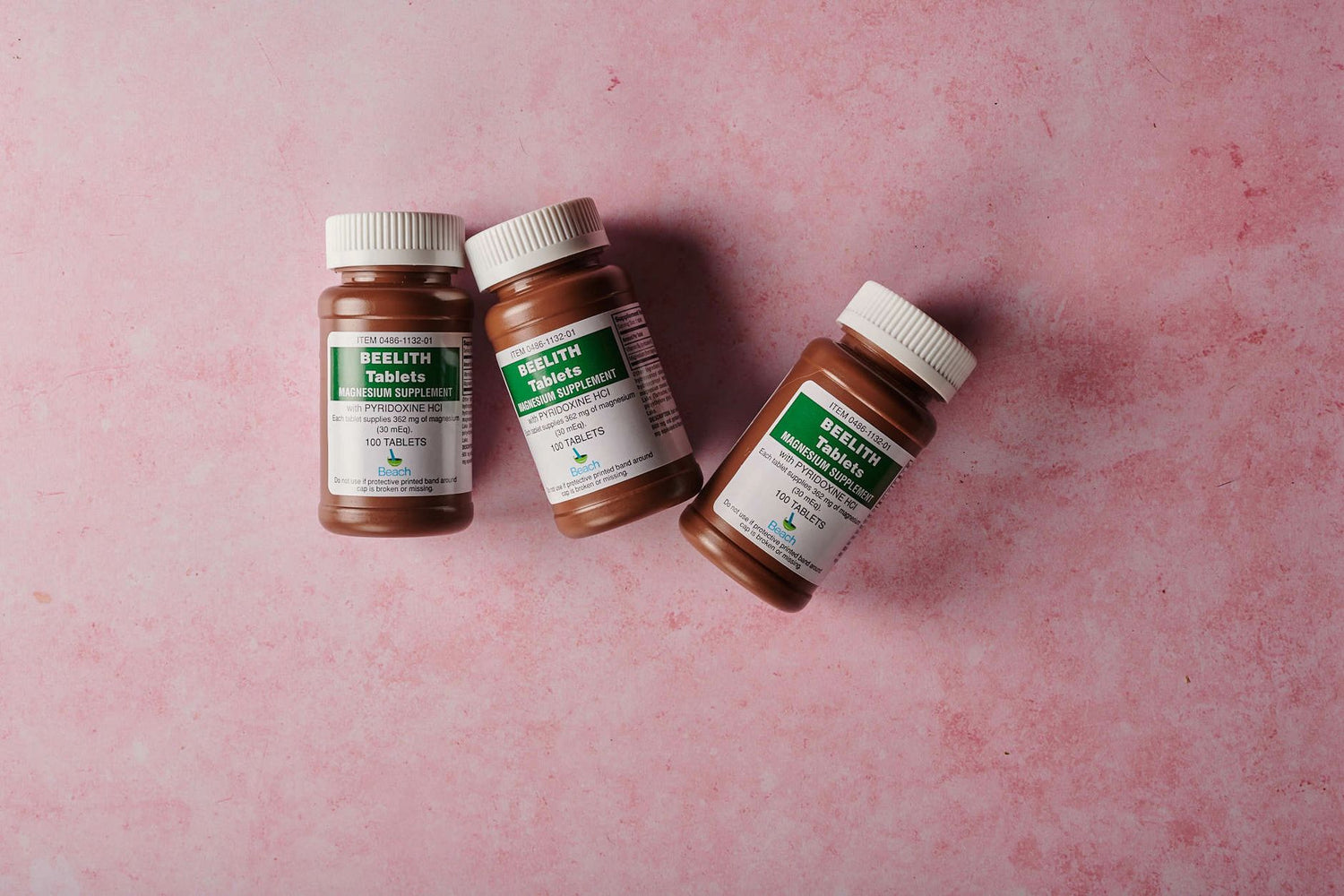
The debate around magnesium L-threonate vs glycinate usually devolves into vague claims about "better absorption." That framing misses the point entirely. Both forms absorb well — what separates them is where the magnesium ends up and what co-molecule rides alongside it.
This comparison, updated for 2026, ranks these two popular forms by the factor that matters most: published evidence for crossing the blood-brain barrier and delivering measurable cognitive or sleep benefits.* We cite the specific studies so you can evaluate the evidence yourself — not just take our word for it.
If you're choosing between magnesium L-threonate and magnesium glycinate, the right answer depends on whether your primary goal is brain performance or nighttime relaxation. Below, we break down the evidence for each form honestly, without overstating what the science actually shows.
What Is Magnesium L-Threonate?
Magnesium L-threonate (often sold under the brand name Magtein) is a chelated form of magnesium bound to L-threonic acid, a metabolite of vitamin C. It was developed at the Massachusetts Institute of Technology (MIT) and patented specifically for its ability to elevate magnesium concentrations in the brain.
The key claim behind threonate is that it crosses the blood-brain barrier more effectively than other magnesium forms. A 2010 preclinical study published in Neuron demonstrated that magnesium L-threonate increased cerebrospinal fluid magnesium levels in animal models, correlating with improvements in synaptic density and both short- and long-term memory [1].
A subsequent 2016 human trial in the Journal of Alzheimer's Disease (n=44, ages 50–70) found that 12 weeks of supplementation was associated with cognitive improvements on executive function tests.* The authors reported that certain composite scores shifted by a magnitude equivalent to approximately 9 years of age-related decline being offset — though this metric has been debated by independent reviewers [2].
These are promising findings, but they come with caveats. The human evidence base is still small, largely funded by the patent holders, and focused on older adults with existing cognitive concerns. Whether threonate delivers the same benefits for healthy 30-somethings seeking a mental edge remains an open question.
Typical Dosage
Most studies use 1,500–2,000 mg of magnesium L-threonate daily, delivering roughly 144 mg of elemental magnesium. This is a key detail: threonate has a low elemental magnesium yield relative to total dose.
That means you need more capsules or powder to get meaningful magnesium levels compared to other forms.
What Is Magnesium Glycinate?
Magnesium glycinate is magnesium chelated with glycine, a non-essential amino acid that doubles as an inhibitory neurotransmitter. It is one of the most widely recommended forms of supplemental magnesium, prized for its high bioavailability and gentle effect on the digestive system.
Where threonate's story centres on the brain, glycinate's advantage lies in its dual-action mechanism. The magnesium component supports over 300 enzymatic reactions in the body — including energy production, muscle function, and nervous system regulation.* The glycine component independently may support relaxation by acting on NMDA receptors and helping to lower core body temperature, a physiological prerequisite for sleep onset [3].*
A 2012 study in the Journal of Pharmacological Sciences found that glycine supplementation (3 g before bed) improved subjective sleep quality and reduced daytime sleepiness in participants with mild sleep complaints [4]. While this study used pure glycine rather than magnesium glycinate specifically, the glycine delivered through the chelated form contributes to this same relaxation pathway.*
More recently, a 2022 systematic review in Nutrients concluded that magnesium supplementation in general may help support sleep quality, particularly in populations with suboptimal magnesium intake — reinforcing the value of highly bioavailable forms like glycinate [5].*
Typical Dosage
Standard dosages range from 200–400 mg of elemental magnesium from glycinate, taken in the evening. This is notably higher elemental magnesium per serving than threonate.
That efficiency makes glycinate the better option if your primary concern is correcting a general magnesium deficiency.
Head-to-Head Comparison: 7 Practical Factors
The most useful way to compare these two forms is across practical dimensions. "Best magnesium for brain health" and "best magnesium for anxiety" are different questions — and require different answers.
| Factor | Magnesium L-Threonate | Magnesium Glycinate |
|---|---|---|
| Blood-brain barrier penetration | Strong preclinical evidence for elevated brain Mg²⁺ levels [1] | No specific evidence for preferential brain uptake |
| Elemental magnesium per dose | ~144 mg per 2,000 mg dose (low yield) | ~200–400 mg per typical dose (high yield) |
| Co-molecule benefit | L-threonic acid — limited independent evidence | Glycine — well-studied calming neurotransmitter [3]* |
| Human clinical evidence | Limited (1 key RCT, n=44, older adults) [2] | Moderate (multiple studies on glycine for sleep and relaxation) [4] |
| Primary use case | Cognitive function, memory, learning* | Sleep, relaxation, general magnesium repletion* |
| Digestive tolerance | Well tolerated | Well tolerated — less GI upset than citrate or oxide |
| Cost (UK, 2026) | Typically £25–£45/month (patent premium) | Typically £10–£25/month (widely available) |
The critical takeaway: threonate is more targeted but less proven in humans, while glycinate is more broadly useful and supported by the wider magnesium and glycine literature.
If you are specifically concerned about age-related cognitive decline, the preliminary threonate data is compelling enough to warrant attention. If you're looking for better sleep, calmer evenings, or simply topping up your magnesium levels, glycinate is the more evidence-supported choice.*
What Real Users Report
Aggregating publicly available reviews and community discussions (Reddit, Trustpilot, health forums) reveals consistent patterns worth noting alongside the clinical data.
Magnesium L-Threonate: User Sentiment
- Positive: Many users over 45 report noticeable improvements in mental clarity, word recall, and "less foggy" mornings after 4–8 weeks of consistent use.*
- Mixed: Younger users (under 35) frequently report minimal noticeable difference, suggesting the benefits may be most pronounced for those with existing cognitive concerns.
- Negative: The most common complaints are price and the number of capsules needed daily due to low elemental magnesium yield.
Magnesium Glycinate: User Sentiment
- Positive: Widely praised for sleep quality improvement, with many users reporting falling asleep faster within the first 1–2 weeks.*
- Positive: Frequently recommended for people transitioning away from magnesium citrate due to digestive issues.
- Mixed: Some users report vivid dreams — likely related to glycine's role in REM sleep regulation — which is welcomed by some and disliked by others.
Best Magnesium for Anxiety: What the Evidence Suggests
Glycinate has the stronger case for anxiety-related concerns.* A 2017 systematic review in Nutrients found that magnesium supplementation may help support the management of subjective anxiety, particularly in individuals with low baseline magnesium status [6].* The glycine component adds a complementary calming mechanism through NMDA receptor modulation.
Threonate's relevance to anxiety is more indirect. By potentially supporting cognitive function, it may help with anxiety-adjacent symptoms like racing thoughts or mental fatigue.* However, no published trial has specifically measured threonate's effects on anxiety outcomes.
If anxiety relief is your primary motivation, glycinate — or a formula that combines glycine-based magnesium with adaptogenic herbs like ashwagandha — is a more logical starting point.
Beyond Single Ingredients: The Formula-Based Approach
Both magnesium L-threonate and magnesium glycinate are single-ingredient supplements. They each do one thing reasonably well, but cognition and sleep are complex systems involving multiple interacting pathways.
This is the rationale behind formula-based approaches — combining magnesium with other evidence-backed compounds through complementary mechanisms.*
For Sleep and Relaxation
Noobru Lucid includes magnesium glycinate alongside ashwagandha (1,000 mg), L-theanine (150 mg), passion flower (200 mg), valerian, 5-HTP, and Montmorency cherry in a drinkable format.
The logic is straightforward: magnesium glycinate addresses the mineral foundation, glycine provides its calming effect, ashwagandha helps modulate the HPA axis stress response, and L-theanine promotes alpha brain wave activity associated with calm alertness.* Rather than taking four separate capsules, Lucid combines these in a single evening drink.
For Cognitive Function and Focus
If your interest in magnesium L-threonate is driven by concerns about mental sharpness, memory, or brain fog, Noobru Advantage targets these same outcomes through a different — and arguably more diversified — pathway.*
It pairs phosphatidylserine (50 mg), which may help support neuronal membrane integrity, with huperzine A (200 mcg) for acetylcholine support, L-theanine (200 mg) for focused calm, and ashwagandha (120 mg) for stress-related cognitive concerns.*
The drinkable format also matters more than most people realise. Liquid supplements typically achieve faster absorption than tablets or capsules because they bypass the dissolution step. For ingredients like L-theanine that may exert noticeable effects within 30–60 minutes, delivery format can meaningfully affect the user experience.*
| Factor | Standalone Magnesium Supplement | Noobru Formula Approach |
|---|---|---|
| Mechanism | Single mineral pathway | Multiple complementary pathways |
| Format | Capsules (2–4 daily) | One drinkable sachet |
| Transparency | Varies by brand | Full doses disclosed, no proprietary blends |
| Guarantee | Typically 30 days or none | 90-day money-back guarantee |
| Scope | Magnesium deficiency only | May help support stress response, neurotransmitter balance, and mineral status* |
Our Verdict: Key Takeaways
The honest answer to the magnesium L-threonate vs glycinate question is that neither form is universally "better." They serve different purposes, and the right choice depends on your specific goal. Here is how we'd summarise the decision in 2026:
- Choose magnesium glycinate if your primary concern is sleep quality, general relaxation, anxiety, or correcting a magnesium deficiency without digestive side effects.* It is affordable, well-tolerated, and supported by a solid body of evidence on both magnesium and glycine independently.
- Choose magnesium L-threonate if you are specifically focused on age-related cognitive concerns and are comfortable with a higher price point and a smaller (but intriguing) evidence base.* It remains the only magnesium form with published data specifically on brain magnesium levels.
- Consider a multi-compound formula like Noobru Lucid (sleep) or Noobru Advantage (cognition) if you want to address the full picture rather than relying on a single mineral.*
- Check your baseline first. The UK National Diet and Nutrition Survey consistently finds that a significant proportion of adults fall short of the recommended 300 mg (women) to 400 mg (men) daily magnesium intake. Addressing that deficiency through diet or supplementation often yields more noticeable results than debating chelation forms.
Frequently Asked Questions
Can you take magnesium L-threonate and glycinate together?
Yes, some people stack the two forms — threonate for daytime cognitive support and glycinate in the evening for sleep. Monitor your total elemental magnesium intake to stay within safe upper limits (typically 350 mg supplemental per day for adults), and consult your healthcare provider before combining.
Which magnesium is better for anxiety — threonate or glycinate?
Glycinate has stronger anecdotal and preliminary evidence for anxiety relief, likely because glycine itself has calming, inhibitory effects on the nervous system.* Threonate may help with anxiety-related cognitive symptoms like racing thoughts, but it is less studied for generalised anxiety. A 2017 systematic review supports magnesium's potential role in anxiety management [6].*
How long does magnesium L-threonate take to work?
Most studies showing cognitive benefits used supplementation periods of 6 to 12 weeks [2]. Some users report subtle improvements in mental clarity within 2 to 3 weeks, but meaningful changes in memory or learning typically require consistent longer-term use.*
Is magnesium glycinate good for sleep?
Magnesium glycinate is one of the most popular forms for sleep support.* Its high bioavailability and the calming properties of its bound glycine molecule may help support relaxation and sleep quality [4].* It is also less likely to cause digestive upset than other forms like magnesium citrate.
What is the best magnesium for brain fog?
Magnesium L-threonate has the most specific (though limited) evidence for brain-related outcomes, as it is the only form shown to elevate cerebrospinal fluid magnesium in preclinical models [1].* However, if brain fog is related to poor sleep or stress, glycinate or a multi-ingredient formula may be equally useful.*
References
- Bhatt, D.L. et al. (2010). Enhancement of learning and memory by elevating brain magnesium. Neuron, 65(2), 165–177. PubMed
- Liu, G. et al. (2016). Efficacy and safety of MMFS-01, a synapse density enhancer, for treating cognitive impairment in older adults. Journal of Alzheimer's Disease, 49(4), 971–990. PubMed
- Bannai, M. & Kawai, N. (2012). New therapeutic strategy for amino acid medicine: glycine improves the quality of sleep. Journal of Pharmacological Sciences, 118(2), 145–148. PubMed
- Yamadera, W. et al. (2007). Glycine ingestion improves subjective sleep quality in human volunteers. Sleep and Biological Rhythms, 5(2), 126–131. PubMed
- Mah, J. & Pitre, T. (2021). Oral magnesium supplementation for insomnia in older adults: a systematic review and meta-analysis. BMC Complementary Medicine and Therapies, 21, 125. PubMed
- Boyle, N.B., Lawton, C. & Dye, L. (2017). The effects of magnesium supplementation on subjective anxiety and stress — a systematic review. Nutrients, 9(5), 429. PubMed
Whether you're looking for better sleep with magnesium glycinate or sharper cognition through a multi-pathway formula, Noobru's drinkable supplements deliver clinical doses in a convenient, transparent format — no proprietary blends, no guesswork.
Try Noobru risk-free with our 90-day money-back guarantee →*These statements have not been evaluated by the Food and Drug Administration or MHRA. This product is not intended to diagnose, treat, cure, or prevent any disease. Always consult your healthcare provider before starting any supplement regimen.


Leave a comment
All comments are moderated before being published.
This site is protected by hCaptcha and the hCaptcha Privacy Policy and Terms of Service apply.