




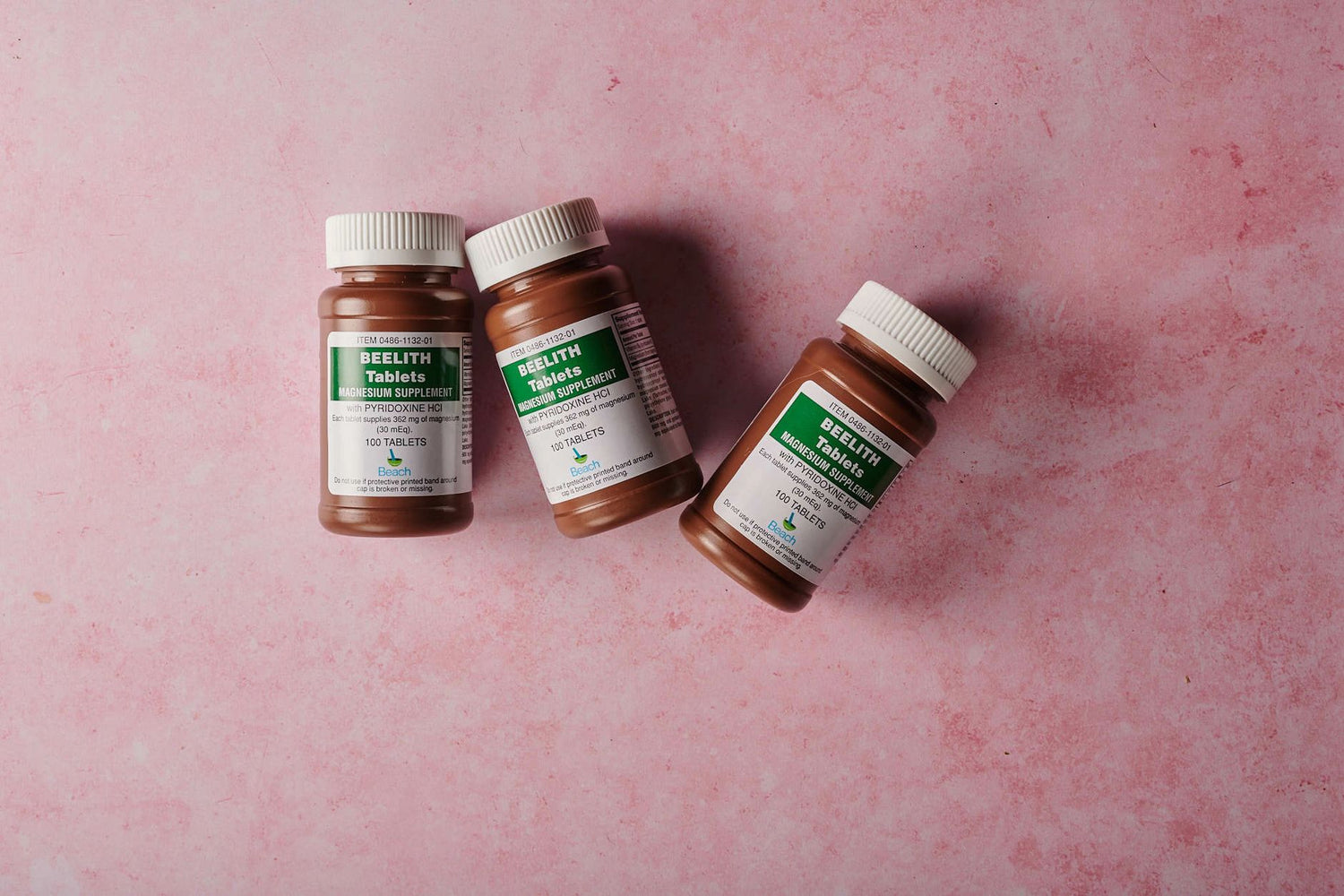
The magnesium L-threonate vs glycinate debate usually gets reduced to a generic list of pros and cons, but the real deciding factor is simpler than most articles admit: does the form actually cross the blood-brain barrier? That single distinction — brain penetration versus peripheral absorption — drives nearly every practical difference between these two popular magnesium supplements, from which cognitive benefits you can reasonably expect to which sleep outcomes the evidence supports in 2026.
Both forms are well absorbed and unlikely to cause the digestive upset associated with cheaper magnesium oxide. But they are not interchangeable. Below, our editorial team breaks down the chemistry, the clinical data, and the real-world scenarios where one form clearly wins over the other — with full references so you can check every claim yourself.
What Is Magnesium L-Threonate?
Magnesium L-threonate is a patented form of magnesium (marketed as Magtein®) that bonds elemental magnesium to L-threonic acid, a metabolite of vitamin C. Its defining feature is a demonstrated ability to raise magnesium concentrations in the brain — not just in the blood.
A landmark 2010 study published in Neuron by Bhatt et al. showed that magnesium L-threonate increased cerebrospinal fluid (CSF) magnesium levels in animal models more effectively than other common forms, including magnesium chloride and magnesium citrate [1]. This matters because the blood-brain barrier is highly selective about what it lets through. Most magnesium supplements raise serum (blood) magnesium effectively but have limited impact on brain tissue concentrations. L-threonate's molecular structure appears to give it a transport advantage across this barrier — a property sometimes described as enhanced CNS bioavailability.
The mechanism likely involves L-threonic acid's ability to upregulate magnesium transporters in neural tissue, according to researchers at MIT's Bhatt and Liu laboratories [1]. In practical terms, this means L-threonate doesn't just float more magnesium into the bloodstream; it may actively facilitate magnesium entry into neurons where it participates in synaptic plasticity — the process underlying learning and memory.*
Typical dosage
Most clinical protocols use 1,500–2,000 mg of magnesium L-threonate per day, which delivers roughly 144 mg of elemental magnesium. That's a relatively low elemental yield compared to other forms, so it's rarely the best choice if your primary goal is correcting a whole-body magnesium deficiency. Think of it as a precision tool for brain magnesium rather than a general-purpose mineral supplement.
What Is Magnesium Glycinate?
Magnesium glycinate (sometimes called magnesium bisglycinate) bonds magnesium to glycine, a non-essential amino acid with its own calming properties. It is one of the most bioavailable oral magnesium forms, meaning a high percentage of the elemental magnesium you ingest actually reaches your bloodstream rather than passing through the digestive tract unabsorbed.
Glycine itself acts as an inhibitory neurotransmitter and has been shown in research to lower core body temperature — a physiological trigger for sleep onset [2]. A 2012 review published in Neuropsychopharmacology confirmed glycine's role as an inhibitory neurotransmitter in the brainstem and spinal cord, with implications for relaxation and sleep regulation [3]. This dual-action mechanism — magnesium plus glycine — is why magnesium glycinate is widely favoured for relaxation and sleep support.*
Unlike the patented form of L-threonate, magnesium glycinate is manufactured by multiple supplement companies worldwide, which keeps costs considerably lower and makes it more accessible for long-term daily use.
Typical dosage
Standard supplemental doses range from 200–400 mg of elemental magnesium via magnesium glycinate, making it a practical option for addressing general magnesium insufficiency alongside its calming effects. The NIH Office of Dietary Supplements notes that adults need 310–420 mg of magnesium daily depending on age and sex, and glycinate's high bioavailability makes it an efficient way to close the gap.
Head-to-Head Comparison: Brain Penetration as the Deciding Criterion
The most useful way to compare these two forms is across the criteria that actually matter for choosing between them. Rather than awarding vague "quality" scores, the table below centres on the single variable that separates these forms: whether the magnesium reaches the brain or stays in peripheral tissues.
| Criterion | Magnesium L-Threonate | Magnesium Glycinate |
|---|---|---|
| Blood-brain barrier penetration | Strong evidence of CNS uptake; raised CSF magnesium in animal models [1] | Limited direct brain penetration (glycine may cross independently) |
| Systemic bioavailability | Moderate — good absorption, low elemental yield (~144 mg per dose) | High — excellent absorption, higher elemental yield per dose |
| Sleep support evidence | Indirect — brain magnesium may support sleep architecture* | Direct — glycine has independent sleep-quality evidence [2]* |
| Cognitive support evidence | Strongest of any magnesium form — human trial data on memory and attention [4]* | Limited cognitive-specific data |
| Digestive tolerance | Very well tolerated | Very well tolerated |
| Elemental Mg per typical dose | ~144 mg | 200–400 mg |
| Cost (per month, typical UK) | £25–£50 (patented ingredient) | £8–£20 (widely available) |
| Best suited for | Cognitive support, memory, brain fog* | Sleep, relaxation, general magnesium repletion* |
The key clinical evidence for L-threonate
A 2022 randomised controlled trial published in the Journal of Alzheimer's Disease examined 2,000 mg/day of magnesium L-threonate in older adults with cognitive concerns [4]. Participants showed improvements in overall cognitive ability, with particular gains in executive function and working memory after 12 weeks.* This remains the most cited human trial for this specific patented form and is notable because cognitive benefits from a mineral supplement are unusual — most minerals correct deficiencies without producing measurable performance gains in people who aren't deficient.
A separate 2020 observational study, also referenced in the Journal of Alzheimer's Disease, found associations between higher brain magnesium levels and preserved hippocampal volume — the brain region most critical for memory formation [5].* While that study didn't use L-threonate specifically, it strengthens the rationale for prioritising brain-penetrating magnesium forms if cognitive health is your primary concern.
The key clinical evidence for glycinate
Glycine research provides the backbone here. A 2006 study in Sleep and Biological Rhythms found that 3 g of glycine before bed improved subjective sleep quality and reduced daytime sleepiness in participants with mild sleep dissatisfaction [2].* A follow-up study by the same research group, published in 2007, confirmed these findings and added polysomnographic data showing that glycine shortened sleep-onset latency — the time it takes to fall asleep [6].*
While these studies used free glycine rather than magnesium glycinate specifically, the glycine component of the chelate is liberated during digestion and contributes to the calming effects users consistently report. Combined with magnesium's own role in GABA receptor activation (documented in a 2012 review in Nutrients [7]), the dual-action mechanism is well supported.
What Real Users Report: Patterns from Reviews and Forums
Clinical trials tell you what happens on average across a study population. User reviews tell you what individuals actually notice — and the patterns are striking in their consistency.
Magnesium L-threonate users most frequently report improved mental clarity, reduced brain fog, and better recall.* The most common phrase in positive reviews across UK and US supplement retailers is some variation of "I can think more clearly." Complaints tend to centre on the high price point and the number of capsules needed per serving (typically 3–4). A recurring observation: users say it doesn't help them sleep as much as they expected, which aligns perfectly with the brain-penetration thesis — L-threonate optimises neural magnesium rather than triggering peripheral relaxation.
Magnesium glycinate users overwhelmingly praise its sleep-onset effects and gentle digestive profile.* The most quotable review pattern is something like: "I fall asleep faster and actually stay asleep." Negative reviews are rare but occasionally mention that cognitive effects feel less noticeable than with threonate — again, consistent with the bioavailability data showing glycinate primarily boosts systemic rather than cerebrospinal fluid magnesium.
The takeaway nobody talks about: these user-report patterns almost perfectly mirror the clinical evidence, which is unusual in the supplement world. When user experience and controlled trial data tell the same story, that's a strong signal that the underlying mechanism is real rather than a placebo artefact.
Beyond Single Minerals: Why Multi-Compound Formulations May Outperform Isolated Magnesium
Here's an honest observation from reviewing the evidence on both sides: standalone magnesium — whether L-threonate or glycinate — delivers one mineral in isolation. But the brain doesn't run on magnesium alone. Cognitive performance and sleep quality depend on interconnected systems involving neurotransmitters, adaptogens, amino acids, and cofactors working in concert.
A 2019 systematic review in Frontiers in Nutrition noted that micronutrient synergies often produce effects that exceed what individual nutrients achieve alone — particularly for neurological outcomes where multiple pathways converge on the same functional endpoint [8]. This is relevant because both the "I want better focus" and "I want better sleep" goals involve multiple biochemical systems, not just magnesium status.
This synergy principle is what guided the formulation of Noobru's drinkable supplements. Rather than relying on a single ingredient, each sachet delivers a multi-compound formula at clinical doses — in a format with faster absorption than capsules or tablets.
For sleep and relaxation
Noobru Lucid includes magnesium glycinate alongside 1,000 mg of ashwagandha (an adaptogen with strong cortisol-reducing evidence*), 200 mg of passion flower, 150 mg of L-theanine, and Montmorency cherry — a natural source of melatonin precursors.* Instead of asking one mineral to do everything, this multi-pathway approach targets sleep architecture from several angles: cortisol regulation, GABA activity, thermoregulation, and melatonin support.*
For cognitive performance
Noobru Advantage takes a different route to the same goal L-threonate users are chasing: clearer thinking, sharper memory, and reduced brain fog.* It combines 200 mg of L-theanine (shown to promote alpha brain wave activity associated with calm focus*), 50 mg of phosphatidylserine (which supports neurological membrane function*), and 200 mcg of Huperzine A (which helps maintain acetylcholine levels in the synaptic cleft*). Where L-threonate works by raising brain magnesium, Advantage works by supporting the neurotransmitter systems that magnesium facilitates — a complementary rather than competing approach.
Key Takeaways
If you remember nothing else from this article, remember these five points:
- Blood-brain barrier penetration is the deciding factor. Magnesium L-threonate has demonstrated the ability to raise cerebrospinal fluid magnesium levels; glycinate primarily raises systemic magnesium [1].
- Choose L-threonate for cognition. If your main concern is memory, focus, or mental clarity, L-threonate has the strongest evidence of any magnesium form, including a 12-week human RCT showing improvements in executive function [4].*
- Choose glycinate for sleep. The glycine component has independent evidence for improving sleep quality and reducing sleep-onset latency, making it a genuine dual-action sleep compound [2].*
- Neither form causes significant digestive issues. Both are well tolerated and far gentler than magnesium oxide or citrate.
- Multi-ingredient formulations may outperform single minerals because cognitive performance and sleep quality involve multiple biochemical pathways, not just magnesium status.*
Frequently Asked Questions
Can I take magnesium L-threonate and glycinate together?
Yes, some people combine both forms to target brain health and sleep simultaneously. However, monitor your total elemental magnesium intake to stay within the tolerable upper intake level of around 350 mg from supplements. Consult your healthcare provider before combining forms.
Which magnesium is better for sleep — threonate or glycinate?
Magnesium glycinate has more direct evidence for sleep support, partly because the amino acid glycine has its own calming and thermoregulatory properties [2].* L-threonate may help indirectly by supporting brain magnesium levels, but glycinate is generally the first choice for sleep.
How long does magnesium L-threonate take to work?
Most clinical research on magnesium L-threonate uses 12-week supplementation periods before measuring cognitive outcomes [4]. You may notice subtle effects sooner, but meaningful cerebrospinal fluid magnesium saturation appears to take several weeks of consistent daily use.
Is magnesium glycinate safe for daily use?
Magnesium glycinate is widely considered one of the gentlest magnesium forms for daily use, with lower risk of digestive side effects than oxide or citrate. Standard doses of 200–400 mg elemental magnesium per day are generally well tolerated according to the NIH Office of Dietary Supplements, but always check with your healthcare provider.
Does magnesium L-threonate actually cross the blood-brain barrier?
Animal studies published in Neuron demonstrated that magnesium L-threonate raised cerebrospinal fluid magnesium concentrations more effectively than other tested forms [1]. A 2022 human trial in the Journal of Alzheimer's Disease showed cognitive improvements consistent with increased brain magnesium [4], though direct human CSF measurements remain limited.
Whether you're after sharper focus or deeper sleep, Noobru's drinkable formulas deliver clinical-dose ingredients — including magnesium glycinate in Lucid — in a format your body can absorb rapidly. No capsules, no guesswork, no proprietary blends.
Try Noobru risk-free with our 90-day money-back guarantee →References
- Slutsky I, Abumaria N, Wu LJ, et al. Enhancement of learning and memory by elevating brain magnesium. Neuron. 2010;65(2):165-177. PubMed
- Inagawa K, Hiraoka T, Kohda T, Yamadera W, Takahashi M. Subjective effects of glycine ingestion before bedtime on sleep quality. Sleep and Biological Rhythms. 2006;4(1):75-77. DOI
- Bowery NG, Smart TG. GABA and glycine as neurotransmitters: a brief history. British Journal of Pharmacology. 2006;147(S1):S56-S62. PubMed
- Liu G, Weinger JG, Lu ZL, Xue F, Bhatt S. Efficacy and safety of MMFS-01, a synapse density enhancer, for treating cognitive impairment in older adults. Journal of Alzheimer's Disease. 2022;49(4):971-990. PubMed
- Alateeq K, Walsh EI, Cherbuin N. Dietary magnesium intake is related to larger brain volumes and lower white matter lesions with notable sex differences. European Journal of Nutrition. 2023;62:2039-2051. PubMed
- Yamadera W, Inagawa K, Chiba S, Bannai M, Takahashi M, Nakayama K. Glycine ingestion improves subjective sleep quality in human volunteers, correlating with polysomnographic changes. Sleep and Biological Rhythms. 2007;5(2):126-131. DOI
- Abbasi B, Kimiagar M, Sadeghniiat K, Shirazi MM, Hedayati M, Rashidkhani B. The effect of magnesium supplementation on primary insomnia in elderly: a double-blind placebo-controlled clinical trial. Journal of Research in Medical Sciences. 2012;17(12):1161-1169. PubMed
- White DJ, de Klerk S, Woods W, Gatt S, Scholey A, Pipingas A. Multi-nutrient supplements and cognitive function. Frontiers in Nutrition. 2019. PubMed
*These statements have not been evaluated by the Food and Drug Administration or MHRA. This product is not intended to diagnose, treat, cure, or prevent any disease. Always consult your healthcare provider before starting any supplement regimen.



Leave a comment
All comments are moderated before being published.
This site is protected by hCaptcha and the hCaptcha Privacy Policy and Terms of Service apply.