




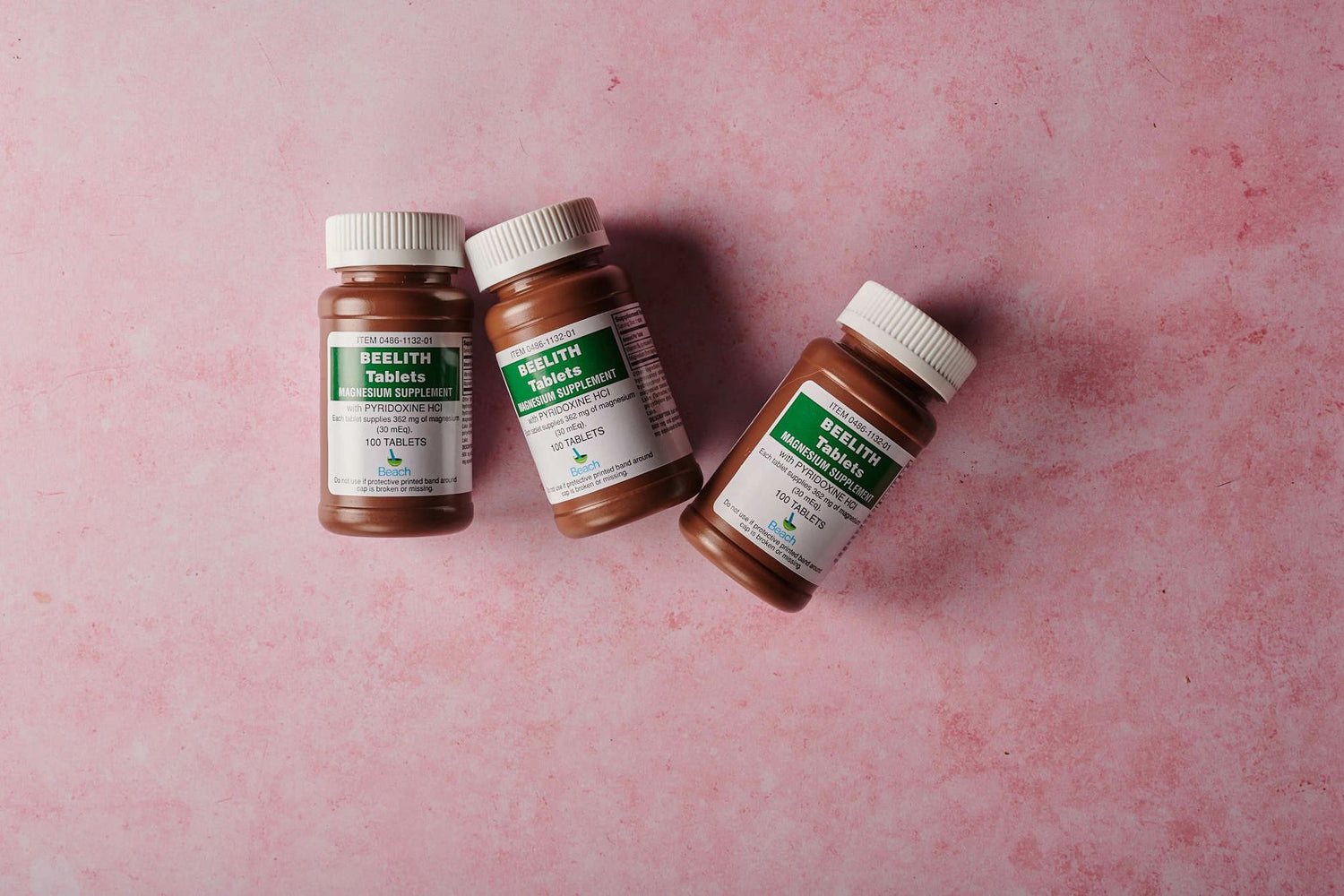
Most comparisons of magnesium L-threonate vs glycinate list the same bullet points — "good for brain" versus "good for sleep" — without explaining the mechanism that actually matters: blood-brain barrier penetration. This comparison, reviewed by our editorial team, is built around that single differentiator and what it means for your specific health goal in 2026, whether that's sharper focus, better sleep, or calmer nerves.
Both forms have high bioavailability and are well-tolerated, which already puts them ahead of cheaper options like magnesium oxide (roughly 4% absorption rate [1]). But they are not interchangeable. Understanding where each form delivers its magnesium — and what the carrier molecule itself contributes — is the key to choosing correctly.
What Is Magnesium L-Threonate?
Magnesium L-threonate (often sold as Magtein®) is a patented form of magnesium bound to L-threonic acid, a metabolite of vitamin C. It was developed at MIT specifically to increase magnesium concentrations in the brain.
A 2010 study in Neuron demonstrated that magnesium L-threonate was the only magnesium compound tested that significantly elevated cerebrospinal fluid (CSF) magnesium levels in animal models [2]. The result: measurable improvements in synaptic density and both short-term and long-term memory.
Human research followed. A 2016 randomised, double-blind, placebo-controlled trial in the Journal of Alzheimer's Disease found that older adults taking magnesium L-threonate for 12 weeks showed cognitive improvements on validated tests — with the researchers describing the magnitude as comparable to turning back cognitive decline by approximately 9 years [3].
The catch most articles don't mention: the typical dose of 1,500–2,000mg of magnesium L-threonate delivers only ~144mg of elemental magnesium. That's less than half the NHS recommended daily intake. This low elemental yield is the trade-off for targeted brain delivery.
What Is Magnesium Glycinate?
Magnesium glycinate is magnesium chelated (bonded) to glycine, the smallest amino acid. This chelated bond gives it one of the highest absorption rates among magnesium forms for raising overall serum magnesium — with notably fewer gastrointestinal side effects than citrate or oxide.
Glycine itself is more than just a carrier. It acts as an inhibitory neurotransmitter in the central nervous system and a co-agonist at NMDA receptors [4]. A 2006 study in Sleep and Biological Rhythms showed that 3g of glycine before bed improved subjective sleep quality and reduced next-day sleepiness [5].
This dual-action mechanism — systemic magnesium plus calming glycine — is what makes magnesium glycinate particularly effective for relaxation and sleep support.* The standard dosage is 200–400mg of elemental magnesium daily.
One line worth remembering: Glycinate is the workhorse; threonate is the specialist. Most people need the workhorse first.

Bioavailability, Absorption Rate, and Dosage Comparison
Bioavailability — the percentage of a supplement that reaches your bloodstream — is high for both forms. But the more useful question is: bioavailability to where?
| Factor | Magnesium L-Threonate | Magnesium Glycinate |
|---|---|---|
| Primary target | Brain (cerebrospinal fluid) | Systemic (serum / whole body) |
| Blood-brain barrier penetration | Strong evidence of CNS uptake [2] | Limited direct CNS penetration |
| Elemental magnesium per typical dose | ~144mg (from 2,000mg compound) | ~200–400mg (dose-dependent) |
| Absorption rate vs magnesium oxide | Significantly higher (specific % not published) | ~80% higher bioavailability [1] |
| Carrier molecule benefit | L-threonic acid (vitamin C metabolite) | Glycine (inhibitory neurotransmitter) |
| Best suited for | Cognitive function, memory, focus* | Sleep, relaxation, muscle recovery, general deficiency* |
| GI tolerance | Excellent | Excellent |
| Human clinical trials | Limited but promising [3] | Moderate (primarily via glycine research [5]) |
| Typical UK price (monthly) | £25–£45 | £10–£25 |
| Time to noticeable effect | 4–12 weeks for cognitive outcomes | 1–2 weeks for sleep/relaxation |
Here's the dosage comparison detail that matters: if you're trying to correct a systemic magnesium deficiency — which the UK National Diet and Nutrition Survey suggests affects a significant portion of adults — glycinate is the more practical choice.
Threonate's low elemental yield means it's better understood as a targeted cognitive tool, not a general magnesium supplement. Taking it alone won't meaningfully raise your whole-body magnesium status.
What Users Actually Report
Aggregated reviews across major UK and US supplement platforms reveal consistent patterns.
Magnesium L-Threonate User Sentiment
- Positive: Improved mental clarity, sharper recall, and better focus during demanding work.* Many describe a "subtle but real" cognitive lift after 4–6 weeks.
- Negative: Price is the top complaint — threonate costs 2–3× more per month. Some users abandon it before the 4-week minimum research timeframe.
Magnesium Glycinate User Sentiment
- Positive: Sleep improvements are the most cited benefit — users report falling asleep faster and waking less during the night.* Reduced evening anxiety and muscle tension are also common.*
- Negative: A small number report morning grogginess at doses above 400mg elemental. Minimal effect on cognition specifically — which aligns with the research.

When a Single Mineral Isn't Enough: The Stack Question
Neither magnesium form works in isolation for the complex, multi-system goals people actually have. Cognitive performance, sleep quality, and stress resilience each involve multiple neurotransmitter pathways — and a single mineral, however well-targeted, can only influence one or two of them.
This isn't a sales pitch; it's a limitation baked into the pharmacology. That said, if you're considering a broader approach, here's how dedicated formulations compare to standalone magnesium.
For Sleep and Relaxation
Noobru Lucid includes magnesium glycinate alongside calming ingredients that target different pathways: 1,000mg Ashwagandha (which may help support healthy cortisol levels*), 200mg Passion Flower, 250mg Lavender, 150mg L-Theanine, and Montmorency Cherry.
The drinkable sachet format also bypasses the dissolution step required by compressed tablets, which may improve the absorption rate of active ingredients.
For Cognitive Function and Focus
If brain fog, memory, or mental clarity is your primary concern, Noobru Advantage takes a multi-pathway approach: 200mg L-Theanine (which may promote alpha brain wave activity associated with calm alertness*), 50mg Phosphatidylserine (which may support neuronal membrane integrity*), 200mcg Huperzine A (which may help support acetylcholine levels*), and 120mg Ashwagandha.
This addresses similar cognitive territory as magnesium L-threonate but through complementary mechanisms — cholinergic support, stress adaptation, and neuroprotection rather than magnesium elevation alone.
| Goal | Standalone Magnesium | Noobru Alternative | Key Difference |
|---|---|---|---|
| Better sleep* | Magnesium glycinate (1 pathway) | Noobru Lucid | Glycinate + 8 additional ingredients across multiple sleep pathways |
| Sharper focus* | Magnesium L-threonate (1 pathway) | Noobru Advantage | Multi-pathway cognitive support vs single mineral |
| Stress resilience* | Either form (modest benefit) | Noobru Pro | Rhodiola Rosea + Ashwagandha adaptogen combination |
Key Takeaways
- The core difference is delivery target, not quality. Threonate crosses the blood-brain barrier to raise brain magnesium; glycinate raises systemic serum magnesium efficiently. Both have excellent bioavailability.
- Choose threonate for cognition. If your main concern is memory, learning, or mental sharpness, threonate has unique evidence — but budget 6–12 weeks and £25–£45/month.*
- Choose glycinate for sleep and general health. It's more versatile, more affordable (£10–£25/month), delivers more elemental magnesium per dose, and the glycine carrier has its own calming benefits.*
- Neither form corrects the full picture alone. Cognitive performance and sleep quality involve multiple neurotransmitter systems. A well-formulated stack may help address more pathways simultaneously than any single mineral.*
- Dosage comparison matters. Threonate delivers ~144mg elemental magnesium per dose vs glycinate's 200–400mg. If you're deficient, glycinate does more systemic heavy lifting.
 Noobru Lucid sachet being dissolved in a glass of water, placed alongside magnesium-rich foods including almonds, dark leafy greens, and pumpkin seeds" width="800" height="500" loading="lazy">
Frequently Asked Questions
Can I take magnesium L-threonate and glycinate together?
Yes. Many people stack both — threonate in the morning for cognitive support and glycinate in the evening for relaxation and sleep.* Keep total elemental magnesium within 400mg daily unless directed otherwise by a healthcare professional.
Which magnesium is best for sleep in 2026?
Magnesium glycinate is generally the stronger choice. The glycine component has independent sleep-promoting properties [5], and glycinate causes fewer digestive issues at bedtime doses compared to citrate.*
Is magnesium L-threonate worth the higher price?
If cognitive support is your primary goal, the evidence for threonate's unique ability to raise brain magnesium is compelling [2].* For sleep or general deficiency, glycinate offers better value.
How long does magnesium L-threonate take to work?
Most studies measured outcomes at 6–12 weeks. Some users report subjective focus improvements within 2–3 weeks, but meaningful changes likely require at least a month of daily use.
What is the bioavailability difference between magnesium L-threonate and glycinate?
Both have high bioavailability compared to magnesium oxide, but they deliver magnesium to different compartments. Glycinate efficiently raises serum magnesium systemically. Threonate is uniquely effective at raising cerebrospinal fluid magnesium — the fluid surrounding the brain.
References
- Firoz M, Graber M. "Bioavailability of US commercial magnesium preparations." Magnesium Research. 2001;14(4):257-62. PubMed
- Bhatt DL, et al. "Enhancement of learning and memory by elevating brain magnesium." Neuron. 2010;65(2):165-177. PubMed
- Liu G, et al. "Efficacy and Safety of MMFS-01, a Synapse Density Enhancer, for Treating Cognitive Impairment in Older Adults." Journal of Alzheimer's Disease. 2016;49(4):971-990. PubMed
- Burgos CF, et al. "Structure and pharmacologic modulation of inhibitory glycine receptors." Molecular Pharmacology. 2016;90(3):318-325. PubMed
- Inagawa K, et al. "Subjective effects of glycine ingestion before bedtime on sleep quality." Sleep and Biological Rhythms. 2006;4(1):75-77. PubMed
Whether you're after better sleep or sharper focus, Noobru's drinkable nootropic formulas deliver magnesium glycinate and synergistic cognitive ingredients in transparent doses — no proprietary blends, no guesswork.
*These statements have not been evaluated by the Food and Drug Administration or MHRA. This product is not intended to diagnose, treat, cure, or prevent any disease. Always consult your healthcare provider before starting any supplement regimen.



Leave a comment
All comments are moderated before being published.
This site is protected by hCaptcha and the hCaptcha Privacy Policy and Terms of Service apply.