




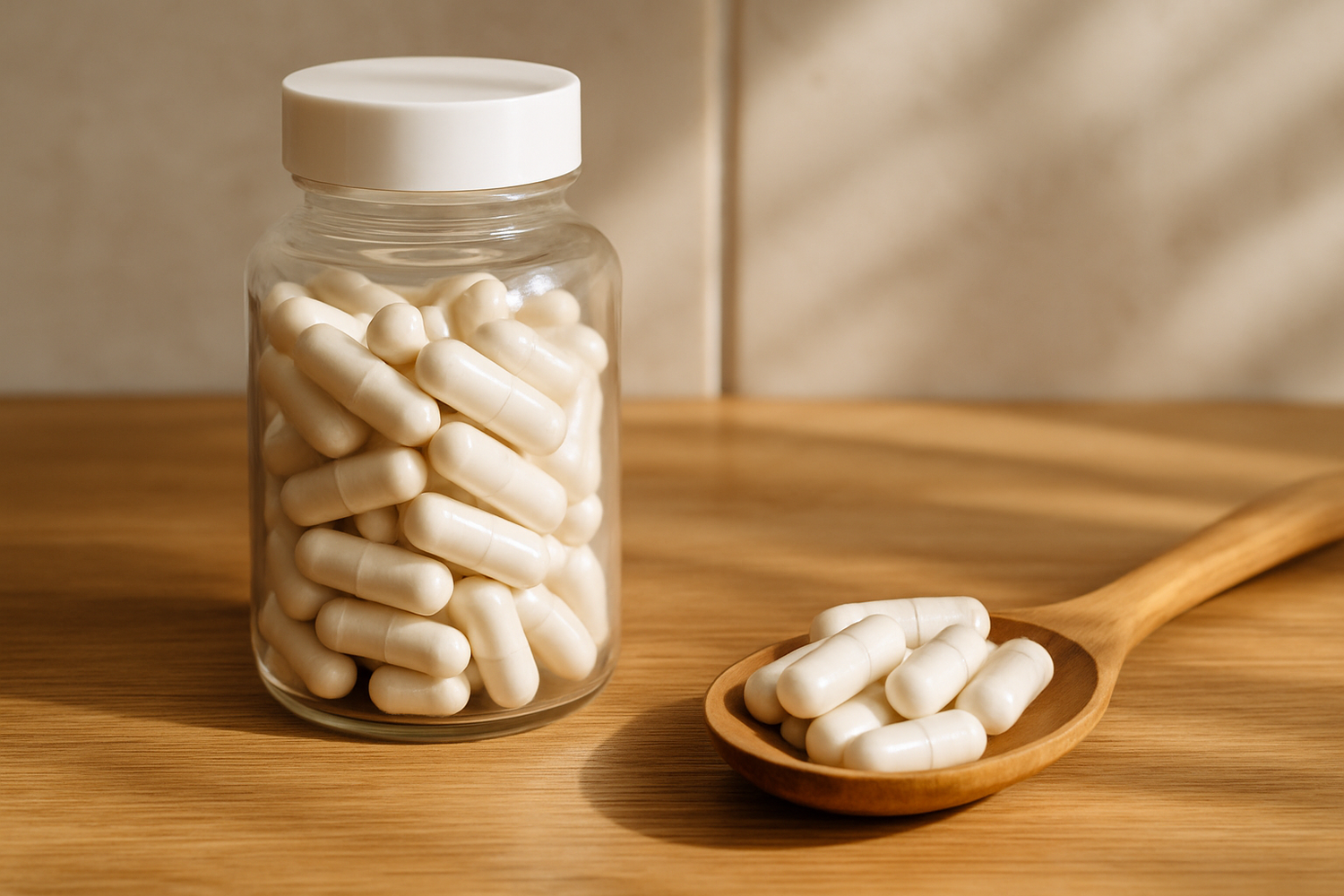
In brief: Magnesium glycinate is a two-for-one compound — it delivers highly absorbable magnesium and glycine, an amino acid with its own independent calming effects on the nervous system.* That dual mechanism makes it the standout form for sleep and stress support in 2026.* This guide compares five major magnesium forms head-to-head on absorption, explains why supplement labels are routinely misleading, and shows how to pair glycinate with complementary ingredients for maximum effect.
Magnesium glycinate is one of the most bioavailable forms of magnesium available in 2026 — but most articles about it bury the one fact that actually matters: the amino acid it's bonded to (glycine) has its own independent calming effects on the nervous system. That dual mechanism — superior mineral absorption plus glycine's action on calming brain pathways — is what separates magnesium glycinate from every other form on the shelf. In this guide, our editorial team breaks down how different magnesium forms compare on absorption, why dosage labels are routinely misleading, and how to choose the right form for your specific goals.
What Is Magnesium Glycinate, Exactly?
Magnesium glycinate is a "chelated" form of magnesium — simply meaning the mineral is bonded to glycine, the smallest amino acid in the body. Think of glycine as a protective escort: it wraps around the magnesium ion and shields it as it travels through your digestive system, preventing the irritation and poor absorption that plague simpler forms like oxide.
This escort system matters because magnesium on its own is a difficult mineral for the body to absorb. In its basic form, it competes with other minerals for uptake and can irritate the gut lining. With glycine attached, the magnesium is carried through the intestinal wall via amino acid transport pathways rather than mineral channels. The result? Higher absorption and far fewer stomach issues.
Here's the part most guides miss: once inside the body, the glycine separates from the magnesium and becomes available as a standalone nutrient. Glycine is a calming neurotransmitter that helps lower core body temperature — one of the body's strongest natural signals for sleep onset.* So when you take magnesium glycinate, you're effectively getting two complementary ingredients in a single compound. That's not a marketing spin; it's basic chemistry.
Magnesium Glycinate vs Other Forms: A Head-to-Head Comparison
Not all magnesium supplements are equal, and the differences are larger than most people realise. The table below compares five common forms on the metrics that actually affect your results.
| Form | Elemental Magnesium | Bioavailability | Primary Use Case | GI Tolerance |
|---|---|---|---|---|
| Magnesium Glycinate | ~14% | High | Sleep, relaxation, stress* | Excellent |
| Magnesium Citrate | ~16% | Moderate–High | General use, digestion | Moderate (laxative risk) |
| Magnesium Oxide | ~60% | Low (~4%) | Antacid, laxative | Poor |
| Magnesium L-Threonate | ~8% | Moderate | Cognitive function* | Good |
| Magnesium Taurate | ~9% | Moderate–High | Heart health support* | Good |
Notice the paradox with magnesium oxide: it contains the highest percentage of elemental magnesium (~60%), but research from the National Institutes of Health indicates that only about 4% of it is actually absorbed. So a 500 mg magnesium oxide capsule delivers roughly 12 mg of usable magnesium — potentially less than what you'd get from a much smaller dose of glycinate.
The takeaway is simple: looking at milligrams on a label without understanding the form is essentially meaningless. A trustworthy product will always state both the total compound weight and the elemental magnesium it provides.
How Magnesium Glycinate Supports Sleep
Magnesium glycinate may help you fall asleep faster and sleep more deeply — not through sedation, but by supporting two biological processes your body already uses to wind down.*
Pathway 1: GABA activation
Magnesium is a cofactor for over 300 reactions in the body, including activating GABA receptors. GABA is the brain's main "off switch" — it quietens overactive neurons and is essential for the transition from wakefulness to sleep. When magnesium levels run low, GABA signalling becomes less efficient, which can show up as difficulty falling asleep, restlessness, and nighttime waking.*
Pathway 2: Glycine's cooling effect
A 2015 study in Neuropsychopharmacology (Bannai et al.) found that glycine taken before bed reduced core body temperature and shortened the time it took participants to fall asleep. This is significant because a drop in core temperature is one of the body's strongest natural cues for sleep initiation.
These two pathways working in tandem is what gives magnesium glycinate its edge over other forms for nighttime use.* Magnesium citrate, for instance, provides the GABA benefit but lacks glycine's cooling pathway — and carries a laxative risk that can itself disrupt sleep. As one sleep researcher put it: "The best sleep supplement is the one that doesn't wake you up to visit the bathroom."
Magnesium Glycinate for Stress and Mood
Beyond sleep, magnesium glycinate may help support a calmer stress response and steadier mood throughout the day.*
Magnesium plays a direct role in your body's stress-response system (known clinically as the HPA axis — the signalling chain between your brain and adrenal glands). NHS guidance acknowledges magnesium's role in normal nervous system function, and research suggests that low magnesium levels are associated with elevated cortisol — the body's primary stress hormone.*
This creates a vicious cycle that's especially relevant for UK adults:
- Stress depletes magnesium — your body burns through its stores faster when you're under pressure.
- Low magnesium amplifies stress — without adequate levels, your stress-response system overreacts.
- UK diets often fall short — the National Diet and Nutrition Survey indicates a significant portion of UK adults don't meet the recommended daily intake of 300 mg (women) to 400 mg (men).
Glycine contributes here too. It's been studied for its role in supporting neurotransmitter balance and moderating inflammatory markers — both of which become disrupted during chronic stress.* While more large-scale trials are needed, the mechanistic data is persuasive enough that magnesium glycinate has become a preferred form among practitioners focused on stress management.*
How to Choose the Right Dosage
The UK Nutrient Reference Value (NRV) for magnesium is 375 mg per day. However, the amounts used in clinical research typically range from 200–400 mg of elemental magnesium — a distinction that trips up almost everyone.
Practical dosage guide
- General maintenance: 200–300 mg elemental magnesium from glycinate, taken with food or before bed.
- Sleep support: 200–400 mg elemental magnesium, taken 30–60 minutes before bed.* At this dose range, you'll also get roughly 1–2 g of glycine — close to the amounts used in glycine sleep studies.
- Stress support: 200–400 mg elemental magnesium, either split across two daily doses or taken in the evening.*
How to read a supplement label without being misled
Here's where most people get caught out: a product listing "magnesium glycinate 1000 mg" may contain only ~140 mg of actual (elemental) magnesium. The remaining 860 mg is the glycine carrier. Always look for the elemental magnesium figure — reputable brands state it clearly. If a label only lists the total compound weight, you can estimate the elemental content at roughly 14% of the stated dose.
Who should check with their GP first
Magnesium glycinate is one of the gentlest forms available, but it's not suitable for everyone without guidance:
- Kidney impairment: Your kidneys regulate magnesium excretion. Impaired function can cause levels to build up.
- Certain medications: Magnesium can affect absorption of antibiotics, bisphosphonates, and some heart medications.
- Pregnancy and breastfeeding: While magnesium needs increase during pregnancy, dosage should be guided by your midwife or GP.
Pairing Magnesium Glycinate With Other Calming Ingredients
One of the most effective strategies isn't taking more magnesium — it's combining a moderate dose with other evidence-based compounds that target different relaxation pathways. Researchers sometimes call this a "multi-target" approach; in the supplement world, it's known as stacking.
- L-Theanine (100–200 mg): Found naturally in green tea, L-theanine promotes alpha brain waves — the brain state associated with relaxed focus. A 2008 study found it improved attention accuracy, and it may help smooth the transition from alertness to restfulness when taken in the evening.*
- Ashwagandha (300–1000 mg): A well-studied adaptogen. A 2012 trial published in the Indian Journal of Psychological Medicine (Chandrasekhar et al.) found it significantly reduced stress scores and cortisol levels versus placebo.* Pairing it with magnesium glycinate addresses both mineral shortfall and stress-hormone overactivity.*
- Rhodiola Rosea (200–600 mg): Research points to reduced mental fatigue and improved short-term memory.* Typically an energising adaptogen, rhodiola's stress-balancing effects complement magnesium's calming pathway — best used during the day rather than before bed.*
- Taurine: A calming amino acid that supports neuronal health and has been shown to help regulate stress-hormone signalling.*
The logic behind stacking is straightforward: lower individual doses of several complementary ingredients can sometimes deliver broader results than a high dose of any single compound — with fewer side effects.
Noobru Lucid sachets alongside herbal tea, a sleep journal, and lavender on a wooden bedside table" width="800" height="450" loading="lazy" />How Noobru Uses Magnesium Glycinate
Noobru Lucid includes magnesium glycinate as one pillar of a broader sleep and relaxation formula. Rather than relying on magnesium alone, it pairs glycinate with 1000 mg of ashwagandha, 200 mg of passion flower, 250 mg of lavender, 150 mg of L-theanine, and 30 mg of chamomile — each targeting a slightly different calming mechanism.*
For those whose magnesium concerns lean more toward daytime stress and mental sharpness than nighttime sleep, Noobru Pro takes a different approach — combining rhodiola rosea (200 mg) with phosphatidylserine and acetyl L-carnitine for sustained energy and stress resilience without drowsiness.*
Both products come in a drinkable sachet format. From a practical standpoint, liquids don't need to disintegrate in the stomach the way tablets do, which may speed up the absorption process — something worth considering if you've ever swallowed a large magnesium tablet and wondered whether it actually dissolved.
Frequently Asked Questions
What is magnesium glycinate best used for?
Magnesium glycinate is best known for supporting sleep quality, relaxation, and stress relief.* The glycine amino acid it's bound to has its own calming properties, making this form particularly suited for evening use and anxiety-related tension.*
How much magnesium glycinate should I take daily?
Most studies use between 200–400 mg of elemental magnesium per day. Because glycinate is highly bioavailable, you may need a lower dose compared to less absorbable forms like oxide. Always check labels for elemental magnesium content, not total compound weight.
Can I take magnesium glycinate every day?
Yes, magnesium glycinate is generally well-tolerated for daily use and is less likely to cause digestive discomfort than citrate or oxide. However, you should consult your healthcare provider before starting any new supplement, especially if you take medications or have kidney concerns.
What is the difference between magnesium glycinate and magnesium citrate?
Magnesium glycinate is bound to glycine and is prized for its calming effects and gentle digestion profile. Magnesium citrate is bound to citric acid, absorbs reasonably well, but is more likely to have a laxative effect — making it better suited for digestive regularity than relaxation.
Does magnesium glycinate help with anxiety?
Preliminary research suggests magnesium glycinate may help reduce symptoms of anxiety by supporting GABA activity and lowering stress hormone levels.* The glycine component also acts on calming neurotransmitter pathways, which may contribute to a feeling of relaxation.* Always consult your healthcare provider for anxiety-related concerns.
Key Takeaways
- Form matters more than dose. Magnesium glycinate's bonded structure means higher absorption and fewer stomach issues than oxide or citrate.
- It's a two-for-one compound. You get magnesium's GABA-supporting benefits and glycine's independent cooling and calming effects.*
- Labels are routinely misleading. A "1000 mg magnesium glycinate" capsule contains only ~140 mg of actual magnesium. Always look for the elemental figure.
- Glycine gives it a sleep-specific edge. The temperature-lowering effect of glycine makes glycinate the best form for evening use and stress-related tension.*
- Stacking amplifies results. Magnesium glycinate pairs well with L-theanine, ashwagandha, and other calming compounds for a multi-pathway approach.*
- Many UK adults fall short. Government survey data suggests a significant portion of adults don't meet the 375 mg NRV, making supplementation worth discussing with your GP.
Ready to put the dual mechanism to work? Noobru Lucid combines magnesium glycinate with ashwagandha, L-theanine, and other evidence-based calming ingredients in a drinkable formula designed to support restful sleep without next-day grogginess.*
Try Noobru risk-free with our 90-day money-back guarantee →References
- Bannai M, Kawai N. New therapeutic strategy for amino acid medicine: glycine improves the quality of sleep. Journal of Pharmacological Sciences. 2012. PubMed
- Chandrasekhar K, Kapoor J, Anishetty S. A prospective, randomised double-blind, placebo-controlled study of safety and efficacy of a high-concentration full-spectrum extract of ashwagandha root. Indian Journal of Psychological Medicine. 2012. PubMed
- Effects of chronic L-theanine administration in patients with major depressive disorder: an open-label study. Acta Neuropsychiatrica. PubMed
- Stress management and the role of Rhodiola rosea: a review. National Library of Medicine. PubMed
- Taurine Regulation of Neuroendocrine Function. Advances in Experimental Medicine and Biology. PubMed
- National Institutes of Health — Office of Dietary Supplements. Magnesium Fact Sheet for Health Professionals. NIH ODS
- Public Health England. National Diet and Nutrition Survey. GOV.UK
*These statements have not been evaluated by the Food and Drug Administration or MHRA. This product is not intended to diagnose, treat, cure, or prevent any disease. Always consult your healthcare provider before starting any supplement regimen.
This article is for informational purposes only and does not constitute medical advice. If you are experiencing persistent sleep difficulties, anxiety, or other health concerns, please speak with your GP or a qualified healthcare professional. Noobru supplements are intended to complement, not replace, a balanced diet and healthy lifestyle.



Leave a comment
All comments are moderated before being published.
This site is protected by hCaptcha and the hCaptcha Privacy Policy and Terms of Service apply.