




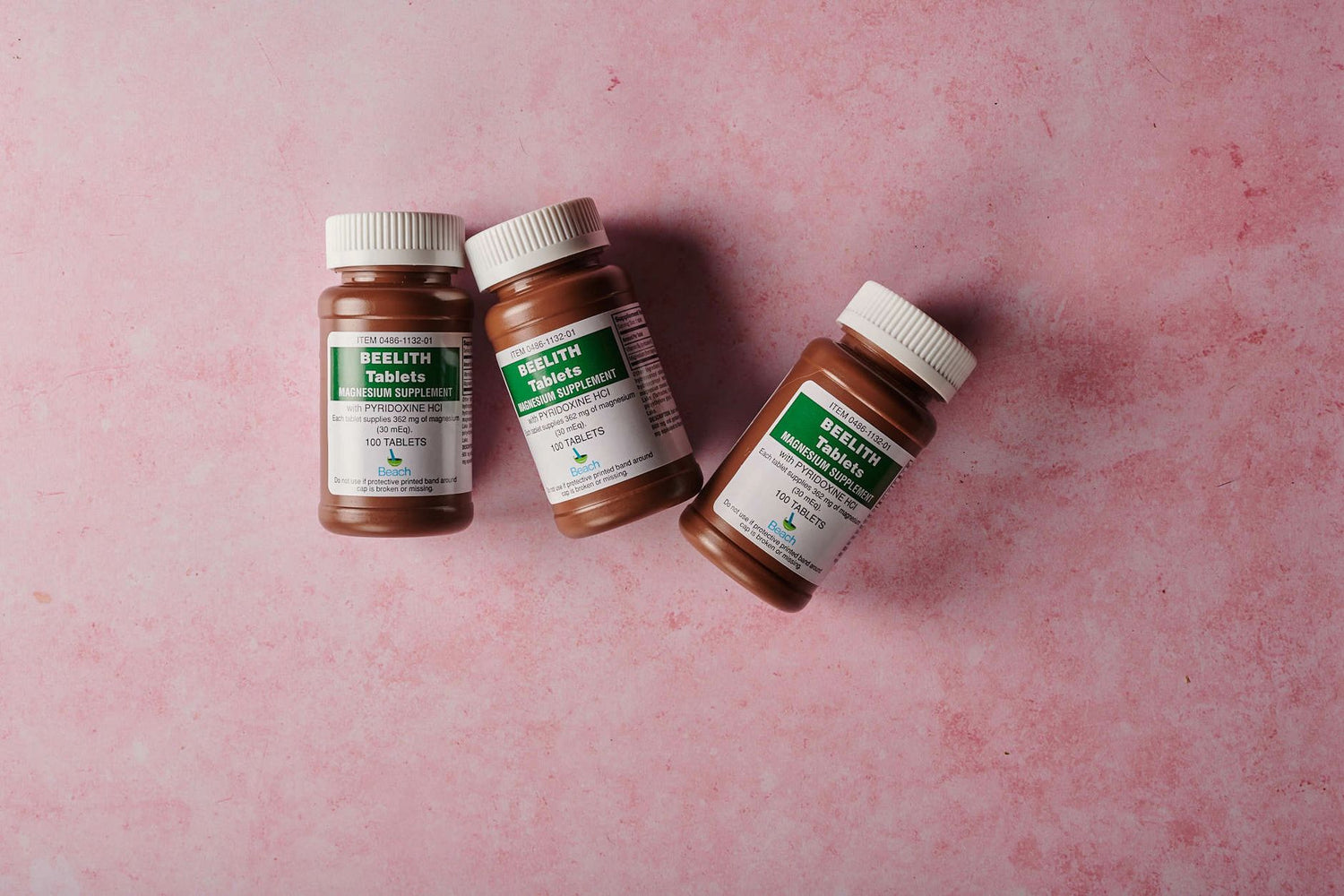
The magnesium L-threonate vs glycinate debate comes down to a question most comparison articles skip: are you optimising for your brain or your body? Rather than listing generic pros and cons, this guide maps both magnesium forms against three specific performance criteria — brain bioavailability (how much actually reaches your neurons), onset speed for sleep, and sustained cognitive benefit — drawing on clinical trials published since 2010. If you're choosing a magnesium supplement for focus, sleep, or both in 2026, this framework will point you to the right form for your goal.
Here's the short answer: magnesium L-threonate is purpose-built for cognitive function — it's the only form clinically shown to raise magnesium levels in the brain. Magnesium glycinate is the better all-rounder for sleep quality and whole-body relaxation, thanks to its glycine backbone. Many people benefit from using both.
What Is Magnesium L-Threonate? (Plain-Language Explainer)
Magnesium L-threonate is a compound where magnesium is bonded to threonic acid, a substance derived from vitamin C. What makes it unique among magnesium forms is its ability to cross the blood-brain barrier — the protective membrane that prevents most supplements from directly reaching brain tissue.
A landmark 2010 study published in Neuron by researchers at MIT found that magnesium L-threonate increased cerebrospinal fluid magnesium levels in animal models more effectively than magnesium chloride or citrate. In plain terms, this means more magnesium actually gets to the synapses — the junctions between brain cells where learning and memory happen. A follow-up human trial published in 2016 in the Journal of Alzheimer's Disease showed that older adults taking magnesium L-threonate (as Magtein™) for 12 weeks demonstrated improvements in executive function and working memory compared to placebo.
Bioavailability is a term that simply means "how much of what you swallow actually gets absorbed and used by the body." For magnesium L-threonate, bioavailability to the brain specifically is the key advantage — not overall gut absorption.
What Is Magnesium Glycinate?
Magnesium glycinate is magnesium bonded to glycine, a small amino acid that acts as a calming neurotransmitter in its own right. This makes glycinate a dual-action supplement: the magnesium supports over 300 enzymatic processes in the body, while the glycine component may independently help with relaxation and sleep quality.*
A 2012 study in the Journal of Pharmacological Sciences found that oral glycine (3 g before bed) improved subjective sleep quality and reduced next-day fatigue in participants with mild sleep difficulties. When delivered as magnesium glycinate, you get glycine's calming effects alongside magnesium's muscle-relaxing and nervous-system-supporting properties.*
Glycinate is also one of the gentlest magnesium forms on the stomach. Unlike magnesium oxide or citrate, it's far less likely to cause the loose stools that make some people abandon magnesium supplements altogether.
Magnesium L-Threonate vs Glycinate: Head-to-Head on Three Criteria
Below is our comparison across the three criteria that matter most for cognitive and sleep performance. "Plasma concentration" refers to how much of the supplement appears in your bloodstream after ingestion — a standard way researchers measure absorption.
| Criterion | Magnesium L-Threonate | Magnesium Glycinate |
|---|---|---|
| Brain bioavailability | High — clinically shown to raise brain magnesium levels [1] | Moderate — well absorbed systemically but not specifically shown to concentrate in brain tissue |
| Sleep onset support | Indirect — may help via reduced cognitive hyperactivity* | Strong — glycine has direct evidence for improving sleep quality [3] |
| Sustained cognitive benefit | Strong — 12-week trial showed improved executive function and working memory [2] | Modest — general magnesium repletion supports cognition, but no brain-specific clinical trials |
Brain Bioavailability: L-Threonate Wins
If your primary goal is getting more magnesium into your brain, L-threonate is the clear winner. No other commercially available magnesium form has published human data showing it raises brain magnesium levels specifically. Glycinate is well absorbed through the gut — meaning it enters your bloodstream efficiently — but it distributes broadly rather than concentrating in neural tissue.
Sleep Quality: Glycinate Wins
For sleep, glycinate has the edge. The glycine amino acid component promotes inhibitory signalling in the central nervous system (essentially, it helps quiet the brain's activity) and has been shown to reduce core body temperature — a physiological trigger for sleep onset. L-threonate may help indirectly if racing thoughts or cognitive overactivity are keeping you awake, but it's not a dedicated sleep aid.*
Long-Term Focus and Memory: L-Threonate Wins
The 2016 human trial on magnesium L-threonate is the strongest piece of evidence here: 12 weeks of supplementation improved composite scores on tests measuring executive function (planning, decision-making) and working memory (holding information in mind while using it). No equivalent brain-specific trial exists for glycinate.
When to Use Each Form (Decision Framework)
Choosing between magnesium L-threonate vs glycinate doesn't have to be either/or. Here's a practical guide:
- Choose L-threonate if: Your main concern is focus, memory, or age-related cognitive decline. Take it in the morning or early afternoon.
- Choose glycinate if: You want better sleep quality, muscle relaxation, or a gentler option for correcting a general magnesium deficiency. Take it 30–60 minutes before bed.
- Stack both if: You want cognitive support during the day and better sleep at night. Use L-threonate in the morning and glycinate in the evening. Keep total elemental magnesium within 300–400 mg daily unless your GP advises otherwise.
Where Magnesium Fits in a Broader Nootropic Stack
Magnesium — in either form — works well alongside other evidence-based cognitive ingredients. For instance, L-theanine may help promote calm alertness by boosting alpha brain waves,* while phosphatidylserine supports cell membrane integrity in the brain.* B vitamins play essential roles in neurotransmitter synthesis and energy metabolism.
If you're looking for a drinkable formula that combines several of these cognitive-support ingredients — including phosphatidylserine, L-theanine, and a full B-vitamin complex — Noobru Advantage provides 14 active compounds designed to cover both rapid onset and sustained mental clarity.* Adding a magnesium L-threonate supplement alongside a multi-ingredient nootropic like this can further support brain magnesium levels for long-term cognitive health.*
How Other Magnesium Types Compare
L-threonate and glycinate aren't the only options. Here's how the broader magnesium landscape stacks up for brain and sleep goals:
- Magnesium citrate: Good gut absorption, but often causes loose stools. No brain-specific data. Better suited for constipation relief.
- Magnesium oxide: Very poorly absorbed (around 4% bioavailability). Not recommended for cognitive or sleep purposes.
- Magnesium taurate: Taurine has its own calming properties, making this a reasonable alternative to glycinate for relaxation. Less studied overall.
- Magnesium malate: Sometimes recommended for energy and muscle recovery. No cognitive-specific evidence.
For focus and memory, L-threonate remains the standout. For sleep, glycinate and taurate are the strongest contenders.
Key Takeaways: Magnesium L-Threonate vs Glycinate
- L-threonate is the only magnesium form with clinical evidence for raising brain magnesium levels — making it the best choice if your priority is focus, working memory, or long-term cognitive support.*
- Glycinate is the superior choice for sleep and relaxation, thanks to glycine's role as a calming neurotransmitter and its evidence for improving sleep quality.*
- Stacking both forms — L-threonate in the morning, glycinate at night — is a practical strategy for people who want daytime cognitive sharpness and better evening wind-down, provided total intake stays within safe limits.
- Neither form replaces a multi-ingredient nootropic stack for acute focus. Magnesium supports foundational brain health; ingredients like L-theanine and phosphatidylserine address faster-acting cognitive pathways.
Frequently Asked Questions
Is magnesium L-threonate or glycinate better for sleep?
Magnesium glycinate is generally the better choice for sleep. Its calming glycine component has independent evidence for improving sleep quality, and glycinate is well-tolerated at the higher doses typically needed for relaxation. L-threonate is optimised for brain penetration and cognitive support rather than sedation.*
Can you take magnesium L-threonate and glycinate together?
Yes, many people stack both forms — L-threonate in the morning for cognitive support and glycinate in the evening for sleep. Keep your combined elemental magnesium intake within recommended daily limits (around 300–400 mg for most adults) and consult your GP if you take other medications.
How long does magnesium L-threonate take to work for focus?
Acute effects on mental clarity may appear within 1–2 hours of ingestion, but the cognitive benefits most studied in clinical trials — such as improved working memory — typically emerge after 6–12 weeks of consistent daily use [2].
Does magnesium L-threonate cross the blood-brain barrier?
Yes. The blood-brain barrier is a protective layer that stops most substances in your blood from entering brain tissue. L-threonate was specifically developed to get past this barrier. A 2010 study in Neuron demonstrated that magnesium L-threonate raised cerebrospinal fluid magnesium concentrations more effectively than other tested magnesium forms, including magnesium chloride and citrate [1].
What is the best magnesium for anxiety?
Magnesium glycinate is most commonly recommended for anxiety due to glycine's role as an inhibitory neurotransmitter — it helps calm excessive nervous system activity. However, if anxiety is accompanied by brain fog or poor concentration, L-threonate may address the cognitive symptoms more directly. Neither form replaces professional treatment for clinical anxiety.
Build Your Cognitive Support Routine
Magnesium is one piece of the cognitive puzzle. If you're ready to combine foundational brain support with faster-acting nootropic ingredients, explore the full Noobru product range. Noobru Advantage pairs 14 active ingredients — including L-theanine, phosphatidylserine, and a complete B-vitamin complex — into a single drinkable sachet for sustained mental clarity throughout your day.* For more evidence-based guides on cognitive nutrition, visit the Noobru blog.
References
- Bhatt DL, Bhatt SS, et al. Enhancement of learning and memory by elevating brain magnesium. Neuron. 2010;65(2):165-177. PubMed
- Liu G, Weinger JG, Lu ZL, Xue F, Sadeghpour S. Efficacy and safety of MMFS-01, a synapse density enhancer, for treating cognitive impairment in older adults. Journal of Alzheimer's Disease. 2016;49(4):971-990. PubMed
- Bannai M, Kawai N. New therapeutic strategy for amino acid medicine: glycine improves the quality of sleep. Journal of Pharmacological Sciences. 2012;118(2):145-148. PubMed
- Owen GN, Parnell H, De Bruin EA, Rycroft JA. The combined effects of L-theanine and caffeine on cognitive performance and mood. Nutritional Neuroscience. 2008;11(4):193-198. PubMed
- Glade MJ, Smith K. Phosphatidylserine and the human brain. Nutrition. 2015;31(6):781-786. PubMed
*These statements have not been evaluated by the Food and Drug Administration or MHRA. This product is not intended to diagnose, treat, cure, or prevent any disease. Always consult your healthcare provider before starting any supplement regimen. This article is produced by Noobru's editorial team and may reference Noobru products.



Leave a comment
All comments are moderated before being published.
This site is protected by hCaptcha and the hCaptcha Privacy Policy and Terms of Service apply.