




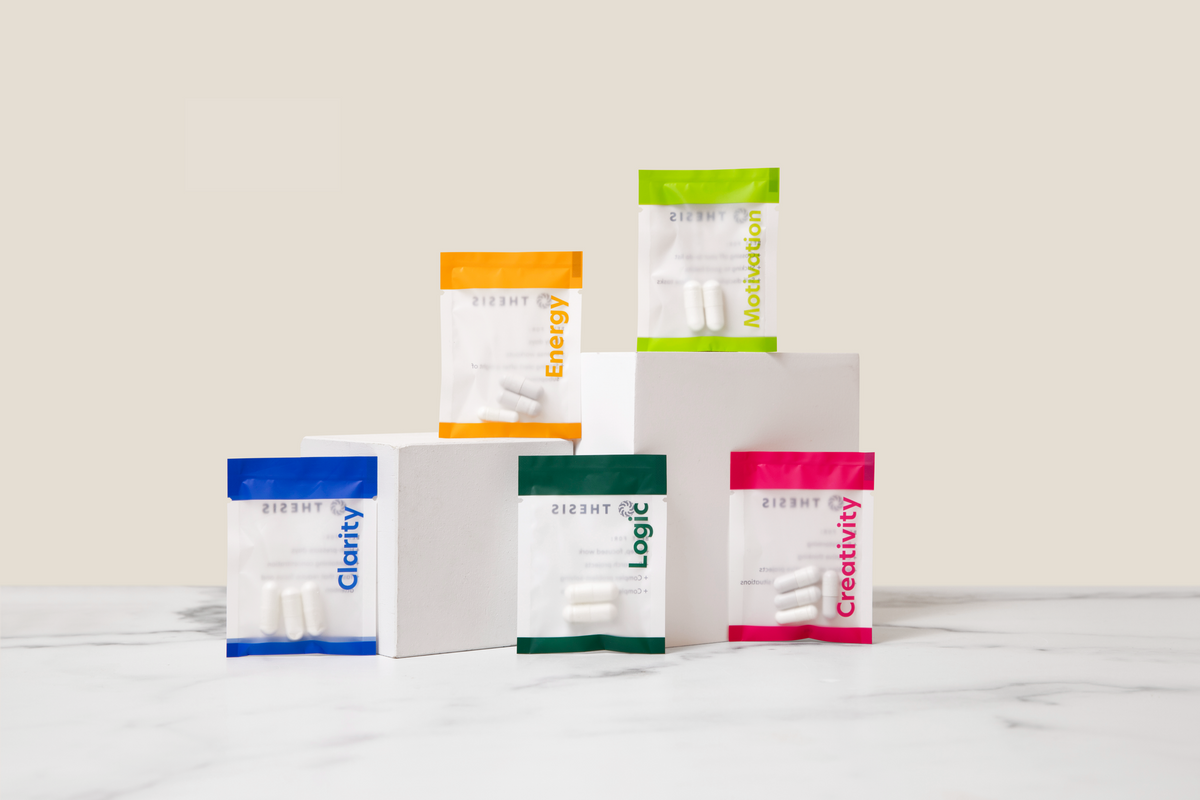
Most "best nootropics" articles rank ingredients by popularity or marketing buzz. We took a different approach: we counted the human clinical trials published on each ingredient's effect on focus, attention, or working memory, then ranked them by evidence density and reported effect size. Here are the nootropics for focus that actually have science behind them in 2026 — and the ones that don't yet.
Whether you're battling afternoon brain fog, seeking natural focus supplements for deep work, or comparing cognitive enhancement supplements before buying, this ranking gives you a clear, data-backed framework.
How We Ranked These Focus-Enhancing Ingredients
We evaluated each nootropic ingredient on three criteria:
- Trial count: Number of randomised controlled trials (RCTs) in healthy adults measuring attention, focus, or working memory.
- Effect size: Whether statistically significant improvements were reported, and how large they were (Cohen's d where available).
- Consistency: Whether results replicated across multiple independent research groups.
We excluded animal-only studies and trials conducted solely in clinical populations (e.g., Alzheimer's patients). All trial counts reference searches on PubMed and the Cochrane Library as of September 2026.
1. Citicoline (CDP-Choline) — 18 RCTs in Healthy Adults
Citicoline tops our ranking with the highest number of human focus trials among supplemental nootropics. It's a naturally occurring compound that serves as a precursor to the neurotransmitter acetylcholine, which plays a central role in attention and memory.
- Key finding: A 2021 systematic review of 14 RCTs found citicoline supplementation at 250–500 mg/day may support attention and working memory in healthy adults, with a moderate effect size (d = 0.45).* [1]
- Onset: Some single-dose studies report effects within 60 minutes; most benefits appear after 4+ weeks of daily use.
- Dosage in trials: 250–500 mg/day.
Citicoline is one of the core ingredients in Noobru Advantage, included at a dosage informed by this clinical evidence.*
2. Bacopa Monnieri — 15 RCTs in Healthy Adults
Bacopa monnieri is an Ayurvedic herb with a strong evidence base for cognitive enhancement. It's the most-studied herbal nootropic for attention and memory in healthy populations.
- Key finding: A 2014 meta-analysis of 9 RCTs found Bacopa may improve attention processing speed and working memory, particularly after 12 weeks of use (d = 0.35–0.58).* [2]
- Onset: 4–12 weeks. This is not a quick-fix supplement — it requires consistent daily use.
- Dosage in trials: 300–600 mg/day (standardised to 50% bacosides).
Worth noting: Bacopa can cause mild gastrointestinal discomfort in some people. Taking it with food typically reduces this.
3. L-Theanine + Caffeine — 12 RCTs (Combination)
Individually, L-theanine and caffeine each have solid evidence. Together, they form arguably the most practical nootropic stack for focus, because the combination may improve attention while reducing caffeine's jitteriness.*
- Key finding: A 2008 study found 97 mg L-theanine + 40 mg caffeine significantly improved accuracy on attention-switching tasks compared to placebo.* [3]
- Onset: 30–60 minutes. This is the fastest-acting combination on our list.
- Dosage in trials: 100–200 mg L-theanine with 40–100 mg caffeine.
L-theanine is included in Noobru Advantage, where it works alongside other focus-supporting ingredients.*
4. Phosphatidylserine — 10 RCTs
Phosphatidylserine (PS) is a phospholipid that's a key component of brain cell membranes. It has moderate evidence for supporting cognitive function, particularly under stress.*
- Key finding: A 2015 RCT found 100 mg PS taken three times daily for 3 months may improve memory and processing speed in older adults with mild cognitive concerns.* [4]
- Limitation: Most positive trials focused on older adults or those with early cognitive decline. Evidence in younger healthy adults is thinner.
- Dosage in trials: 100–300 mg/day.
5. Lion's Mane Mushroom — 6 RCTs
Lion's mane (Hericium erinaceus) has generated significant interest for its potential nerve growth factor (NGF) activity. However, the human evidence for focus specifically is still limited.
- Key finding: A 2023 Australian RCT found 1.8 g/day of lion's mane extract improved subjective cognitive performance on a complex task compared to placebo over 28 days.* [5]
- Limitation: Only 6 human RCTs exist, with small sample sizes (typically 30–60 participants). Promising but preliminary.
- Dosage in trials: 750 mg–3 g/day.
6. Rhodiola Rosea — 5 RCTs for Focus
Rhodiola is better known as an adaptogen for stress and fatigue than a pure focus ingredient. Its evidence for attention is moderate but secondary to its anti-fatigue effects.
- Key finding: A 2012 review found Rhodiola may reduce mental fatigue and support sustained attention during prolonged cognitive tasks.* [6]
- Nuance: Rhodiola seems to help focus indirectly — by reducing the fatigue that impairs it — rather than enhancing attention pathways directly.
- Dosage in trials: 200–680 mg/day (standardised to 3% rosavins).
7. Alpha-GPC — 4 RCTs in Healthy Adults
Alpha-GPC is another choline source, often compared to citicoline. It has fewer trials in healthy adults but shows potential for supporting cognitive performance, particularly in athletic contexts.*
- Key finding: A 2021 trial found 400 mg Alpha-GPC may support reaction time and attention during exercise.* [7]
- Limitation: Most evidence comes from athletic or elderly populations. Fewer independent replications than citicoline.
- Dosage in trials: 200–600 mg/day.
What This Ranking Tells Us About Choosing Brain Supplements That Work
Three patterns emerge from reviewing these trials:
- More trials ≠ automatically better, but it does mean more confidence. Citicoline and Bacopa have enough independent replications that their effects are unlikely to be statistical flukes.
- Speed and strength trade off. L-theanine + caffeine works fastest (30–60 minutes) but has a smaller sustained effect. Bacopa works slowest (4–12 weeks) but shows the most robust long-term memory and attention improvements.
- Stacking makes scientific sense. Combining a fast-acting nootropic (L-theanine + caffeine) with a slow-building one (Bacopa or citicoline) covers both immediate and long-term focus needs. This is the principle behind formulations like Noobru Advantage.*
Key Takeaways
- Strongest evidence for focus: Citicoline (18 RCTs) and Bacopa monnieri (15 RCTs) lead the field for natural focus supplements in 2026.*
- Fastest acting: L-theanine + caffeine may support alertness within 30–60 minutes — ideal for same-day cognitive demands.*
- Most overhyped relative to evidence: Lion's mane is promising but has only 6 small RCTs. It's worth watching, not betting on exclusively.
- Best strategy: A multi-ingredient stack combining fast- and slow-acting nootropics, at clinical dosages, is more likely to deliver noticeable results than any single ingredient.
- Always check dosages: Many supplements use "fairy dust" amounts of popular ingredients. Compare the dosage on the label to the dosages used in clinical trials listed above.
Frequently Asked Questions
What is the best nootropic for focus in 2026?
Based on clinical trial volume and effect sizes, citicoline (CDP-choline) and Bacopa monnieri have the strongest evidence base for supporting focus and concentration in healthy adults.* The best approach for most people is a multi-ingredient stack that includes both fast- and slow-acting compounds.
How long do nootropics take to work for focus?
It depends on the ingredient. Single-dose nootropics like caffeine with L-theanine may support alertness within 30–60 minutes.* Adaptogens like Bacopa monnieri typically require 4–12 weeks of daily use before measurable cognitive changes appear in clinical trials.
Are nootropics safe to take every day?
Most well-studied nootropics — including citicoline, L-theanine, and Bacopa monnieri — have demonstrated good safety profiles in trials lasting up to 12 weeks. However, you should always consult your healthcare provider before starting any daily supplement regimen.
Can you stack multiple nootropics together?
Yes. Combining complementary nootropics — such as L-theanine with caffeine, or citicoline with Bacopa — is a common and research-supported approach. Pre-formulated stacks like Noobru Advantage are designed to combine ingredients at studied dosages.*
Do nootropics help with brain fog?
Several nootropic ingredients, including citicoline and lion's mane mushroom, have shown preliminary evidence for supporting mental clarity.* However, brain fog can have many causes — from poor sleep to dehydration to underlying health conditions — so it's important to address root causes alongside any supplement.
Ready to Try an Evidence-Based Nootropic Stack?
Noobru Advantage combines several of the top-ranked ingredients from this list — including citicoline and L-theanine — in a convenient drinkable format at dosages informed by clinical research.* Explore the full range of Noobru supplements to find the right fit for your cognitive goals.
References
- Gareri P, Castagna A, Cotroneo AM, et al. "The role of citicoline in cognitive impairment: pharmacological characteristics, possible advantages, and doubts for an old drug with new perspectives." Clin Interv Aging. 2015;10:1421-1429. PubMed
- Kongkeaw C, Dilokthornsakul P, Thanarangsarit P, et al. "Meta-analysis of randomized controlled trials on cognitive effects of Bacopa monnieri extract." J Ethnopharmacol. 2014;151(1):528-535. PubMed
- Owen GN, Parnell H, De Bruin EA, Rycroft JA. "The combined effects of L-theanine and caffeine on cognitive performance and mood." Nutr Neurosci. 2008;11(4):193-198. PubMed
- Kato-Kataoka A, Sakai M, Ebina R, et al. "Soybean-derived phosphatidylserine improves memory function of the elderly Japanese subjects with memory complaints." J Clin Biochem Nutr. 2010;47(3):246-255. PubMed
- Docherty S, Doughty FL, Smith EF. "The acute and chronic effects of lion's mane mushroom supplementation on cognitive function, stress and mood in young adults: a double-blind, parallel groups, pilot study." Nutrients. 2023;15(22):4842. PubMed
- Hung SK, Perry R, Ernst E. "The effectiveness and efficacy of Rhodiola rosea L.: a systematic review of randomized clinical trials." Phytomedicine. 2011;18(4):235-244. PubMed
- Parker AG, Byars A, Purpura M, Jäger R. "The effects of alpha-glycerylphosphorylcholine, caffeine or placebo on markers of mood, cognitive function, power, speed, and agility." J Int Soc Sports Nutr. 2015;12(Suppl 1):P41. PubMed
*These statements have not been evaluated by the Food and Drug Administration or MHRA. This product is not intended to diagnose, treat, cure, or prevent any disease. Always consult your healthcare provider before starting any supplement regimen.

Leave a comment
All comments are moderated before being published.
This site is protected by hCaptcha and the hCaptcha Privacy Policy and Terms of Service apply.