




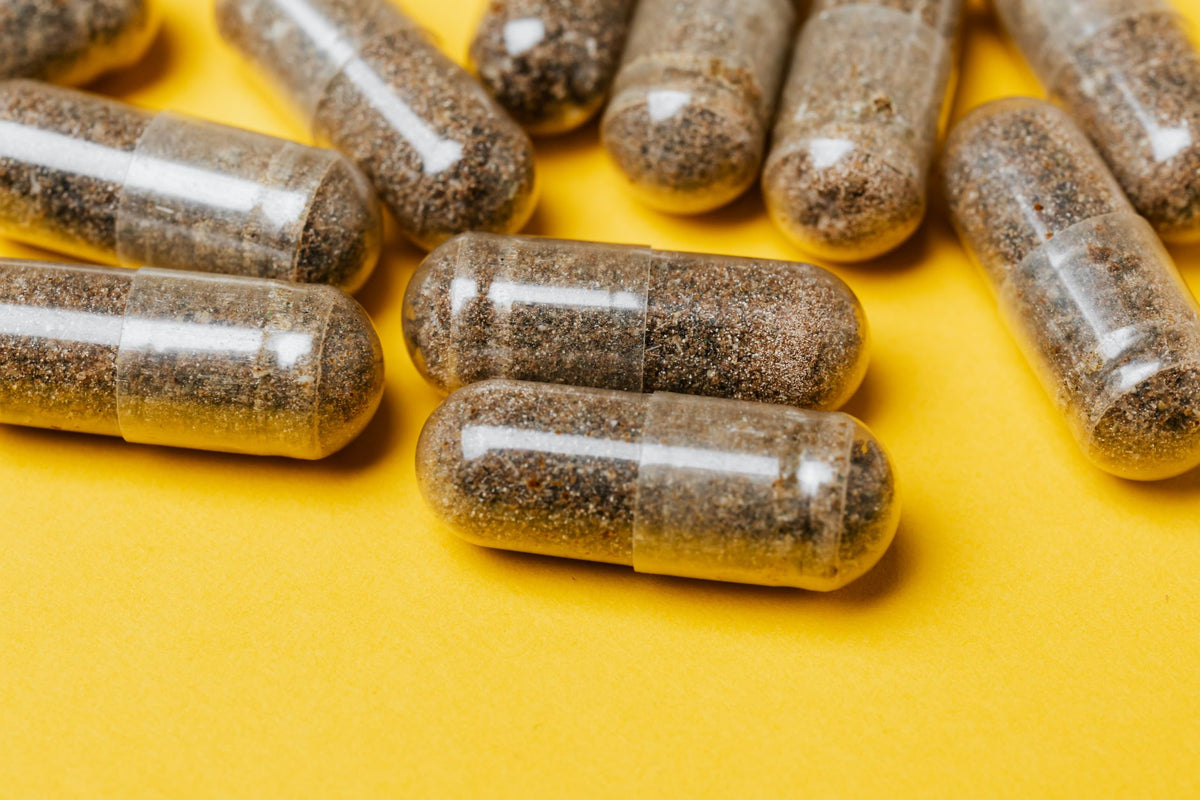
Most psyllium husk capsule buyers never do the dosage arithmetic — and the result is a supplement that delivers a fraction of the fibre intake used in clinical research. The average UK adult already falls roughly 12 g short of the NHS-recommended 30 g of daily fibre, and a typical "two capsules twice daily" label adds just 2 g. That is gap-narrowing on paper, but it is nowhere near the 5–10 g doses that actually move the needle in published trials.
This article works backwards from those trial doses to show you exactly how many psyllium husk capsules you need, what they cost versus powder, where the soluble fibre evidence is genuinely strong, and where other ingredients may serve you better in 2026.
What Is Psyllium Husk and Why Is It So Effective as Soluble Fibre?
Psyllium husk is the outer coating of seeds from the Plantago ovata plant, native to India. It is composed almost entirely of soluble fibre — specifically a gel-forming compound called arabinoxylan (a type of complex carbohydrate that human enzymes cannot break down). When psyllium meets water, it absorbs 10–20 times its own weight and forms a thick, viscous gel.
That gel is the engine behind every studied benefit. In the lower gut, it adds bulk and softens stool, which may help support regular bowel movements and broader gut health*. In the upper digestive tract, the gel slows gastric emptying and delays the absorption of glucose and cholesterol from food — effects documented in dozens of randomised controlled trials over four decades [1].
Psyllium husk capsules contain this same ground husk material in a gelatin or cellulose shell. The soluble fibre inside is identical across formats. What differs — dramatically — is the practical dose you can achieve per serving.
Capsules vs. Powder vs. Whole Husk: The Real Trade-Offs
Convenience is the reason people buy capsules. Cost and dose are the reasons many switch to powder within a month. Here is how the three formats compare on the criteria that actually determine whether you will stick with psyllium long enough for it to work.
| Factor | Capsules (500 mg each) | Powder (mixed into liquid) | Whole Husk (stirred into food/drink) |
|---|---|---|---|
| Typical serving size | 2–6 capsules (1–3 g) | 5–10 g (1–2 tablespoons) | 5–10 g (1–2 tablespoons) |
| Capsules needed for 5–10 g clinical dose | 10–20 capsules/day | N/A | N/A |
| Ease of use | Convenient, no taste | Moderate — must mix quickly and drink fast | Moderate — gritty texture |
| Gel formation speed | Slower (capsule shell must dissolve first) | Fast (gel forms within minutes) | Fast |
| Risk of choking/obstruction | Low if taken with adequate water | Very low | Low |
| Cost per effective dose (UK average, 2026) | £0.30–£0.60/day | £0.10–£0.25/day | £0.08–£0.20/day |
The capsule paradox is this: the format that removes every friction from taking psyllium also makes it three times more expensive and requires swallowing a small handful of pills before every meal. If you travel frequently or genuinely cannot tolerate textures in your drinks, capsules earn their premium. Otherwise, powder delivers the same soluble fibre at a fraction of the price.
What the Evidence Actually Supports: Psyllium Benefits by Strength of Data
Psyllium husk is one of the most-studied fibre supplements available. Not all its purported benefits carry equal weight. Here they are ranked from strongest to weakest evidence, with doses and references.
1. Digestive Regularity and Gut Health — Strong Evidence
A 2020 systematic review in Alimentary Pharmacology & Therapeutics found that psyllium significantly improved stool frequency and consistency in adults with chronic constipation [1]. Unusually for a fibre supplement, psyllium has a bidirectional effect: it may help soften hard stools in constipation while firming loose stools in mild diarrhoea*. This dual action makes it more versatile than insoluble fibre sources like wheat bran.
For gut health more broadly, the gel-forming action of psyllium creates a moist, bulky stool that may reduce straining and transit time. Some researchers have also noted mild prebiotic effects — partial fermentation by gut bacteria that produces short-chain fatty acids — though the evidence is less robust than for chicory inulin or fructo-oligosaccharides [2].
2. Cholesterol Management — Strong Evidence
A meta-analysis of 28 clinical trials found that psyllium supplementation at 3–13 g per day reduced LDL cholesterol by an average of 7% [3]. The mechanism is well understood: the soluble fibre gel binds bile acids in the intestine, forcing the liver to pull cholesterol from the bloodstream to synthesise replacements. The European Food Safety Authority (EFSA) has authorised a health claim for psyllium's role in cholesterol maintenance — one of the few fibre supplements to receive that recognition.
3. Blood-Sugar Regulation — Moderate Evidence
Several controlled trials demonstrate that psyllium taken before or with meals may help reduce post-meal blood-glucose spikes by physically slowing carbohydrate absorption*. A 2018 review in the European Journal of Clinical Nutrition noted consistent reductions in fasting blood glucose and HbA1c in participants with type 2 diabetes who supplemented with 5.1 g or more of psyllium daily [4]. However, the magnitude of effect varies considerably between studies, and psyllium alone is unlikely to replace dietary or pharmaceutical interventions for glycaemic control.
4. Appetite and Satiety — Weak Evidence
Because psyllium's gel expands in the stomach, some studies report increased feelings of fullness*. But evidence for psyllium as a standalone weight-management tool is mixed at best. A useful supporting strategy — not a primary one.
Dosage: The Arithmetic Most Buyers Skip
The clinical fibre intake threshold for meaningful effects sits between 5 g and 10 g of psyllium husk per day, divided across two or three doses taken with meals. In capsule terms, that is 10–20 standard 500 mg capsules daily — a number that should be printed in bold on every label but rarely is.
If you are new to psyllium, start low. Begin with 2–3 g per day (4–6 capsules) and increase gradually over one to two weeks. Rapid increases in fibre intake are the most common cause of bloating and abdominal discomfort. Every dose should be taken with at least 250 ml of water to ensure the husk hydrates fully and moves through the digestive tract without obstruction.
Timing matters for specific goals. For blood-sugar benefits, take psyllium 15–30 minutes before a meal — this gives the gel time to form before carbohydrates arrive. For general digestive regularity, timing is less critical; consistency matters more than clock precision.
Side Effects and Precautions
Psyllium husk is generally well tolerated, but capsule users face specific risks that powder users do not.
- Bloating and gas: Common in the first few days as the gut microbiome adapts to increased fibre intake. Starting at a low dose and building up over one to two weeks dramatically reduces this.
- Oesophageal obstruction: Psyllium capsules must always be taken with a full glass of water. A capsule that lodges in the throat without adequate fluid can swell and cause blockage — rare, but more relevant for capsule users than powder users.
- Medication interactions: Psyllium can reduce the absorption of certain medications, including lithium, carbamazepine (an anti-seizure drug), digoxin (a heart medication), and warfarin (a blood thinner). Take psyllium at least one to two hours before or after any prescription medication.
- Allergic reactions: Documented primarily in occupational settings, psyllium allergies can cause hives, difficulty breathing, or swelling. If you experience any of these, stop immediately and seek medical advice.
If you have a history of bowel obstruction, difficulty swallowing, or oesophageal narrowing, consult your GP before using psyllium husk capsules.
Where Psyllium Stops and Other Approaches Start
Psyllium husk capsules solve one problem exceptionally well: they increase soluble fibre intake. But fibre is a mechanical tool — it physically slows digestion and adds bulk. It does not address the enzymatic, metabolic, or stress-related factors that also shape digestive and metabolic health.
If your goals extend into blood-sugar management after carbohydrate-heavy meals, ingredients that work through different mechanisms can complement a fibre supplement rather than replace it. For example, chromium picolinate and alpha lipoic acid have been studied for their roles in supporting insulin sensitivity and glucose metabolism — pathways that psyllium does not touch*. Noobru Cheat combines both of these with white kidney bean extract (400 mg) and mulberry leaf extract (290 mg) in a drinkable format that sidesteps the capsule-fatigue problem entirely.
The honest position: psyllium and metabolic-support ingredients are not competitors. They work at different points in the digestive process. Someone serious about closing a fibre gap and supporting healthy blood-sugar response might reasonably use both.
Who Benefits Most From Psyllium Husk Capsules?
Capsules are best suited for people who meet two criteria: a clear fibre gap in their diet, and a strong preference for a tasteless, portable format — even knowing it means swallowing multiple capsules daily.
You are most likely to benefit if you:
- Eat fewer than 20 g of fibre per day (common in the UK — the National Diet and Nutrition Survey consistently shows the average fibre intake sits around 18 g)
- Experience irregular bowel movements or mild constipation
- Want additional support for maintaining healthy cholesterol levels alongside dietary changes*
- Travel frequently and need a format that does not require mixing
Psyllium husk capsules are not a substitute for a fibre-rich diet. Whole grains, legumes, vegetables, and fruit provide additional micronutrients, prebiotic compounds, and insoluble fibre that isolated psyllium does not. The supplement bridges the gap — it is not the bridge itself.
Frequently Asked Questions
How many psyllium husk capsules should I take per day?
Most clinical trials use 5–10 g of psyllium husk daily, which translates to 10–20 standard 500 mg capsules spread across two to three doses. Always start with 4–6 capsules per day and increase gradually over one to two weeks to minimise bloating.
Can I take psyllium husk capsules with other supplements?
Psyllium can slow the absorption of certain medications and supplements if taken simultaneously. Space psyllium capsules at least one to two hours away from other supplements or prescription medicines, and consult your GP if you take regular medication.
Are psyllium husk capsules better than powder?
Neither format is inherently superior — the soluble fibre is identical. Capsules offer convenience and avoid the gritty texture, but you need to swallow 10–20 capsules to match the dose a single tablespoon of powder provides. Choose whichever format you will take consistently.
How long does it take for psyllium husk capsules to work?
Most people notice changes in bowel regularity within 24–72 hours of consistent use. Benefits for cholesterol and blood-sugar management typically require four to eight weeks of daily supplementation at adequate doses.
Do psyllium husk capsules help with gut health?
Psyllium husk is a soluble fibre that adds bulk and moisture to stool, which may help support regular bowel movements and overall gut health*. Some research also suggests partial fermentation by gut bacteria produces short-chain fatty acids, though the prebiotic evidence is less robust than for inulin or FOS.
Do psyllium husk capsules have side effects?
Common side effects include bloating, gas, and stomach cramps — particularly when starting at a high dose or not drinking enough water. These usually resolve within a few days. Rarely, psyllium can cause allergic reactions or oesophageal obstruction if swallowed without sufficient fluid.
Key Takeaways
- Do the dosage arithmetic first. Clinical doses of psyllium husk require 10–20 standard capsules per day — far more than most labels suggest. If that capsule count feels unsustainable, powder is the same soluble fibre at a third of the cost.
- The strongest evidence supports psyllium for digestive regularity, gut health, and LDL cholesterol reduction. Blood-sugar benefits are real but more modest*.
- Always take psyllium with at least 250 ml of water per dose. This is not optional — it is a safety requirement to prevent oesophageal obstruction.
- Fibre is mechanical; metabolism is biochemical. For blood-sugar support beyond what fibre alone provides, ingredients like chromium picolinate and alpha lipoic acid target different pathways and can be used alongside psyllium*.
- No supplement replaces a varied, fibre-rich diet. Psyllium husk capsules bridge the fibre gap — they do not fill it on their own.
Looking for metabolic support that complements your fibre routine? Noobru Cheat combines chromium picolinate, alpha lipoic acid, white kidney bean extract, and mulberry leaf extract in a single drinkable sachet — no capsule fatigue, full-dose transparency, no proprietary blends.
Explore the full Noobru range with our 90-day money-back guarantee →References
- McRorie JW Jr, McKeown NM. Understanding the physics of functional fibers in the gastrointestinal tract: an evidence-based approach to resolving enduring misconceptions about insoluble and soluble fiber. J Acad Nutr Diet. 2017;117(2):251-264. PubMed
- Jalanka J, Major G, Murray K, et al. The effect of psyllium husk on intestinal microbiota in constipated patients and healthy controls. Int J Mol Sci. 2019;20(2):433. PubMed
- Jovanovski E, Yashpal S, Engkilde K, et al. Effect of psyllium (Plantago ovata) fiber on LDL cholesterol and alternative lipid targets: a systematic review and meta-analysis of randomized controlled trials. Am J Clin Nutr. 2018;108(5):922-932. PubMed
- Gibb RD, McRorie JW Jr, Russell DA, et al. Psyllium fiber improves glycemic control proportional to loss of glycemic control: a meta-analysis of data in euglycemic subjects, patients at risk of type 2 diabetes mellitus, and patients being treated for type 2 diabetes mellitus. Am J Clin Nutr. 2015;102(6):1604-1614. PubMed
- NHS. How to get more fibre into your diet. nhs.uk
- Public Health England. National Diet and Nutrition Survey: results from years 9 to 11 (2016 to 2019). gov.uk
Reviewed by the Noobru Editorial Team. Last updated: 13 October 2026.
*These statements have not been evaluated by the Food and Drug Administration or MHRA. This product is not intended to diagnose, treat, cure, or prevent any disease. Always consult your healthcare provider before starting any supplement regimen.


Leave a comment
All comments are moderated before being published.
This site is protected by hCaptcha and the hCaptcha Privacy Policy and Terms of Service apply.