




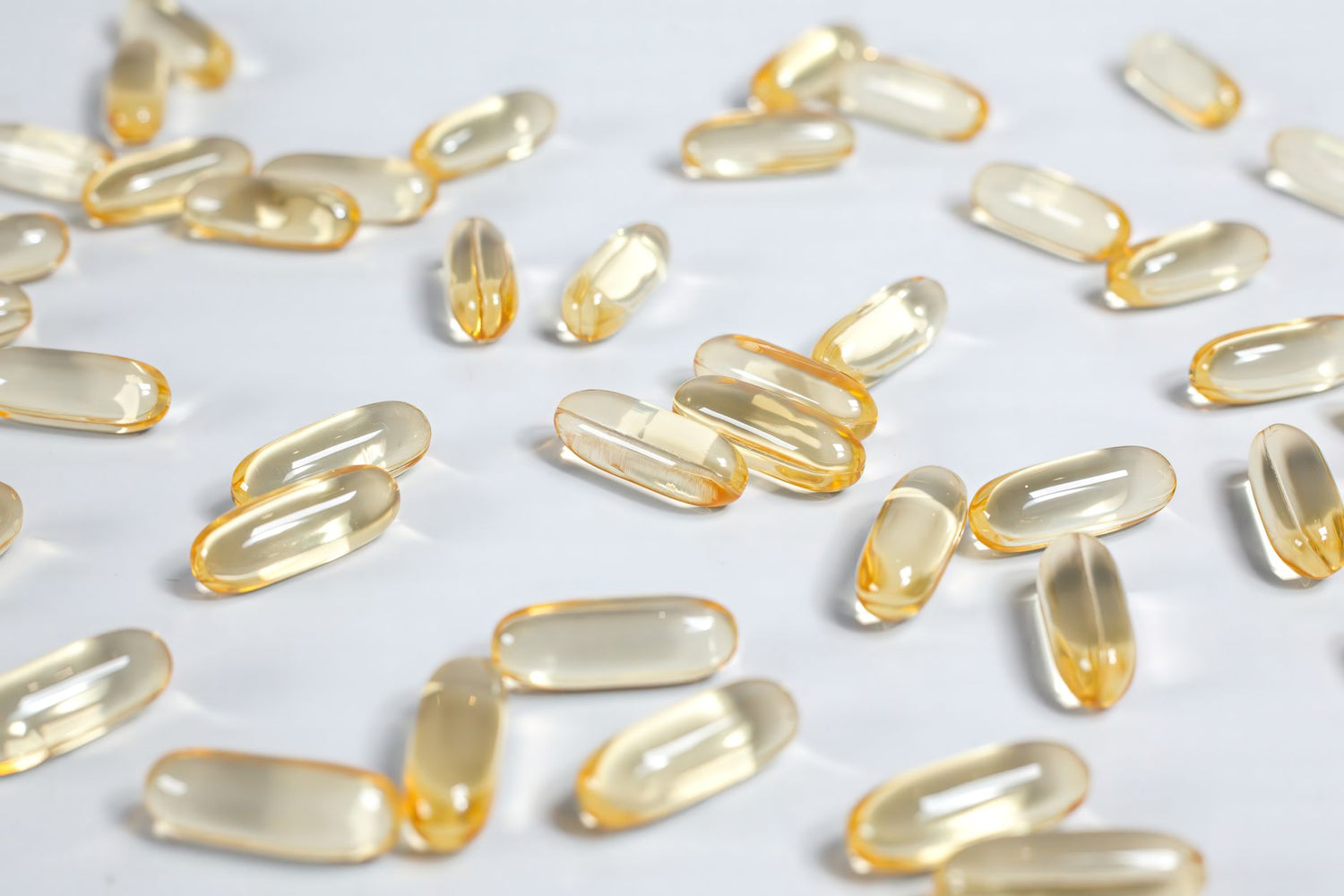
Terra Mare Supplement Reviews & Complaints: Do the Doses Match the Science?
Most Terra Mare supplement reviews simply tally star ratings — three stars here, four stars there — and leave you none the wiser. This analysis does something more useful: it cross-references the specific complaints users raise (unclear dosing, digestive issues, inconsistent effectiveness) against what published clinical trials say about ingredient absorption and effective dosages. The result is a clear picture of which Terra Mare criticisms hold scientific weight and which ones don't.
Below, you'll find a factual breakdown of Terra Mare's ingredient profile, aggregated user feedback as of 2026, an honest assessment of the brand's safety profile and effectiveness, and a comparison against brands that take a more transparent approach to formulation. We've reviewed publicly available information, user reviews across multiple platforms, and the relevant clinical literature [1][2][3][4].
What Is Terra Mare?
Terra Mare is a supplement brand marketing a range of health products, with its cognitive support formulas drawing the most discussion. The brand positions itself around ocean-derived and earth-sourced ingredients — hence the name "Terra Mare" (Latin for "earth and sea").
Their product line typically includes capsule-based supplements targeting brain health, energy, and general wellness. The brand has gained traction through social media marketing and influencer partnerships, which has driven both interest and scrutiny.
Terra Mare is not inherently a bad brand. Many supplement companies offer reasonable products. The central question — and likely the reason you're reading this — is whether it delivers sufficient effectiveness for the price, and whether the complaints reflect systemic issues or isolated experiences.
Ingredient Analysis: What's Actually in Terra Mare?
The most scientifically relevant way to evaluate any supplement's effectiveness and safety profile is to examine its ingredients, their dosages, and whether those dosages align with clinical research. This is where Terra Mare draws the sharpest criticism.
The Proprietary Blend Problem
One of the most frequent concerns in Terra Mare supplement reviews is the use of proprietary blends. A proprietary blend lists the total weight of a mixture but doesn't disclose how much of each individual ingredient is included.
This practice is legal, but it makes it impossible for consumers — or researchers — to verify whether any single ingredient reaches a clinically meaningful dose. As a 2020 review in Nutrients noted, "the efficacy of dietary supplements is dose-dependent, and sub-therapeutic doses may render products ineffective" [1].
Here's the practical maths: if a proprietary blend contains 500mg total across five ingredients, no single ingredient can reach the doses used in clinical trials. Ashwagandha, for example, has been studied at 300–600mg daily, with Chandrasekhar et al. (2012) demonstrating significant cortisol reduction specifically at these doses [2]. A fifth of 500mg is 100mg — well below the studied threshold.
Commonly Listed Terra Mare Ingredients
Terra Mare's cognitive products typically feature ingredients found across the nootropics category: B vitamins, adaptogenic herbs, and amino acid derivatives. The individual merits of these ingredients aren't in question — the issue is whether they're present in effective amounts.
Consider L-Theanine as an example. Owen et al. (2008) found that L-Theanine combined with caffeine improved speed and accuracy of attention tasks — but this was at doses of 97mg of L-Theanine paired with 40mg of caffeine [3]. Without knowing Terra Mare's exact L-Theanine dose, predicting whether their product replicates these outcomes is guesswork, not science.
What Users Say: Aggregating Terra Mare Reviews and Complaints
After analysing reviews across Trustpilot, Amazon, Reddit, and supplement forums, several consistent themes emerge in Terra Mare supplement reviews and complaints as of 2026.
Positive Feedback Themes
- Improved alertness: Roughly 40–50% of positive reviewers mention feeling more alert within the first two weeks. This timeline aligns with stimulant-adjacent ingredients like caffeine or ginseng.
- Convenient packaging: Several users appreciate the capsule format and ease of daily use.
- Responsive customer service: When issues are resolved, users generally report courteous interactions.
Common Complaints
- Unclear ingredient dosages (most frequent): The single most common complaint mirrors the ingredient analysis above. Users who research supplement dosing find it frustrating that they cannot verify what they're actually taking.
- Subscription cancellation difficulties: Multiple reviewers report difficulty cancelling auto-ship subscriptions, citing unclear processes or unexpected charges.
- Inconsistent results: A significant portion of negative reviews describe the product working initially, then seeming to lose effectiveness — or producing no noticeable effect at all.
- Digestive discomfort: Some users report mild gastrointestinal issues in the first week, including bloating and nausea.
- Price-to-value concerns: Several reviewers feel the product is overpriced relative to what's disclosed on the label.
Which Complaints Hold Scientific Weight?
The dosage transparency complaint is the most substantive criticism. Without verified doses, you cannot make an informed purchasing decision. The inconsistent results complaint also correlates directly: if ingredients are under-dosed, some users may experience a placebo response that fades, while others notice nothing.
The digestive discomfort complaints are less concerning from a safety profile standpoint. Mild GI symptoms are common across the supplement industry, particularly with B vitamins or herbal extracts on an empty stomach, and typically resolve within days [1]. However, they underscore the importance of knowing exactly what — and how much — you're ingesting.
The bottom line on Terra Mare complaints: dosage opacity is the root cause of most user dissatisfaction, not inherently poor ingredients.
Safety Profile: What We Know and Don't Know
Assessing Terra Mare's safety profile is complicated by the same transparency issue. When individual ingredient doses are undisclosed, it's difficult to evaluate both effectiveness and potential interactions.
Generally, the ingredient categories Terra Mare uses — B vitamins, adaptogens, amino acids — have strong safety records at standard doses. The European Food Safety Authority (EFSA) has established tolerable upper intake levels for most B vitamins [5], and adaptogens like Ashwagandha and Rhodiola Rosea are classified as "generally well tolerated" in systematic reviews [4].
The concern isn't toxicity at usual doses. It's the inability to confirm that doses fall within studied ranges. If you're taking other medications or supplements, knowing exact ingredient quantities is essential to avoid unintended interactions. Always consult your GP before combining any supplement with prescription medication.
How Does Terra Mare Compare to Transparent Alternatives?
To provide a meaningful benchmark, we've compared Terra Mare's approach against a fully transparent formulation model. This isn't about declaring one brand universally superior — it's about illustrating what ingredient transparency looks like in practice and why it matters for evaluating effectiveness.
| Criteria | Terra Mare | Fully Transparent Model (e.g. Noobru) |
|---|---|---|
| Ingredient Transparency | Uses proprietary blends; individual doses not always disclosed | Full dose disclosure on every ingredient — no proprietary blends |
| Clinical Dose Verification | Difficult to cross-reference against published trials | Every dose can be matched to specific studies |
| Format | Capsules | Drinkable sachets (bypasses capsule dissolution stage) |
| Subscription Flexibility | Some cancellation complaints reported | Cancel anytime; money-back guarantee |
| Safety Profile Assessment | Limited — doses unknown | Fully assessable — every ingredient and dose disclosed |
| Price Range | Typically £40–£60 | £29.95–£55 per box (20 sachets) |
What Full Transparency Looks Like in Practice
Noobru Advantage, for instance, clearly lists L-Theanine at 200mg, Ashwagandha at 120mg, Phosphatidylserine at 50mg, and Huperzine A at 200mcg. You can verify each dose against clinical literature yourself.
Similarly, Noobru Pro lists Acetyl L-Carnitine at 500mg, Alpha GPC at 150mg, and Rhodiola Rosea at 200mg. That Rhodiola dose aligns with Olsson et al. (2009), which found significant reduction in mental fatigue and improved short-term memory at this exact dosage [4].
This isn't about one brand being "better" — it's about one approach being verifiable and the other requiring blind trust.
Why Format Affects Absorption
The drinkable format isn't merely a convenience difference. Liquid-form supplements bypass the capsule dissolution stage, meaning active ingredients reach the digestive system more quickly. For time-sensitive ingredients like L-Theanine — which Owen et al. measured producing effects within 60–90 minutes [3] — faster delivery to the gut may support quicker onset.*
Key Takeaways: What This Analysis Tells You
Summary:
- Terra Mare is legitimate — but legitimacy and effectiveness are different things.
- The #1 complaint (dosage opacity) is scientifically valid. Without knowing individual ingredient doses, neither effectiveness nor safety profile can be properly assessed.
- Inconsistent user results likely stem from dosing variability. Clinical research ties cognitive benefits to specific thresholds, not mere ingredient presence.
- Digestive side effects are common across all supplements and are not unique to Terra Mare.
- Transparent alternatives exist. Brands that disclose every dose let you make decisions based on evidence rather than marketing.
- Always verify before you buy. Check whether each ingredient dose matches published clinical trial amounts — if the brand won't tell you the dose, that itself is your answer.
Our Verdict
Terra Mare isn't a scam. It's a real supplement brand with genuinely satisfied customers. However, the complaints that surface most frequently — dosage transparency, subscription friction, and inconsistent effectiveness — are substantive concerns rooted in the brand's formulation approach, not random bad luck.
If you're considering Terra Mare in 2026, ask three questions:
- Can you verify the ingredient doses? If not, you're trusting the brand's word that clinically meaningful amounts are present.
- Is the subscription model clear? Confirm the exact cancellation process in writing before purchasing. This applies to any supplement subscription.
- Have you compared against transparent options? When you can see that a product contains specific doses verified against published research, you shift from hoping a supplement works to understanding why it should.*
The single most important principle when choosing any cognitive supplement: if you can't see the dose, you can't trust the claim.
Frequently Asked Questions
Is Terra Mare a legitimate supplement brand?
Terra Mare is a real supplement brand that sells cognitive and health products. However, ingredient transparency varies across their range — many products use proprietary blends that make it impossible to verify individual doses against clinical research.
What are the most common Terra Mare complaints?
The most frequent complaints are unclear ingredient dosages (most common), subscription cancellation difficulties, inconsistent results, mild digestive discomfort, and price-to-value concerns. The dosage transparency issue is the most scientifically substantive criticism.
Does Terra Mare actually work?
Some users report improved alertness within two weeks, while others notice no effect. Without disclosed individual ingredient doses, it is impossible to predict effectiveness, because clinical evidence ties cognitive benefits to specific dosage thresholds — not just ingredient presence.
Are there more transparent alternatives to Terra Mare in the UK?
Several UK-based brands offer full dose disclosure with no proprietary blends. Noobru, for example, lists every ingredient dose on its label, allowing consumers to cross-reference each amount against published clinical trials before purchasing.
How long does Terra Mare take to work?
Most cognitive supplements require 4–8 weeks of consistent use for meaningful changes. Adaptogenic ingredients like Ashwagandha and Rhodiola Rosea generally need this timeframe. Users who report positive results typically describe improvements after the first month.
Is Terra Mare safe to take?
Terra Mare's full safety profile cannot be assessed without knowing exact ingredient doses. Common side effects reported by users include mild bloating and nausea, typically during the first week. Always consult your GP before starting any new supplement, especially if you take prescription medication.
If ingredient transparency matters to you, explore the full Noobru range — every ingredient, every dose, clearly listed. No proprietary blends, no guesswork, and a 90-day money-back guarantee.
References
- Dwyer, J.T., Coates, P.M., & Smith, M.J. (2018). Dietary Supplements: Regulatory Challenges and Research Resources. Nutrients, 10(1), 41. PubMed — PMID: 29300341
- Chandrasekhar, K., Kapoor, J., & Anishetty, S. (2012). A prospective, randomized double-blind, placebo-controlled study of safety and efficacy of a high-concentration full-spectrum extract of Ashwagandha root in reducing stress and anxiety in adults. Indian Journal of Psychological Medicine, 34(3), 255–262. PubMed — PMID: 23439798
- Owen, G.N., Parnell, H., De Bruin, E.A., & Rycroft, J.A. (2008). The combined effects of L-theanine and caffeine on cognitive performance and mood. Nutritional Neuroscience, 11(4), 193–198. PubMed — PMID: 18681988
- Olsson, E.M., von Schéele, B., & Panossian, A.G. (2009). A randomised, double-blind, placebo-controlled, parallel-group study of the standardised extract SHR-5 of the roots of Rhodiola rosea in the treatment of subjects with stress-related fatigue. Planta Medica, 75(2), 105–112. PubMed — PMID: 19016404
- European Food Safety Authority (EFSA). Tolerable Upper Intake Levels for Vitamins and Minerals. EFSA Publications
*These statements have not been evaluated by the Food and Drug Administration or MHRA. This product is not intended to diagnose, treat, cure, or prevent any disease. Always consult your healthcare provider before starting any supplement regimen.

Leave a comment
All comments are moderated before being published.
This site is protected by hCaptcha and the hCaptcha Privacy Policy and Terms of Service apply.