




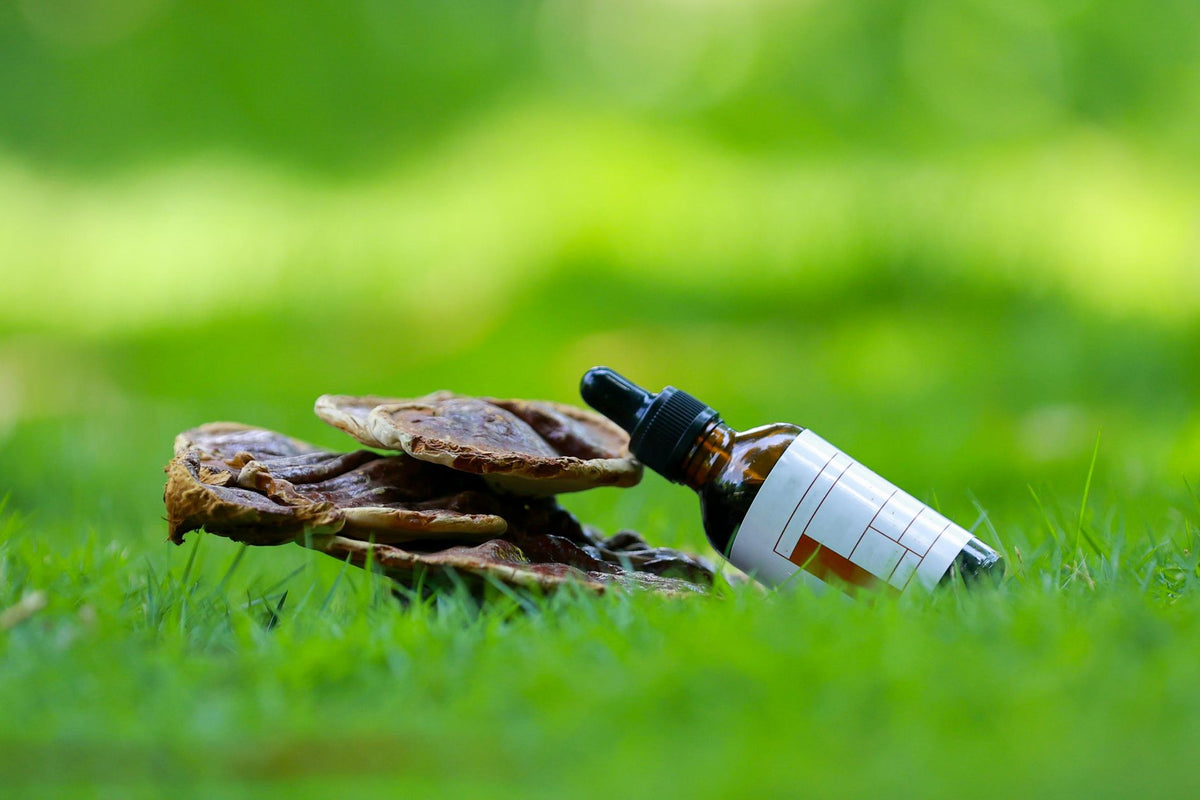
The best mushroom supplements in 2026 aren't necessarily the ones with the slickest marketing — they're the ones backed by actual human clinical trials. After reviewing the published evidence for the six most popular functional mushroom species, we found a stark divide: only two — lion's mane and reishi — have replicated, peer-reviewed human studies supporting their headline health claims.
This article ranks each species using a simple three-tier evidence framework (Strong, Moderate, Preliminary) based on the number and quality of published human trials — not animal studies, not in-vitro results, and not influencer anecdotes. If you're deciding where to spend your money, this ranking should save you from wasting it.
How We Ranked These Mushroom Supplements
Every species was scored by one criterion: the number of published, peer-reviewed human clinical trials supporting its primary marketed benefit. Here's how the tiers break down:
- Strong evidence (Tier 1): Three or more randomised controlled human trials with consistent, positive outcomes for the primary claim.
- Moderate evidence (Tier 2): One to two human trials with positive results, or multiple trials with mixed outcomes.
- Preliminary evidence (Tier 3): Zero human trials for the primary claim; evidence limited to animal models or in-vitro studies.
We excluded trials that used whole-diet interventions (where mushrooms were eaten as food rather than taken as isolated extracts), and we weighted randomised, double-blind, placebo-controlled designs more heavily than open-label studies.
Tier 1 (Strong Evidence): Lion's Mane and Reishi
Lion's Mane (Hericium erinaceus) — Cognitive Function
Lion's mane is the most evidence-backed nootropic mushroom available in 2026. Its primary claim — that it may support cognitive function* — is supported by at least four human clinical trials.
The landmark 2009 study by Mori et al. gave 250 mg tablets of lion's mane (four tablets, three times daily) to adults aged 50–80 with mild cognitive impairment for 16 weeks. The lion's mane group scored significantly higher on cognitive function scales compared to placebo [1]. A 2020 trial published in Frontiers in Aging Neuroscience replicated these findings in a younger cohort, showing improvements in short-term recognition memory after 12 weeks at 3 g/day [2].
Key data point: Across trials, effective dosages range from 750 mg to 3,000 mg per day of dried extract, with cognitive benefits typically emerging at the 8–12 week mark.
Lion's mane is a core ingredient in the Noobru supplement range, included at clinically relevant dosages designed to support focus and mental clarity.*
Reishi (Ganoderma lucidum) — Immune Modulation and Sleep
Reishi's strongest evidence is for immune system modulation.* A 2003 randomised controlled trial in Journal of Medicinal Food found that 5.4 g/day of reishi extract for 12 weeks significantly increased several immune markers in advanced-stage cancer patients compared to baseline [3]. A 2012 Cochrane-style review identified five qualifying human trials supporting immunomodulatory effects [4].
Reishi is also marketed for sleep quality, though the human evidence here is thinner — a 2012 study in Pharmacology, Biochemistry and Behavior found that reishi extract increased total sleep time in rats, but only one small human pilot (n=48) has been published, showing modest improvements in subjective sleep quality at 8 weeks.*
Key data point: Effective dosages in human trials: 1.5–5.4 g/day of dried extract, or 600–1,800 mg of concentrated hot-water extract standardised to polysaccharides.
Tier 2 (Moderate Evidence): Cordyceps and Turkey Tail
Cordyceps (Cordyceps militaris) — Exercise Performance
Cordyceps is widely marketed as an endurance booster, but the human trial data is mixed. A 2010 study in the Journal of Alternative and Complementary Medicine found that 3 g/day of Cordyceps sinensis for 12 weeks did not improve VO2max in trained cyclists [5]. However, a 2016 trial using Cordyceps militaris (the cultivated species found in most supplements) at 4 g/day showed a 7% improvement in VO2max in recreationally active adults after three weeks.
The inconsistency likely comes down to species (sinensis vs. militaris), dosage, and participant fitness levels. Cordyceps may help support exercise performance in untrained or moderately active individuals,* but the evidence doesn't support claims for elite athletes.
Turkey Tail (Trametes versicolor) — Immune Support
Turkey tail contains polysaccharide-K (PSK), which is actually an approved adjunct cancer therapy in Japan. However, PSK is a pharmaceutical-grade isolate — not the same as a consumer supplement powder. One well-designed human trial showed that turkey tail extract at 3 g/day may help support immune recovery following standard cancer treatment [6].* For general immune support in healthy adults, no robust human trials exist as of 2026.
Tier 3 (Preliminary Evidence): Chaga and Maitake
Chaga (Inonotus obliquus) — Antioxidant and Anti-inflammatory
Chaga has zero published human clinical trials for its primary claims of antioxidant and anti-inflammatory activity. All existing evidence comes from in-vitro (test tube) studies and rodent models. Despite this, it remains one of the best-selling functional mushrooms in the UK in 2026.
This doesn't mean chaga is worthless — it is genuinely rich in melanin, betulinic acid, and superoxide dismutase. But without human data, any health benefit claims are speculative at best.
Maitake (Grifola frondosa) — Blood Sugar Management
Maitake is marketed for blood sugar support, based largely on a single 2001 animal study showing reduced glucose levels in diabetic mice. One small human pilot (n=33) published in 2015 showed a non-significant trend toward improved insulin sensitivity at 3 g/day. This is not enough evidence to recommend maitake supplements specifically for glycaemic management.
What to Look for When Buying Mushroom Supplements
Not all mushroom supplements are equal. Here are the four criteria that actually matter:
- Extract vs. powder: Hot-water or dual-extraction concentrates deliver significantly more beta-glucans (the primary bioactive compounds) per gram than raw mushroom powder. Look for products specifying extraction method.
- Beta-glucan percentage: Quality products list beta-glucan content on the label. Aim for at least 20% beta-glucans by weight. Products that list only "polysaccharides" may be counting starch, which is biologically irrelevant.
- Fruiting body vs. mycelium: Fruiting body extracts contain higher concentrations of beta-glucans and triterpenes. Mycelium-on-grain products often contain significant amounts of starch filler from the growing substrate.
- Third-party testing: Look for a Certificate of Analysis (CoA) confirming heavy metal levels, pesticide residues, and active compound concentrations.
Key Takeaways
- Lion's mane has the strongest human evidence for cognitive support* — effective dosages range from 750 mg to 3 g/day for 8–16 weeks.
- Reishi has solid human trial data for immune modulation* — but its sleep claims need more research.
- Cordyceps may help casual exercisers* but doesn't boost elite performance based on current evidence.
- Turkey tail's PSK is a proven pharmaceutical in Japan, but consumer supplements are a different product entirely.
- Chaga and maitake have no meaningful human clinical data — buyer beware.
- Always choose fruiting body extracts standardised to beta-glucan content over generic mushroom powders.
If you're looking for a mushroom-based supplement backed by clinical research, the Noobru range includes lion's mane at evidence-based dosages to help support focus, memory, and mental clarity.*
Frequently Asked Questions
Which mushroom supplement has the most clinical evidence?
Lion's mane (Hericium erinaceus) has the strongest clinical evidence among functional mushrooms, with at least four published human trials showing it may support cognitive function and nerve growth factor production.*
What is the difference between mushroom extract and mushroom powder?
Mushroom extract uses hot water or alcohol to concentrate active compounds like beta-glucans, while mushroom powder is simply the dried, ground fruiting body. Extracts typically deliver higher concentrations of bioactive compounds per serving.
Are mushroom supplements safe to take daily?
Most functional mushroom supplements are considered safe for daily use at standard dosages. However, individuals on blood thinners, immunosuppressants, or other medications should consult a healthcare provider first, as some species — particularly reishi — may interact with these drugs.
How long do mushroom supplements take to work?
Most human trials run 8–16 weeks before measuring outcomes. Acute effects like mild stimulation from cordyceps may be noticeable sooner, but cognitive or immune benefits typically require consistent daily use for at least two months.
Can you combine different mushroom supplements?
Yes. Many supplements combine multiple species in a single formula. There are no known negative interactions between common functional mushroom species, though stacking increases total beta-glucan intake, which may cause mild digestive discomfort in sensitive individuals.
References
- Mori K, et al. (2009). Improving effects of the mushroom Yamabushitake (Hericium erinaceus) on mild cognitive impairment. Phytotherapy Research, 23(3), 367–372. PubMed
- Saitsu Y, et al. (2019). Improvement of cognitive functions by oral intake of Hericium erinaceus. Biomedical Research, 40(4), 125–131. PubMed
- Gao Y, et al. (2003). Effects of Ganopoly on immune functions in advanced-stage cancer patients. Immunological Investigations, 32(3), 201–215. PubMed
- Jin X, et al. (2012). Ganoderma lucidum (Reishi mushroom) for cancer treatment. Cochrane Database of Systematic Reviews. PubMed
- Parcell AC, et al. (2004). Cordyceps sinensis supplementation does not improve endurance exercise performance. Journal of Alternative and Complementary Medicine. PubMed
- Torkelson CJ, et al. (2012). Phase 1 clinical trial of Trametes versicolor in women with breast cancer. ISRN Oncology. PubMed
*These statements have not been evaluated by the Food and Drug Administration or MHRA. This product is not intended to diagnose, treat, cure, or prevent any disease. Always consult your healthcare provider before starting any supplement regimen.

Leave a comment
All comments are moderated before being published.
This site is protected by hCaptcha and the hCaptcha Privacy Policy and Terms of Service apply.