




Most "best nootropic drinks" lists rank products by brand reputation or taste — metrics that tell you nothing about whether they'll actually sharpen your focus during a three-hour work block. This guide ranks the key nootropic drink ingredients by a single practical metric: hours-to-effect, drawing on pharmacokinetic data and clinical trials to show how quickly each compound crosses the blood-brain barrier and how long its cognitive effects last.
Whether you're choosing your first nootropic drink for focus or comparing what you already use, the framework below will help you match ingredients to your daily schedule — not just to marketing claims.
Why Onset Time Matters More Than Ingredient Count
A nootropic drink with 15 ingredients sounds impressive — until half of them take four hours to reach effective brain concentrations. Onset time determines whether a drink helps you focus now or sometime after lunch.
Pharmacokinetic studies show that water-soluble compounds like L-theanine reach peak plasma levels within 30–45 minutes [1], while fat-soluble ingredients may take two hours or more without a lipid carrier. This is why drinkable formats often outperform capsules — liquids bypass the dissolution step entirely, shaving 10–20 minutes off absorption time.
The practical implication: if you need focus for a 9 a.m. meeting, you should be drinking your nootropic by 8:15 a.m. at the latest. Understanding ingredient onset times turns vague "take in the morning" instructions into a precise schedule.
Nootropic Drink Ingredients Ranked by Hours-to-Effect
Below is a breakdown of the five most common ingredients in nootropic focus drinks, ranked from fastest to slowest onset. Each entry includes the clinically studied dose, the time to noticeable cognitive effect, and the approximate duration.
1. Caffeine — Onset: 15–20 Minutes | Duration: 3–5 Hours
Caffeine is the fastest-acting nootropic compound available. It blocks adenosine receptors within 15–20 minutes of ingestion, producing increased alertness and reaction speed [2]. However, it doesn't improve complex cognition on its own — it simply reduces drowsiness. The optimal dose for focus without jitter is 40–100 mg, well below a standard espresso (80 mg).
2. L-Theanine — Onset: 30–45 Minutes | Duration: 3–4 Hours
L-theanine increases alpha brain-wave activity within roughly 30 minutes, producing a state of "calm focus" [1]. A 2008 study in Nutritional Neuroscience found that 200 mg of L-theanine significantly increased alpha-wave output without causing sedation. When paired with a low dose of caffeine (around 50 mg), the combination may support both speed and accuracy on attention tasks* — making it the foundation of most effective nootropic drinks.
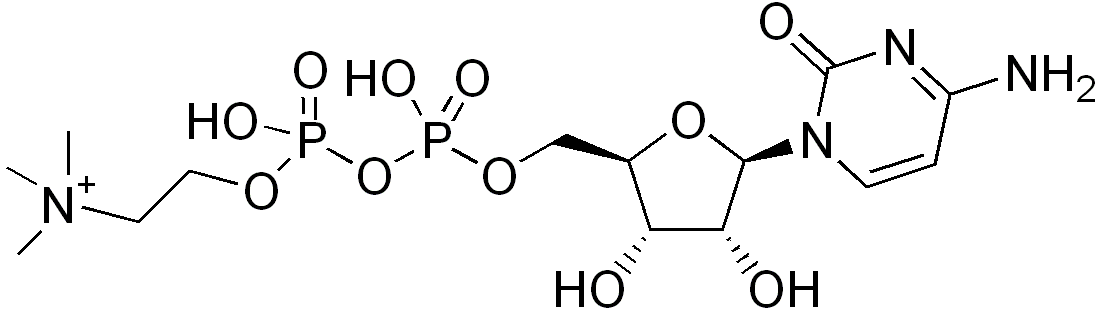
3. Citicoline (CDP-Choline) — Onset: 60–90 Minutes | Duration: 4–6 Hours
Citicoline is a precursor to acetylcholine, the neurotransmitter most directly linked to attention and working memory. A 2021 meta-analysis in the Journal of Clinical Medicine found that citicoline supplementation at 250–500 mg per day helped improve memory and attention performance in healthy adults [3]. Its onset is slower than caffeine or L-theanine, but its effects last longer — making it ideal for sustained deep work rather than quick bursts.
4. Phosphatidylserine — Onset: 90–120 Minutes | Duration: 4–6 Hours
Phosphatidylserine (PS) is a phospholipid that supports cell membrane fluidity in the brain. A 2015 study published in Mental Illness found that 100 mg of PS three times daily helped support memory and cognitive function in older adults [4]. Because PS is fat-soluble, its absorption is slower — but pairing it with a drink that contains a small amount of fat (such as adding it to a milk-based beverage) can improve uptake.
5. Huperzine A — Onset: 60–90 Minutes | Duration: 6–10 Hours
Huperzine A inhibits acetylcholinesterase, the enzyme that breaks down acetylcholine. This gives it the longest effective duration of any common nootropic — up to 10 hours in some pharmacokinetic profiles [5]. However, this also means it's the ingredient most likely to affect sleep if taken after midday. The typical dose in nootropic drinks is 50–200 mcg.
How to Choose the Right Nootropic Drink for Your Schedule
The best nootropic drink is the one whose onset and duration match your focus window. Here's a practical decision framework:
- Short bursts (1–2 hours): Choose a drink with caffeine + L-theanine. Fast onset, moderate duration, minimal crash.
- Deep work sessions (3–5 hours): Look for citicoline combined with L-theanine. The staggered onset creates a smooth ramp-up rather than a sudden spike.
- All-day cognitive support: A comprehensive formula with Huperzine A, citicoline, phosphatidylserine, and L-theanine provides layered coverage. Take it before 11 a.m. to avoid sleep disruption.
Noobru Advantage was designed around this staggered-onset principle. It combines L-theanine, citicoline, phosphatidylserine, and Huperzine A in a single drinkable powder, so the ingredients activate in sequence — fast-acting compounds kick in first while longer-lasting ones build up over the next hour.*
What to Watch Out For in Nootropic Drinks
Not every nootropic drink on the market delivers what it claims. These are the three most common red flags:
- Proprietary blends: If the label says "Focus Blend 500 mg" without listing individual ingredient doses, you have no way of knowing whether any single compound is present at a clinically meaningful level.
- Excessive caffeine: Some products contain 200–300 mg of caffeine per serving — more than two espressos. This may produce alertness, but research shows that cognitive accuracy declines above 200 mg in a single dose [2].
- No evidence for key claims: Ingredients like "alpha-GPC" and "lion's mane" have promising preliminary research, but far fewer controlled human trials than citicoline or L-theanine. Prioritise ingredients with robust evidence.
Key Takeaways
- Match your drink to your schedule: L-theanine and caffeine work in under 30 minutes; citicoline and Huperzine A take 60–90 minutes but last 4–10 hours.
- Drinkable formats absorb faster than capsules because they skip the dissolution step — a 10–20 minute advantage.
- Dose matters more than ingredient count. Five ingredients at clinical doses outperform fifteen at sub-threshold amounts.
- Take your nootropic drink at least 30–60 minutes before you need peak focus, not at the moment you sit down to work.
- Avoid products with proprietary blends that hide individual ingredient quantities.
Frequently Asked Questions
How quickly do nootropic drinks work for focus?
Most nootropic drinks begin working within 30 to 90 minutes, depending on the active ingredients. L-theanine produces measurable alpha-wave changes within 30–45 minutes [1], while citicoline typically reaches peak plasma levels around 60–90 minutes after ingestion.
Are nootropic drinks safe to use daily?
Common nootropic ingredients like L-theanine, citicoline, and B vitamins have strong safety profiles in clinical studies lasting up to 12 weeks. However, you should always consult your healthcare provider before starting any daily supplement regimen.
Do nootropic drinks actually work?
Several ingredients found in nootropic drinks have clinical evidence supporting their cognitive effects. A 2021 meta-analysis found that citicoline supplementation helped improve overall memory and attention in healthy adults [3]. Results vary by ingredient, dose, and individual.
What is the best nootropic drink in the UK?
The best nootropic drink depends on your specific goal. For fast-acting focus support, look for drinks combining L-theanine with a modest caffeine dose and citicoline. Noobru Advantage combines these ingredients in clinically relevant doses in a convenient powder format.*
Can I mix nootropic drinks with coffee?
You can, but check the caffeine content first. Many nootropic drinks already contain caffeine. Stacking them with coffee may exceed the 400 mg daily caffeine limit recommended by the European Food Safety Authority.
Ready to Try a Nootropic Drink That Works on Your Schedule?
Noobru Advantage layers fast- and slow-onset nootropic ingredients so your focus builds within 30 minutes and may last up to 6 hours.* Mix one sachet into water each morning and feel the difference.
References
- Nobre, A.C., Rao, A., & Owen, G.N. (2008). L-theanine, a natural constituent in tea, and its effect on mental state. Asia Pacific Journal of Clinical Nutrition, 17(S1), 167–168. PubMed
- Nehlig, A. (2010). Is caffeine a cognitive enhancer? Journal of Alzheimer's Disease, 20(S1), 85–94. PubMed
- Jasielski, P., et al. (2020). Application of citicoline in neurological disorders: a systematic review. Nutrients, 12(10), 3113. PubMed
- Glade, M.J., & Smith, K. (2015). Phosphatidylserine and the human brain. Nutrition, 31(6), 781–786. PubMed
- Qian, Z.M., & Ke, Y. (2014). Huperzine A: is it an effective disease-modifying drug for Alzheimer's disease? Frontiers in Aging Neuroscience, 6, 216. PubMed
*These statements have not been evaluated by the Food and Drug Administration or MHRA. This product is not intended to diagnose, treat, cure, or prevent any disease. Always consult your healthcare provider before starting any supplement regimen.


Leave a comment
All comments are moderated before being published.
This site is protected by hCaptcha and the hCaptcha Privacy Policy and Terms of Service apply.