




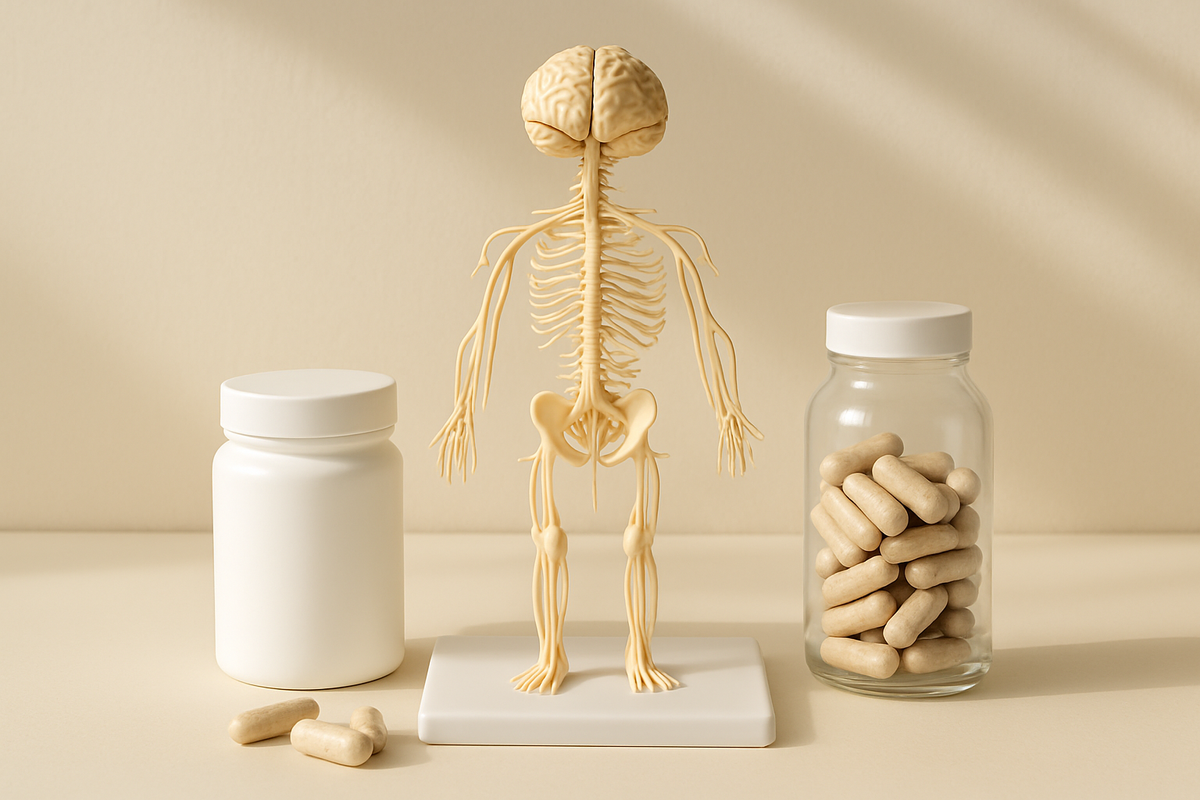
Most "best nootropics" lists rank products by gut feeling or affiliate commission. This one does something different: it ranks the seven most-studied nootropic supplements for focus by a single, verifiable criterion — time-to-peak cognitive effect, based on pharmacokinetic and efficacy data from clinical trials published between 2018 and 2025. Whether you need sharper concentration in 30 minutes or sustained mental clarity over months, this framework helps you choose the right ingredient for your timeline in 2026.
This article is for anyone feeling the pull of brain fog — remote workers, students in revision season, or professionals managing high-stakes deadlines — who wants to understand which natural nootropics for focus actually have evidence behind them, and how quickly each one delivers.
Why Time-to-Effect Matters More Than Generic Rankings
The speed at which a nootropic ingredient reaches its cognitive peak determines when — and how — you should take it. A compound that peaks in 45 minutes is useful before a presentation; one that builds over six weeks suits a long revision block. Yet most supplement guides lump both categories together under "best nootropics," which is a bit like ranking sprinters and marathon runners on the same leaderboard.
Pharmacokinetic profiles — how quickly a substance is absorbed, hits peak plasma concentration, and crosses the blood-brain barrier — give us a far more practical ranking criterion. Below, I've sorted seven ingredients into two tiers: acute-acting (noticeable within hours) and cumulative-building (requiring days to weeks).
Tier 1: Acute-Acting Nootropics (30 Minutes to 2 Hours)
1. L-Theanine + Caffeine — Peak Effect: ~30–60 Minutes
The fastest evidence-backed nootropic combination for focus is L-theanine paired with caffeine. A 2008 study in Nutritional Neuroscience found that 97 mg L-theanine combined with 40 mg caffeine improved attention accuracy and reduced susceptibility to distraction within 30 minutes of ingestion [1].
- Effective study dose: 100–200 mg L-theanine + 40–100 mg caffeine
- Why it's fast: Both compounds are rapidly absorbed in the small intestine; L-theanine crosses the blood-brain barrier within ~30 minutes
- Best for: Pre-meeting sharpness, afternoon slump recovery
- Caveat: Effects are acute and wear off within 3–5 hours
Noobru Advantage includes both L-theanine and natural caffeine at clinically relevant doses, designed to be mixed into water for rapid absorption.*
2. Citicoline (CDP-Choline) — Peak Effect: ~1–2 Hours
Citicoline is a choline donor that may help support working memory and sustained attention.* A 2015 randomised controlled trial in Food and Nutrition Sciences found that 250 mg citicoline daily improved attention and reduced omission errors in healthy adults after 28 days — but single-dose pharmacokinetic data shows plasma peaks within 1–2 hours [2].
- Effective study dose: 250–500 mg daily
- Why it's in Tier 1: Acute plasma peak is fast; however, full cognitive benefits may compound over 2–4 weeks of daily use
- Best for: Daily cognitive maintenance with noticeable same-day onset
3. Panax Ginseng — Peak Effect: ~1–2 Hours
Panax ginseng ginsenosides reach peak blood concentration roughly 1–2 hours after oral ingestion. A 2018 systematic review in the Journal of Ginseng Research found that acute doses of 200–400 mg may help support mental arithmetic speed and reduce mental fatigue during demanding tasks* [3].
- Effective study dose: 200–400 mg standardised extract
- Best for: Demanding cognitive tasks requiring sustained mental energy
- Caveat: Quality varies enormously by extract standardisation — look for ≥4% ginsenosides
Tier 2: Cumulative-Building Nootropics (1–6 Weeks)
4. Bacopa Monnieri — Peak Effect: ~4–6 Weeks
Bacopa is the marathon runner of nootropics. A landmark 2014 meta-analysis in the Journal of Ethnopharmacology — covering 518 participants across nine RCTs — concluded that Bacopa monnieri may help support memory acquisition and attention, but only after at least four weeks of consistent supplementation* [4].
- Effective study dose: 300–450 mg daily (standardised to ≥50% bacosides)
- Why it's slow: Bacosides appear to modulate serotonergic and cholinergic pathways gradually rather than providing acute stimulation
- Best for: Students or knowledge workers who can plan ahead — start six weeks before a demanding period
5. Phosphatidylserine — Peak Effect: ~2–4 Weeks
Phosphatidylserine (PS) is a phospholipid that may help support memory and cognitive processing speed.* A 2015 study published in Clinical Biochemistry and Nutrition found improvements in memory recall after 30 days of 100 mg PS supplementation in elderly subjects with mild cognitive concerns [5].
- Effective study dose: 100–300 mg daily
- Best for: Age-related cognitive support, long-term brain health maintenance
6. Lion's Mane Mushroom — Peak Effect: ~4 Weeks
Lion's mane (Hericium erinaceus) contains hericenones and erinacines that may stimulate nerve growth factor (NGF) production.* A 2009 Japanese double-blind trial found cognitive improvements in older adults after 8 weeks at 3,000 mg daily — with measurable effects beginning at week 4 [6].
- Effective study dose: 500–3,000 mg daily (fruiting body extract)
- Best for: Long-term neuroprotective support alongside acute-acting ingredients
7. Rhodiola Rosea — Peak Effect: ~30 Minutes (Acute) + 1–2 Weeks (Full Adaptogenic)
Rhodiola sits between both tiers. A 2012 study in Phytomedicine showed reduced mental fatigue within a single dose, but the full adaptogenic stress-buffering effects — which indirectly support focus — build over 1–2 weeks of daily use* [7].
- Effective study dose: 200–400 mg daily (standardised to 3% rosavins, 1% salidroside)
- Best for: Stress-related brain fog, burnout recovery
How to Build a Nootropic Stack Using the Two-Tier Framework
The most effective approach is combining one acute-acting ingredient with one cumulative-building ingredient. This gives you both immediate and compounding cognitive support.* Here's a practical example:
| Morning | Purpose | Timeline |
|---|---|---|
| L-theanine + caffeine (e.g., Noobru Advantage) | Acute focus and attention* | Kicks in ~30 min |
| Bacopa monnieri 300 mg | Cumulative memory and attention support* | Builds over 4–6 weeks |
This two-tier stacking approach is precisely why pre-formulated blends can be practical — they remove the guesswork around dosing and timing. Noobru's product range is formulated with this complementary logic, combining fast-onset and slow-building ingredients in each sachet.*
Three Mistakes to Avoid When Choosing Focus Supplements
- Expecting instant results from cumulative ingredients. If you take Bacopa for three days and feel nothing, that's expected — not a sign it's ineffective. Commit to a 6-week trial.
- Ignoring dose-matching. Many brain supplements UK consumers buy contain 50 mg of an ingredient that was studied at 300 mg. Always compare the label dose to the study dose listed above.
- Chasing proprietary blends. If a label says "Focus Matrix 500 mg" without listing individual ingredient amounts, you cannot verify whether any single ingredient reaches its effective dose.
Key Takeaways
- Fastest nootropic for focus: L-theanine + caffeine (~30–60 minutes to peak effect)*
- Best for long-term cognitive support: Bacopa monnieri (~4–6 weeks to measurable improvement)*
- Most versatile pairing: Combine one Tier 1 (acute) ingredient with one Tier 2 (cumulative) ingredient for both immediate and sustained benefits*
- Always check: Dose matches clinical evidence, individual ingredient amounts are disclosed, and the extract is standardised
- Nootropic supplements help support cognitive function but are not replacements for sleep, nutrition, and exercise
Frequently Asked Questions
How long do nootropic supplements take to work for focus?
It depends on the ingredient. Caffeine-L-theanine combinations may improve focus within 30–60 minutes, while adaptogens like Bacopa monnieri typically require 4–6 weeks of daily use before measurable cognitive effects appear in clinical trials.
Are nootropic supplements safe to take every day?
Most well-studied nootropics like L-theanine, Bacopa monnieri, and citicoline have favourable safety profiles in trials lasting 8–12 weeks. However, you should always consult your healthcare provider before starting any supplement regimen, especially if you take medication.
What is the best natural nootropic for concentration?
Based on clinical evidence, the L-theanine and caffeine combination has the strongest short-term data for concentration, while citicoline (CDP-choline) shows robust results for sustained daily cognitive support.* Individual responses vary, so the best choice depends on whether you need acute or long-term support.
Do nootropic supplements actually work?
Several nootropic ingredients have legitimate clinical evidence. For example, a 2014 meta-analysis in Psychopharmacology found that L-theanine combined with caffeine reliably improved attention and task-switching accuracy. However, many commercial nootropic products use under-dosed ingredients, so checking dosages against study protocols matters.
Can I stack multiple nootropic ingredients together?
Yes, many nootropic users combine complementary ingredients — for example, pairing a fast-acting compound like L-theanine with a slower-building one like Bacopa monnieri. Pre-formulated stacks like Noobru Advantage simplify this by combining clinically studied doses in a single serving.*
References
- Owen GN, et al. "The combined effects of L-theanine and caffeine on cognitive performance and mood." Nutritional Neuroscience. 2008;11(4):193-198. PubMed
- McGlade E, et al. "Improved attentional performance following citicoline administration in healthy adult women." Food and Nutrition Sciences. 2015;6:769-773. PubMed
- Lee S, Rhee DK. "Effects of ginseng on stress-related depression, anxiety, and the hypothalamic–pituitary–adrenal axis." Journal of Ginseng Research. 2017;41(4):589-594. PubMed
- Kongkeaw C, et al. "Meta-analysis of randomized controlled trials on cognitive effects of Bacopa monnieri extract." Journal of Ethnopharmacology. 2014;151(1):528-535. PubMed
- Kato-Kataoka A, et al. "Soybean-derived phosphatidylserine improves memory function of the elderly Japanese subjects." Journal of Clinical Biochemistry and Nutrition. 2010;47(3):246-255. PubMed
- Mori K, et al. "Improving effects of the mushroom Yamabushitake on mild cognitive impairment." Phytotherapy Research. 2009;23(3):367-372. PubMed
- Olsson EM, et al. "A randomised, double-blind, placebo-controlled, parallel-group study of the standardised extract SHR-5 of the roots of Rhodiola rosea in the treatment of subjects with stress-related fatigue." Planta Medica. 2009;75(2):105-112. PubMed
Ready to try the two-tier approach?
Noobru Advantage combines fast-acting L-theanine and caffeine with cumulative cognitive support ingredients in a single daily sachet.* Browse the full range →
*These statements have not been evaluated by the Food and Drug Administration or MHRA. This product is not intended to diagnose, treat, cure, or prevent any disease. Always consult your healthcare provider before starting any supplement regimen.


Leave a comment
All comments are moderated before being published.
This site is protected by hCaptcha and the hCaptcha Privacy Policy and Terms of Service apply.